Sourdough Tunisian Maklouba Bread Loaf
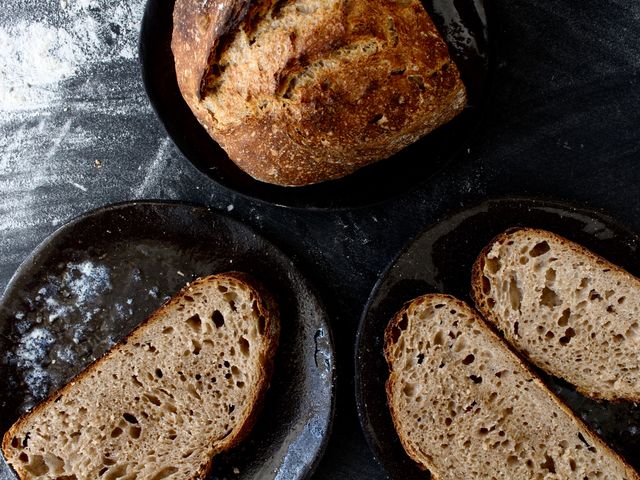
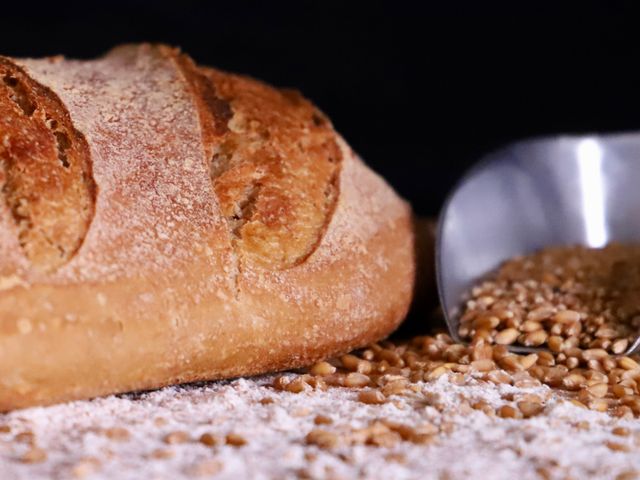
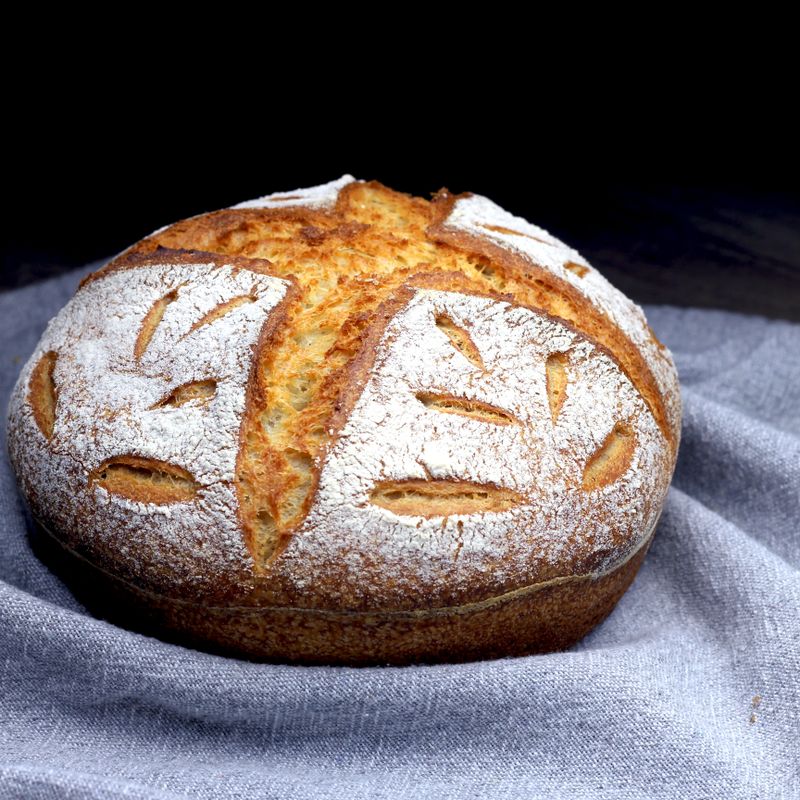
A rustic sourdough loaf infused with the bold, spiced flavors of Tunisia. Caraway seeds, harissa, and brined green olives are folded into tangy sourdough dough, creating a naturally leavened bread with a crispy crust and a warm, complex interior. The dough undergoes a long fermentation for depth of flavor, while the maklouba technique (turning the dough over) develops strength and structure. Perfect sliced warm with olive oil and cheese, or for dipping in soups and stews.
- Prep
- 30 min
- Cook
- 42 min
- Wait
- 9 hr 30 min
- Total
- 10 hr 42 min
- Makes
- 1 loaf (about 450 g / 1 lb, 12 slices)
Steps
Before you start
- Activate your sourdough starter 4–6 hours ahead so it's bubbly and at peak (double in volume with a dome on top or just starting to collapse). Room temperature should be 68–75°F (20–24°C) for ideal fermentation timing.
- Have all ingredients measured and at room temperature before mixing.
- If using a Dutch oven, place it in the oven before preheating so it's hot when you're ready to score and bake.
Mix dough
- In a large 5-quart bowl, combine 150 g active sourdough starter, 205 ml room-temperature water, and 325 g bread flour.
- Stir with a wet hand or dough whisk until all flour is hydrated and no dry streaks remain, about 3 minutes.
- The dough will be shaggy.
- Cover loosely with a damp towel and let rest for 30 minutes at room temperature (this is the autolyse, allowing flour to fully absorb water).
+ Show details− Hide details
Ready when: All flour is moistened; no dry bits remain
Tip: Avoid adding salt during autolyse as it can inhibit gluten development.
Incorporate salt and harissa
- Sprinkle 8 g fine sea salt over the dough.
- Add 30 g harissa paste (distribute it in small spoonfuls across the dough).
- Wet your hand and fold the dough over itself repeatedly for 3–4 minutes, working the salt and harissa throughout.
- The dough will feel slightly sticky but should hold together.
- Pinch and stretch the dough gently to test; it should show some strength but not be fully developed.
+ Show details− Hide details
Ready when: Salt and harissa are evenly distributed; dough feels unified
Tip: Work gently to avoid overheating the dough; harissa can be sticky, so keep your hand wet.
Bulk fermentation with folds
- Place the dough in the bowl, cover with the damp towel, and let sit at room temperature (68–72°F / 20–22°C).
- Perform a set of stretch-and-folds every 30 minutes for 2 hours (4 sets total).
- For each fold, wet your hand, pinch the dough at the edge, stretch it toward the center, and fold it over itself; rotate the bowl 90° and repeat 4 times.
- Between folds, let the dough rest covered.
- By the final fold, the dough should feel smoother and slightly airy.
- Total bulk time: 2 hours.
+ Show details− Hide details
Ready when: Dough rises visibly, feels slightly puffy; surface shows small bubbles
Tip: Consistent temperature and timing are key; if your kitchen is cool (below 68°F), add 15–30 minutes to bulk time.
Laminate and add olives and seeds
- Wet your work surface lightly.
- Turn the dough out onto it and gently shape it into a rough rectangle about 8×10 inches.
- Spread 12 g toasted caraway seeds evenly over the dough, then scatter 100 g chopped green olives across it.
- Using the bench scraper, fold the dough in half over the filling, then fold in half again (like a letter).
- Gently shape into a round with the seams facing down.
- Place seam-side up into a banneton proofing basket that's been lightly dusted with rice flour or all-purpose flour.
+ Show details− Hide details
Ready when: Filling is distributed; dough forms a ball shape
Tip: Don't overwork; gentle handling preserves the bubbles built during bulk fermentation.
Cold proof overnight
- Cover the banneton with a shower cap or sealed plastic bag to prevent drying.
- Refrigerate at 38–40°F (3–4°C) for 12–18 hours.
- This long cool fermentation develops flavor and makes scoring easier.
- The dough is cold and ready to bake when a poke with a floured finger springs back slowly (not immediately, but not staying indented).
+ Show details− Hide details
Ready when: Dough poke-test: indentation springs back slowly
Tip: If you need to bake sooner, do a 4-hour room-temperature proof instead of overnight cold proof, though flavor will be less developed.
Preheat oven and Dutch ovenOven 500°F / 260°C
- About 1 hour before baking, remove the dough from the refrigerator and leave it on the counter to come up in temperature slightly.
- Place a 5-quart Dutch oven with its lid inside your oven and preheat to 500°F (260°C) for at least 45 minutes.
- The Dutch oven must be very hot to create steam for oven spring and crust development.
+ Show details− Hide details
Ready when: Oven is fully preheated and Dutch oven is smoking hot
Tip: Use an oven thermometer to verify 500°F; uneven preheating is a common cause of pale crusts.
Score and loadOven 500°F / 260°C
- Carefully remove the hot Dutch oven from the oven.
- Line a counter space with parchment paper.
- Tip the banneton over the parchment so the dough falls seam-side down onto it.
- Using a lame or very sharp knife, score the top of the dough with a single long slash or cross at a 45° angle, cutting about ¼ inch deep.
- Gently transfer the dough (still on parchment) into the hot Dutch oven.
- Cover with the lid.
+ Show details− Hide details
Ready when: Dough is scored and resting in the hot vessel
Tip: Cold dough scores more cleanly than warm dough; work quickly so the dough doesn't warm up before baking.
Bake covered with steamOven 500°F / 260°C
- Bake covered at 500°F (260°C) for 22 minutes.
- The lid traps steam, which helps the dough expand and creates a crispy, deep crust.
- You should hear the dough sizzle as it hits the hot Dutch oven.
+ Show details− Hide details
Ready when: Steam is visible; you hear sizzling; dough has visibly risen
Tip: Resist the urge to peek; every time you open the oven, you release steam.
Remove lid and finish bakingOven 450°F / 230°C
- Carefully remove the Dutch oven lid (watch for hot steam).
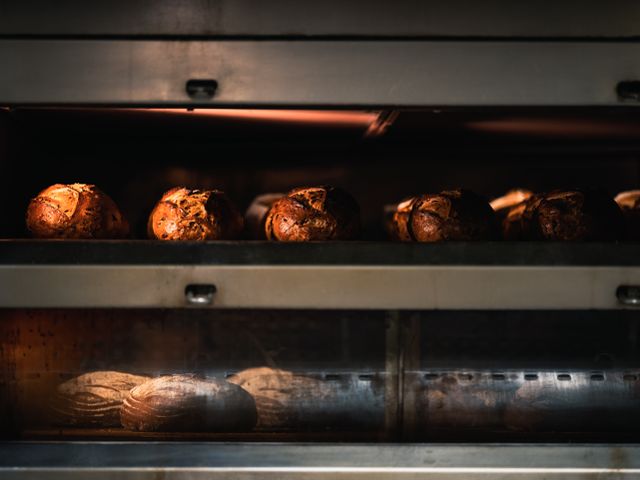
- Reduce the oven temperature to 450°F (232°C) and bake uncovered for another 20 minutes, until the crust is deep golden brown all over, including the sides.
- The loaf should sound hollow when tapped on the bottom.
+ Show details− Hide details
Ready when: Crust is deep golden brown; loaf sounds hollow when tapped on bottom
Tip: If the crust is already very dark at 15 minutes, remove it early to avoid burning.
Cool on wire rack
- Using oven mitts, transfer the hot loaf to a wire rack.
- Brush or rub the warm crust lightly with 15 ml extra-virgin olive oil if desired for extra richness and shine.
- Let cool completely at room temperature, about 1–2 hours.
- This allows the interior crumb to set; slicing while hot will compress the crumb and make it gummy.
- You'll hear the crust crackle as it cools.
+ Show details− Hide details
Ready when: Loaf is room temperature; crust is fully crisp and crackly
Tip: Patience here pays off—the crumb texture improves significantly as the loaf cools completely.
Good to know
Tips
- Harissa varies in saltiness and heat intensity by brand. Start with 30 g; if your harissa is very mild, you may increase to 35–40 g. Taste a small piece of raw dough to check flavor before bulk fermentation.
- Caraway seeds can be toasted dry in a skillet over medium heat for 1–2 minutes until fragrant to deepen their flavor, then cooled before adding to the dough.
- The 'maklouba' concept (turning the dough) is reflected in the lamination step, where you fold the dough over the filling to seal and strengthen it. This also distributes the fillings evenly.
- Sourdough fermentation times vary greatly with room temperature. In a warmer kitchen (75–78°F / 24–26°C), reduce bulk time to 1.5 hours and cold proof for 8–12 hours. In a cool kitchen (below 68°F / 20°C), extend bulk time to 2.5–3 hours and cold proof for up to 24 hours.
Make ahead
You can prepare the dough up to the point of shaping and place it in the banneton for cold proofing up to 18 hours ahead. This actually improves flavor. Shape, proof, and bake fresh, or freeze the shaped dough (in the banneton, wrapped in plastic) for up to 1 month; bake from frozen, adding 10–15 minutes to the baking time.
Storage & reheating
Room temperature (in a paper bag or bread box): 2–3 days. Wrap in a damp cloth before storing to keep the crust crispy and crumb soft. Refrigerator (wrapped in plastic or in an airtight container): up to 5 days. To refresh, wrap in foil and warm in a 350°F (175°C) oven for 10 minutes. Freezer (whole loaf, wrapped well in plastic and then foil): up to 3 months. Thaw at room temperature for 2–3 hours, then refresh as above.
Substitutions
- harissa paste → 2–3 tsp Tunisian spice blend (caraway, coriander, fennel, and red pepper) mixed with 1 tsp tomato paste. If you can't find harissa paste, you can build the flavor with individual spices. The texture will be slightly drier, so add a touch of water to the mix.
- pitted green olives, brined → Kalamata olives or oil-cured black olives, pitted and chopped. The flavor will be deeper and less sharp, but still delicious. Use the same weight.
- caraway seeds → Fennel seeds or a mix of fennel and coriander seeds (equal amount). This shifts the flavor toward anise and spice rather than the earthiness of caraway, but remains authentic to North African breads.
- bread flour → All-purpose flour (with 2–3% less hydration, so use 200 ml water instead of 205 ml). Bread flour has higher protein (12–14%) and develops gluten faster; all-purpose (10–12%) will result in a slightly softer crumb but still good rise.