Moroccan Batbout Buns
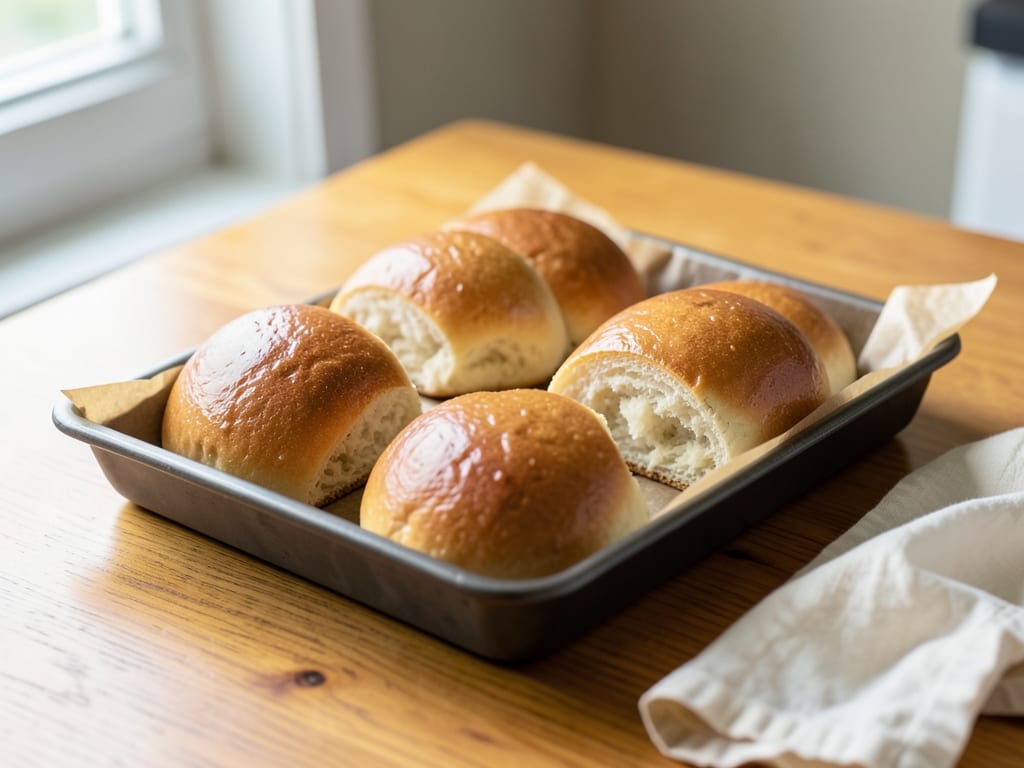
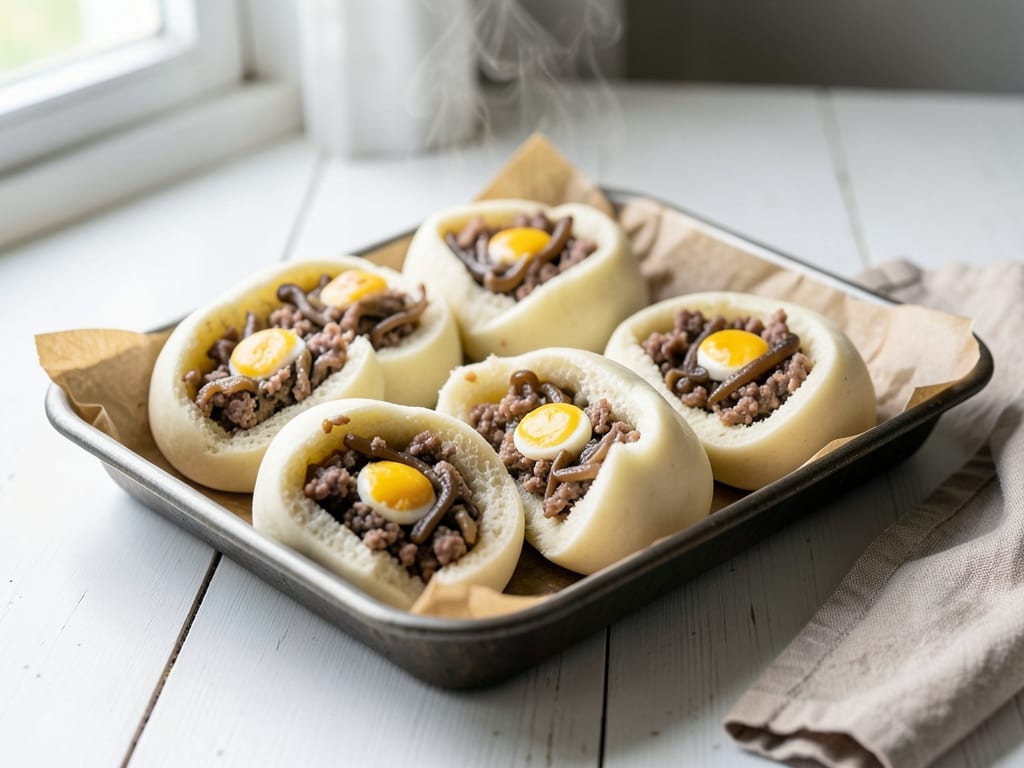
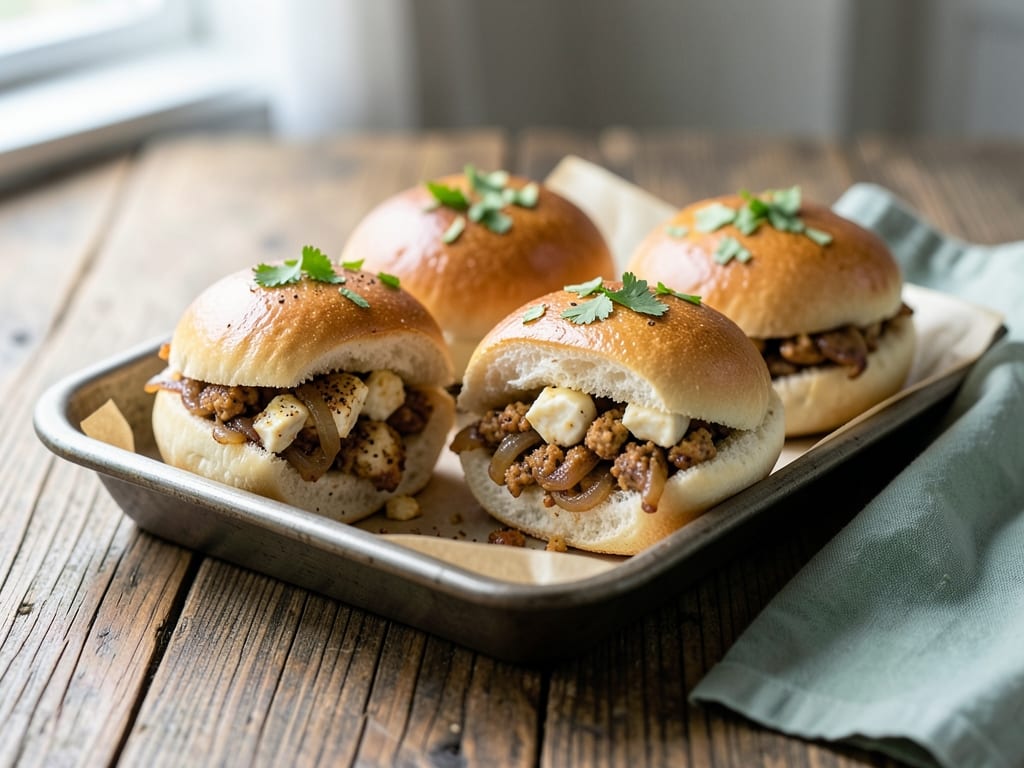
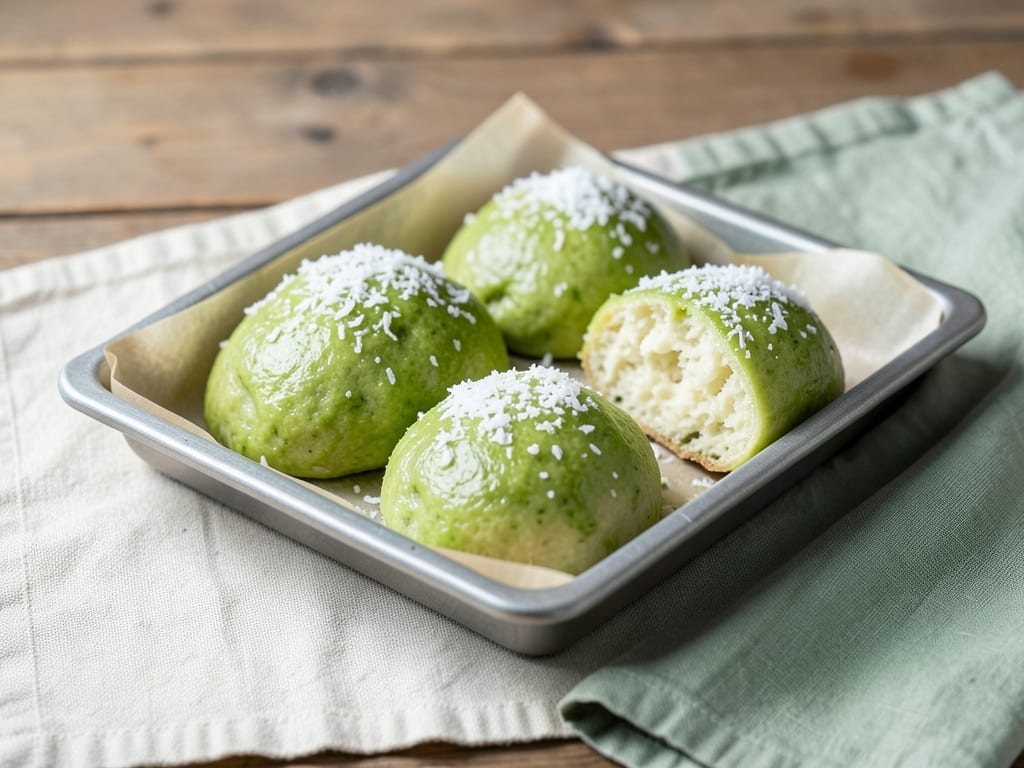
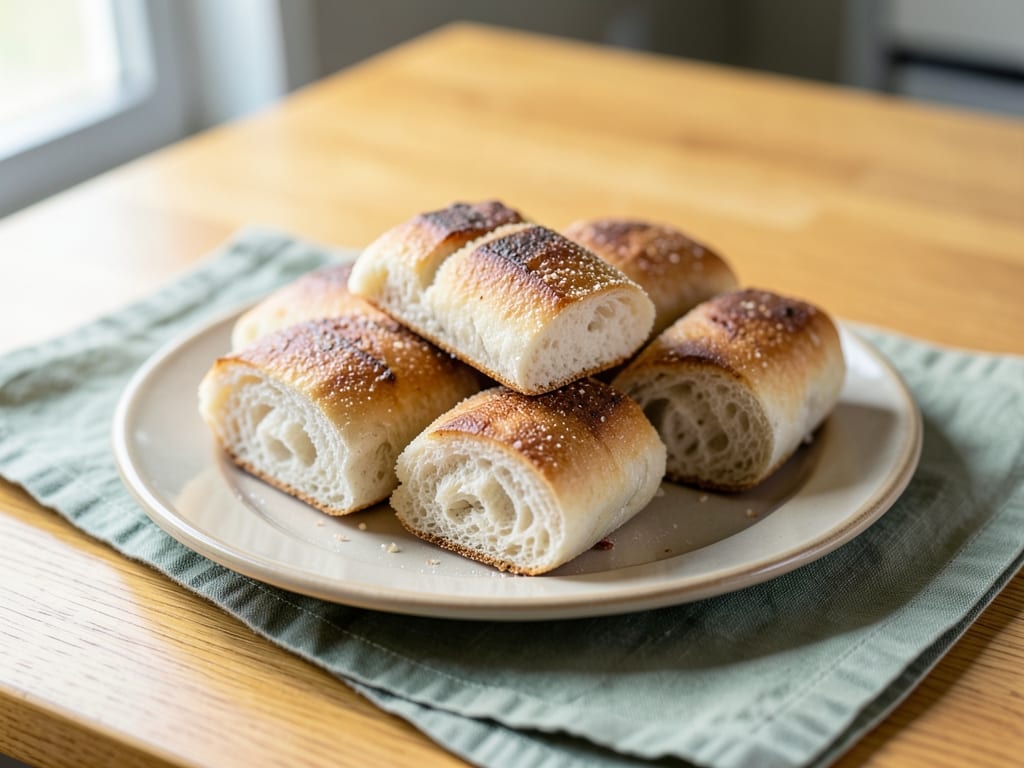
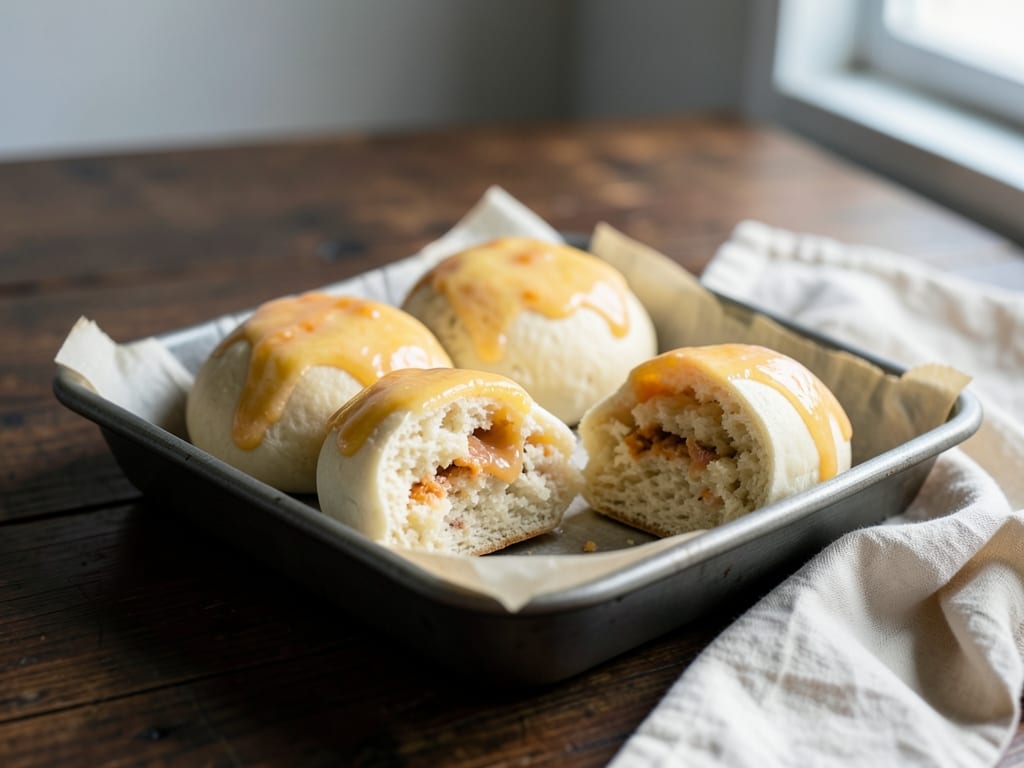
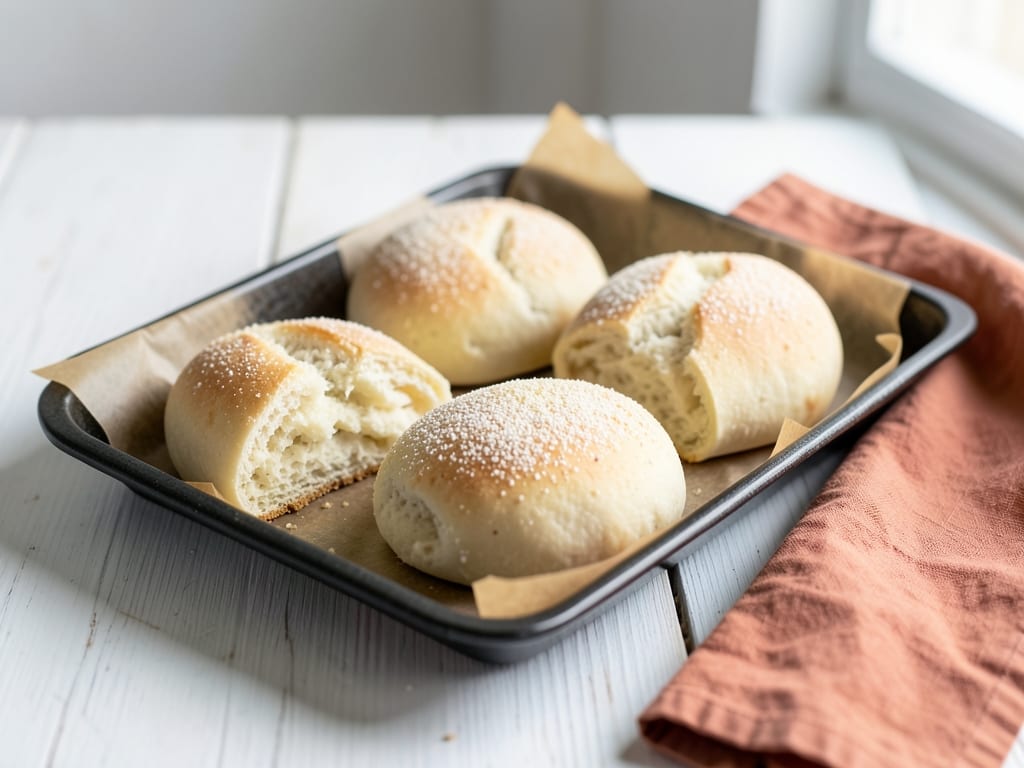
Soft, pillowy Moroccan griddle buns with a fine semolina crumb and a natural pocket, cooked in a dry skillet instead of the oven. Split them and stuff with kefta, eggs, cheese or olives, or tear and dip in soups and tagines.
- Prep
- 35 min
- Cook
- 25 min
- Wait
- 1 hr 45 min
- Total
- 2 hr 45 min
- Makes
- 8 buns, each about 4 inches (10 cm) wide
Steps
Before you start
- Plan on about 2 hours 45 minutes in total, most of it hands-off rising time.
- Warm the water to 105–110°F (40–43°C). It should feel comfortably warm, not hot, on your wrist.
- Use fine semolina (sometimes labeled 'semolina flour' or 'fine semolina'), not coarse semolina or cream of wheat.
- Clear a spot for a floured or semolina-dusted tray and a clean kitchen towel for resting and cooling the buns.
Mix the dough
- In a large bowl, whisk together the all-purpose flour, 1 cup (150 g) fine semolina, instant yeast, sugar and salt.
- Make a well in the center and pour in the warm water and 2 tablespoons (30 ml) olive oil.
- Stir with a wooden spoon or your hand until no dry flour remains and you have a shaggy, sticky dough.
+ Show details− Hide details
Ready when: No dry flour left in the bowl; dough looks shaggy and sticky.
Tip: Keep the yeast away from the salt until everything is whisked together so the salt doesn't slow the yeast.
Knead until smooth
- Turn the dough onto a lightly floured counter and knead for 8 minutes, pushing it away with the heel of your hand and folding it back.
- Dust with a little flour only if it sticks badly.
- The dough should stay soft and slightly tacky.
+ Show details− Hide details
Ready when: Dough is smooth, elastic and springs back slowly when pressed with a finger.
Tip: Resist adding lots of extra flour. A soft dough gives the lightest, most open crumb.
First rise
- Rub a large bowl with about 1 teaspoon olive oil, add the dough, and turn it once to coat.
- Cover with a towel or plastic wrap and leave in a warm spot (75–80°F / 24–27°C) for 60 minutes.
+ Show details− Hide details
Ready when: Dough has doubled and a floured finger leaves an indent that fills back slowly.
Tip: In a cool kitchen, it may need up to 15 extra minutes.
Divide and shape
- Dust a rimmed baking sheet generously with some of the 3 tablespoons (30 g) semolina.
- Turn the dough out, gently press out the large bubbles, and cut into 8 pieces of about 95 g each.
- Roll each piece into a tight ball by cupping your hand over it and rotating it against the counter until the top is smooth.
- Set the balls on the tray 2 inches (5 cm) apart.
+ Show details− Hide details
Ready when: Eight smooth, taut balls with no seams on top.
Tip: Weigh the pieces so the buns cook at the same speed.
Flatten and rest
- Press each ball with your palm into a disc about 4 inches (10 cm) wide and ¾ inch (2 cm) thick.
- Dust the tops with the remaining semolina, cover loosely with a towel, and let them rest for 35 minutes.
+ Show details− Hide details
Ready when: Discs look visibly puffy and a gentle fingertip press springs back slowly.
Tip: Flatten evenly. Thick-and-thin spots cook unevenly.
Cook first side
- Heat a dry 12-inch (30 cm) skillet over medium-low heat for 3 minutes.
- Do not add oil.
- Lift 3 buns with a wide spatula, shake off excess semolina, and place them in the pan with space between.
- Cook for 4 minutes without pressing.
+ Show details− Hide details
Ready when: Underside is pale golden with light brown freckles and the buns have puffed noticeably.
Tip: If the bottoms brown in under 3 minutes, lower the heat. Browning too fast leaves the centers doughy.
Flip and cook
- Flip the buns and cook the second side for 4 minutes, until the tops are speckled golden brown and the buns feel light and spring back when pressed.
- Covering the skillet with a lid for the last minute helps the centers set.
+ Show details− Hide details
Ready when: Both sides are golden with brown freckles, and the buns sound faintly hollow when tapped.
Tip: Do not squash the buns with a spatula, or they won't form a pocket.
Cook the edges, repeat
- Using tongs, stand each bun on its edge for about 20 seconds to dry the pale sides.
- Move finished buns to a towel and repeat with the remaining buns in two more batches, wiping out any burnt semolina between batches.
+ Show details− Hide details
Ready when: Edges are dry and no longer pale or sticky.
Tip: Brush the pan lightly with a dry paper towel between batches to prevent bitter burnt semolina.
Wrap and cool
- Brush the warm buns lightly with the finishing olive oil if using.
- Wrap them in a clean kitchen towel and let them rest for 10 minutes.
+ Show details− Hide details
Ready when: Crusts feel soft and pliable rather than crisp.
Split and serve
- Slice each bun open around the edge with a serrated knife, or tear it apart by hand, and fill with kefta, eggs, cheese, olives or tagine.
- Serve warm.
+ Show details− Hide details
Ready when: The bun opens into a soft, airy pocket.
Tip: Cut while still warm. Cooled buns tear more easily.
Good to know
Tips
- Cook on gentle, steady medium-low heat. Too hot and the outsides brown before the centers cook.
- Handle the risen discs carefully to keep the air in; they should not be re-kneaded.
- For cleaner pockets, split the buns while still warm.
- Use a kitchen scale for even buns that cook in the same time.
Make ahead
Shape the buns (through step 5), cover the tray tightly, and refrigerate for up to 12 hours. Let them stand at room temperature for 30 minutes before cooking.
Storage & reheating
Room temperature in an airtight bag for up to 2 days. Freeze cooled buns in a freezer bag for up to 2 months. Reheat in a dry skillet over medium-low heat for 1–2 minutes per side; from frozen, cook covered with a lid over medium-low heat for 3–4 minutes per side, until hot and soft in the center.
Substitutions
- all-purpose flour → bread flour. Gives a slightly chewier bun; add 1–2 tbsp (15–30 ml) more water if the dough feels stiff.
- instant yeast → active dry yeast. Use the same amount, dissolved in the warm water with the sugar for 10 minutes until foamy before mixing.
- extra-virgin olive oil → neutral vegetable oil. Works equally well in the dough, though you lose the olive flavor.
- fine semolina → additional all-purpose flour. Replace the 150 g in the dough with flour for a softer, paler bun with less of the traditional nutty flavor.