
Jalapeño Cheddar Biscuits
Fluffy, buttery drop biscuits studded with sharp cheddar cheese and fresh jalapeño heat. These savory biscuits are quick to mix and bake, making them perfect for breakfast, lunch, or alongside soup and stew. The cheese adds richness while the jalapeños provide a bright, spicy kick that keeps building with each bite.
Steps
Before you start
- Preheat oven to 425°F (220°C)
- Use cold butter straight from the fridge—this ensures flaky biscuits
- Line a baking sheet with parchment paper or spray lightly with cooking spray
Mix dry ingredients
- Whisk together 2 cups (250 g) flour, 1 tablespoon (15 g) baking powder, ½ teaspoon (3 g) kosher salt, and ¼ teaspoon freshly ground black pepper in a large bowl.
- Make sure the baking powder is evenly distributed throughout the flour—no lumps.
+ Show details− Hide details
Ready when: Mix appears uniform and pale
Tip: Sift the flour-baking powder mixture if it feels lumpy, which helps biscuits rise evenly.
Cut in cold butter
- Add 6 tablespoons (85 g) cold butter cubes to the flour mixture.
- Using your fingertips or a pastry cutter, work the butter into the flour until the mixture resembles coarse breadcrumbs with some pea-sized pieces of butter still visible.
- This should take 2–3 minutes.
- Cold butter creates steam pockets that make biscuits flaky.
+ Show details− Hide details
Ready when: Mixture looks like coarse breadcrumbs with pea-sized butter pieces visible
Tip: Do not overmix or let the butter soften—work quickly and keep everything as cold as possible.
Fold in cheese and jalapeños
- Add 1½ cups (170 g) coarsely grated sharp cheddar cheese and 3 medium (75 g) finely diced jalapeños to the flour mixture.
- Toss gently with a fork or your fingers until the cheese and jalapeños are evenly distributed.
- Do not overwork the dough.
+ Show details− Hide details
Ready when: Cheese and jalapeños are scattered throughout without any large clumps
Tip: Finely dicing the jalapeños ensures they distribute evenly and cook through; leaving them too large creates hot spots.
Add buttermilk
- Pour ¾ cup (180 ml) cold buttermilk into the mixture.
- Using a fork, gently stir just until the dough comes together into a shaggy, slightly wet mass.
- Stop stirring as soon as no dry flour remains—the batter should look rough and lumpy, not smooth.
- Overmixing develops gluten and makes tough biscuits.
+ Show details− Hide details
Ready when: Shaggy dough with no visible dry flour; still has visible lumps
Tip: If the dough feels too dry and won't hold together, add 1 tablespoon more buttermilk. It should be moist but not sticky.
Portion and shape biscuits
- Using a 2-ounce (60 ml) cookie scoop or a 2-tablespoon measure, drop 12 rough mounds of dough onto a parchment-lined 9×13-inch (23×33 cm) baking sheet, leaving about 2 inches (5 cm) between each biscuit.
- Do not smooth or compress the tops—rustic, lumpy biscuits are more tender than neat ones.
+ Show details− Hide details
Ready when: 12 mounds evenly spaced on the baking sheet
Tip: If you smooth the tops, the biscuits will be denser. Let them stay shaggy.
Bake until goldenOven 425°F / 220°C
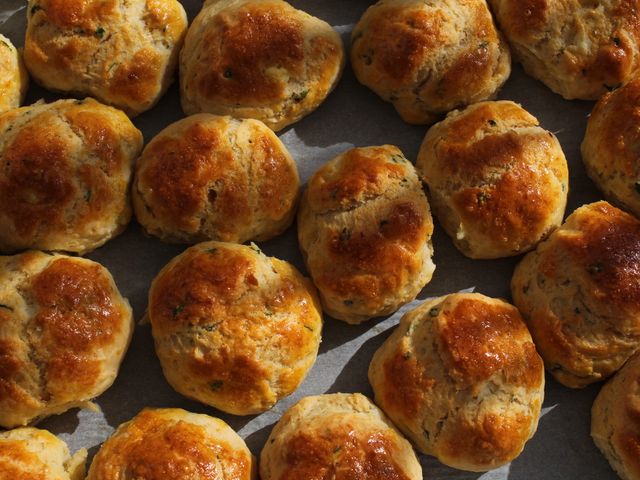
- Bake at 425°F (220°C) for 12–14 minutes, until the tops are golden brown and the edges are lightly darkened.
- The biscuits will puff up and spread slightly.
- When done, they should feel slightly firm on top but still have some give when you press gently.
+ Show details− Hide details
Ready when: Tops are golden brown with slightly darker edges; biscuits have puffed and spread
Tip: Check after 12 minutes—oven temperatures vary. If the tops brown too quickly, the oven may run hot; lower to 400°F (200°C) for the next batch.
Cool briefly and serve
- Let the biscuits rest on the baking sheet for 2 minutes to set slightly, then transfer to a wire rack or serve warm.
- They are best eaten within an hour of baking, while the interior is still tender and steamy.
+ Show details− Hide details
Ready when: Biscuits hold their shape when lifted
Tip: Serve these biscuits warm with butter, honey, or fresh-squeezed lime juice for extra brightness.
Good to know
Tips
- Keep all ingredients cold, especially the butter and buttermilk. Cold dough produces flaky, tender biscuits. If your kitchen is warm, chill the mixing bowl for 5 minutes before starting.
- Seed the jalapeños to reduce intense heat, or leave the seeds in for a spicier biscuit. White interior ribs hold the most heat and capsaicin.
- Do not skip the 2-minute rest on the pan—it allows the structure to set just enough that the biscuits stay moist inside without falling apart.
- These biscuits are best served the day they're baked. They start to dry out by day 2, but freezing and reheating restores much of their texture.
Storage & reheating
Store cooled biscuits in an airtight container at room temperature for up to 2 days. Reheat wrapped in foil at 325°F (163°C) for 5–7 minutes. Freeze baked biscuits in a freezer-safe bag for up to 3 months; thaw and reheat as above. You can also freeze the dough portions on a baking sheet, transfer to a freezer bag, and bake from frozen, adding 2–3 minutes to the baking time.
Substitutions
- sharp cheddar cheese → Gruyère, white sharp cheddar, or aged Gouda. Use cheeses with similar sharpness and melting properties. Avoid soft cheeses like brie.
- fresh jalapeños → Seeded and diced poblano pepper (milder) or serrano pepper (spicier). Poblanos are less spicy; serranos add more heat. Adjust the amount based on your heat tolerance.
- cold buttermilk → Greek yogurt thinned with milk (¾ cup yogurt mixed with ¼ cup milk), or milk soured with 1 tablespoon white vinegar. Both provide acidity and tang. Let the vinegar-milk mixture sit for 5 minutes before using.
- all-purpose flour → Whole wheat pastry flour or a 50/50 blend of all-purpose and whole wheat flour. Whole wheat flour makes denser, nuttier biscuits. Add 1–2 tablespoons extra buttermilk to compensate for the drier flour.
More scones & biscuits
See all →


.jpg)
Find more like this
- Meal
- Breakfast
- Main ingredient
- CheddarBell Peppers
- Method
- Oven