Corn Cheddar Scones
Golden, tender scones studded with sharp cheddar and sweet corn flour. These savory biscuits are perfect warm from the oven with butter, or alongside soup, salad, or chili. The combination of all-purpose flour and cornmeal creates a delicate crumb with subtle corn flavor, while aged cheddar provides sharpness and richness.
Steps
Before you start
- Preheat oven to 400°F (200°C)
- Cut butter into ½-inch cubes and chill for 15 minutes before mixing
- Line a baking sheet with parchment paper
- Have all ingredients at the ready—scone dough comes together quickly
Mix dry ingredients
- In a large bowl, whisk together 1¾ cups (220 g) all-purpose flour, ¾ cup (110 g) cornmeal, 1½ tablespoons (22 g) baking powder, ¾ teaspoon (4 g) kosher salt, and ¼ teaspoon (0.5 g) cayenne pepper if using.
- Make sure there are no lumps in the baking powder.
+ Show details− Hide details
Ready when: Mixture is evenly combined
Tip: Whisk the baking powder thoroughly to avoid lumps that can create dense spots in the scones.
Cut in butter
- Add 6 tablespoons (85 g) of cold butter cubes to the bowl.
- Using a pastry cutter, two knives, or your fingertips, work the butter into the flour mixture until it resembles coarse breadcrumbs with some pea-sized pieces of butter still visible.
- This should take about 2 minutes.
+ Show details− Hide details
Ready when: Mixture resembles coarse breadcrumbs with pea-sized butter pieces
Tip: Keep the butter cold; cold butter creates steam pockets that lead to tender, flaky scones. Work quickly to avoid warming the mixture.
Add cheese and combine
- Stir in 1¼ cups (150 g) coarsely grated sharp cheddar cheese with a wooden spoon or fork until evenly distributed throughout the dry mixture.
+ Show details− Hide details
Ready when: Cheese is evenly distributed
Tip: Coarsely grating the cheese prevents it from clumping and ensures even flavor throughout.
Form dough
- Pour ¾ cup (180 ml) cold buttermilk into the dry mixture.
- Using a fork, gently stir just until a shaggy dough forms—do not overmix.
- The dough should come together in about 10–12 light strokes; some floury bits are okay and will disappear as you shape.
+ Show details− Hide details
Ready when: Dough is shaggy and barely combined
Tip: Overmixing develops gluten and makes scones tough. A few dry specks are fine; the dough will come together when you shape it.
Shape scones
- Turn the dough onto a lightly floured work surface and gently shape it into a 7-inch (18 cm) disk about ¾ inch (2 cm) thick.
- Avoid kneading; use light, quick motions.
- Cut the disk into 8 wedges (like a pie), then carefully transfer each wedge to the prepared baking sheet, spacing them about 2 inches (5 cm) apart.
+ Show details− Hide details
Ready when: Scones are shaped and arranged on baking sheet
Tip: Handle the dough as little as possible; each touch warms it and makes it tougher. If the dough feels warm or sticky, chill it on the baking sheet for 5 minutes before proceeding.
Apply egg wash
- Beat 1 large egg with 1 tablespoon water in a small bowl.
- Lightly brush the egg mixture over the top of each scone using a pastry brush.
- Do not let it drip down the sides, as that can prevent the scones from rising evenly.
+ Show details− Hide details
Ready when: Scones are evenly glazed
Tip: A thin egg wash browns beautifully; don't soak the scones or they'll become heavy.
Bake sconesOven 400°F / 205°C
- Bake at 400°F (200°C) for 16–18 minutes, until the tops are golden brown and a toothpick inserted into the center comes out with just a few moist crumbs.
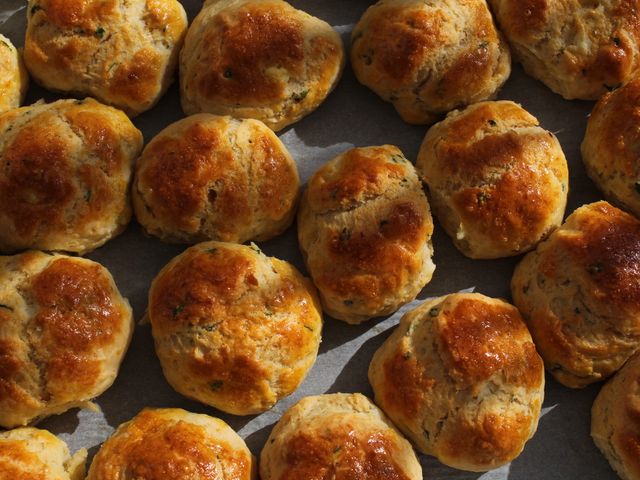
- The scones will spring up slightly and develop a pale golden crust.
+ Show details− Hide details
Ready when: Tops are golden brown; toothpick shows just a few moist crumbs
Tip: Do not overbake or the scones will be dry. Start checking at 16 minutes; oven temperatures vary.
Cool and serve
- Remove the scones from the oven and let them rest on the baking sheet for 5 minutes to set.
- Transfer to a cooling rack or serve warm.
- They are best eaten within a few hours of baking.
+ Show details− Hide details
Ready when: Scones are firm enough to move without breaking
Tip: Serving warm brings out the buttery, cheesy flavor. If they cool completely, warm them in a 300°F (150°C) oven for 3–4 minutes before serving.
Good to know
Tips
- Do not skip chilling the butter; cold butter is essential for flaky scones.
- Measure flour by weight (grams) or spoon it lightly into the measuring cup, then level off; scooping directly tightens the flour and makes dry scones.
- If your kitchen is very warm, chill the bowl and utensils before mixing to keep the dough cool.
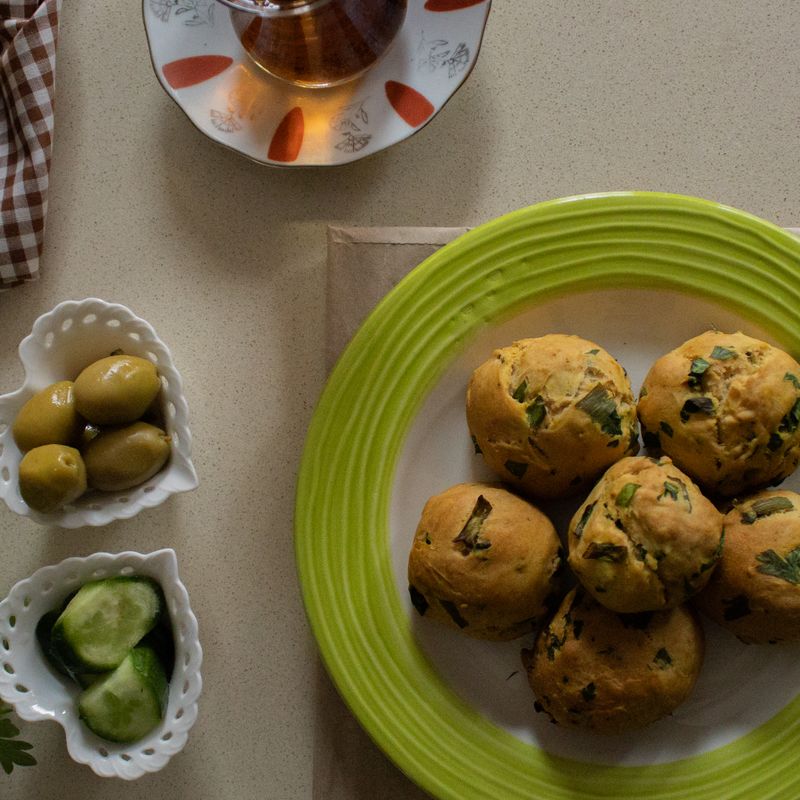
- These scones pair beautifully with hot soup (corn chowder, butternut squash soup), or serve alongside a salad with vinaigrette.
Make ahead
Prepare the dry mixture (flour, cornmeal, baking powder, salt, and cayenne) up to 2 days ahead in an airtight container. When ready to bake, cut in cold butter and cheddar, add buttermilk, and proceed. Unbaked scones can also be frozen on the baking sheet for up to 3 months; bake straight from frozen, adding 2–3 minutes to the baking time.
Storage & reheating
Room temperature: keep in an airtight container for up to 1 day. Refrigerator: store in an airtight container for up to 3 days; warm in a 300°F (150°C) oven for 3–4 minutes before serving. Freezer: wrap individually in plastic wrap and freeze in a freezer bag for up to 3 months; thaw at room temperature for 2–3 hours or warm from frozen at 300°F (150°C) for 8–10 minutes.
Substitutions
- sharp cheddar cheese → Aged Gouda or Gruyère cheese. Use the same weight; both melt beautifully and add a rich, slightly sweet note.
- buttermilk, cold → Plain Greek yogurt thinned with milk (1:1 ratio by volume). Whisk them together first. Yogurt creates a slightly tangier scone with a similar crumb.
- yellow cornmeal (polenta) → Fine polenta or masa harina (corn flour). Masa harina adds a subtle corn tortilla flavor; use the same amount.
- cayenne pepper → Smoked paprika or freshly cracked black pepper. Use ⅛ to ¼ teaspoon for a milder, less spicy kick.