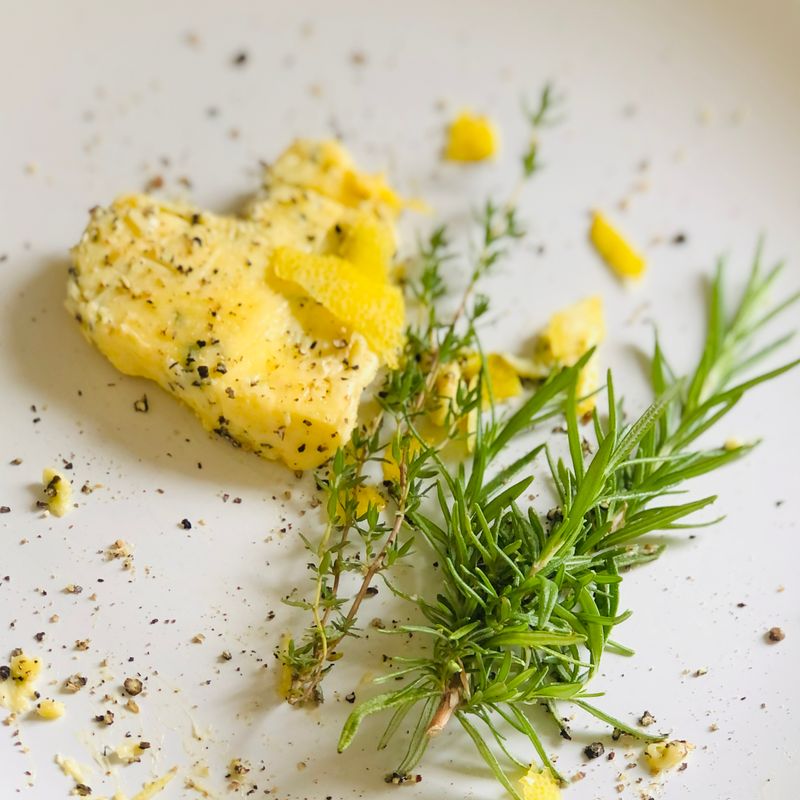
Herb and Cheese Buttermilk Biscuits
Tender, flaky biscuits studded with sharp cheddar and fragrant fresh herbs. The buttermilk creates a subtle tang that balances the cheese, while cold butter layers ensure a crumbly, tender crumb. Perfect warm from the oven with butter and jam, or split for breakfast sandwiches.
Steps
Before you start
- Preheat oven to 425°F (220°C)
- Cut butter into small cubes and chill in the freezer for 10 minutes
- Have all ingredients at room temperature except the butter
- Line a large baking sheet with parchment paper
Mix dry ingredients
- In a large mixing bowl, whisk together the all-purpose flour, baking powder, kosher salt, and freshly ground black pepper.
- Make sure the baking powder is evenly distributed throughout the flour to ensure consistent rise.
+ Show details− Hide details
Ready when: Mixture appears uniform and light
Tip: Sifting the flour and baking powder together ensures no lumps and more consistent biscuits
Cut in cold butter
- Add the cold butter cubes to the dry mixture.
- Using a pastry cutter, two knives, or your fingertips, work the butter into the flour until the mixture resembles coarse breadcrumbs with some pea-sized pieces of butter remaining.
- This is crucial for flaky layers.
- Do this quickly so the butter stays cold.
+ Show details− Hide details
Ready when: Mixture looks like coarse breadcrumbs with pea-sized butter pieces visible
Tip: Keep the butter cold and work quickly. If the mixture gets warm, refrigerate it for 5 minutes before continuing
Add cheese and herbs
- Gently fold in the finely grated sharp cheddar, chopped fresh thyme, chopped fresh chives, and chopped fresh parsley until evenly distributed throughout the mixture.
- Avoid overworking the dough.
+ Show details− Hide details
Ready when: Cheese and herbs evenly distributed, no visible dry flour pockets
Tip: If the cheese clumps, gently break it apart with your fingers before adding
Add buttermilk
- Pour the buttermilk over the mixture and gently fold it in using a wooden spoon or your hands, stirring just until the dough comes together.
- Do not overmix; the dough should look slightly shaggy and lumpy.
- Overworking develops gluten and makes tough biscuits.
+ Show details− Hide details
Ready when: Dough is shaggy but holds together, no dry flour visible
Tip: If the dough seems too dry, add 1 tablespoon more buttermilk at a time. It should be slightly wetter than bread dough
Shape and cut biscuits
- Turn the dough onto a lightly floured work surface and gently pat it into a 1-inch (2.5 cm) thick round, handling it as little as possible.
- Using a 2-inch (5 cm) round biscuit cutter dipped in flour, cut out biscuits with one clean downward motion without twisting.
- Gather scraps gently and re-pat to cut additional biscuits.
+ Show details− Hide details
Ready when: 12 cut biscuits arranged on the sheet
Tip: Twisting the cutter seals the edges and prevents biscuits from rising evenly; use a straight downward motion instead
Arrange and brush
- Place the biscuits on the prepared parchment-lined baking sheet, spacing them about 1 inch (2.5 cm) apart for even baking.
- Beat the large egg with 1 tablespoon water to make an egg wash, then brush the top of each biscuit lightly with the mixture for a golden-brown finish.
+ Show details− Hide details
Ready when: Each biscuit has a light, even coating of egg wash
Tip: Don't let egg wash drip down the sides or it will seal the edges and prevent rise
Bake until goldenOven 425°F / 220°C
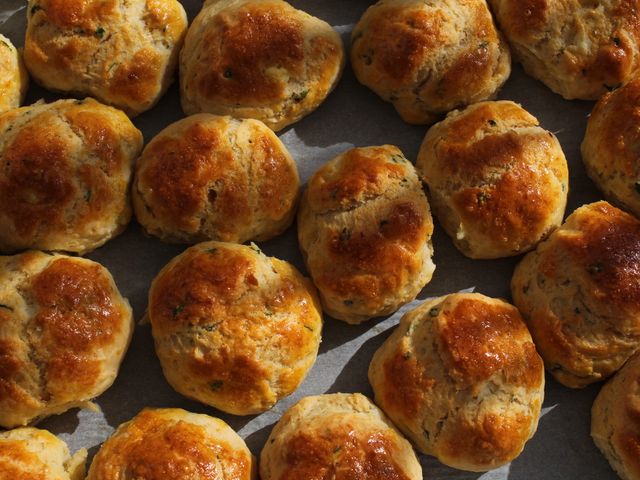
- Bake in the preheated 425°F (220°C) oven for 14 to 16 minutes, until the biscuits are risen and golden brown on the tops.
- The cheese will toast at the edges and add deep flavor.
- Remove from the oven and let cool on the sheet for 2 minutes before transferring to a wire rack.
+ Show details− Hide details
Ready when: Golden-brown tops, risen above the pan, fragrant aroma
Tip: Watch them closely toward the end; ovens vary. If the tops brown too quickly but the centers feel soft, tent loosely with foil and bake 2 more minutes
Good to know
Tips
- Keep all ingredients except buttermilk as cold as possible. A cold dough produces flakier biscuits because the butter creates distinct layers when it doesn't fully meld into the flour.
- Don't skip the buttermilk tang—it tenderizes the dough through acid and adds a subtle flavor that complements the cheese. Milk alone will work but produces slightly denser biscuits.
- These biscuits are best eaten fresh and warm, within a few hours of baking. The texture remains best on the day they are made.
- For extra cheesy biscuits, press a small pinch of extra grated cheddar on top of each biscuit just before baking.
Make ahead
Prepare the dough up to 2 hours ahead. Cover and refrigerate on the baking sheet. Bake directly from the fridge, adding 1–2 minutes to the bake time.
Storage & reheating
Room temperature in a covered container: up to 2 days. Refrigerator: up to 4 days. Freezer: up to 1 month (freeze baked biscuits in an airtight container). Reheat frozen biscuits in a 350°F (175°C) oven for 8–10 minutes, or wrap in foil to warm through gently.
Substitutions
- sharp cheddar cheese → Gruyère, Emmental, or smoked Gouda. Use the same amount. Any firm, flavorful cheese will work; avoid soft cheeses like brie
- fresh thyme → Fresh rosemary or sage. Use 1 tablespoon of either; these are more assertive so reduce the amount slightly if sensitive to strong herbal flavors
- buttermilk → Plain Greek yogurt thinned with milk (equal parts) or regular milk mixed with 1 tablespoon lemon juice or white vinegar, let sit 5 minutes. The tang is slightly less pronounced, but the biscuits will still be tender and flaky
- fresh_herbs → 1 teaspoon each of dried thyme, chives, and parsley. Use half the amount of fresh herbs called for. Add dried herbs at the same point in the recipe
More scones & biscuits
See all →


Find more like this
- Meal
- Breakfast
- Main ingredient
- Cheddar
- Method
- Oven
- Quick & Easy
- EasyMake Ahead