Sourdough Discard Herb and Cheese Scones
These savory British scones make wonderful use of sourdough discard while delivering a tender, flaky crumb studded with sharp cheddar and fresh herbs. Rosemary, thyme, and chives weave through the scones, creating an aromatic bread that's perfect served warm with butter and jam, or alongside soup and salad. The discard contributes subtle tang and helps develop the characteristic layered texture that makes scones so irresistible. Ready in under an hour, they're ideal for a leisurely breakfast or afternoon treat.
Steps
Before you start
- Ensure sourdough discard is active and bubbly, at room temperature
- Cut cold unsalted butter into ½-inch (1 cm) cubes and chill in the freezer for 15 minutes
- Preheat your oven to 400°F (200°C)
- Line a large baking sheet with parchment paper
Mix dry ingredients
- In a large bowl, whisk together the all-purpose flour, baking powder, salt, and black pepper until evenly combined and no lumps remain.
- This ensures the leavening agent is distributed evenly throughout the dough.
+ Show details− Hide details
Ready when: Dry ingredients are uniformly combined with no visible lumps
Tip: If the flour feels lumpy, sift it before whisking to ensure even baking powder distribution
Cut in cold butter
- Add the cold butter cubes to the flour mixture.
- Using your fingertips or a pastry cutter, work the butter into the flour by rubbing and cutting until the mixture resembles coarse breadcrumbs with some pea-sized pieces of butter still visible throughout.
- This should take 3–5 minutes.
- Work quickly and keep your hands cool to prevent the butter from softening.
+ Show details− Hide details
Ready when: Mixture resembles coarse breadcrumbs with visible pea-sized butter pieces remaining
Tip: If your kitchen is warm, chill your hands under cold water or chill the bowl in the freezer for a few minutes; warm hands melt the butter, which prevents the flaky layers from forming
Fold in cheese and herbs
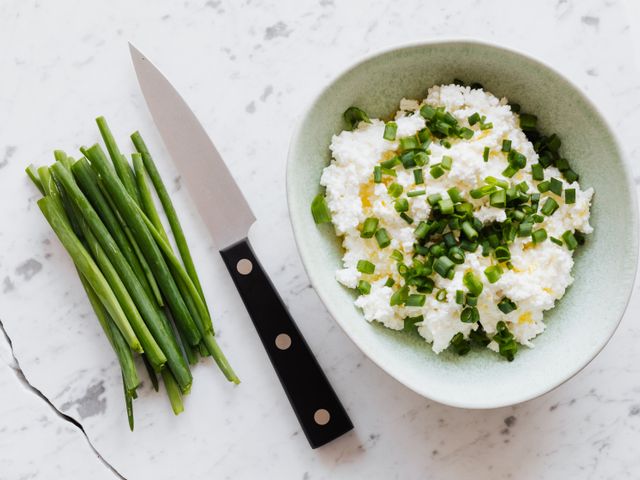
- Gently fold in the shredded cheddar cheese, rosemary, thyme, and chives using a rubber spatula or wooden spoon, turning the bowl and folding until the cheese and herbs are evenly distributed throughout the mixture.
+ Show details− Hide details
Ready when: Cheese and herbs are evenly distributed throughout the mixture
Tip: Fold gently to keep the butter pieces as intact as possible; this preserves the flaky texture of the finished scones
Incorporate sourdough discard
- Make a well in the center of the mixture.
- Add the sourdough discard and gently fold it into the dry ingredients using a rubber spatula or your hand, turning the bowl and folding until the discard is just incorporated and no dry flour is visible.
- The dough will look shaggy and slightly moist but should hold together.
+ Show details− Hide details
Ready when: Discard is evenly incorporated, no dry flour visible, dough looks shaggy but cohesive
Tip: Stop folding as soon as the ingredients come together—overmixing develops gluten and creates a tough, dense scone
Shape into scones
- Lightly flour your work surface.
- Turn the dough out onto it and gently gather it together using a bench scraper or your hands.
- Pat the dough into an 8-inch (20 cm) round, about 1 to 1½ inches (2.5 to 4 cm) thick.
- Using a sharp knife or bench scraper, cut the round into 8 equal wedges like pizza slices.
- Transfer the wedges to the prepared baking sheet, spacing them 2 inches (5 cm) apart.
+ Show details− Hide details
Ready when: 8 evenly sized wedge-shaped scones arranged on the baking sheet with 2 inches between each
Tip: Cut straight down with a sharp knife without twisting—twisting seals the edges and prevents the scones from rising into distinct layers
Apply egg wash
- In a small bowl, whisk together the egg and water until well combined.
- Brush the top of each scone generously with the egg wash.
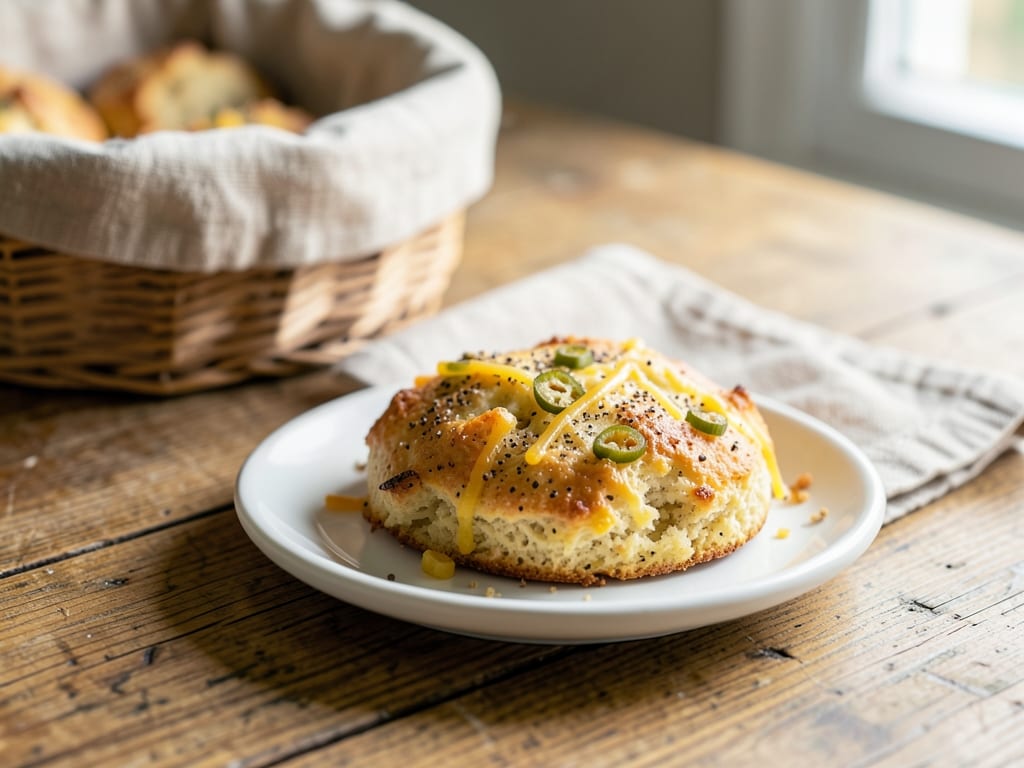
- If desired, sprinkle the top of each scone with a pinch of extra shredded cheddar or a small pinch of fresh chopped herbs.
+ Show details− Hide details
Ready when: All scone tops are evenly coated with glossy egg wash
Tip: Use a pastry brush for even coverage; a light hand with additional toppings prevents them from burning before the scone is cooked through
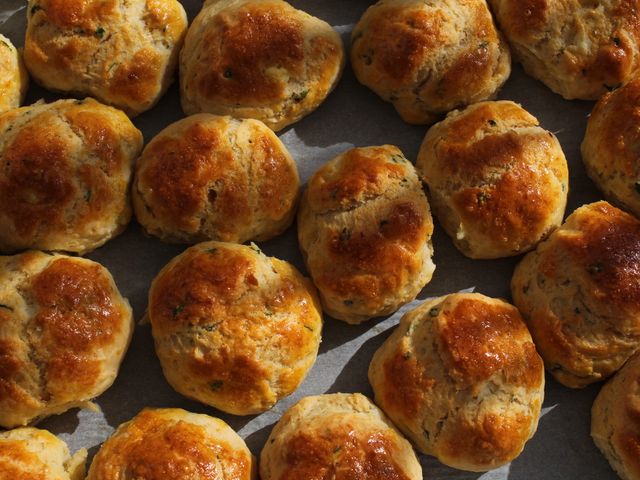
Bake until goldenOven 400°F / 205°C
- Place the baking sheet on the middle rack of the preheated 400°F (200°C) oven.
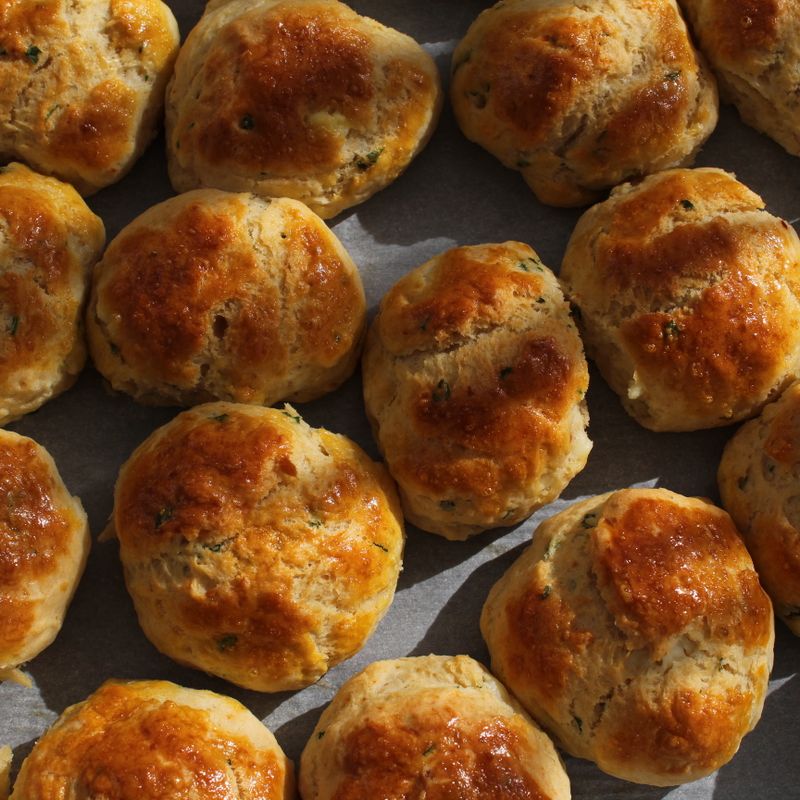
- Bake for 18–22 minutes, until the tops are deep golden brown and a wooden skewer or cake tester inserted into the center of the largest scone comes out clean with no doughy crumbs.
- The scones should feel springy when gently pressed.
+ Show details− Hide details
Ready when: Tops are deep golden brown, skewer comes out clean, scones feel springy when pressed
Tip: Open the oven door only once after 18 minutes to check for color; opening prematurely can cause the scones to fall or bake unevenly
Cool and serve
- Remove the scones from the oven and let them cool on the baking sheet for 5 minutes, then transfer them to a wire rack or serve plate.
- These scones are best served warm, preferably within an hour of baking.
- They can be split horizontally and spread with butter, jam, whipped cream, or smoked salmon and crème fraîche.
+ Show details− Hide details
Ready when: Scones have cooled for 5 minutes and can be safely transferred
Tip: Warm scones are most flavorful and have the best texture; if they cool completely, reheat in a 350°F (175°C) toaster oven for 5–7 minutes
Good to know
Tips
- The secret to light, flaky scones is keeping everything cold (especially the butter) and handling the dough minimally. Mix just until the ingredients come together—overmixing will toughen the scones.
- Use sourdough discard that's active and bubbly, ideally at peak fermentation (doubled and bubbly but not collapsed). If your discard is thick, whisk it briefly to loosen it before adding to create a more cohesive dough.
- These savory scones are wonderful split horizontally and spread with butter and jam, or served alongside salad and cheese for a simple lunch. They're also excellent topped with smoked salmon and crème fraîche for an elegant brunch.
- For maximum flakiness, you can chill the shaped scones on the baking sheet for 30 minutes before baking; this slows their spread and creates more defined layers. There's no need to rest if you're short on time.
Make ahead
Shape unbaked scones, wrap tightly in plastic wrap, and freeze for up to 1 month. Bake directly from frozen, adding 2–3 minutes to the bake time.
Storage & reheating
Store cooled scones in an airtight container at room temperature for up to 2 days. Refrigerate for up to 4 days. Freeze for up to 3 months. To reheat: place in a 350°F (175°C) toaster oven for 5–7 minutes until warmed through. Fresh, warm scones are best within 2 hours of baking.
Substitutions
- sharp cheddar cheese → Gruyère or Emmental cheese. Use the same 1 cup shredded; these cheeses add a nuttier flavor while maintaining the savory profile
- fresh rosemary → Dried rosemary and thyme (1 tbsp total, split between them). Mix dried herbs into the dry flour before adding the butter; use half the amount as dried herbs are more concentrated
- sourdough discard → Buttermilk or sour cream. Replace with the same 1/2 cup (120ml); the scones will be tangier and slightly more tender
- sourdough discard → Heavy cream mixed with milk (1/4 cup of each). Substitute for the 1/2 cup discard for a richer, less tangy scone with a slightly softer crumb