Cheddar Chive Butter Biscuits
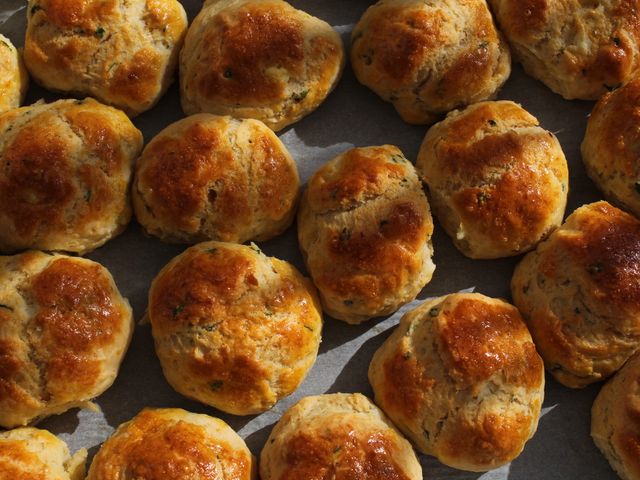
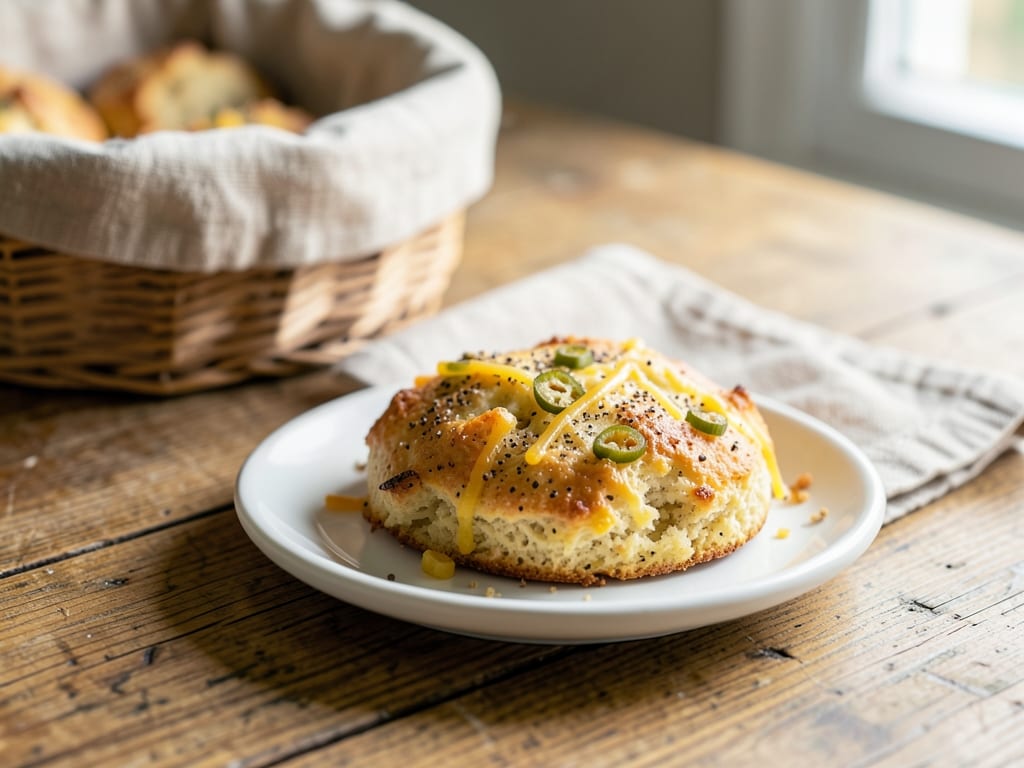
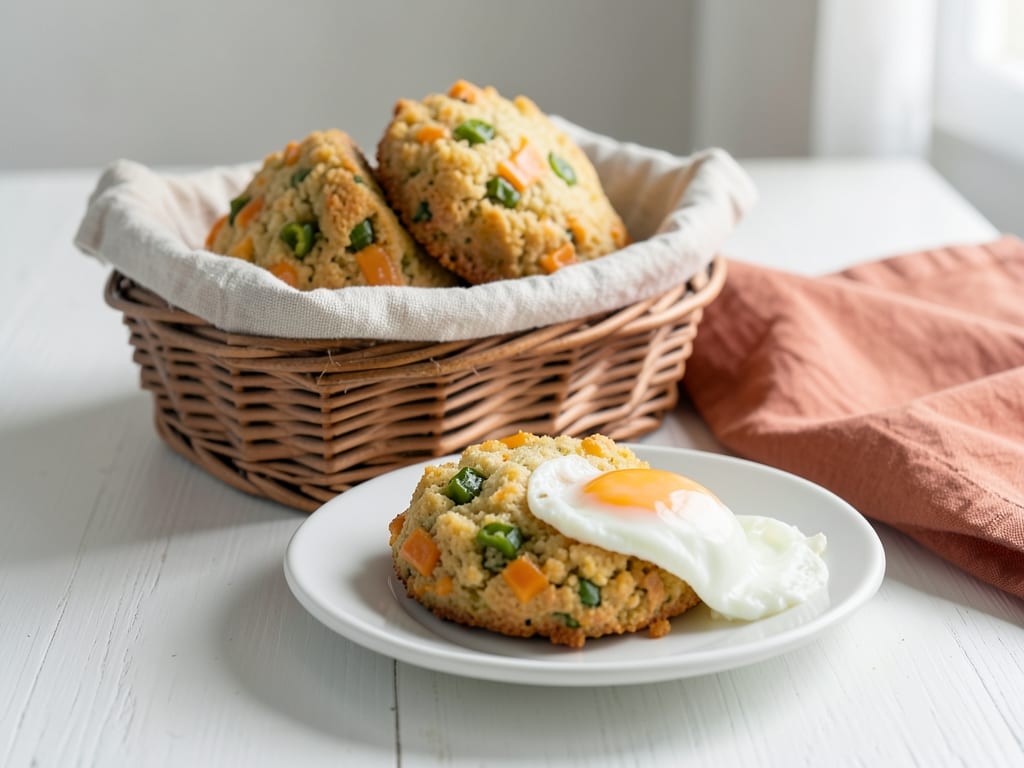
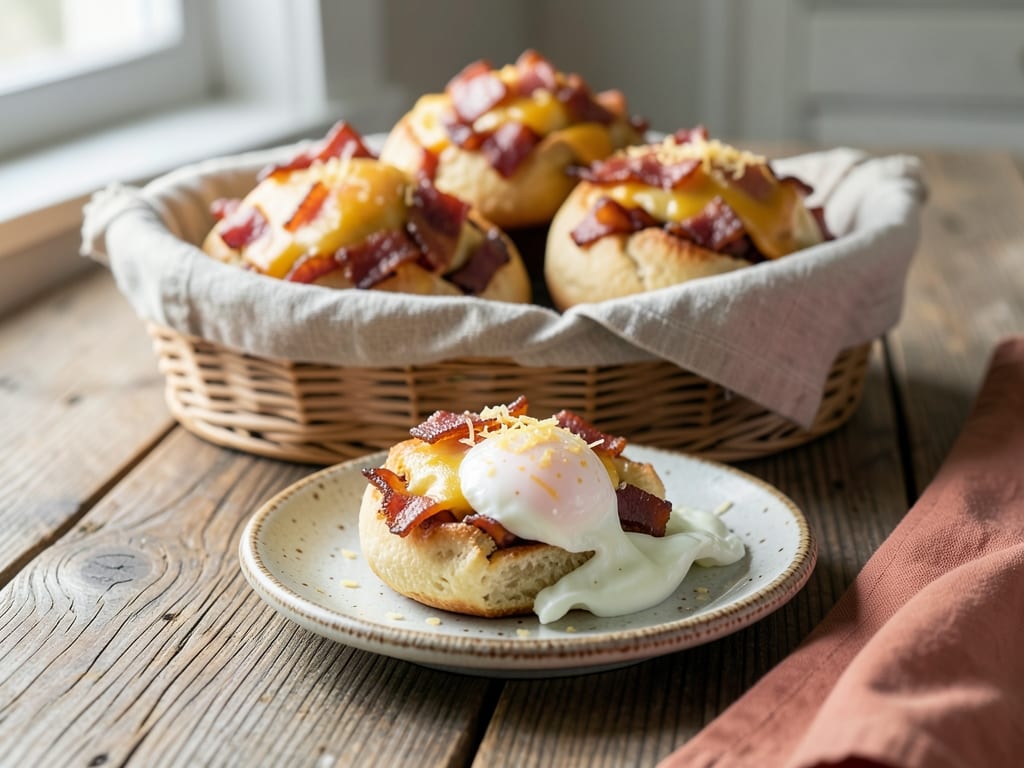
Tender, buttery biscuits studded with sharp cheddar and bright chives. These savory biscuits have a crispy exterior and flaky interior—perfect warm from the oven with butter, alongside soup or stew, or split for sandwiches. The key is keeping all ingredients cold and handling the dough minimally to achieve height and tenderness.
Steps
Before you start
- Chill all ingredients (flour, butter, milk, bowl) for at least 30 minutes before you begin.
- Preheat your oven to 425°F (220°C) on the rack positioned in the upper third of the oven.
- Line a baking sheet with parchment paper or a silicone mat.
- Have a 2-inch (5 cm) round cutter or biscuit cutter ready.
Mix dry ingredients
- In a chilled mixing bowl, whisk together 2 cups (240 g) flour, 2 teaspoons (10 g) baking powder, 0.75 teaspoon (4.5 g) kosher salt, and 0.25 teaspoon (0.5 g) black pepper.
- Make sure no lumps remain.
+ Show details− Hide details
Ready when: Dry ingredients are evenly combined
Cut in cold butter
- Add 6 tablespoons (85 g) cold butter cubes to the dry mixture.
- Using a pastry cutter, two knives in a cross-cutting motion, or your fingertips, work the butter into the flour until the mixture resembles coarse breadcrumbs with pea-sized butter pieces visible.
- Do not overmix—the butter must remain in distinct pieces for flaky layers.
+ Show details− Hide details
Ready when: Mixture looks like coarse breadcrumbs with pea-sized bits of butter visible
Tip: Keep your hands cold and work quickly. If the mixture gets warm, refrigerate it for 5 minutes before continuing.
Add cheese and chives
- Fold in 1 cup (115 g) finely grated sharp cheddar and 0.33 cup (20 g) finely chopped fresh chives with a few gentle strokes.
- The mixture should remain loose and crumbly—do not overmix.
+ Show details− Hide details
Ready when: Cheese and chives are evenly scattered throughout
Add milk and form dough
- Pour 0.75 cup (180 ml) cold milk into the mixture.
- Using a fork or wooden spoon, gently stir until the dry ingredients are just moistened and a shaggy, wet dough forms.
- You may not need all the milk—stop adding when the dough comes together.
- Do not knead or overmix; lumps and streaks are fine.
+ Show details− Hide details
Ready when: Dough is shaggy and wet, with no dry flour remaining in the bowl
Tip: If the dough is too dry, add milk 1 tablespoon at a time. A slightly wetter dough yields more tender biscuits than one that is too dry.
Turn out and shape
- Turn the dough onto a lightly floured work surface and gently form it into a rough disk about 1 inch (2.5 cm) thick, being careful not to overwork it.
- Using a 2-inch (5 cm) round cutter, cut out biscuits.
- Press straight down and lift straight up—do not twist, as that seals the edges and prevents rise.
- Place biscuits 2 inches (5 cm) apart on a parchment-lined baking sheet.
- Re-gather scraps, gently press into a disk, and cut more biscuits until dough is used.
+ Show details− Hide details
Ready when: 12 biscuits are cut and arranged on the baking sheet
Tip: If the dough becomes warm and sticky, chill it for 5 minutes before cutting. The scraps yield denser biscuits, so handle them minimally.
Brush and bakeOven 425°F / 220°C
- Brush the top of each biscuit lightly with 1 tablespoon (15 ml) cold milk.
- Place the baking sheet on the upper third oven rack and bake at 425°F (220°C) for 12–14 minutes, until the tops are light golden brown and a skewer inserted into the center comes out clean.
+ Show details− Hide details
Ready when: Tops are light golden brown; skewer in the center comes out clean
Tip: The upper rack ensures the bottoms don't brown too quickly. Rotate the pan halfway through baking if your oven has hot spots.
Cool and serve
- Remove the baking sheet from the oven and let the biscuits rest on the pan for 5 minutes.
- Transfer to a wire rack or serve warm from the pan.
- These are best enjoyed fresh and still warm, with butter and jam or alongside soup.
+ Show details− Hide details
Ready when: Biscuits are set and can be lifted without crumbling
Good to know
Tips
- Keep all ingredients—especially the mixing bowl, flour, butter, and milk—as cold as possible. Cold butter is essential for flaky layers. If your kitchen is warm, chill your mixing bowl in the freezer for 10 minutes before starting.
- Do not knead or overwork the dough. Each extra mix breaks down the butter and produces tough, dense biscuits. Mix just until the dry ingredients are moistened.
- Press the cutter straight down and straight up without twisting. Twisting seals the dough edges and prevents the biscuits from rising properly.
- For even baking, arrange biscuits so they just barely touch on the baking sheet. This allows them to rise up rather than out, yielding taller biscuits.
Make ahead
Prepare the dough and cut the biscuits up to 8 hours ahead. Place on the baking sheet, cover loosely with plastic wrap, and refrigerate. Bake directly from the fridge, adding 2–3 minutes to the bake time. You can also freeze cut biscuits for up to 3 months; bake straight from the freezer, adding 3–4 minutes to the bake time.
Storage & reheating
Store cooled biscuits in an airtight container at room temperature for up to 2 days. Reheat wrapped in foil at 325°F (163°C) for 5–8 minutes until warm. Freeze baked biscuits in a freezer bag for up to 3 months; thaw and reheat as directed above.
Substitutions
- sharp cheddar cheese → Gruyère, Comté, or aged Gouda. Use the same amount. Gruyère adds a nuttier flavor; Gouda brings a hint of smokiness. Avoid milder cheeses like Colby.
- fresh chives → Fresh green onion tops, thinly sliced, or 1 tablespoon dried chives (use half the amount). Green onion tops add slight onion bite. Dried chives are convenient but less vibrant—rehydrate briefly in water if using them.
- whole milk → Buttermilk or heavy cream. Buttermilk adds tang and aids rise; use the same amount. Heavy cream yields richer, thicker biscuits—use slightly less, starting with 0.5 cup (120 ml).
- baking powder → 1.5 teaspoons baking powder + 0.25 teaspoon baking soda, plus 1 tablespoon lemon juice stirred into the milk. This substitution works if using buttermilk. The acid-base reaction enhances rise and tang.