Italian Schiacciata all'Uva (Grape Focaccia)
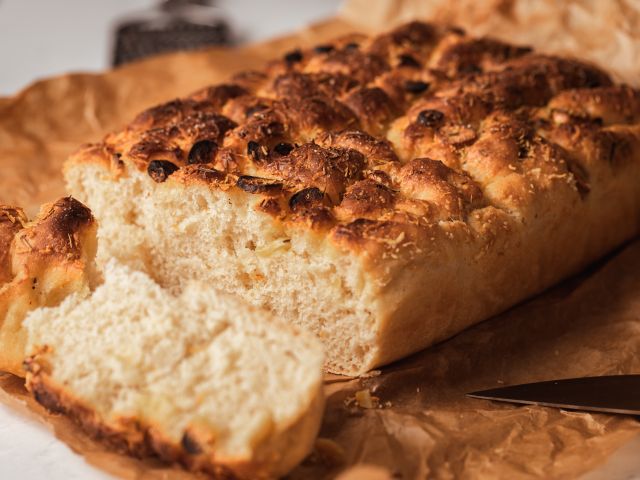
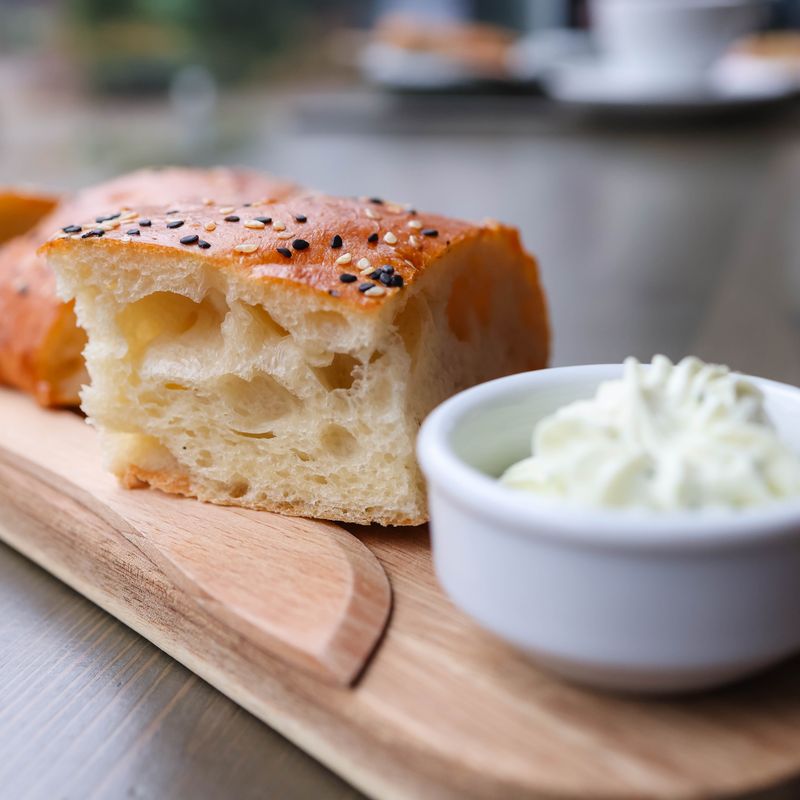
A rustic Tuscan sweet focaccia studded with plump grapes and brushed with fruity olive oil and coarse sugar. The dough is soft and pillowy with a slightly crisp crust, while the grapes burst during baking to create pockets of jammy sweetness. Perfect warm from the oven with coffee, or sliced the next day for breakfast.
- Prep
- 30 min
- Cook
- 30 min
- Wait
- 2 hr
- Total
- 3 hr
- Makes
- 1 focaccia (8 pieces)
Steps
Before you start
- Warm the water to 110°F (43°C)—test it on your wrist; it should feel comfortably warm, not hot
- Preheat the oven to 425°F (220°C) about 15 minutes before baking
- Pat the grapes dry with a clean kitchen towel so they don't weep excess water into the dough
Mix the dough
- Pour the warm water into a large bowl.
- Sprinkle the yeast over the water and let sit for 1 minute, then stir gently until the yeast dissolves.
- Add the salt and stir.
- Add the flour 1 cup at a time, stirring with a wooden spoon after each addition, until a shaggy, sticky dough forms.
- The dough should be quite wet and loose—more like a thick pancake batter than a traditional bread dough.
+ Show details− Hide details
Ready when: All flour is moistened and dough is shaggy and sticky
Tip: Don't knead this dough—high-hydration focaccia dough gets its texture from lamination and stretch-and-fold, not traditional kneading. Resist the urge to add more flour.
Stretch and fold the dough
- Drizzle 1 tablespoon of olive oil over the dough.
- Using an oiled bench scraper or your hand, fold the dough over itself 4–5 times, rotating the bowl a quarter turn between folds.
- The dough will be sticky and loose; this is correct.
- Let the dough rest at room temperature for 30 minutes uncovered.
+ Show details− Hide details
Ready when: Dough looks slightly puffier and more cohesive
Tip: If your kitchen is cold, cover the bowl loosely with a damp cloth to keep the dough from skinning over.
Oil the pan and press dough
- Drizzle 1 tablespoon of olive oil into a 9×13-inch (23×33 cm) baking pan and rub it all over the bottom and corners.
- Turn the dough out onto the oiled pan (it will still be very sticky).
- Using oiled fingers, gently press and stretch the dough toward the edges of the pan, working slowly and allowing it to relax as you go.
- Press gently to avoid tearing.
- The dough should fill the pan in an uneven layer, roughly ½ inch thick.
+ Show details− Hide details
Ready when: Dough fills the pan from edge to edge
Tip: Let the dough rest for 5–10 minutes between pressing efforts if it springs back; it will be easier to shape when relaxed.
Final rise
- Cover the pan loosely with a clean kitchen towel or plastic wrap.
- Let the dough rise at room temperature until it is puffy and springs back slowly when gently poked, about 1 hour.
- The dough should increase noticeably in volume but not double.
+ Show details− Hide details
Ready when: Dough is visibly puffed and bounces back slowly when poked with a finger
Tip: Rising time depends on your kitchen temperature; warmer kitchens will rise faster. If your kitchen is cold, place the pan in a turned-off oven with the light on.
Heat the ovenOven 425°F / 220°C
- Preheat the oven to 425°F (220°C).
- The oven should be fully heated by the time your dough has finished rising.
+ Show details− Hide details
Ready when: Oven is preheated
Dimple and add grapes
- Using the tips of your fingers, gently press all over the risen dough to create shallow dimples, but do not deflate it completely—you want to keep some height.
- Working quickly and methodically, push the halved red and white grapes firmly into the dough, distributing them evenly across the surface.
- You should use all the grapes; they should be partially embedded so they don't roll off during baking.
+ Show details− Hide details
Ready when: Grapes are pressed into the dough and distributed evenly
Tip: Press the grapes in firmly; grapes that sit loosely on top will not caramelize well and may roll off. Wet fingers help the grapes stay in place.
Brush and sugar
- Drizzle the remaining 1 tablespoon of olive oil evenly over the focaccia, letting it pool slightly in the dimples.
- Sprinkle the coarse sugar evenly across the entire surface.
- The sugar will catch the heat and create a sweet, crispy crust.
+ Show details− Hide details
Ready when: Oil and sugar are distributed evenly
Tip: Use coarse sugar (sometimes called sanding sugar) rather than granulated sugar; it won't dissolve into the oil and will give you that signature crystalline crunch.
BakeOven 425°F / 220°C
- Transfer the pan to the preheated 425°F (220°C) oven.
- Bake for 25–30 minutes, until the top is deep golden brown and the grapes have collapsed and caramelized slightly.
- The bottom should also be golden and crisp when lifted with a spatula.
- The focaccia will smell sweet and yeasty.
+ Show details− Hide details
Ready when: Top is deep golden brown, grapes are soft and caramelized, bottom is crispy and golden
Tip: If the top is browning too quickly before the bottom crisps, reduce oven heat to 400°F (200°C) for the final 10 minutes.
Cool and serve
- Remove the focaccia from the oven and let it cool in the pan for 5 minutes, then turn it out onto a wire rack or clean work surface to cool completely, about 20 minutes.
- The focaccia is best eaten warm or at room temperature on the day it's made, but is still delicious the next day.
- Cut into 8 pieces and serve.
+ Show details− Hide details
Ready when: Focaccia is no longer steaming and is easy to handle
Tip: Don't skip the cooling step—the structure sets as it cools, making it easier to cut and serving you a better texture.
Good to know
Tips
- Pat your grapes completely dry before halving them; excess moisture will release into the dough during baking and prevent the bottom crust from crisping. A clean kitchen towel works best.
- This dough is very wet by design—it produces the characteristic open, tender crumb of focaccia. Resist the urge to add flour; trust the process and use oiled hands instead.
- If you can find them, use a mix of red and white seedless grapes for the most authentic appearance and a balance of tart and sweet flavors.
- Schiacciata all'Uva is a Florentine specialty traditionally made in September and October when grapes are at their peak. This recipe celebrates that seasonal, rustic spirit.
Make ahead
The dough can be made through the end of step 3 (pressing into the pan), then covered and refrigerated for up to 16 hours. Let it come to room temperature and rise for 1–1.5 hours before dimpling, sugaring, and baking. Alternatively, the finished focaccia can be baked a full day ahead and stored in an airtight container at room temperature.
Storage & reheating
Store the cooled focaccia in an airtight container at room temperature for up to 3 days. To reheat, wrap loosely in foil and warm in a 300°F (150°C) oven for 10–15 minutes until the crust is crispy again. The focaccia does not freeze well due to the moisture from the grapes.
Substitutions
- red grapes (seedless) → black or purple seedless grapes. Black grapes will darken more during baking and create a slightly deeper, more molasses-like sweetness. Use the same weight and adjust white grapes if desired for color contrast.
- coarse sugar → turbinado sugar or demerara sugar. Both work excellently for the same crystalline crust. Muscovado sugar will add a molasses note but may brown more quickly.
- bread flour → all-purpose flour. All-purpose flour will produce a slightly less chewy crumb but is acceptable. You may need 15–20 ml more water since all-purpose has slightly less protein.
- extra-virgin olive oil → light or pure olive oil. Extra-virgin oil has the best flavor, but a lighter-colored olive oil will work if you prefer a milder taste or are worried about smoke point during baking.