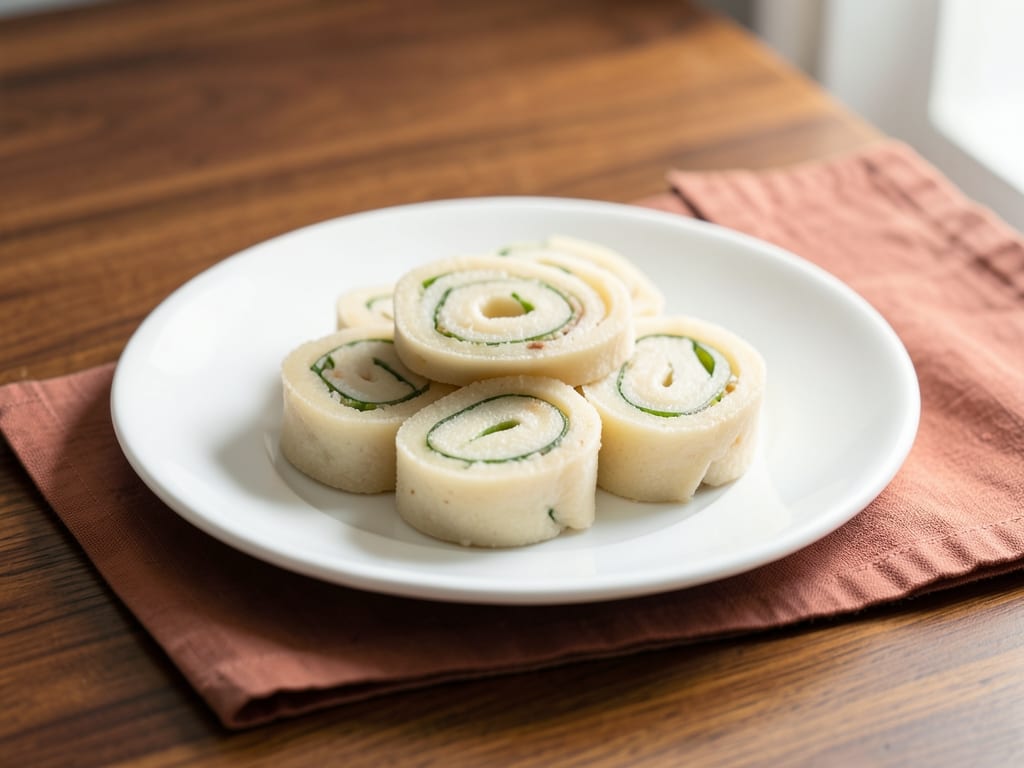
Hua Juan Steamed Flower Rolls
Hua juan (花卷), or steamed flower rolls, are a beloved Chinese classic with a soft, pillowy texture and delicate spiral shape. These rolls are filled with aromatic scallions and sesame oil, creating an irresistible savory side dish. When sliced, the spiral cross-section resembles a blooming flower, which is how they got their poetic name. They're perfect alongside congee, clear soup, or as part of a dim sum spread. The dough is tender and light from steaming, with a slight sheen and delicate flavor that lets the scallion-sesame filling shine through.
Steps
Before you start
- Prepare warm water at 90–100°F (32–38°C)—this temperature is crucial for proper rise
- Cut or tear 8 squares of parchment paper, each about 2×2 inches (5×5 cm), for the rolls to sit on
- Read through the rolling and coiling instructions before starting so you understand the shaping technique
- Have your steamer basket and pot ready; you'll begin heating water during the dough's first rise
Mix and knead dough
- In a large bowl, combine flour, salt, and sugar.
- Add the warm water and vegetable oil, stirring until a shaggy dough forms.
- Turn the dough out onto a lightly oiled work surface and knead for 8–10 minutes, using the heel of your hand to push and fold the dough.
- It should become smooth, elastic, and slightly sticky (softer than bread dough but not wet).
- If it's too dry, add water 1 teaspoon at a time; if it's too wet, dust with a bit more flour.
+ Show details− Hide details
Ready when: Dough is smooth, elastic, and slightly sticky
Tip: The water temperature is crucial—too hot kills the yeast, too cold slows rising. Use a thermometer if you have one.
Let dough rise
- Lightly oil the same bowl, return the dough, and cover with a damp kitchen towel or plastic wrap.
- Let it rise at room temperature (68–72°F / 20–22°C) for 1 to 1.5 hours until it has roughly doubled in volume.
- Meanwhile, set up your steamer: fill a large pot with 2 inches (5 cm) of water, place the steamer basket on top (it should sit above the water line), and cover.
- When you're ready to proceed with rolling, bring the water to a rolling boil.
+ Show details− Hide details
Ready when: Dough has roughly doubled
Tip: Don't skip this rise; it develops structure and creates light, fluffy rolls.
Divide dough into portions
- Gently punch down the dough to release excess gas.
- Divide it into 8 equal pieces (about 60 g each).
- Roll each piece between your palms into a smooth ball, then set it on a parchment paper square.
- Cover all the balls loosely with a damp towel and let them rest for 10 minutes.
- Dividing into equal pieces ensures all rolls finish cooking at the same time.
+ Show details− Hide details
Ready when: All balls are smooth and equal in size
Tip: Use a kitchen scale if possible to divide them evenly.
Roll, fill, and seal
- Working with one ball at a time, place it on a lightly oiled work surface.
- Using a rolling pin, roll it out into a thin rectangle about 1/8 inch (3 mm) thick and roughly 6×9 inches (15×23 cm).
- If the dough springs back, let it rest 1–2 minutes and roll again.
- Brush the surface evenly with about 1 teaspoon of sesame oil, then sprinkle with about 15 g of the sliced scallions and a small pinch of salt.
- Starting from a long edge (the 9-inch side), roll the dough up tightly toward you, pressing gently as you go to seal out air pockets.
- Pinch the seam closed.
- Repeat with the remaining balls.
+ Show details− Hide details
Ready when: All rolls are tightly sealed with no obvious seams
Tip: Roll thin (about 1/8 inch) for light, fluffy rolls when steamed. Don't overdo the filling, or it may leak during steaming.
Coil and arrange rolls
- Take one filled log and coil it tightly into a spiral shape, starting at one end and wrapping it round and round, tucking the end underneath so it doesn't unravel.
- Place it on a parchment square.
- Repeat with the remaining logs.
- Arrange the coils on their parchment squares in the steamer basket, leaving about 1 inch (2.5 cm) of space between each one so they can expand without sticking together.
+ Show details− Hide details
Ready when: All rolls are neatly coiled and spaced evenly
Tip: The parchment keeps them from sticking to the basket and makes removal easy.
Rest rolls before steaming
- Cover the steamer basket with the damp towel and let the coiled rolls rest for 20–30 minutes at room temperature.
- They will puff slightly as the dough relaxes.
- If your steamer water is not yet at a rolling boil, bring it to a full boil now so the rolls begin steaming immediately when you place the basket on top.
+ Show details− Hide details
Ready when: Rolls are visibly puffier than when arranged
Tip: Don't overproof; if the rolls wait too long, they may become overly sticky. Also ensure your boiling water doesn't touch the bottom of the rolls.
Steam the rolls
- Place the steamer basket over the boiling water and cover tightly.
- Steam on medium-high heat (maintaining a steady steam) for 15–18 minutes.
- The rolls are done when they are noticeably fluffy, pale, and springy to the touch; the dough surface should no longer look wet or shiny.
- Carefully remove the basket from the heat (use tongs or thick gloves, as the steam is very hot) and let the rolls cool for 1–2 minutes before serving.
- If steaming in batches, keep the cooked rolls covered with a damp towel.
+ Show details− Hide details
Ready when: Rolls are fluffy, springy, and no longer damp; dough springs back when lightly pressed
Tip: Keep the lid closed during steaming—lifting it releases steam and adds cooking time. Avoid opening the basket until the full time has passed.
Good to know
Tips
- Warm water at the correct temperature (90–100°F / 32–38°C) is non-negotiable. Use a thermometer if you don't have a good feel for it; water that is too hot will kill the yeast, and water that is too cold won't activate it properly.
- Don't rush the rolling step. If the dough springs back, let it rest for 1–2 minutes before continuing; this prevents the gluten from tearing and creates a more even texture.
- Fresh sesame oil is essential. Old sesame oil can taste rancid and ruin the delicate flavor of the rolls. Buy from a store with good turnover and store in a cool, dark place.
- The key to fluffy rolls is proper steaming technique: ensure the water is at a rolling boil, keep the lid on throughout cooking, and don't lift it to peek until the time is nearly up.
Make ahead
The dough can be made up to 1 day ahead, covered, and refrigerated. Bring it to room temperature (about 1 hour) before rolling. Shaped coils can be frozen on a baking sheet, then transferred to a freezer bag and stored for up to 1 month. Steam directly from frozen, adding 5–7 minutes to the cooking time (no need to thaw).
Storage & reheating
Room temperature (loosely covered): 1–2 days. Refrigerator (in an airtight container): 4–5 days; reheat by steaming for 5 minutes over boiling water. Freezer (in an airtight container): up to 1 month; reheat by steaming for 8–10 minutes from frozen. Do not microwave, as it can make the rolls tough and rubbery.
Substitutions
- sesame oil → neutral vegetable oil or peanut oil. The rolls will be milder and less aromatic, but the technique remains the same. Avoid olive oil, which is too strong.
- scallions (green onions) → Chinese chives (jiu cai), garlic chives, or regular chives. These offer a more delicate or pungent flavor. Adjust amount to taste.
- all-purpose flour → bread flour or cake flour. Bread flour will create slightly chewier rolls; cake flour will make them more tender. Both work, though all-purpose is ideal.
- warm water (90–100°F / 32–38°C) → warm milk or a mix of milk and water. This adds richness and a subtle sweetness; use the same volume.
More rolls & buns
See all →
Find more like this
- Meal
- Breakfast
- Cuisine
- Chinese
- Method
- Stovetop
- Quick & Easy
- 5 Ingredients or Less