Spanish Piperade with Bell Peppers and Jamón
A rustic Spanish egg dish where sweet bell peppers and tomatoes simmer into a soft, jammy sauce, finished with jamón Ibérico and eggs cooked gently until the whites set while the yolks remain runny. Piperade is Basque Country comfort food at its finest—simple, deeply flavored, and perfectly suited to breakfast, lunch, or a light dinner.
- Prep
- 15 min
- Cook
- 35 min
- Total
- 50 min
- Makes
- 4 servings (one egg per person)
Steps
Before you start
- Use fresh ripe tomatoes if in season; canned San Marzano tomatoes work beautifully year-round
- Have all ingredients prepped and within reach before you start cooking
- Eggs cook quickly once added, so be ready to watch closely in the final step
Sauté onion and peppers
- Heat the olive oil in a large 12-inch (30 cm) skillet over medium heat.
- Add the sliced onion and cook gently, stirring often, for 3–4 minutes until it begins to soften and turn translucent.
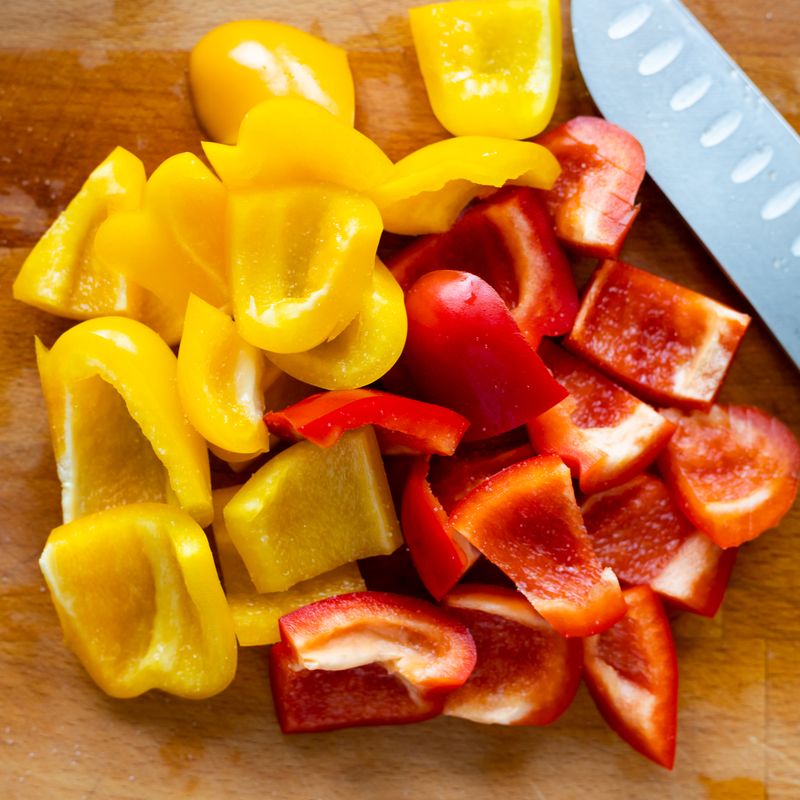
- Add the red and yellow bell pepper strips and continue cooking, stirring occasionally, for 8–10 minutes.
- The peppers should soften and begin to collapse slightly; they'll release their natural sweetness as they cook.
+ Show details− Hide details
Ready when: Peppers are tender and beginning to soften at the edges
Tip: Don't rush this step—slow cooking brings out the peppers' sweetness and creates the foundation for the sauce.
Add garlic and tomato paste
- Stir in the minced garlic and cook for 1 minute until fragrant.
- Add the tomato paste and stir continuously for 1–2 minutes, coating all the peppers and onion.
- The paste will darken slightly and caramelize lightly at the pan edges, deepening the flavor.
+ Show details− Hide details
Ready when: Tomato paste is well distributed and slightly caramelized at pan edges
Tip: Cooking the tomato paste briefly concentrates its flavor and prevents raw tomato-paste taste in the finished dish.
Add tomatoes and seasonings
- Pour in the tomatoes (fresh or canned), stirring well to combine.
- Add the Spanish smoked paprika, bay leaf, and thyme sprigs.
- Stir until evenly combined.
- The mixture will be slightly loose at this point.
+ Show details− Hide details
Ready when: All ingredients are evenly distributed and the pan is simmering gently
Simmer the sauce
- Reduce heat to medium-low and simmer uncovered for 12–15 minutes, stirring occasionally.
- The sauce will thicken as the tomatoes break down and the liquid reduces by about one-third.
- You should see small bubbles breaking the surface consistently.
- Taste and season with salt and freshly ground black pepper.
+ Show details− Hide details
Ready when: Sauce has thickened noticeably and coats the back of a spoon; peppers are very soft
Tip: If your sauce is very watery after 15 minutes, increase heat slightly to medium and cook uncovered for 2–3 minutes longer to reduce further.
Nestle in jamón and create wells
- Scatter the torn jamón Ibérico pieces across the top of the sauce.
- Using the back of your spoon, gently push some sauce aside to create four shallow wells, spacing them evenly around the pan.
- These wells are where the eggs will sit.
- The sauce should still cover most of the pan—the eggs will sink slightly as they cook.
+ Show details− Hide details
Ready when: Four wells are visible in the sauce; jamón is distributed throughout
Tip: Creating wells ensures the eggs cook evenly and the whites set while the yolks stay creamy.
Crack eggs and cover
- Remove the pan from heat briefly.
- Carefully crack one egg into each well, keeping the yolks intact.
- Gently return the pan to medium-low heat.
- Cover the skillet with a lid (or a piece of foil if you don't have a fitted lid) to trap steam and help the egg whites cook through while the yolks stay soft.
+ Show details− Hide details
Ready when: Eggs are cracked into the sauce and the pan is covered
Tip: Work quickly but carefully when cracking eggs to avoid breaking the yolks. Keep the heat at medium-low to prevent the bottom of the pan from browning too fast.
Cook eggs until set
- Keep the pan covered and cook for 5–7 minutes, until the egg whites turn opaque and set while the yolks remain slightly jiggly when you gently shake the pan.
- You can peek under the lid after 4 minutes to check progress.
- The whites should be fully set and no longer translucent; the yolk should jiggle slightly but not slosh.
+ Show details− Hide details
Ready when: Egg whites are opaque and set; yolks jiggle slightly but are not runny
Tip: If the yolks are still quite runny after 6 minutes, replace the lid and cook for 1 minute longer. Runny yolks are the goal—they'll run into the sauce when broken.
Finish and serve
- Remove the pan from heat and discard the bay leaf and thyme sprigs.
- Taste the sauce once more and adjust salt and pepper if needed.
- Garnish with fresh chopped parsley if using.
- Serve the piperade directly from the skillet, or transfer to a serving platter, giving each person one egg, plenty of sauce, and bits of jamón.
- Crusty bread is essential for soaking up every drop.
+ Show details− Hide details
Ready when: Dish is ready to serve; garnish is applied
Tip: Serve immediately while the eggs are still warm and the yolks are runny—this is when the dish is at its best.
Good to know
Tips
- Spanish Piperade is from the Basque Country—it's one of the oldest recipes in the region and appears in cookbooks dating back centuries. The key is balancing sweet peppers with savory jamón and runny egg yolks.
- For a deeper, richer sauce, add 1 tablespoon of sherry vinegar in step 3 after the paprika. The acidity brightens the tomatoes and complements the jamón beautifully.
- If you prefer cooked yolks, simply leave the lid off for the final 1–2 minutes, or break the yolks with your spoon and stir them into the sauce for a richer, more cohesive dish.
- Serve piperade with thick slices of toasted bread rubbed lightly with garlic (pan con tomate style), or alongside a simple green salad. A glass of Spanish cider, dry Albariño, or light red wine like Rioja pairs perfectly.
Storage & reheating
Piperade is best served fresh, but leftovers can be stored covered in the refrigerator for up to 2 days. Reheat gently in a 325°F (163°C) oven for 8–10 minutes to warm through without overcooking any remaining runny yolk. Do not freeze eggs in this dish—they become rubbery. You can, however, make and freeze the pepper-tomato sauce (through step 4) for up to 3 months; thaw overnight in the refrigerator and proceed with step 5.
Substitutions
- jamón Ibérico → Prosciutto di Parma or Spanish chorizo (thinly sliced). Prosciutto offers similar saltiness and delicacy; chorizo adds spice. Use about the same weight and tear into bite-sized pieces.
- Spanish smoked paprika → Hungarian sweet paprika or a pinch of cayenne pepper. Hungarian paprika will taste slightly earthier; cayenne will add heat. Use the same amount as smoked paprika or reduce cayenne to ½ teaspoon.
- ripe tomatoes or canned San Marzano tomatoes → One 14.5 oz (410 g) can crushed fire-roasted tomatoes. Fire-roasted canned tomatoes add complexity. Use the same amount as fresh and drain excess liquid if the sauce seems too thin after simmering.
- large eggs → Quail eggs (6–8 per person) or poached eggs added at the end. Quail eggs look elegant and cook faster (2–3 minutes). Poached eggs offer texture variety but require a separate cooking vessel.