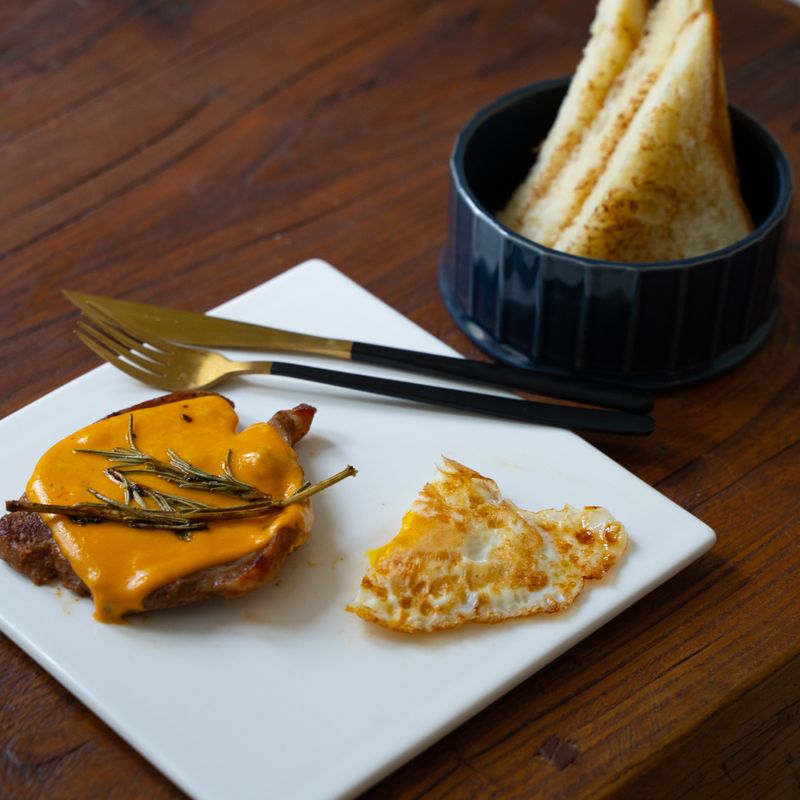
Greek Egg and Cheese Saganaki with Lemon Sauce
Crispy pan-fried saganaki cheese paired with soft eggs and a silky lemon-butter sauce. This elegant yet simple Greek dish celebrates the harmony of tangy cheese, bright citrus, and rich egg yolks. Serve warm, ideally with crusty bread to soak up the sauce.
- Prep
- 10 min
- Cook
- 12 min
- Total
- 22 min
- Makes
- 2 servings (2 cheese pieces and 2 eggs each)
Steps
Before you start
- Bring saganaki cheese out of the refrigerator 15 minutes before cooking so it's cold but not ice-cold
- Have all ingredients assembled and measured before you start cooking
- Make sure the lemon is at room temperature for easier juicing
- Preheat your serving plates in a 200°F (93°C) oven
Coat and chill cheese
- Place 3 tablespoons of flour in a shallow bowl.
- Season the saganaki slices generously on both sides with sea salt and freshly ground black pepper, then dredge each slice lightly on both sides in the flour, tapping off excess.
- Set on a plate and refrigerate while you prepare the other ingredients.
+ Show details− Hide details
Tip: Cold cheese holds its shape better when it hits the hot oil and won't release its filling all at once.
Pan-fry the saganaki
- Heat 1.5 tablespoons of olive oil in a 9-inch (23 cm) nonstick skillet over medium-high heat for 1 minute until shimmering.
- Carefully place the 4 floured cheese slices flat in the pan (they should fit snugly).
- Fry for 1.5 to 2 minutes per side without moving them, until golden and crispy with a light crust, then transfer to the warm plate.
- You should hear a slight sizzle and see the edges turn golden.
+ Show details− Hide details
Ready when: Cheese is golden brown and crispy on both sides with a light, crackling crust
Tip: Don't crowd the pan or move the cheese too early—let it develop a crust before flipping so it doesn't stick or break apart.
Fry the eggs
- Add the remaining 1.5 tablespoons of olive oil to the same skillet over medium heat.
- Once the oil is shimmering, crack all 4 eggs directly into the pan, keeping the yolks intact.
- Fry for 2.5 to 3 minutes for soft, runny yolks, or 3.5 to 4 minutes for firmer yolks.
- Season with a pinch of salt and pepper.
- The whites should be just set and opaque while the yolks remain bright yellow and jiggly in the center.
+ Show details− Hide details
Ready when: Egg whites are set and opaque, yolks are soft and runny (or firm, depending on preference)
Tip: For even cooking, tilt the pan gently and spoon a little hot oil over the tops of the yolks halfway through.
Make lemon-butter sauce
- While the eggs cook, combine the lemon juice and cold butter in a small saucepan off the heat.
- Once the butter is ready to be added (just before serving), place the pan over low heat and whisk constantly for 1 to 2 minutes.
- The butter will melt and emulsify with the lemon juice, creating a silky, pale yellow sauce.
- Stop whisking once the mixture is smooth and pale.
- Don't let it boil or the sauce will break.
+ Show details− Hide details
Ready when: Sauce is smooth, creamy, and pale yellow with no visible butter lumps
Tip: Keep the heat low to prevent the butter from separating; if the pan gets too hot, whisk it off heat briefly to cool it down.
Plate and serve
- Divide the fried saganaki and eggs between 2 warm plates, placing 2 pieces of cheese and 2 eggs on each plate.
- Spoon the warm lemon-butter sauce over and around the cheese and eggs.
- Garnish with fresh parsley, a pinch of red pepper flakes if using, and a light sprinkle of lemon zest.
- Serve immediately with crusty bread for soaking up the sauce.
+ Show details− Hide details
Tip: Work quickly from the stove to the table—this dish is best enjoyed while the cheese is still warm and crispy and the yolk is still runny.
Good to know
Tips
- For the crispiest cheese crust, make sure the saganaki slices are very cold and dry before flouring, and don't shake off all the flour—a light coating helps develop that golden crust.
- If you can't find saganaki or halloumi, thick slices of a firm, mild cheese like graviera or even a thick slice of mozzarella will work, though the texture will be slightly different.
- The lemon-butter sauce is delicate and relies on temperature control. If it breaks or looks separated, whisk in 1 teaspoon of cold water off the heat to bring it back together.
- Serve this dish with thick slices of crusty bread (sourdough or Greek village bread is ideal) for soaking up every drop of the silky lemon sauce and any runny egg yolk.
Storage & reheating
This dish is best enjoyed fresh and warm. Leftover fried cheese can be stored in an airtight container in the refrigerator for up to 2 days and reheated gently in a 300°F (150°C) oven for 5 minutes to restore crispness, though it will not be as crispy as when first made. Do not refrigerate cooked eggs or prepare the lemon sauce ahead of time.
Substitutions
- saganaki cheese (halloumi, kefalotyri, or similar Greek frying cheese) → feta cheese (cut into ½-inch/12 mm thick slices) or firm halloumi. Feta will soften more than saganaki and won't develop as thick a crust, but it still works well. Increase cooking time slightly to 2.5 minutes per side.
- fresh lemon juice → white wine vinegar or fresh lime juice. Use the same amount. Lime juice will give a slightly different but equally bright flavor; vinegar adds a sharper tang.
- unsalted butter → high-quality extra-virgin olive oil. Whisk it the same way with the lemon juice for a lighter, brighter sauce. The flavor will be more herbaceous.
- fresh flat-leaf parsley → fresh dill or fresh mint. Either brings a different Mediterranean herb note. Use the same amount of dill or half the amount of mint, as mint is more pungent.