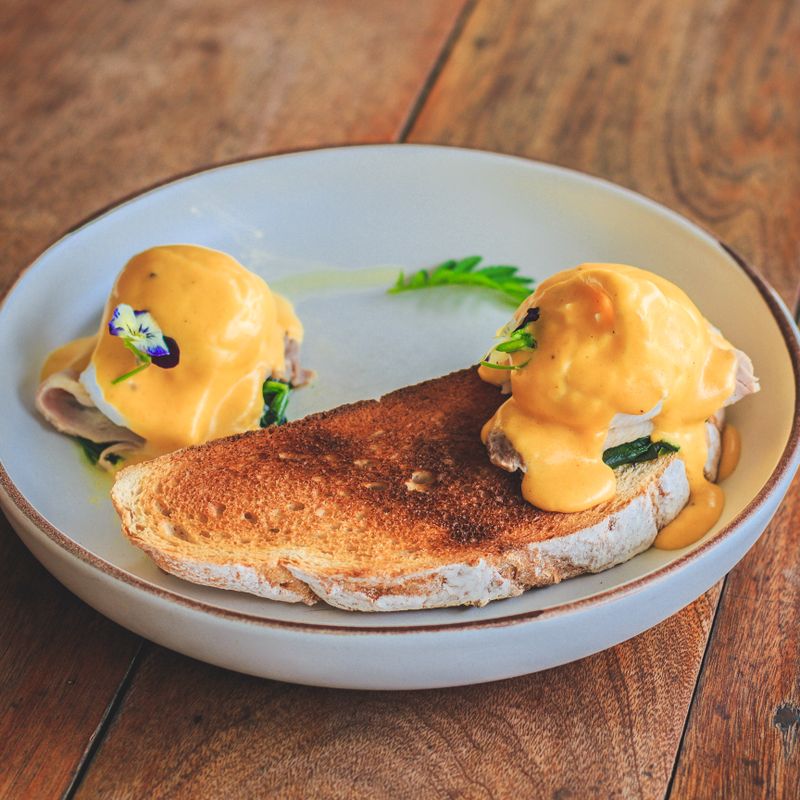
French Oeufs Meurette (Red Wine Braised Eggs)
A rustic Burgundian classic: eggs gently poached in a rich red wine sauce with caramelized pearl onions, sautéed mushrooms, and crispy bacon lardons. The wine reduces into a glossy, deeply flavored braise that cooks the eggs to tender perfection. Serve with crusty bread to soak up every drop of sauce.
- Prep
- 20 min
- Cook
- 45 min
- Wait
- 20 min
- Total
- 1 hr 25 min
- Makes
- 4 servings (4 eggs per plate with sauce)
Steps
Before you start
- Bring eggs to room temperature (about 20 minutes out of the fridge) so they cook evenly
- Have all ingredients prepped and at hand before you begin cooking—the braise happens quickly
- Use a good-quality red wine you'd drink; it will define the sauce flavor
- Set out a warm serving platter or shallow bowls
Render and crisp the bacon
- In a large, shallow braising pan (12 to 14 inches wide), cook the bacon lardons over medium heat, stirring occasionally, until the fat renders and the bacon is golden and crispy, about 5 to 7 minutes.
- The bacon should reach an internal temperature of 145°F (63°C) and be completely opaque with no pink remaining.
- Using a slotted spoon, transfer the bacon to a paper towel–lined plate, leaving the rendered fat in the pan.
+ Show details− Hide details
Ready when: Bacon is golden and crispy; edges are darkened; internal temperature reaches 145°F (63°C)
Tip: Don't let the bacon burn; it will continue to darken slightly as it cools. You need this fat to sauté the onions and mushrooms. The high heat required for crisping ensures food safety.
Sauté onions and mushrooms
- In the same pan with the bacon fat, add the pearl onions.
- Cook over medium heat, stirring occasionally, until they begin to soften and develop golden color on all sides, 8 to 10 minutes.
- Add the mushrooms and cook for another 3 to 4 minutes, stirring gently, until they release their moisture and begin to brown lightly.
- Season with a pinch of salt and pepper.
+ Show details− Hide details
Ready when: Onions are golden and tender; mushrooms are lightly browned
Tip: Don't crowd the pan—shake it gently rather than stirring constantly so the vegetables caramelize rather than steam.
Build the braise base
- Add the minced garlic to the pan and cook for 30 seconds until fragrant.
- Stir in the tomato paste and cook for 1 minute, coating the vegetables.
- Pour in the red wine, scraping the bottom of the pan to release any browned bits.
- Add the warm stock, bay leaf, and thyme sprigs.
- Bring the liquid to a gentle simmer.
+ Show details− Hide details
Ready when: Liquid is simmering gently, aromatics are fragrant
Tip: Scrape well to incorporate the caramelized fond—it adds deep flavor to the sauce.
Simmer the braise
- Reduce heat to medium-low and simmer the wine and vegetable mixture for 12 to 15 minutes, allowing the wine to reduce slightly and the flavors to meld.
- The liquid should be fragrant and slightly thickened.
- Taste and adjust seasoning with salt and pepper.
+ Show details− Hide details
Ready when: Wine is slightly reduced; vegetables are tender and infused with flavor
Tip: Don't let it boil hard—a gentle simmer preserves the wine's complexity and prevents the eggs from cooking too quickly later.
Crack and nestle the eggs
- Once the braise is simmering gently, carefully crack each egg directly into the pan, spacing them evenly around the vegetables.
- You can crack them into a small cup first if you prefer, then slide them gently into the simmering liquid.
- The eggs should be mostly submerged or nestled among the vegetables.
+ Show details− Hide details
Ready when: Eggs are in the pan, whites are beginning to set
Tip: Keep the heat at medium-low—high heat will cause the whites to cook unevenly while the yolks remain raw. Room-temperature eggs help with even cooking.
Poach the eggs in wine
- Maintain a gentle simmer and cook the eggs uncovered for 6 to 8 minutes, depending on how you like your yolks.
- For a slightly runny center, aim for 6 to 7 minutes; for a firmer yolk, cook closer to 8 minutes.
- The egg whites should be opaque and set, and the yolks should reach 160°F (71°C) for food safety, though a soft yolk center (145°F / 63°C internal temperature) is safe if cooked for at least 6 minutes.
- The yolk should still give slightly when gently pressed.
+ Show details− Hide details
Ready when: Egg whites are opaque and set; yolks are warm; minimum safe internal temperature is 145°F (63°C) at center after 6 minutes cooking time
Tip: Resist the urge to stir or move the eggs around—let them sit undisturbed so the whites set evenly. If the braise is too hot, the egg whites will toughen before the yolks are warm. For runny yolks, the 6-minute cooking time ensures safety.
Finish the sauce
- Remove the pan from heat.
- Using kitchen tongs or a slotted spoon, carefully lift each egg and place it on a warm serving plate or shallow bowl.
- Discard the bay leaf and thyme sprigs from the sauce.
- Whisk the cold butter into the sauce in small pieces, swirling the pan gently until the butter is incorporated and the sauce is silky.
+ Show details− Hide details
Ready when: Sauce is glossy and emulsified; butter is fully incorporated
Tip: The residual heat will melt the butter without breaking the sauce. Keep the pan off heat while whisking so the sauce stays silky and doesn't split.
Plate and serve
- Distribute the pearl onions, mushrooms, and bacon lardons among the plates with the eggs.
- Ladle the red wine sauce generously over each egg, ensuring plenty of sauce pools around it.
- Garnish with fresh parsley if desired.
- Serve immediately with warm crusty bread for dipping into the sauce.
+ Show details− Hide details
Ready when: Dishes are warm; sauce is distributed
Tip: Work quickly to keep the eggs warm. If making for more than 2 people, you may need to plate in stages and keep finished plates warm in a low oven (200°F / 93°C) while finishing the rest.
Good to know
Tips
- Room-temperature eggs are essential: cold eggs will take too long to poach and risk the wine sauce overreducing. Set them out 20 minutes before starting.
- Use a wine you enjoy drinking—it becomes the foundation of the sauce and any off-flavors will concentrate as it reduces.
- For a thicker sauce, strain out the vegetables after poaching, then simmer the sauce uncovered for another 2 to 3 minutes before whisking in the butter.
- This dish is best with a shallow, wide pan so the eggs poach evenly and the wine doesn't take too long to reduce. A deep pot will create a different texture.
Storage & reheating
Best served fresh, but leftover braise (without the eggs) can be refrigerated in an airtight container for up to 2 days. Reheat gently on the stovetop over medium-low heat. Do not reheat cooked eggs in the braise, as they will toughen; instead, poach fresh eggs in the reheated braise just before serving.
Substitutions
- thick-cut bacon or salt pork → pancetta or lardons (French smoked pork belly), or omit for a vegetarian version. If omitting meat, use 1 tablespoon of butter in place of rendered bacon fat for sautéing the vegetables. If using pancetta or lardons, cook to the same internal temperature (145°F / 63°C).
- cremini or button mushrooms → cremini, oyster, or a mix of wild mushrooms. Cremini and oyster mushrooms work best for their texture and flavor; avoid very delicate varieties that fall apart.
- dry red wine (Burgundy, Côtes du Rhône, or similar) → white wine (Chablis, Pinot Grigio) or rosé. This shifts the flavor dramatically—white wine gives a lighter, more delicate braise. Reduce cooking time slightly as white wine is less assertive.
- beef or chicken stock → vegetable stock or additional red wine. Using 1 more cup of red wine instead of stock deepens the wine flavor but makes the braise less savory. Vegetable stock keeps the dish lighter.
More egg dishes
See all →

Find more like this
- Meal
- Dinner
- Cuisine
- French
- Diet
- Sugar-Free
- Method
- Stovetop