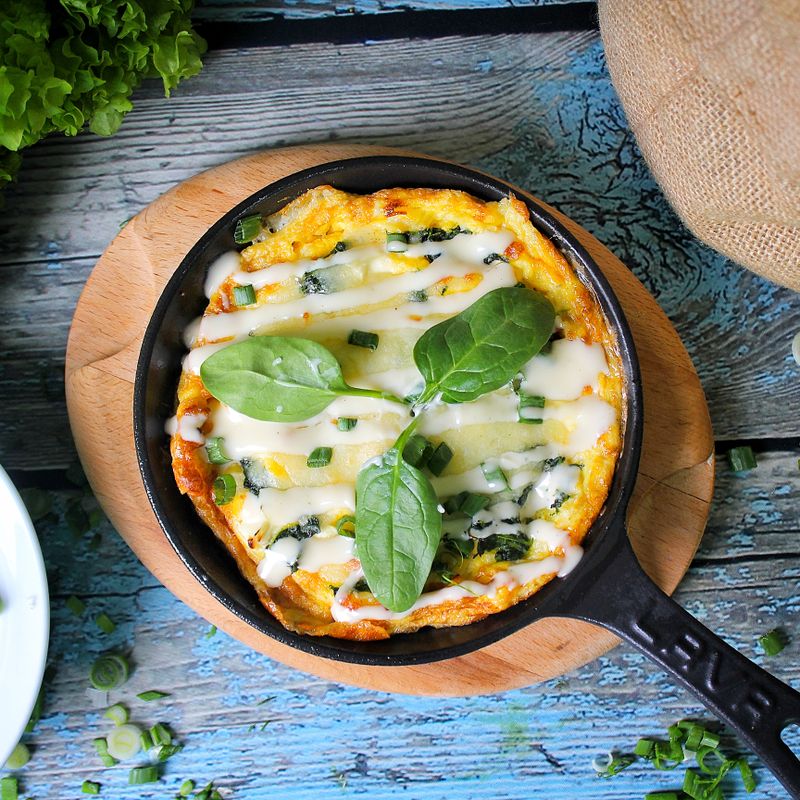
Greek Eggs with Fava and Caramelized Onions
Silky scrambled eggs folded together with creamy fava bean puree and sweet, golden caramelized onions. This Mediterranean-inspired dish celebrates simple ingredients treated with care—a brunch or supper that tastes both humble and refined.
Steps
Before you start
- Have all ingredients measured and ready before you begin—eggs cook quickly and need your full attention
- Use the largest onion you can find; you want 2 cups sliced for proper caramelization
- Bring eggs to room temperature for 10–15 minutes so they scramble evenly
Start the caramelized onions
- Heat 3 tablespoons olive oil in a 10-inch non-stick skillet over medium-low heat.
- Add the sliced onions and ½ teaspoon salt, stirring to coat.
- Cook, stirring occasionally every 5 minutes, for 25–30 minutes.
- The onions will shrink dramatically and turn deep golden brown.
- Add the thyme sprigs after 10 minutes and leave them in for flavor.
- When the onions are very soft, jammy, and caramelized, transfer them to a small bowl and discard the thyme sprigs.
- Wipe out the skillet.
+ Show details− Hide details
Ready when: Onions are deep golden brown, very soft, and jam-like
Tip: Do not rush caramelization—keep heat low to prevent burning. Stir only occasionally so a thin fond builds on the pan bottom, adding depth.
Make the fava puree
- While the onions cook, warm 1 tablespoon olive oil in a small saucepan over medium heat.
- Add the minced garlic and cook for 30 seconds until fragrant.
- Add the thawed fava beans, ¼ teaspoon salt, and a small pinch of black pepper.
- Stir to combine and warm through, about 2 minutes.
- Remove from heat and mash the beans with the back of a wooden spoon until mostly smooth with just a few small lumps (resembling rough hummus).
- Stir in 1½ tablespoons lemon juice.
- Taste and adjust salt and pepper as needed.
- Set aside.
+ Show details− Hide details
Ready when: Beans are mashed to a chunky puree and warmed through
Tip: Do not over-puree; a little texture keeps the dish interesting. The lemon juice brightens the earthy beans.
Whisk and cook the eggs
- Crack the 6 room-temperature eggs into a bowl and whisk them together with ¼ teaspoon salt and a pinch of black pepper until the yolks and whites are fully combined and slightly pale, about 15 seconds.
- Return the skillet to medium heat and add the 2 tablespoons cold butter.
- Let it melt completely and foam, then swirl to coat the bottom evenly.
- Pour in the whisked eggs and let them sit undisturbed for 10–15 seconds so the bottom starts to set.
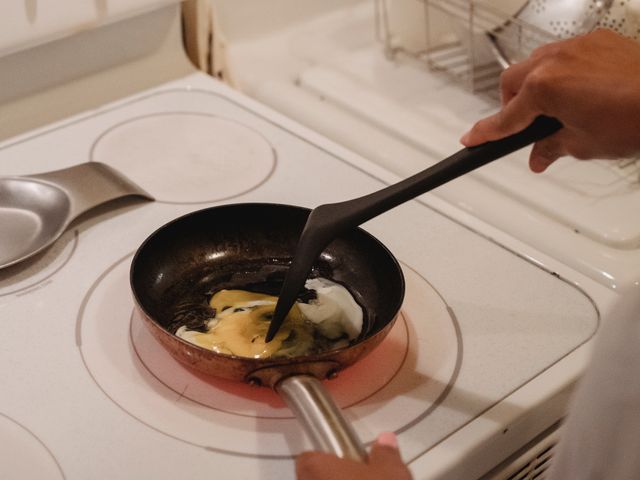
- Using a wooden spatula, gently push the eggs from the edge toward the center, tilting the pan slightly so uncooked egg flows to the edges.
- Repeat this motion every 15–20 seconds.
+ Show details− Hide details
Ready when: Eggs are mostly set but still slightly creamy and soft
Tip: Remove the eggs from heat when they still look slightly underdone—they will continue cooking from residual heat and stay silky, not rubbery.
Fold in fava and onions
- When the eggs are just barely set but still soft and glossy (after about 4–5 minutes total cooking), remove the skillet from heat.
- Gently fold in the fava bean puree and caramelized onions using the wooden spatula, turning the eggs over itself two or three times until combined.
- Do not overmix; it's fine to have swirls of cream and caramelized color.
+ Show details− Hide details
Ready when: Fava and onions are evenly distributed throughout the creamy eggs
Tip: Fold gently off the heat so the residual heat finishes cooking the eggs without toughening them.
Plate and garnish
- Divide the eggs between two plates.
- Top with crumbled feta cheese (if using) and a small handful of fresh chopped dill (if using).
- Serve immediately.
+ Show details− Hide details
Tip: Feta and fresh herbs add a bright, salty finish that complements the deep sweetness of the caramelized onions.
Good to know
Tips
- Caramelization takes patience. Keep the heat low and stir only occasionally—this builds fond and deepens flavor far more than high-heat cooking.
- Room-temperature eggs cook more evenly than cold ones, producing a silkier, more delicate scramble.
- The fava bean puree is the backbone of this dish; don't skip mashing it until creamy. It binds everything together.
- Stop cooking the eggs just shy of where you think they're done; carryover heat will finish them perfectly as you fold in the warm fava and onions.
Storage & reheating
Best served fresh. Leftovers can be refrigerated in an airtight container for up to 1 day; reheat gently in a 325°F (163°C) oven for 5–8 minutes, stirring occasionally, until warmed through. Do not microwave, as eggs become tough.
Substitutions
- frozen fava beans, thawed → Frozen peas or fresh pea puree. Peas are slightly sweeter and more delicate; use the same amount. The result will be brighter in color and flavor.
- crumbled feta cheese → Crumbled ricotta salata or aged goat cheese. Both offer a tangy, salty finish. Use about ⅓ cup (50 g) of either for similar salinity.
- fresh dill, finely chopped → Fresh mint or chives. Mint brings a cool, herbaceous note that pairs well with fava. Chives are milder and more onion-forward.
- fresh lemon juice → White wine vinegar. Use 1 tablespoon. Vinegar is sharper and adds a different kind of brightness; reduce slightly if you prefer less acidity.
More egg dishes
See all →


Find more like this
- Meal
- Brunch
- Cuisine
- Mediterranean
- Main ingredient
- FetaFava BeansEggs
- Method
- Stovetop