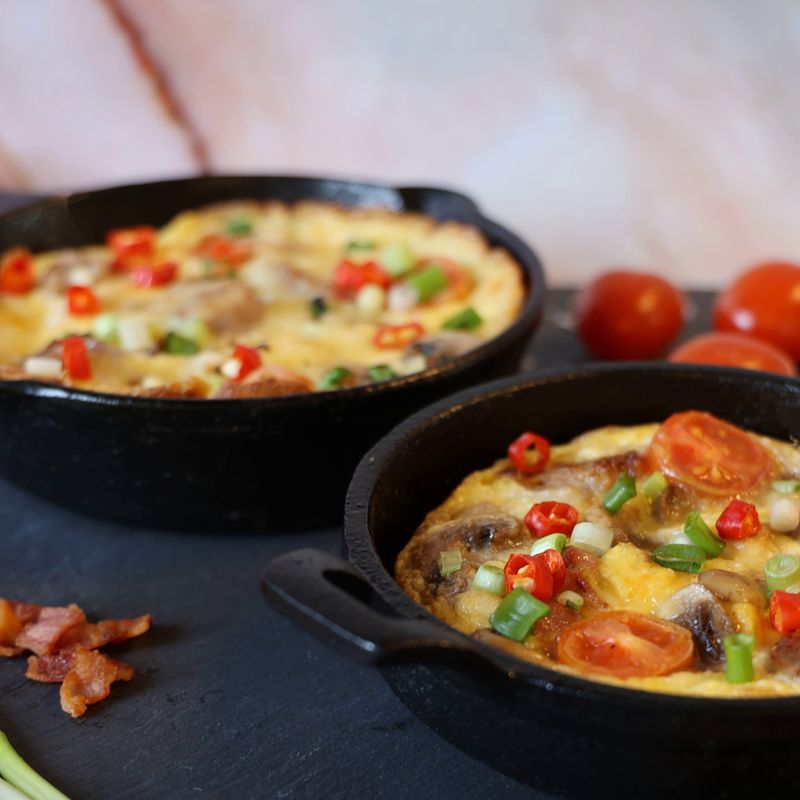
Italian Frittata di Carciofi with Artichokes and Mint
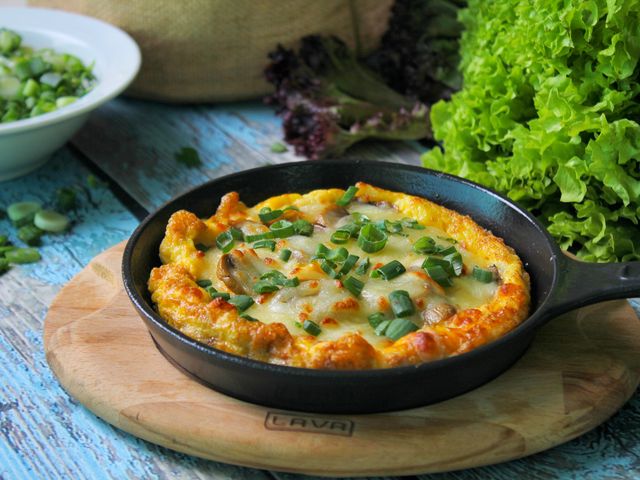
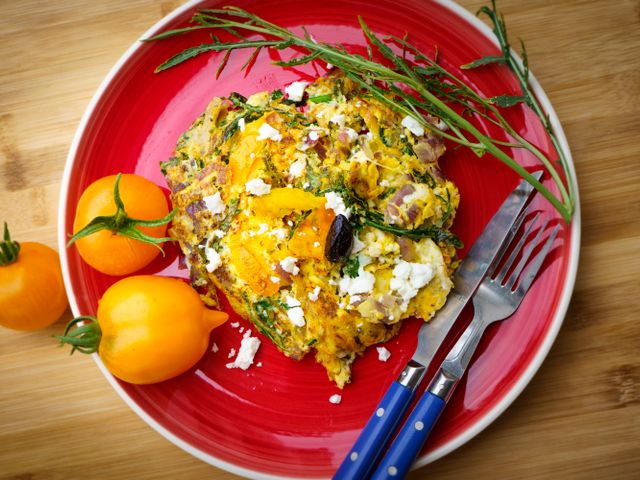
A rustic Italian frittata featuring tender artichoke hearts, fresh mint, and sharp pecorino cheese. The eggs are first pan-seared on the stovetop to set the bottom, then finished in the oven to cook through gently. Serve warm or at room temperature for a light lunch, dinner, or appetizer.
- Prep
- 15 min
- Cook
- 20 min
- Wait
- 5 min
- Total
- 40 min
- Makes
- 1 frittata (4 main-course servings or 6–8 appetizer portions)
Steps
Before you start
- Preheat oven to 375°F (190°C)
- Use fresh artichoke hearts if available; if using frozen, thaw and pat completely dry
- Have all ingredients measured and prepped before you start cooking
Sauté artichokes and aromatics
- Heat 2 tablespoons (30 ml) of olive oil in a 10-inch (25 cm) nonstick or cast-iron skillet over medium-high heat.
- Add the sliced onion and cook for 3–4 minutes, stirring occasionally, until it begins to soften and turn translucent.
- Add the minced garlic and cook for 30 seconds until fragrant.
- Stir in the artichoke pieces and cook for 5–6 minutes, stirring frequently, until the artichokes are tender and any excess moisture has evaporated.
- Season lightly with salt and pepper.
- Remove from heat and let cool slightly.
+ Show details− Hide details
Ready when: Artichokes are tender and onions are soft and translucent
Tip: Pat fresh artichokes dry before cutting to prevent excess moisture in the frittata; excess water will make it soggy and prevent proper browning.
Whisk eggs with cheese and mint
- In a medium bowl, whisk together the 8 room-temperature eggs until the whites and yolks are fully combined and the mixture is pale and slightly foamy, about 1 minute.
- Stir in the grated Pecorino Romano, fresh chopped mint, and red pepper flakes if using.
- Season with a pinch of salt and pepper.
- The mixture should look well combined and speckled with mint throughout.
+ Show details− Hide details
Ready when: Mixture is pale, foamy, and well combined
Tip: Room-temperature eggs whisk faster and create a lighter, more tender frittata than cold eggs.
Build frittata in the skillet
- Return the skillet with the cooked artichokes to medium heat and add the remaining 1 tablespoon (15 ml) of olive oil, swirling to coat the bottom evenly.
- Once the oil shimmers, pour in the egg mixture, gently stirring with a rubber spatula to distribute the artichokes and mint evenly.
- Let the eggs cook undisturbed for 2–3 minutes until the bottom begins to set and turn light golden.
+ Show details− Hide details
Ready when: Bottom is set and light golden when you tilt the pan; edges are starting to pull away slightly from the sides
Tip: Do not stir once the eggs begin to set; this keeps them tender. Let gravity and heat do the work.
Transfer to oven to finishOven 375°F / 190°C
- Transfer the skillet to a preheated 375°F (190°C) oven and bake for 8–10 minutes until the top is set, the edges are lightly golden, and a toothpick inserted in the center comes out clean.
- The center may still jiggle very slightly when you gently shake the pan, but it will continue to cook as it rests.
+ Show details− Hide details
Ready when: Top is set and light golden; a toothpick or knife inserted in the center comes out clean or with barely a trace of moist egg
Tip: Do not overbake or the frittata will be rubbery. It will continue to cook slightly as it cools, so remove it when the center is just set.
Rest and serve
- Remove the skillet from the oven and let the frittata rest in the pan for 5 minutes.
- Run a rubber spatula around the edges to loosen it from the pan.
- Slide it onto a serving plate or cut it directly in the skillet into 4 wedges.
- Serve warm, at room temperature, or chilled.
+ Show details− Hide details
Ready when: Frittata is cool enough to handle and slides easily away from the pan
Tip: A cast-iron or nonstick skillet ensures the frittata releases easily. If using stainless steel, butter it well or loosen very carefully.
Good to know
Tips
- For the most vibrant flavor, use fresh artichoke hearts in spring or early summer when they're at their peak; jarred or frozen hearts work year-round but may be slightly less delicate.
- A 375°F (190°C) oven is the sweet spot—higher heat will brown the top too quickly before the center sets, and lower heat may dry out the edges.
- This frittata is excellent served at room temperature with a green salad and crusty bread, making it ideal for picnics, light lunches, or light suppers.
- Frittatas are forgiving—any leftover vegetables, herbs, or cheese can be substituted in the same quantities.
Storage & reheating
Store covered in the refrigerator for up to 3 days. Reheat gently in a 300°F (150°C) oven for 5–7 minutes until warmed through, or serve chilled directly from the fridge. The frittata is best enjoyed within a day of cooking.
Substitutions
- artichoke hearts → 1½ lb (680 g) zucchini, cut into ¼-inch (6 mm) rounds, or 1 lb (450 g) fresh spinach. Adjust cooking time for softer vegetables like spinach; add it raw to the egg mixture.
- fresh mint leaves → 2 tablespoons (8 g) fresh flat-leaf parsley or 1 tablespoon (3 g) dried oregano. Mint is traditional, but parsley is a classic Italian alternative; oregano will give a different but complementary flavor.
- Pecorino Romano cheese → ½ cup (60 g) grated Parmigiano-Reggiano or Grana Padano. Less sharp than Pecorino but still nutty and aged; use the same quantity.
- extra-virgin olive oil → Unsalted butter (3 tablespoons or 43 g total). Creates a richer, more delicate frittata, though less traditional for this Italian dish.