Spanish Ajillo Egg Skillet with Garlic and Shrimp
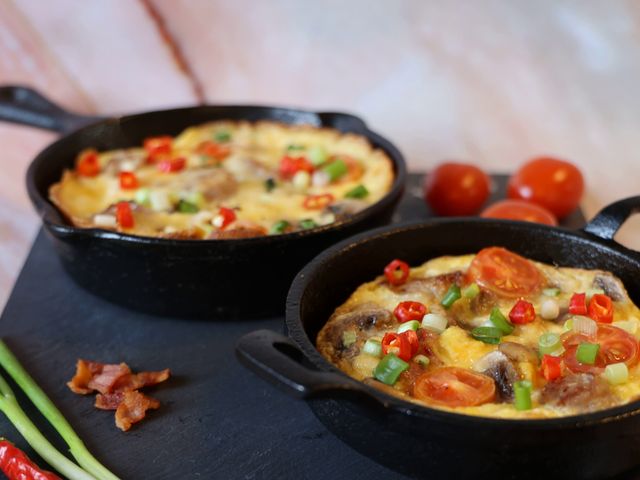
A rustic Spanish egg skillet inspired by gambas al ajillo, where plump shrimp and paper-thin garlic slices infuse premium olive oil, then eggs are nestled into the bubbling mixture. The result is a luxurious, garlicky one-pan dish with tender shrimp, silky eggs, and crispy-edged bread for soaking up the golden ajillo oil. Serves 2–3 as a main course.
- Prep
- 10 min
- Cook
- 12 min
- Wait
- 2 min
- Total
- 24 min
- Makes
- 2 servings (one 10-inch skillet)
Steps
Before you start
- Peel and devein the shrimp and pat them dry (moisture prevents proper browning)
- Slice the garlic into thin, even slices—consistent thickness cooks evenly
- Have all ingredients within reach before you start cooking (this dish moves quickly)
- Warm a serving plate in the oven or a bowl with hot water
Infuse oil with garlic
- Pour the olive oil into your 10-inch skillet and set it over medium heat.
- Once the oil is warm (about 1 minute), add the sliced garlic.
- Stir gently and continuously for 3–4 minutes, until the garlic turns pale golden and fragrant but does not brown.
- Watch carefully—the heat must be medium or the garlic will scorch and taste bitter.
- The oil should bubble gently around the garlic slices.
+ Show details− Hide details
Ready when: Garlic is pale golden and fragrant, oil is shimmering
Tip: Keep the heat moderate and stir constantly—burnt garlic ruins the entire dish.
Add shrimp and seasoning
- Increase the heat to medium-high.
- Add the dried shrimp to the garlic-oil mixture and sprinkle with red pepper flakes.
- Stir occasionally for 2–3 minutes, until the shrimp curl and turn opaque.
- The shrimp should be almost cooked through but still tender.
- Season with a pinch of sea salt and black pepper.
+ Show details− Hide details
Ready when: Shrimp are curled, opaque, and just cooked through (no gray translucent centers)
Tip: Do not overcook the shrimp—they will toughen. They will cook a bit more once the eggs are added.
Crack eggs into skillet
- Reduce the heat back to medium.
- Working quickly, crack the 4 eggs directly into the simmering oil and garlic mixture, spacing them around the pan.
- Try to keep the yolks intact.
- The oil will bubble and sizzle around the eggs—this is expected and desired.
- Season the eggs lightly with salt and pepper.
- Do not stir.
+ Show details− Hide details
Ready when: Eggs are cracked and nestled in the pan
Tip: Keep yolks whole for a luxurious presentation. If a yolk breaks, it still tastes great—just less visually dramatic.
Cook eggs to preferred doneness
- Let the skillet bubble gently on medium heat for 3–4 minutes.
- For runny yolks with set whites, aim for 3–4 minutes.
- For slightly softer yolks, stop at 2–3 minutes.
- For fully set yolks, cook to 4–5 minutes.
- Watch the whites—once they turn opaque and no longer look raw, the eggs are very close to done.
- The edges of the whites nearest the pan will become slightly crispy and golden, which adds great texture.
+ Show details− Hide details
Ready when: Egg whites are opaque and set; yolks are runny or softly set depending on your preference
Tip: Tilt the pan slightly to check that the whites are truly set. Runny whites will slide; set whites stay put.
Finish and serve
- Slide the entire skillet onto a warmed serving plate.
- Sprinkle the fresh parsley (if using) over the top and season with an extra grind of black pepper.
- Serve immediately, straight from the skillet, with lemon wedges and crusty bread for dipping in the golden ajillo oil.
- Guests can break the yolks and let them mix into the shrimp and oil.
+ Show details− Hide details
Tip: The bread is essential—it's the best way to capture every precious drop of that infused oil.
Good to know
Tips
- Use the finest quality extra-virgin olive oil you own—it's the star of this dish. The flavor of the oil directly translates to the final dish.
- Pat the shrimp very dry before cooking. Moisture on the surface prevents browning and will make them steam instead of sear.
- If your skillet is very thin or heats unevenly, stir the oil gently once or twice during the egg-cooking stage to prevent the bottom from overcooking, but be careful not to break the yolks.
- For a crowd, this recipe doubles easily in a 12-inch skillet (use 8 eggs instead of 4), but keep the cooking time the same—the extra oil distributes the heat more evenly.
Storage & reheating
Best served immediately. Leftovers can be stored in an airtight container in the refrigerator for up to 1 day, but the eggs will firm up and the bread will lose its crispness. Reheat gently in a skillet over medium-low heat for 2–3 minutes. Do not freeze.
Substitutions
- large shrimp → Large sea scallops (10 oz / 285 g), patted dry and halved if very large. Scallops cook at the same rate and have a similar tender texture. Sear them 1–2 minutes per side until opaque, then proceed with eggs.
- large shrimp → Firm white fish such as cod or halibut, cut into 1-inch chunks (10 oz / 285 g). Fish will break apart slightly but is delicious. Reduce searing time to 2–3 minutes total so it doesn't toughen.
- large eggs → 6 quail eggs instead of 4 large eggs. Quail eggs cook faster (2–3 minutes). They create a delicate, elegant presentation and are traditional in some Spanish preparations.
- red pepper flakes → Smoked paprika (use ½ teaspoon / 1 g for milder heat and a smoky note). Paprika adds depth without sharp heat. Stir it into the oil after the garlic and before the shrimp.