Sourdough Moroccan Khobz
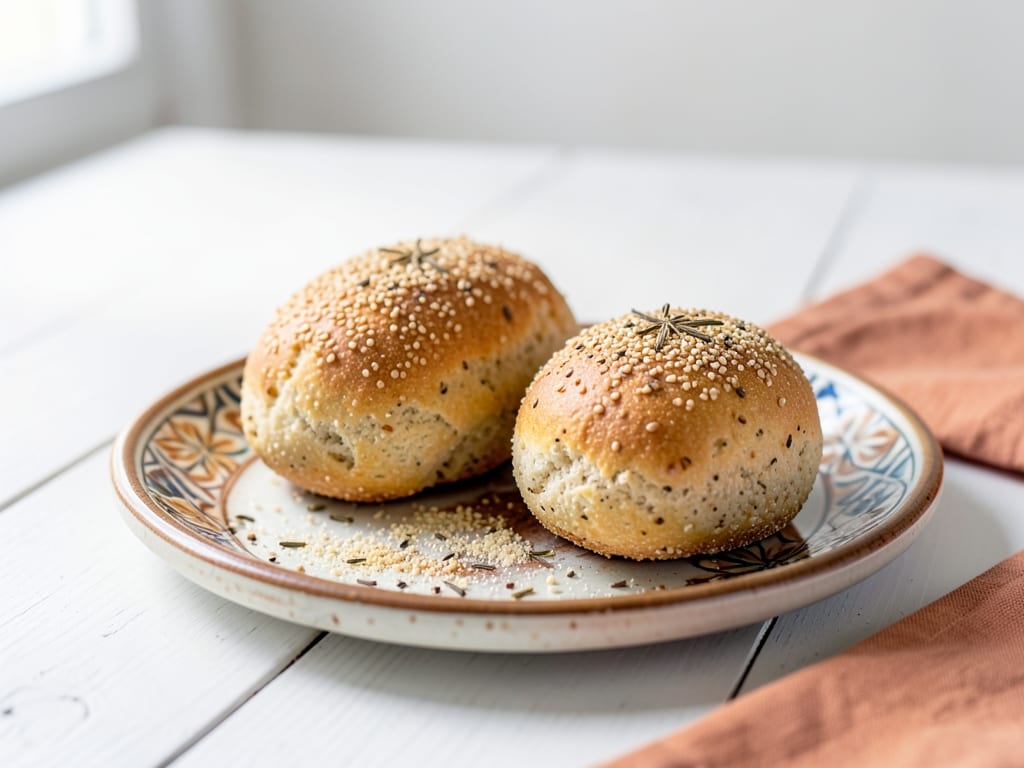
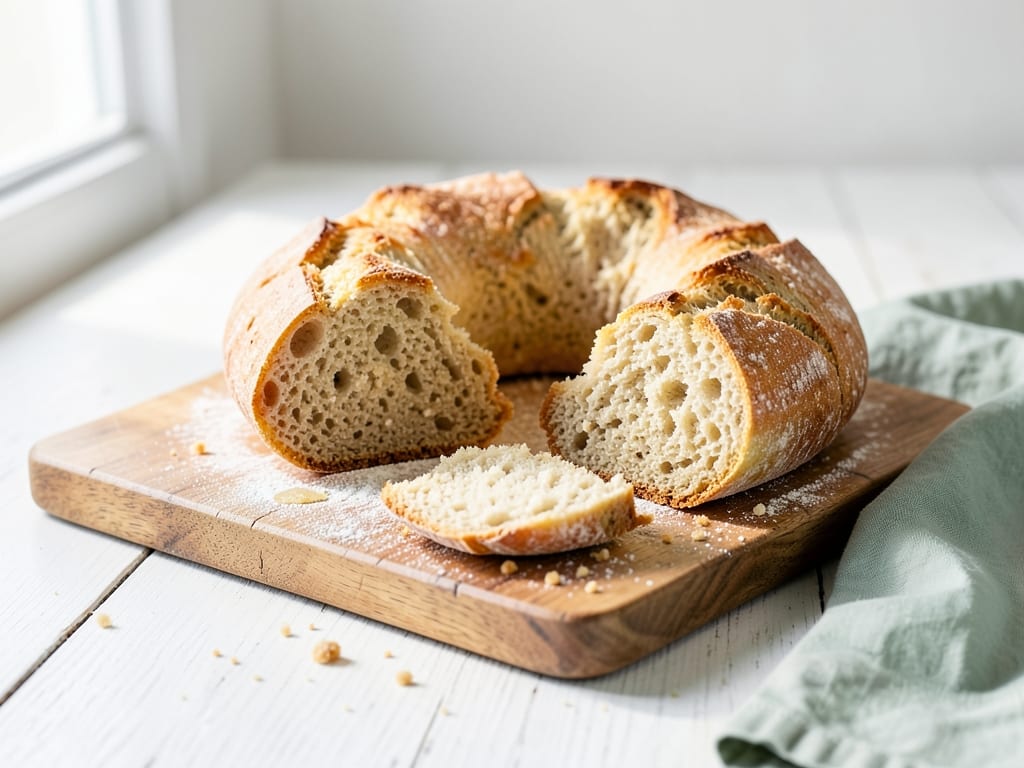
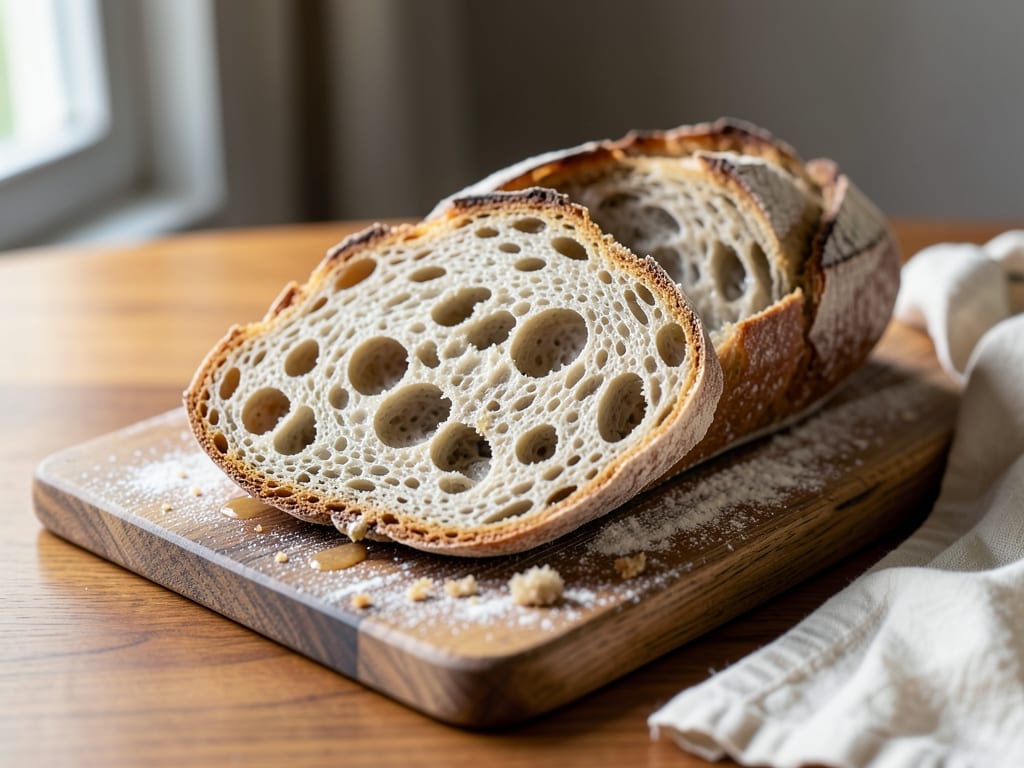
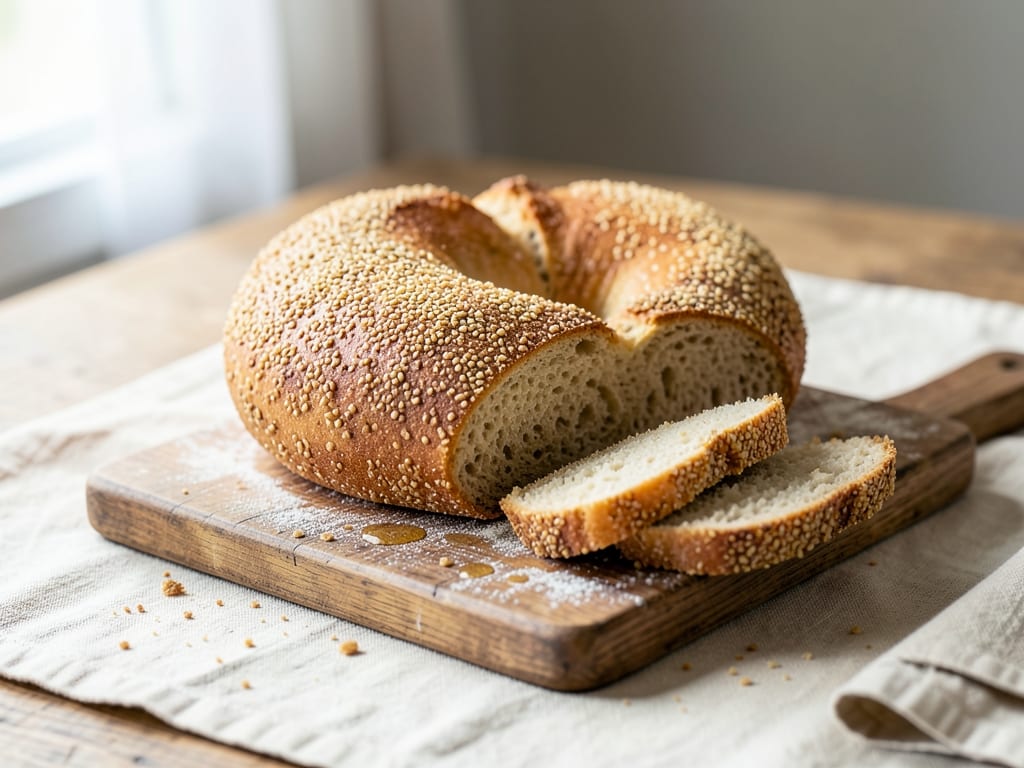
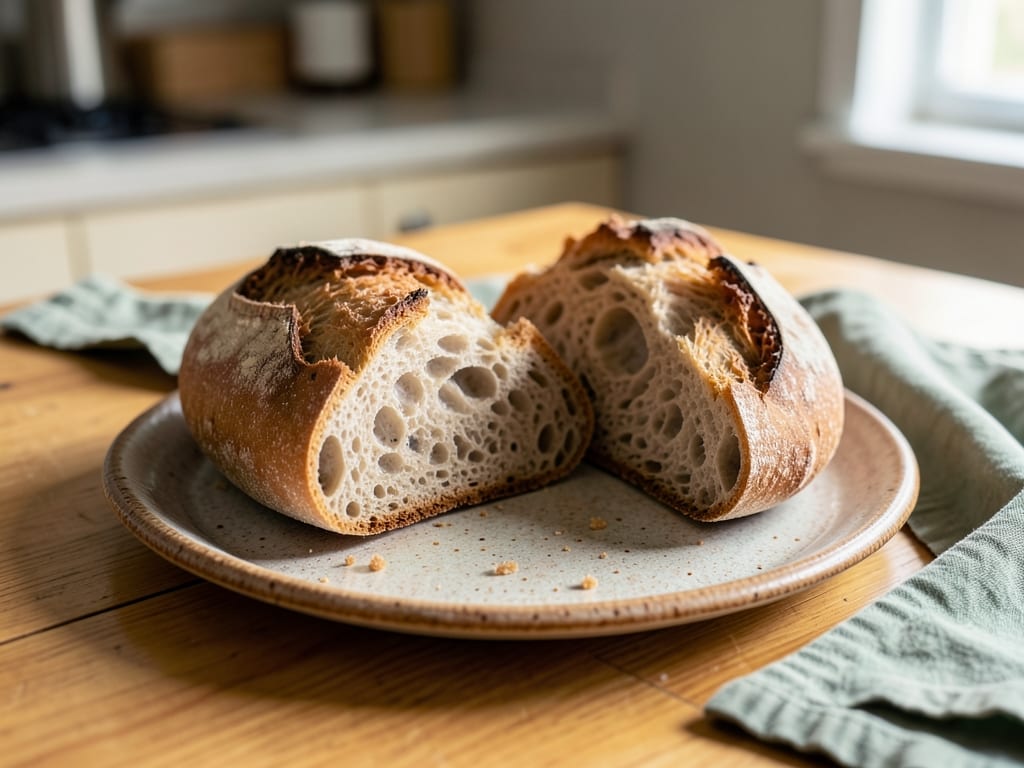
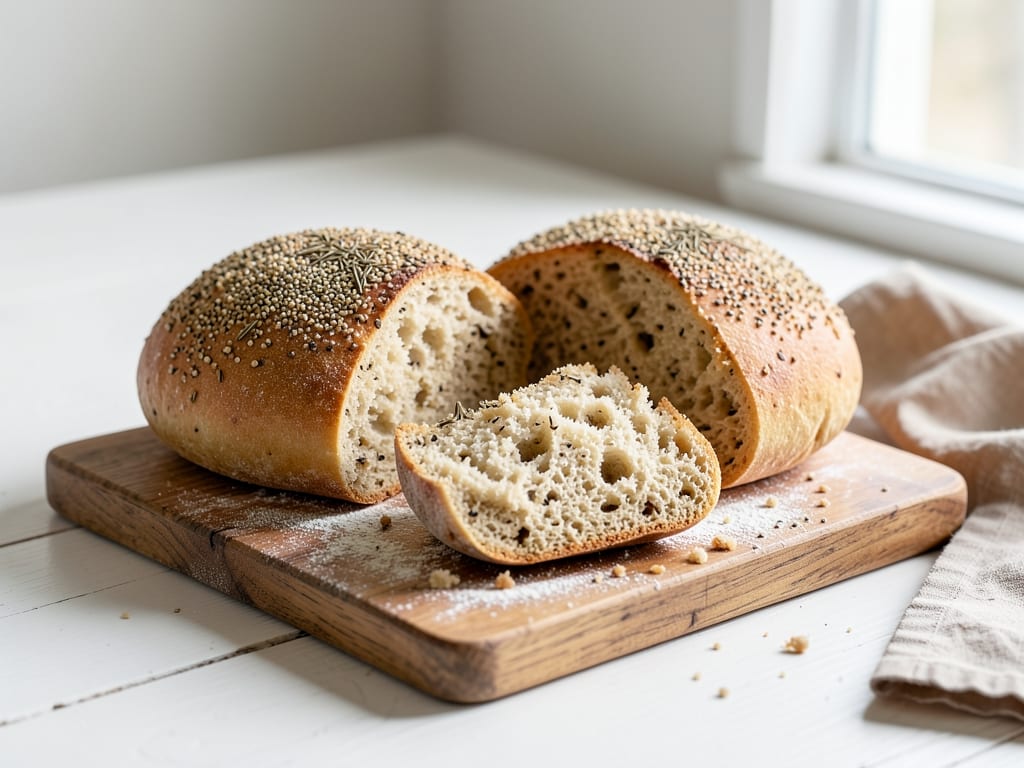
Two soft, round Moroccan khobz loaves with a tender, slightly sweet crumb from semolina and whole wheat, perfumed with anise and raised entirely by sourdough starter. Ideal for scooping up tagines, dips and stews.
- Prep
- 48 min
- Cook
- 32 min
- Wait
- 6 hr 30 min
- Total
- 7 hr 50 min
- Makes
- 2 round loaves (about 6 inches/15 cm wide), 4 wedges each
Steps
Before you start
- Feed your starter 4–8 hours ahead so it is bubbly, doubled and just past its peak when you begin (use it at 100% hydration: equal weights flour and water).
- Read the timing: about 8 hours start to finish, mostly hands-off. Dough is done rising by volume and feel, not the clock; a warm kitchen (75–78°F/24–26°C) is assumed.
- Semolina and whole wheat make the dough absorb water slowly, so it will feel sticky at first. Resist adding extra flour; it firms up during the folds.
- Place an oven rack in the middle and a second, empty rack or rimmed pan on the bottom for steam.
Mix and autolyse
- In a large bowl, stir together the bread flour, whole wheat flour and 150 g fine semolina.
- Pour in the 330 ml lukewarm water and mix with your hand or a spatula until no dry flour remains.
- Cover and rest 30 minutes so the whole grain and semolina hydrate.
+ Show details− Hide details
Ready when: No dry patches; a shaggy, thick, sticky dough
Tip: Do not add the starter or salt yet; they slow hydration.
Add starter and flavorings
- Spread the starter, salt, toasted anise seeds and olive oil over the dough.
- Squeeze and fold the dough with wet hands for about 3 minutes, pinching through it, until everything is evenly mixed and the dough feels cohesive.
- Cover the bowl.
+ Show details− Hide details
Ready when: No streaks of starter, and anise seeds are evenly scattered
Tip: Wet your hands with water to stop the sticky dough clinging to them.
Stretch and fold
- Over 90 minutes, perform three sets of stretch-and-folds, 30 minutes apart (first one right after mixing).
- For each set, wet your hand, grab one edge of the dough, stretch it up gently and fold it over the center; rotate the bowl a quarter turn and repeat 4 times total.
- Cover between sets.
+ Show details− Hide details
Ready when: Dough is smoother, puffier and holds its shape more firmly after each set
Tip: Stretch gently; semolina dough tears if pulled too hard.
Finish bulk rise
- Leave the covered dough undisturbed at 75–78°F (24–26°C) for about 2½ hours more, until it has grown by 50–75% and looks airy with bubbles along the edges and surface.
+ Show details− Hide details
Ready when: Dough is jiggly, domed, and shows bubbles at the sides; a poke springs back slowly
Tip: In a cooler kitchen this can take an hour longer; judge by the dough, not the clock.
Divide and pre-shape
- Dust the counter with about 1 tbsp of the semolina for dusting.
- Scrape out the dough, divide into 2 equal pieces (about 560 g each) and fold each edge into the center to form a loose round.
- Flip seam-side down, cover with a towel and rest 15 minutes.
+ Show details− Hide details
Ready when: Rounds are slightly flattened and relaxed
Shape the loaves
- Line a baking sheet or peel with parchment and sprinkle with the remaining semolina.
- Cup each round with both hands and drag it toward you on the counter to tighten the surface, then gently pat it into a disk about 6 inches (15 cm) wide and 1½ inches (4 cm) thick.
- Place on the parchment, 3 inches (7.5 cm) apart.
+ Show details− Hide details
Ready when: Smooth, taut top with an even thickness
Tip: Don't press out all the air; you want a soft, open crumb.
Proof and preheatOven 475°F / 245°C
- Cover the loaves loosely with a towel and proof 60 minutes at room temperature.
- After 15 minutes, place a baking stone on the middle rack and an empty metal pan on the bottom rack, and preheat the oven to 475°F (245°C) for at least 45 minutes.
+ Show details− Hide details
Ready when: Loaves look puffy and a floured finger dent springs back slowly, leaving a small dent
Tip: If the dent springs back instantly, proof 10 more minutes.
Dock, seed and loadOven 475°F / 245°C
- Brush or sprinkle the tops with water if seeds need to stick, then scatter on the sesame seeds.
- Prick each loaf all over with a fork, 10–12 times, pushing through to the bottom.
- Slide the parchment onto the hot stone, pour 1 cup (240 ml) boiling water into the bottom pan and quickly close the door.
+ Show details− Hide details
Ready when: Steam fills the oven and the door closes quickly
Tip: Pour water away from yourself and the oven glass; steam is scalding.
Bake hotOven 475°F / 245°C
- Bake 10 minutes at 475°F (245°C) with the steam, until the loaves have puffed and begun to set and turn pale golden.
+ Show details− Hide details
Ready when: Loaves have risen and tops are light gold
Finish bakingOven 425°F / 220°C
- Carefully remove the steam pan, reduce the oven to 425°F (220°C), rotate the sheet or loaves front to back, and bake 22 more minutes, until deep golden brown and the bottoms sound hollow when tapped.
+ Show details− Hide details
Ready when: Deep golden crust, hollow thump on the bottom, internal temperature 205–210°F (96–99°C)
Tip: Pale loaves are underbaked; leave them in 3–5 more minutes.
Cool before slicing
- Transfer loaves to a wire rack and cool at least 45 minutes before tearing or cutting.
- The crumb finishes setting as it cools.
+ Show details− Hide details
Ready when: Loaves feel just warm to the touch, not hot
Tip: Cutting too soon makes sourdough crumb sticky.
Good to know
Tips
- Use a scale: weighing the flours and water is much more accurate than cups, especially with semolina.
- Toasting anise seeds briefly makes their flavor rounder and more fragrant.
- Docking with a fork keeps the flat loaves from ballooning and gives the traditional look.
- Serve torn, not cut, for the authentic way to scoop up tagines, harira or olive oil and honey.
Make ahead
"After shaping, cover the loaves tightly and refrigerate 8–14 hours instead of proofing at room temperature. Bake straight from the fridge, adding 3–5 minutes to the first bake stage if needed. Preheat the oven and stone as directed."
Storage & reheating
"Room temperature: wrap in a clean towel or bread bag up to 2 days. Freezer: slice or leave whole, wrap well and freeze up to 3 months. Reheat: thaw at room temperature, then warm at 350°F (175°C) for 8–10 minutes. Refrigeration is not recommended as it stales the bread faster."
Substitutions
- fine semolina flour → all-purpose or bread flour. Crumb will be softer and less golden, with less of the traditional sweet flavor; the dough will be a little wetter.
- anise seeds → fennel seeds or nigella seeds. Fennel is milder and sweeter; nigella gives a peppery note. Use the same amount.
- bread flour → all-purpose flour. Use the same weight; the loaf will be slightly less chewy and may need 10–15 g less water.
- extra-virgin olive oil → neutral vegetable oil. Use the same amount; you'll lose the subtle fruity flavor.