Italian Ciabatta
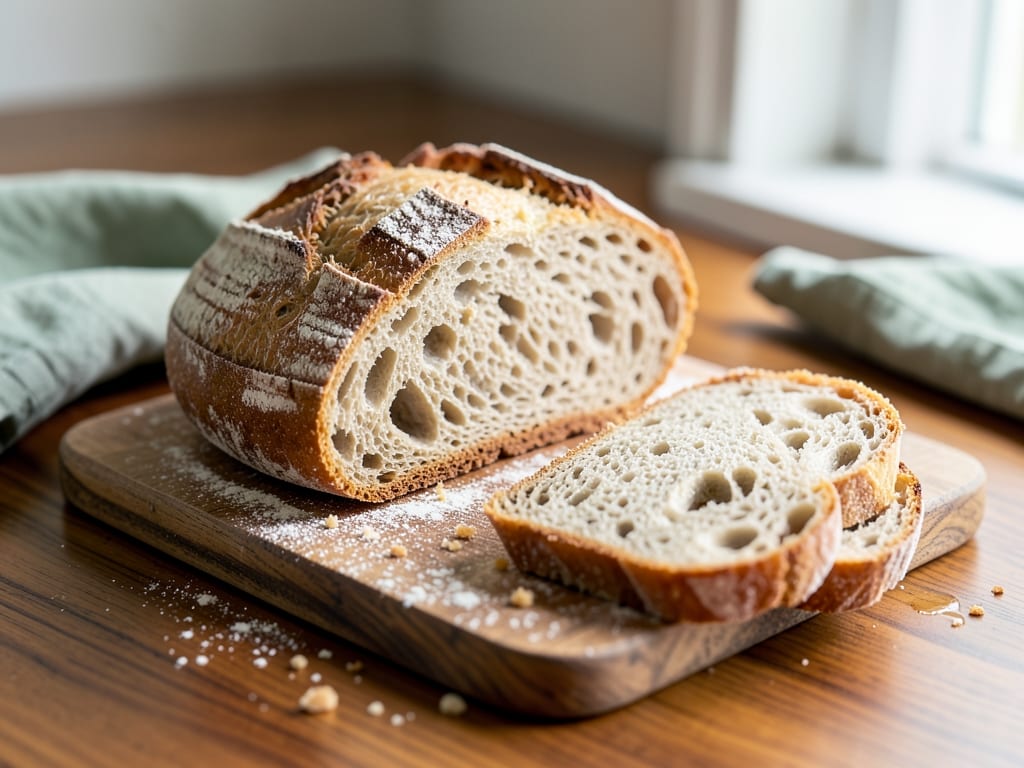
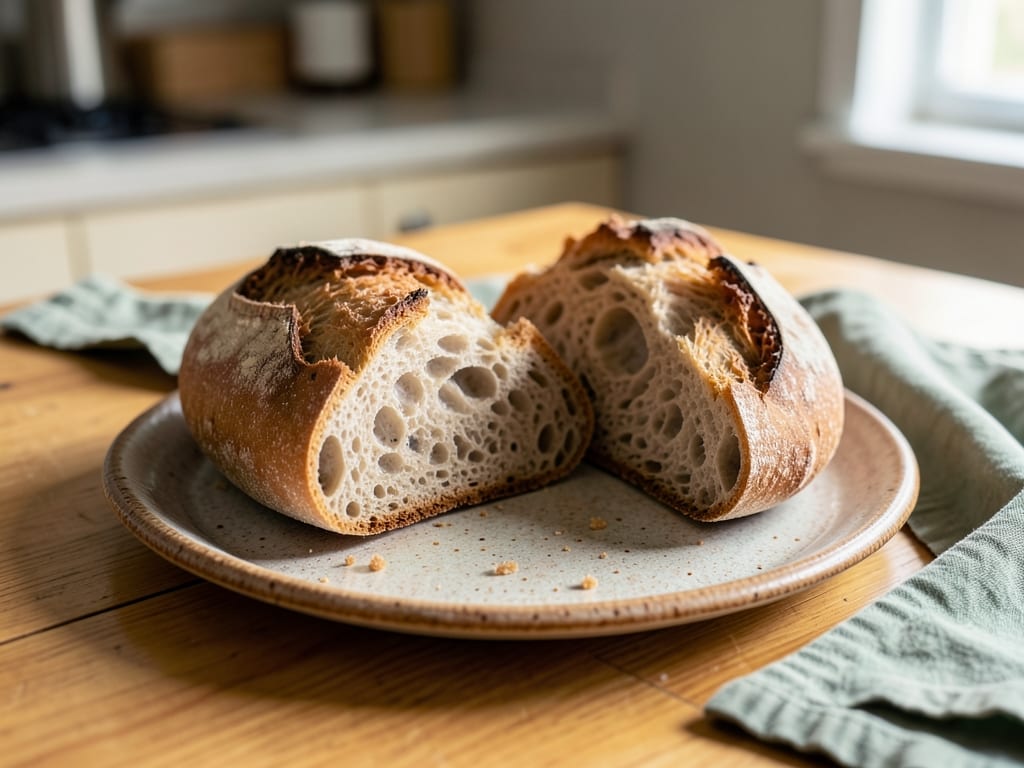
Two open-crumbed, crisp-crusted ciabatta loaves made from a overnight poolish and a very wet dough. It takes mostly waiting, with little kneading, and it bakes in a hot steamy oven.
- Prep
- 36 min
- Cook
- 25 min
- Wait
- 16 hr 41 min
- Total
- 17 hr 42 min
- Makes
- 2 loaves (about 10 inches / 25 cm long each, 8 servings)
Steps
Before you start
- Plan ahead: the poolish ferments 12–16 hours (start the evening before, or early morning for an evening bake). Total time is about 17–18 hours, but only about 36 minutes is hands-on.
- Use bread flour (12–13% protein). The dough is about 77% hydration and needs the extra gluten strength. Weigh the ingredients with a scale if you can.
- The dough is very sticky by design. Wet your hands or dust them with flour when handling it, and don't add more flour to the dough itself.
- About 45 minutes before baking, set an oven rack in the middle and another in the lowest position, then preheat as directed in the proofing step. A heavy baking stone, steel or inverted sheet pan needs this full time to get hot.
Make the poolish
- In the 1-quart (1 L) container, stir together 150 g (1 cup) bread flour, 150 ml (⅔ cup) room-temperature water and ⅛ tsp instant yeast until no dry flour remains and the mixture looks like thick pancake batter.
- Cover loosely and leave at cool room temperature (65–70°F / 18–21°C) for 12–16 hours.
+ Show details− Hide details
Ready when: Surface is bubbly and domed or just starting to collapse, with a mildly sweet, yeasty smell
Tip: In a warm kitchen (above 75°F / 24°C) aim for 12 hours so the poolish doesn't over-ferment and turn sour.
Mix the dough
- Add 235 ml (1 cup) lukewarm water to the poolish and break it up with a wet spatula.
- Add 350 g (2⅓ cups) bread flour, 1 tsp instant yeast, 1¾ tsp salt and 22 ml (1½ tbsp) olive oil.
- Stir vigorously for 2 minutes until shaggy, then use wet hands to squeeze, slap and fold the dough in the bowl for about 5 minutes more.
+ Show details− Hide details
Ready when: Dough is very sticky and loose but pulls into a smooth, elastic strand that stretches without tearing when you lift it
Tip: Resist adding extra flour. The wetness is what makes the open ciabatta crumb.
Bulk ferment with folds
- Pour 1 tsp olive oil into the large bowl, move the dough into it and turn once to coat.
- Cover.
- Let it rest 30 minutes, then with wet hands grab one edge of the dough, stretch it up and fold it over the center; rotate the bowl a quarter turn and repeat 4 times total.
- Re-cover and repeat the folds at 60 minutes.
- Let the dough rest undisturbed until 90 minutes total.
+ Show details− Hide details
Ready when: Dough has roughly doubled, is puffy, jiggles when the bowl is shaken and shows bubbles on the surface and sides
Tip: Use a clear bowl or mark the dough level with tape to judge the rise more easily.
Divide the dough
- Generously flour the work surface with about half of the 35 g dusting flour.
- Gently scrape the dough out of the bowl without deflating it.
- Dust the top lightly and cut it in half with a floured bench scraper to make two equal pieces of about 500 g each.
+ Show details− Hide details
Ready when: Two roughly rectangular, bubbly pieces of equal size
Tip: Flour your hands and scraper often. Handle gently to keep the air bubbles.
Shape the loaves
- Line a rimmed baking sheet with parchment and dust well with flour.
- Flour your fingers and gently stretch each piece into a rectangle about 10×4 inches (25×10 cm), then fold the short ends in like a letter, one-third from each side, and lightly stretch again to about 10×4 inches.
- Move each loaf to the parchment with a bench scraper, seam-side down, about 4 inches (10 cm) apart.
+ Show details− Hide details
Ready when: Each loaf is a slack, slipper-shaped rectangle with a flat, airy surface
Tip: Don't press out the bubbles. Pinch the parchment between the loaves into a pleat so they don't spread into each other.
Proof and preheatOven 450°F / 230°C
- Cover the loaves loosely with a floured towel and proof for 45 minutes.
- Meanwhile, place the baking stone (or an upside-down sheet pan) on the middle rack and the skillet on the lowest rack, then preheat the oven to 450°F (230°C) for the full 45 minutes.
+ Show details− Hide details
Ready when: Loaves look puffy and a floured fingertip pressed lightly leaves a dent that fills back slowly
Tip: A stone or steel that isn't fully hot gives pale, dense loaves.
Dimple and loadOven 450°F / 230°C
- Flour your fingertips and press straight down into each loaf in rows, almost touching the parchment, to make shallow dimples across the surface.
- Quickly slide the parchment with the loaves onto the hot stone (use the back of a sheet pan as a peel).
- Bring 1 cup of water to a boil, then carefully pour it into the preheated skillet and shut the oven door right away.
+ Show details− Hide details
Ready when: Loaves are on the stone and the oven is filled with steam
Tip: Wear oven mitts and pour away from your face. The steam burst is hot.
Bake the ciabattaOven 450°F / 230°C
- Bake at 450°F (230°C) for 22–25 minutes, rotating the stone once at 15 minutes if the oven browns unevenly.
- Remove the steam skillet after the first 15 minutes to dry the crust.
+ Show details− Hide details
Ready when: Crust is deep golden brown, loaves sound hollow when tapped on the bottom, and the center reads 205–210°F (96–99°C)
Tip: Pale crust means underbaked. Add 3–5 more minutes rather than pulling them early.
Cool completely
- Transfer the loaves to a wire rack and cool for at least 30 minutes before slicing.
- Crackling sounds as they cool are normal.
+ Show details− Hide details
Ready when: Loaves feel just warm or at room temperature and no longer steam when cut
Tip: Slice with a serrated knife using a gentle sawing motion so you don't crush the crumb.
Good to know
Tips
- Weigh ingredients. Ciabatta's high hydration makes small measuring errors very noticeable.
- For bigger holes, handle the dough as little as possible after bulk fermentation and keep wet or floured hands gentle.
- If you have no stone, preheat an upside-down heavy sheet pan; avoid using a thin pan, which will not hold enough heat.
- Dark, blistered patches on the crust are good; they add flavor. Lower the oven by 25°F (15°C) only if the bottom darkens too fast.
Make ahead
"The poolish can ferment up to 16 hours at room temperature. After the second fold, the dough can be refrigerated for up to 12 hours, then shaped straight from the fridge and proofed for 60 minutes before baking."
Storage & reheating
Room temperature: keep cut-side down on a board or in a paper bag up to 2 days. Freezer: slice and wrap tightly, freeze up to 3 months. Fridge storage is not recommended because it dries the bread out. To refresh, warm whole or halved loaves in a 350°F (175°C) oven for 8–10 minutes, or toast frozen slices straight from the freezer.
Substitutions
- bread flour → unbleached all-purpose flour. Works in a pinch, but use about 20–30 g less water total for a manageable dough; the crumb will be slightly less chewy.
- instant yeast → active dry yeast. Use 1¼ tsp (4 g) and dissolve it in the lukewarm water for 5 minutes before adding it to the poolish.
- extra-virgin olive oil → neutral vegetable oil. Gives a similar soft crumb but loses the fruity flavor.
- fine sea salt → kosher salt (Diamond Crystal). Use 2¼ tsp (about 10 g by weight is the same; weigh if possible, since volume varies by brand).