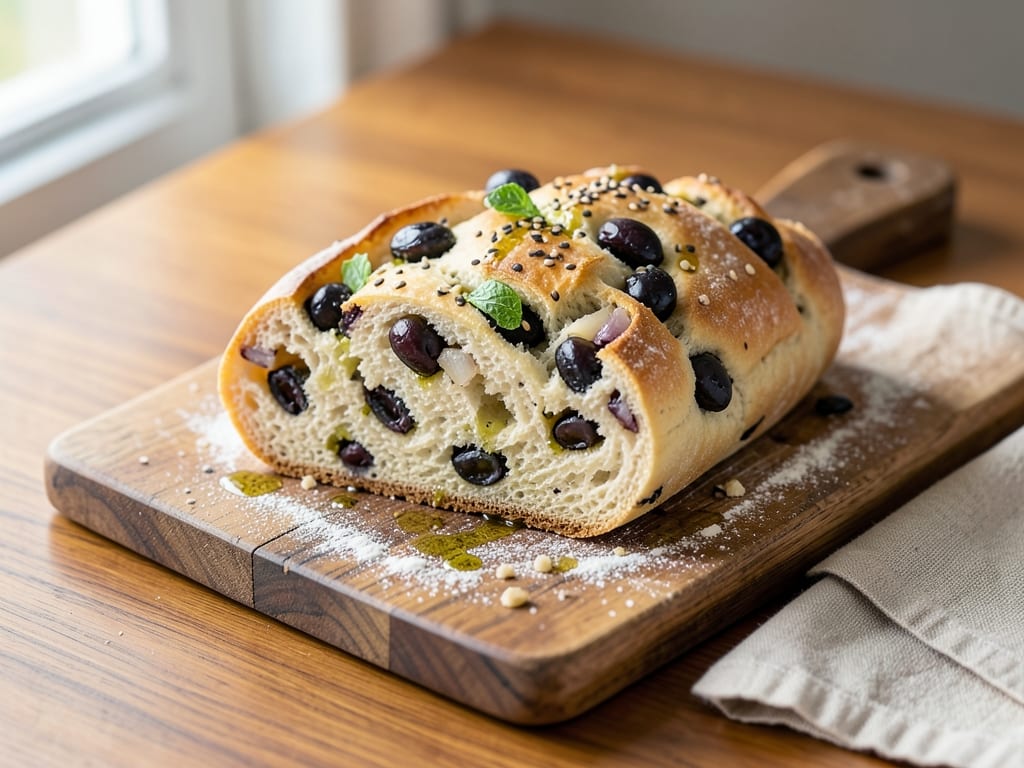
Cypriot Olive Bread (Eliopitta)
A soft, golden Cypriot loaf studded with salty Kalamata olives, sweet softened onion and fresh mint, with a fragrant olive oil crumb and a lightly crisp crust. It is excellent with halloumi, tomatoes or soup.
- Prep
- 40 min
- Cook
- 48 min
- Wait
- 2 hr
- Total
- 3 hr 28 min
- Makes
- 1 large round loaf (10 slices)
Steps
Before you start
- Pit the olives if they aren't already pitted. Pat them very dry on paper towels, because wet olives make the dough slippery and streaky.
- Plan on about 3½ hours from start to finish. Most of that is rising and cooling, so you can do other things.
- Warm the water to 100–110°F (38–43°C). It should feel comfortably warm, not hot. Water that is too hot will kill the yeast.
- Line a large baking sheet with parchment paper, and set a rack in the middle of the oven.
Soften the onion
- Heat 1 tbsp (15 ml) olive oil in a 10-inch (25 cm) skillet over medium heat.
- Add the chopped onion and a tiny pinch of salt from the dough measure.
- Cook, stirring often, for 7–8 minutes.
- Transfer to a plate and spread it out so it cools quickly.
+ Show details− Hide details
Ready when: The onion is soft, translucent and just beginning to turn pale gold, with no browned edges.
Tip: Don't let the onion brown. Browned onion tastes bitter against the olives. Make sure it is cool before it touches the dough, or it will warm the yeast too much.
Mix the dough
- In a large bowl, whisk together the flour, yeast, sugar and the remaining salt.
- Add the warm water and 3 tbsp (45 ml) olive oil.
- Stir with a wooden spoon or your hand until no dry flour remains and a shaggy, sticky dough forms, about 2 minutes.
+ Show details− Hide details
Ready when: No dry flour remains and the dough looks shaggy.
Tip: Keep the salt and yeast on opposite sides of the bowl until you add the water. Salt in direct contact can slow the yeast.
Knead until smooth
- Knead on a lightly oiled counter for 8–10 minutes, or in a stand mixer with a dough hook on medium-low for 6–7 minutes.
- Add 1–2 tbsp of flour only if the dough sticks to your hands like glue.
- It will stay soft and slightly tacky.
+ Show details− Hide details
Ready when: The dough is smooth and elastic. When you stretch a small piece it forms a thin, translucent window without tearing right away.
Tip: Resist adding much extra flour. A softer dough gives a moister, more tender crumb.
First rise
- Shape the dough into a ball and place it in a large bowl brushed lightly with oil.
- Cover with a damp towel or plastic wrap.
- Let it rise in a warm spot (75–80°F / 24–27°C) for about 1 hour.
+ Show details− Hide details
Ready when: The dough has doubled in size and a floured finger pressed in about ½ inch leaves a dent that springs back slowly.
Tip: In a cool kitchen this can take up to 90 minutes. Judge by the dough, not the clock.
Fold in olives and mint
- Turn the dough onto a lightly floured counter and press it into a rough 12×10-inch (30×25 cm) rectangle.
- Scatter the cooled onion, chopped olives and mint over the top.
- Fold the dough over itself and knead gently for 1–2 minutes, folding and pressing, until the filling is evenly spread.
- If olives pop out, push them back in.
+ Show details− Hide details
Ready when: Olives, onion and mint are evenly distributed, and the dough holds together as one mass.
Tip: Don't over-knead at this stage. The olives will smear and turn the crumb grayish-purple.
Shape the loaf
- Pull the edges of the dough toward the center and pinch to seal, then flip it seam-side down.
- Cup your hands around it and rotate it on the counter to form a tight round about 8 inches (20 cm) wide.
- Place it on the parchment-lined baking sheet.
+ Show details− Hide details
Ready when: The surface is taut and the loaf holds a dome shape.
Tip: Tuck any olives sticking out of the surface back into the dough. Exposed olives scorch in the oven.
Second rise and preheatOven 400°F / 205°C
- Cover the loaf loosely with a damp towel.
- Let it rise for about 30 minutes, until puffy and about 1½ times its size.
- About 15 minutes into this rise, preheat the oven to 400°F (200°C).
+ Show details− Hide details
Ready when: The loaf looks puffy, and a gently pressed fingertip leaves a dent that fills back in slowly.
Score, brush and bakeOven 400°F / 205°C
- Brush the loaf with 1 tbsp (15 ml) olive oil and sprinkle with sesame seeds, if using.
- Cut 3 parallel slashes about ½ inch (1 cm) deep across the top.
- Bake on the middle rack at 400°F (200°C) for 38–42 minutes, rotating the pan after 20 minutes.
+ Show details− Hide details
Ready when: The crust is deep golden brown and the loaf sounds hollow when tapped on the bottom. An instant-read thermometer in the center reads 200–205°F (93–96°C).
Tip: If the top browns too fast before 30 minutes, tent the loaf loosely with foil.
Cool before slicing
- Transfer the loaf to a wire rack.
- Let it cool for at least 30 minutes before slicing with a serrated knife.
- Serve warm or at room temperature.
+ Show details− Hide details
Ready when: The loaf is warm rather than hot to the touch, and the base feels dry.
Tip: Cutting too early traps steam and makes the crumb gummy.
Good to know
Tips
- Dry the olives thoroughly and chop them fairly coarsely. Wet or tiny pieces bleed color and moisture into the dough.
- Taste your olives first. If they are very salty, rinse them briefly and pat dry, since the dough already has salt.
- A kitchen scale gives the most reliable result because cup measurements of flour can vary by 20% or more.
- For a crustier loaf, put an empty metal pan on the bottom rack while preheating and pour 1 cup (240 ml) hot water into it when you put the loaf in.
Make ahead
Complete steps 1–6, then cover the shaped loaf tightly and refrigerate for up to 12 hours. Let it stand at room temperature for 45–60 minutes until puffy, then preheat the oven and bake as directed. You can also bake the loaf a day ahead and reheat it.
Storage & reheating
Room temperature: wrap well and keep up to 2 days. Fridge: up to 5 days (the crumb firms up, so reheat before serving). Freezer: slice, wrap tightly and freeze up to 3 months. To reheat, warm slices or the whole loaf in a 350°F (175°C) oven for 8–12 minutes (whole loaf 15–20 minutes, wrapped in foil), or toast slices.
Substitutions
- fresh mint leaves → 2 tbsp (6 g) dried mint. Dried mint is common in Cyprus. Mix it into the flour in step 2 rather than folding it in later.
- Kalamata olives → Green Cypriot-style olives (such as Halkidiki). Gives a sharper, fruitier flavor and a greener crumb. Use the same weight, pitted and dried well.
- bread flour (or all-purpose flour) → All-purpose flour. Works well but gives a slightly softer, less chewy crumb. You may need 1–2 tbsp less water.
- instant yeast → Active dry yeast, 2¾ tsp (8.5 g). Stir it into the warm water with the sugar and let it foam for 5–10 minutes before adding to the flour.
More yeast breads
See all →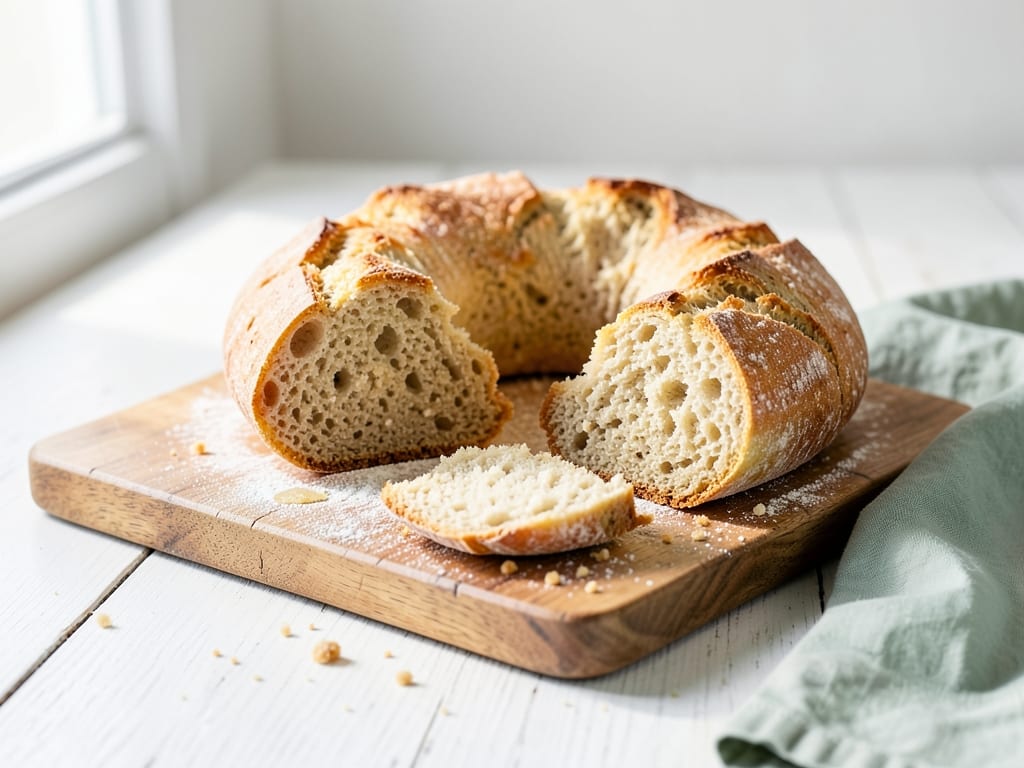
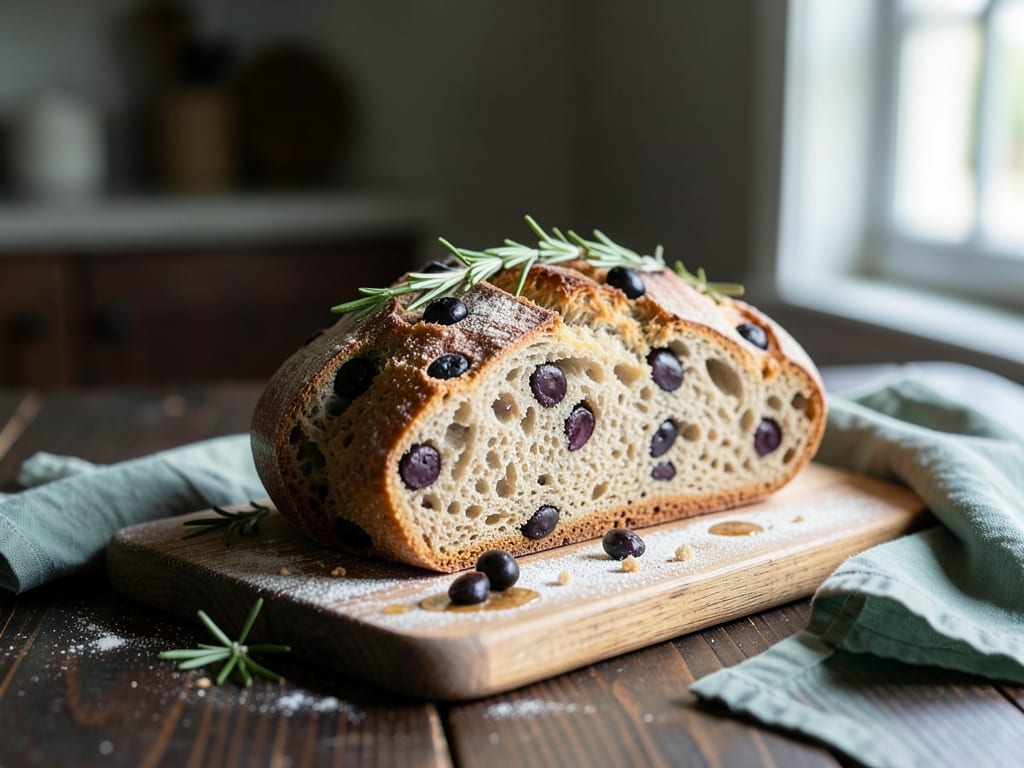
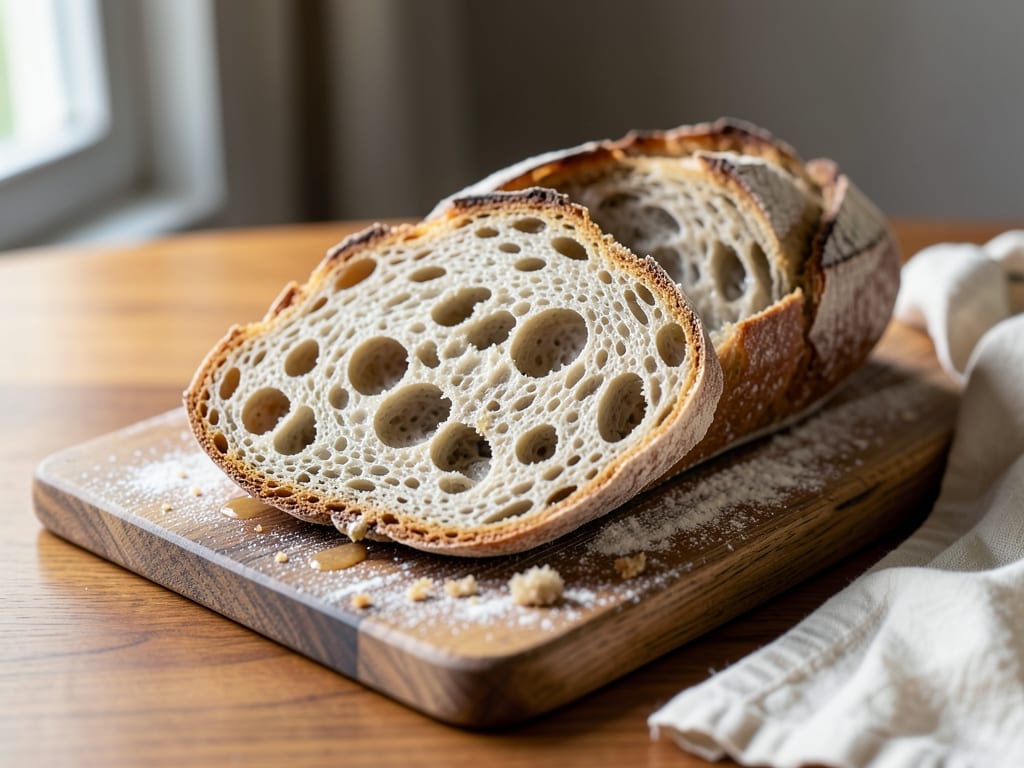
Find more like this
- Meal
- Lunch
- Cuisine
- Mediterranean
- Method
- Oven