Greek Tsoureki Easter Bread
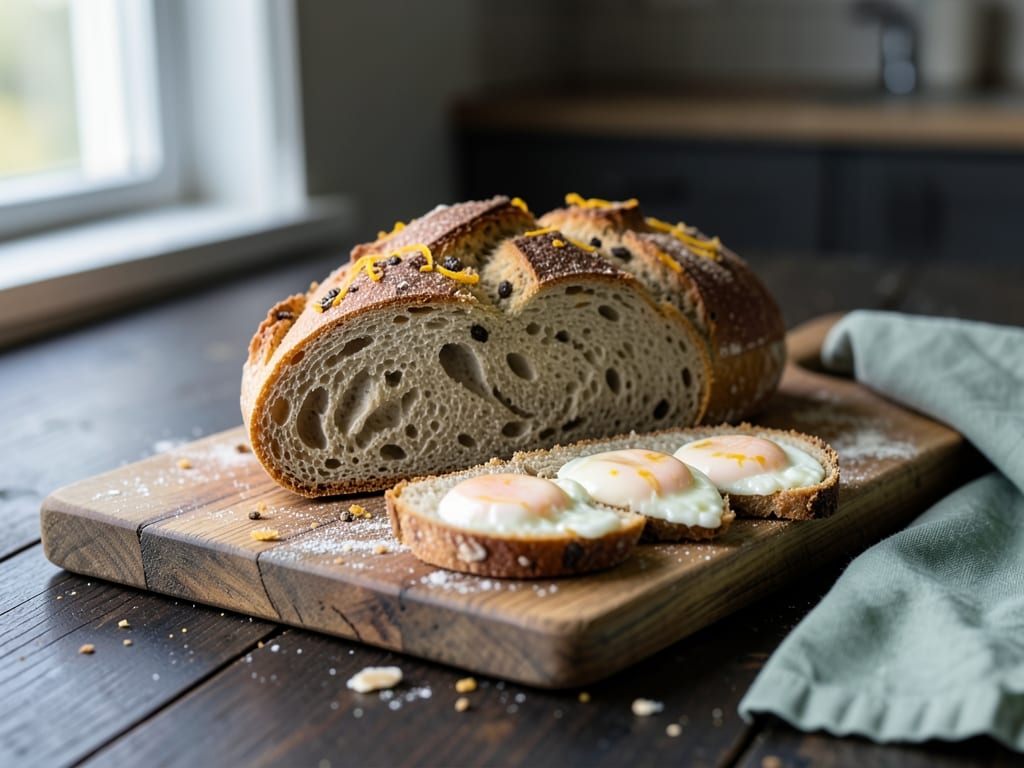
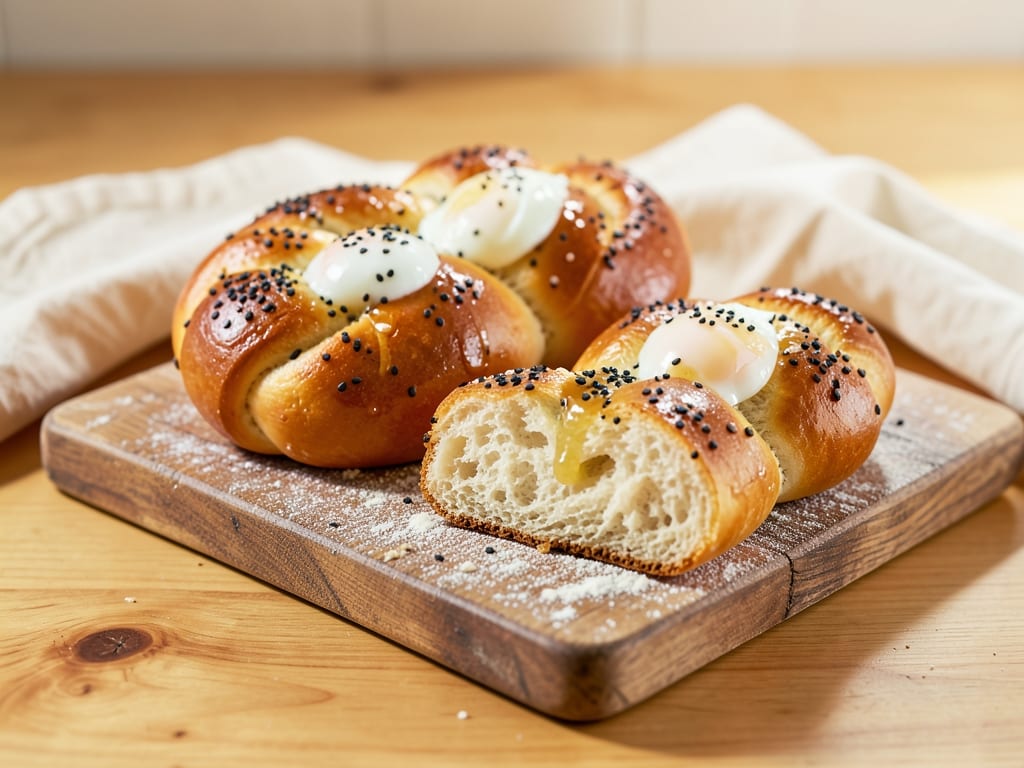
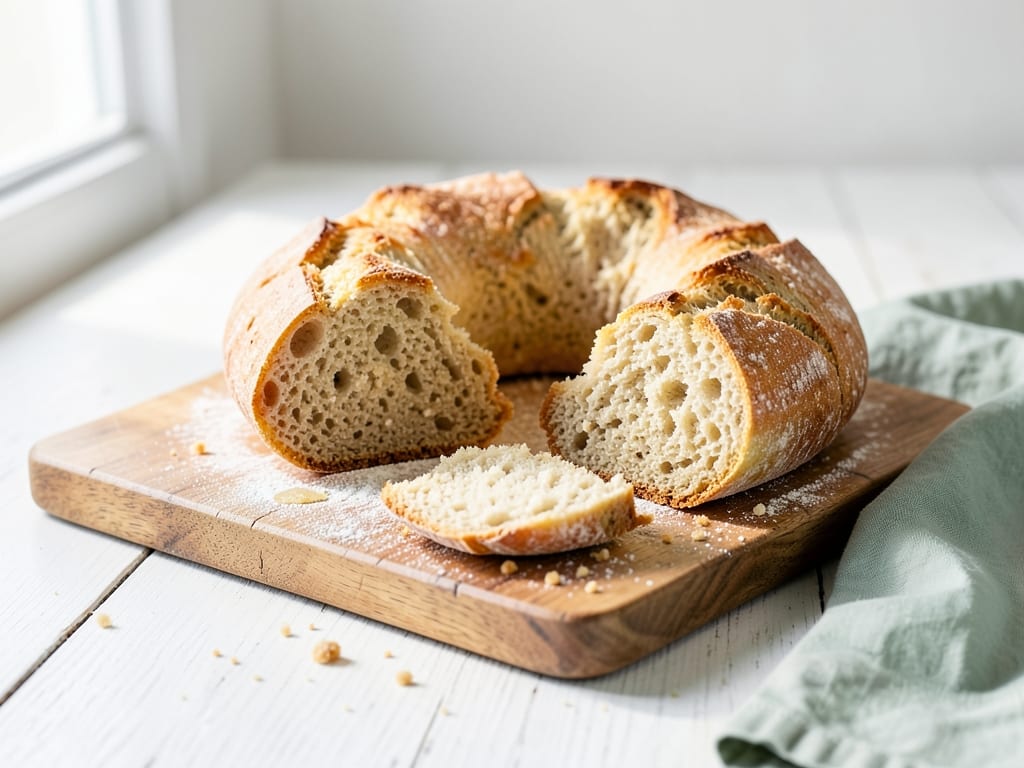
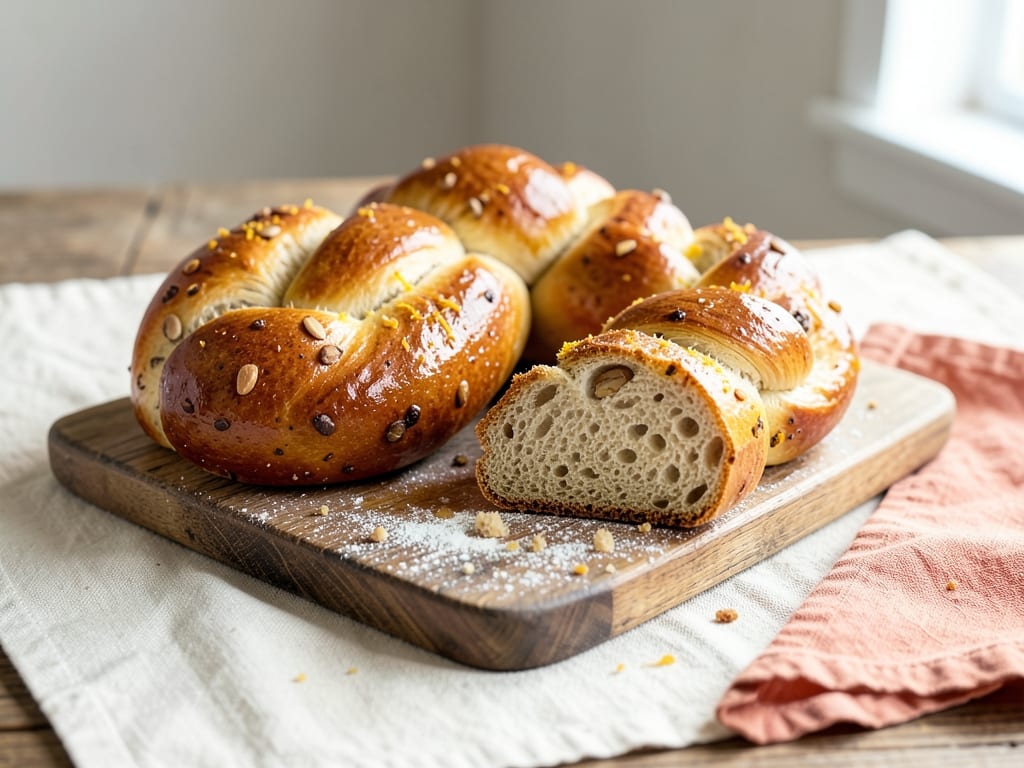
Two glossy braided loaves of soft, feathery, pull-apart Greek Easter bread, perfumed with orange zest, mahlepi and mastic. It's lightly sweet, rich with eggs and butter, and perfect for toasting.
- Prep
- 54 min
- Cook
- 35 min
- Wait
- 3 hr 30 min
- Total
- 4 hr 59 min
- Makes
- 2 braided loaves (10 slices each)
Steps
Before you start
- Set out the 3 eggs and the butter 30 minutes ahead so the eggs are at room temperature. Melt the butter and let it cool until just warm to the touch.
- Mahlepi (ground cherry-stone kernel) and mastic (resin tears) are sold at Greek and Middle Eastern groceries and online. Buy whole mastic tears, because they grind best with sugar.
- Plan on about 5 hours from start to finish. Most of that is rising and cooling.
- Warm the milk to 100–110°F (38–43°C), which feels comfortably warm. Hotter milk can kill the yeast.
Grind the mastic
- Put the mastic tears and 1 tablespoon (12 g) of the sugar in a mortar.
- Grind with the pestle for 2–3 minutes to a fine, sandy powder.
- Stir in the mahlepi and set aside.
+ Show details− Hide details
Ready when: No visible chunks of resin remain, and the powder looks pale and uniform.
Tip: Sugar stops the sticky mastic from clumping on the pestle. Don't skip it.
Make the sponge
- In the bowl of a stand mixer, whisk the warm milk, yeast, 40 g (3 tbsp) of the sugar and 100 g (¾ cup) of the flour until smooth.
- Cover and leave in a warm spot for 15 minutes.
+ Show details− Hide details
Ready when: The surface is foamy and bubbly and has puffed noticeably.
Tip: If the sponge shows no bubbles after 15 minutes, the yeast or milk was off. Start again with fresh yeast.
Mix the dough
- Add the eggs, the remaining sugar (about 98 g), orange zest, cooled melted butter, the mastic-mahlepi mixture and salt to the sponge.
- Stir briefly with a spatula.
- Add the remaining 650 g (about 5¼ cups) flour and mix on low with the dough hook for 2 minutes, until a shaggy dough forms.
+ Show details− Hide details
Ready when: No dry flour remains and the dough clumps around the hook.
Tip: Add the salt away from the yeast, which is why it goes in with the flour. Direct contact can slow the yeast.
Knead until silky
- Knead on medium-low speed for 10 minutes.
- The dough will be soft and slightly tacky at first.
- Scrape the bowl once or twice.
- Resist adding more than 2 tablespoons of extra flour.
+ Show details− Hide details
Ready when: The dough is smooth and elastic, pulls from the sides of the bowl, and passes the windowpane test (a small piece stretches thin without tearing).
Tip: Kneading by hand takes about 15 minutes on a lightly floured counter. The dough should stay soft, because a stiff dough bakes into a dry loaf.
First rise
- Grease a large bowl with the oil.
- Shape the dough into a ball, turn it in the bowl to coat, and cover tightly with plastic wrap.
- Let it rise in a warm place (75–80°F / 24–27°C) for 1½ hours.
+ Show details− Hide details
Ready when: The dough has doubled, and a floured finger pressed in 1 inch leaves a dent that springs back slowly.
Tip: A cool kitchen can take up to 2½ hours. Judge by the dough, not the clock.
Divide and braid
- Turn the dough onto a very lightly oiled counter and divide it into 2 equal portions (about 900 g each).
- Cut each portion into 3 pieces.
- Roll each piece into a rope about 20 inches (50 cm) long, tapering the ends slightly.
- Pinch the three ropes together at one end, braid them loosely, and pinch and tuck the other end under.
- Place each loaf on its own parchment-lined baking sheet.
+ Show details− Hide details
Ready when: Each braid is even and about 14 inches (35 cm) long, with the ends sealed.
Tip: Braid loosely. A tight braid can't expand as it rises and will split in the oven. If the ropes shrink back while rolling, rest them for 5 minutes.
Second riseOven 350°F / 175°C
- Cover the loaves loosely with kitchen towels.
- Let them rise for 1 hour.
- About 20 minutes before the end, place a rack in the center of the oven and preheat to 350°F (175°C).
+ Show details− Hide details
Ready when: The braids look puffy and nearly doubled, and a gentle fingertip press leaves a slow-filling dent.
Tip: Bake one sheet at a time if your oven is small, and keep the second loaf covered and out of the draft.
Egg wash and top
- Beat the wash egg with the 1 tablespoon milk until streak-free.
- Gently brush it over the loaves, including the crevices, taking care not to deflate them.
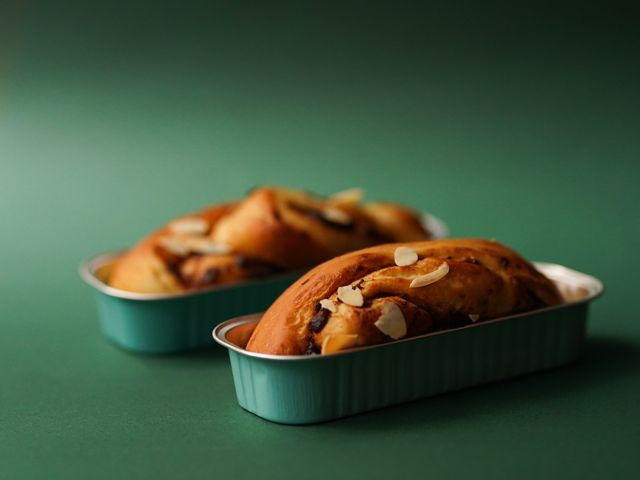
- Scatter the sliced almonds over the top, if using.
+ Show details− Hide details
Ready when: The loaves are evenly glossy with no pooled egg.
Tip: Pooled egg in the crevices bakes into scrambled-looking patches, so brush lightly.
BakeOven 350°F / 175°C
- Bake in the preheated 350°F (175°C) oven for 30–35 minutes, rotating the sheet halfway.
- If the tops are dark brown after 20 minutes, tent loosely with foil.
- If baking both sheets at once, swap their racks at the halfway point.
+ Show details− Hide details
Ready when: The crust is deep golden-mahogany, the loaf sounds hollow when tapped on the bottom, and the center reads 190°F (88°C) on an instant-read thermometer.
Tip: Sweet doughs brown quickly. Use the thermometer, not color alone, to avoid pulling out a doughy center.
Cool completely
- Slide the loaves, still on parchment, onto wire racks.
- Cool for at least 45 minutes before slicing.
+ Show details− Hide details
Ready when: The loaves feel barely warm to the touch.
Tip: Slicing while hot compresses the crumb and makes it gummy.
Good to know
Tips
- Weigh the flour. Cups vary widely, and too much flour is the most common reason for dry tsoureki.
- Don't rush the rises. Long, slow fermentation builds the signature stringy, feathery crumb.
- For a traditional Easter look, press 1–2 dyed red hard-boiled eggs into each braid after baking, or tuck them in during shaping and tent with foil. Keep cooked eggs refrigerated and eat within a week.
- Use a fine microplane for the orange zest and avoid the bitter white pith.
Make ahead
"After kneading, you can refrigerate the covered dough in the oiled bowl for up to 12 hours for a slow first rise. Let it sit at room temperature for 30 minutes, then shape and continue as written. Or bake the loaves up to 2 days ahead and store them as below."
Storage & reheating
"Room temperature: wrap well and keep up to 3 days. Fridge: up to 5 days in an airtight bag, though it will dry out faster. Freezer: wrap whole loaves or slices tightly and freeze up to 3 months. Thaw at room temperature, then warm in a 300°F (150°C) oven for 8–10 minutes, or toast slices."
Substitutions
- ground mahlepi → ¼ tsp almond extract plus ¼ tsp ground anise seed. This won't taste the same as mahlepi's cherry-and-almond note, but it gives a similar warm, floral scent.
- mastic tears → ½ tsp vanilla extract added with the eggs. Mastic has a unique pine-resin aroma. Without it the bread is still tasty, just less traditional.
- bread flour → all-purpose flour, same weight. The crumb will be slightly softer and less chewy. Add flour only if the dough is truly too sticky to handle.
- unsalted butter → mild olive oil, 100 ml. This gives a lighter flavor. Some Greek families use oil during Lent-adjacent baking.