Sourdough Libyan Asida Sweet Semolina Bread
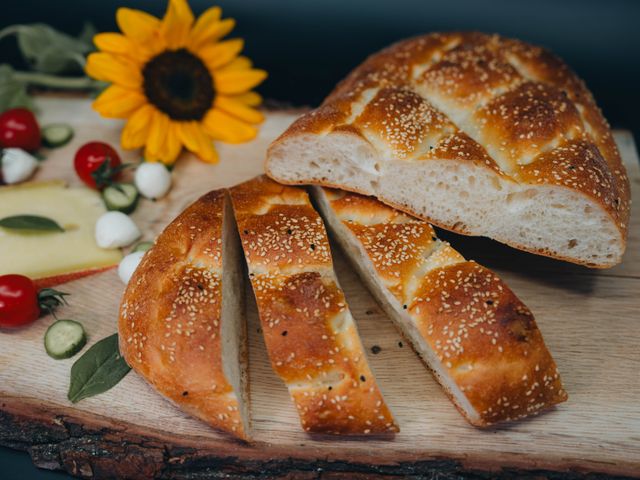
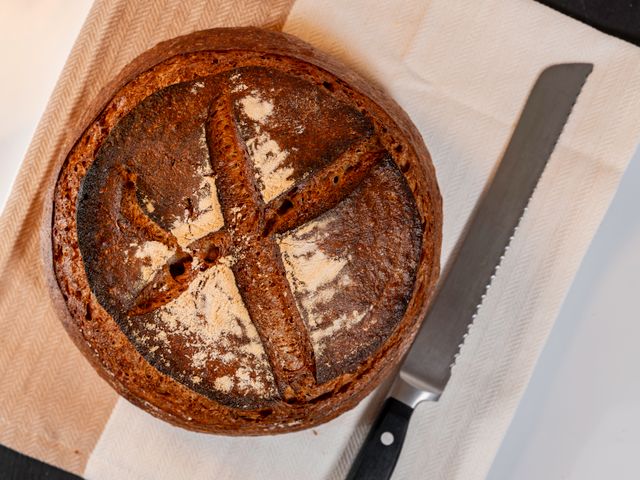
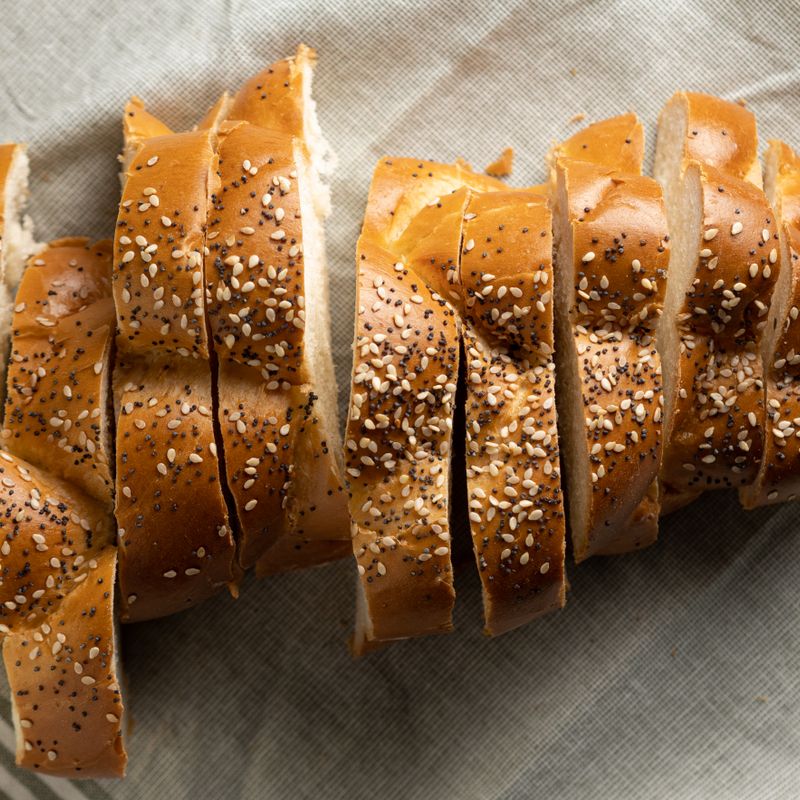
A rich, golden sweet semolina bread with the gentle tang of sourdough fermentation. This Libyan-inspired asida features a dense, tender crumb infused with butter and honey, topped with toasted sesame seeds. The sourdough starter adds depth while the semolina flour creates a subtly grainy texture and warm flavor. Traditionally served cut into wedges and drizzled with more honey or clarified butter, this bread is perfect for breakfast or special occasions.
- Prep
- 20 min
- Cook
- 35 min
- Wait
- 9 hr
- Total
- 9 hr 55 min
- Makes
- 1 loaf (8 wedges)
Steps
Before you start
- Ensure your sourdough starter is active and bubbly—feed it 4–6 hours before mixing if using from the refrigerator.
- Bring all ingredients to room temperature except butter, which should be soft and pliable.
- Preheat oven to 375°F (190°C) about 15 minutes before baking.
- Have a 9-inch (23 cm) round cake pan or cast-iron skillet ready, lightly oiled.
Mix dough components
- In a large bowl, combine the sourdough starter, semolina flour, all-purpose flour, honey, soft butter, and salt.
- Add the water and stir vigorously with a wooden spoon for 2–3 minutes until a thick, sticky dough forms.
- The mixture should look shaggy and wet, with no visible dry flour streaks.
+ Show details− Hide details
Ready when: No visible dry flour; dough is thick and sticky
Tip: Do not knead this dough—overworking will make it tough. Gentle stirring incorporates air without developing excess gluten.
First rise (bulk fermentation)
- Cover the bowl with a damp towel or plastic wrap.
- Let the dough rise at room temperature (68–72°F / 20–22°C) for 3 hours.
- After 1.5 hours, give the dough a single stretch-and-fold (pull one edge over the top and repeat around the bowl).
- The dough should rise about 30–40% and show visible bubbles on the surface by the end.
+ Show details− Hide details
Ready when: Dough is visibly airier, with bubbles visible under the towel, and has risen noticeably
Tip: One stretch-and-fold halfway through builds strength without aggressive kneading, which would deflate the delicate bubbles.
Shape into pan
- Oil a 9-inch (23 cm) round cake pan or cast-iron skillet lightly.
- Using a damp bench scraper or dough knife, gently transfer the entire dough to the pan, letting it settle naturally into the bottom and sides.
- Smooth the top gently with a damp hand, but do not press hard—you want to preserve the bubbles.
+ Show details− Hide details
Ready when: Dough fills the pan loosely and sits level
Tip: Work gently here; the dough is delicate. A wet bench scraper prevents sticking and tearing.
Final rise (proofing)
- Cover the pan with a damp towel or plastic wrap.
- Let it rise at room temperature for 3–4 hours.
- The dough should rise above the rim of the pan by about 1 inch (2.5 cm) and jiggle slightly when you gently shake the pan.
+ Show details− Hide details
Ready when: Dough domes above the pan and has a jiggly, aerated appearance
Tip: If your kitchen is cool (below 65°F / 18°C), proof longer. If warmer, check after 2.5 hours to avoid overproofing.
Preheat ovenOven 375°F / 190°C
- About 15 minutes before baking, preheat your oven to 375°F (190°C).
+ Show details− Hide details
Tip: Use an oven thermometer if you have one; many home ovens run hot or cool, which affects baking time.
Brush with butter and seeds
- Just before baking, uncover the dough.
- Brush the top generously with melted butter using a pastry brush.
- Sprinkle the sesame seeds evenly over the buttered surface, pressing gently so they stick.
+ Show details− Hide details
Ready when: Top is completely covered with butter and sesame seeds
Tip: Apply butter and seeds just before baking so they don't dry out on top of the risen dough.
Bake until goldenOven 375°F / 190°C
- Place the pan in the preheated 375°F (190°C) oven on the middle rack.
- Bake for 33–38 minutes.
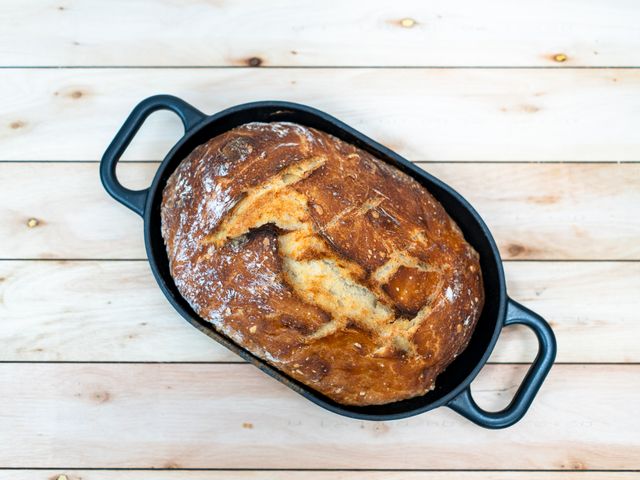
- The top should turn deep golden brown, and the bread should smell rich and sweet.
- If the top browns too quickly (after 20 minutes), loosely tent it with aluminum foil to prevent over-browning while the interior continues to cook.
+ Show details− Hide details
Ready when: Top is deep golden brown; a skewer inserted into the center comes out with a few moist crumbs (not wet)
Tip: Watch for color after 30 minutes. Semolina flour browns darker and faster than wheat flour, so monitor closely to avoid burning the top.
Cool in pan
- Remove the bread from the oven and let it cool in the pan for 15 minutes.
- The bread will set slightly but remain warm.
- This makes it easier to turn out and prevents the crust from cracking.
+ Show details− Hide details
Ready when: Bread is firm enough to turn out but still warm to the touch
Tip: Do not turn out immediately—the bread needs time to set or it will fall apart.
Turn out and finish
- Turn the bread out onto a wire rack or cutting board.
- If serving immediately, you can brush the warm bread lightly with extra honey or butter and sprinkle a few more sesame seeds on top.
- The bread will continue to cool and firm up for another 20–30 minutes.
+ Show details− Hide details
Ready when: Bread is turned out and cooling
Tip: This bread is best served warm or at room temperature, drizzled with honey or clarified butter on the side for dipping.
Good to know
Tips
- Check that your sourdough starter is truly active before mixing—it should double in size within 4–8 hours of feeding and smell pleasantly sour and yeasty. A weak starter will result in a dense, slow-rising bread.
- This bread is intentionally thick and dense, more like a pudding bread (asida) than an airy loaf. Do not expect a feathery crumb; the structure is meant to be moist and buttery.
- Semolina flour absorbs slightly more liquid than wheat flour, so the dough will be thicker and stickier than typical sourdough. This is normal—do not add extra flour.
- For extra richness, brush a thin layer of melted clarified butter (ghee) over the warm bread immediately after removing from the oven, before serving. Serve with a small bowl of honey for drizzling or dipping.
Make ahead
You can prepare the dough through the end of the first rise (after stretch-and-fold), then cover and refrigerate for up to 12 hours. The next morning, let it come to room temperature (about 1–2 hours) before shaping and proceeding with the final rise. Cold fermentation develops more complex flavor. Alternatively, shape the dough, cover, and refrigerate for up to 8 hours before the final proof—add 1–2 hours to the proof time when cold.
Storage & reheating
Room temperature (covered): up to 2 days. The bread stays moist and dense, improving slightly on day 2 as flavors meld. Refrigerator (wrapped): up to 5 days. Reheat gently wrapped in foil at 300°F (150°C) for 10 minutes. Freezer (wrapped tightly in foil and a freezer bag): up to 3 months. Thaw at room temperature for 2–3 hours, then reheat as above.
Substitutions
- semolina flour (durum wheat) → Durum flour or semolina wheat flour. These are closely related; use 1:1 by weight. The crumb will be similarly golden and slightly grainy, though durum is slightly finer.
- honey → Dark brown sugar or muscovado sugar. Use 6 tablespoons (75 g) per 0.5 cup (170 g) honey. Brown sugar will make the bread slightly darker and less glossy, with a molasses undertone.
- sesame seeds (white or mixed) → Nigella seeds, sunflower seeds, or pine nuts. Use the same weight (50 g). Nigella will give a peppery note; sunflower seeds add nuttiness; pine nuts provide richness.
- unsalted butter → Clarified butter or ghee. Use the same weight. This adds a deeper, more fragrant richness and is traditional in Libyan cuisine. The bread will brown slightly faster.