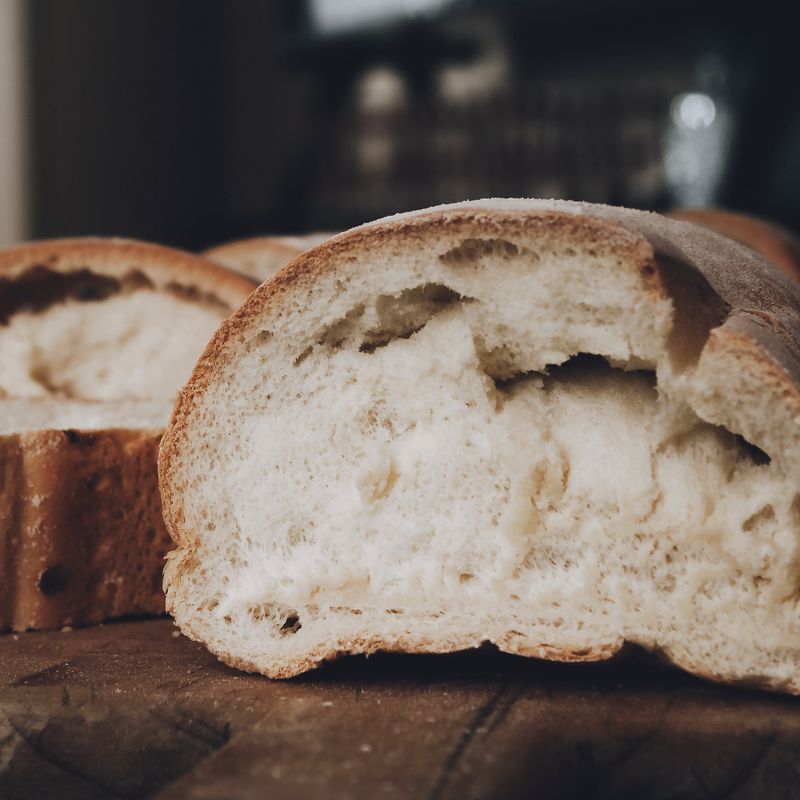
Sourdough Levantine Labneh and Cucumber Stuffed Rounds
Tender, tangy sourdough rounds stuffed with creamy labneh, cool cucumber, and fresh mint, finished with sumac for a bright, Middle Eastern flavor profile. A beautiful way to showcase fermented dough with vibrant Levantine ingredients.
- Prep
- 45 min
- Cook
- 25 min
- Wait
- 8 hr
- Total
- 9 hr 10 min
- Makes
- 8 rounds (serves 4–8 as a main or appetizer)
Steps
Before you start
- Have active sourdough starter fed 4–8 hours ahead (should smell pleasantly tangy and show bubbles)
- Make labneh the day before or use store-bought; it needs time to drain
- Preheat oven to 450°F (230°C) 20 minutes before baking
- Have all filling ingredients prepped and chilled
Mix dough
- In a large bowl or the bowl of a stand mixer, combine the active starter (150 g), warm water (240 ml), and bread flour (350 g).
- Mix with your hands or the dough hook on low speed until all flour is incorporated and a shaggy mass forms, about 2 minutes.
- Cover the bowl with a damp kitchen towel and let it rest for 30 minutes (autolyse).
- This helps the flour fully hydrate.
+ Show details− Hide details
Ready when: All flour is wet and incorporated
Tip: Warm water activates the starter's fermentation and develops gluten.
Add salt and knead
- Add the salt (7 g) to the dough and continue mixing on medium speed (or knead by hand) for 8–10 minutes until the dough is smooth, elastic, and passes the windowpane test (a small piece stretches thin without tearing).
- The dough should feel slightly sticky but hold together.
+ Show details− Hide details
Ready when: Dough is smooth, elastic, and stretches without tearing
Tip: Adding salt after hydration prevents it from interfering with gluten development.
Bulk fermentation
- Place the dough in a lightly oiled bowl, cover with plastic wrap or a damp towel, and let it rise at room temperature (68–72°F / 20–22°C) for 4–5 hours, or until roughly doubled in size.
- Perform 3–4 sets of stretch-and-fold every 30 minutes during the first 2 hours: wet your hand, grab one side of the dough, stretch it up and fold it over the center, rotate the bowl 90°, and repeat 4 times.
+ Show details− Hide details
Ready when: Dough increases to roughly double size; bubbles visible inside
Tip: Stretch-and-folds replace aggressive kneading and strengthen the gluten network without drying the dough.
Prepare filling
- While the dough ferments, prepare the filling.
- In a small bowl, combine the labneh (200 g), diced cucumber (350 g), chopped mint (20 g), and sumac (1 tsp / 2 g).
- Gently fold until evenly mixed.
- Taste and season with salt to preference.
- Cover and refrigerate until needed.
+ Show details− Hide details
Ready when: All ingredients are combined and chilled
Tip: Patting the cucumber dry prevents excess liquid from soaking into the bread; chill the filling so it stays cool during baking.
Shape into rounds
- Turn the dough onto a lightly floured work surface and gently divide it into 8 equal pieces (roughly 90 g each).
- Form each piece into a tight, smooth round by folding the edges underneath and rolling toward you slightly.
- Arrange them on a sheet of parchment paper, spaced at least 2 inches apart.
- Cover with a damp towel and let them rest for 20 minutes.
+ Show details− Hide details
Ready when: 8 evenly sized balls with a smooth, taut surface
Tip: Tight shaping traps gas and gives you a clean surface to work with; the rest relaxes the gluten before stuffing.
Stuff rounds
- Flatten each round slightly with the heel of your hand into a disc about 4 inches (10 cm) wide.
- Gently poke and stretch the center with your thumb until a small pocket forms, leaving about ½-inch (1.25 cm) of dough around the edges.
- Using a small spoon or piping bag, fill each pocket with about 25 g (roughly 2 tbsp) of the labneh-cucumber mixture.
- Fold the edges slightly inward to partially seal the filling; it should be mostly covered but a few gaps are fine—the dough will seal a bit during proofing.
+ Show details− Hide details
Ready when: 8 rounds evenly filled with labneh mixture and edges folded
Tip: Work gently to avoid tearing the dough; if it resists, let it rest 5 minutes before continuing.
Final proofOven 450°F / 230°C
- Cover the stuffed rounds with a damp towel and let them proof at room temperature for 45 minutes to 1 hour.
- They should feel slightly puffy and the dough will look more relaxed.
- Meanwhile, preheat your oven to 450°F (230°C) and place a Dutch oven inside to heat for at least 20 minutes.
+ Show details− Hide details
Ready when: Rounds feel puffy and dough has relaxed; oven is hot
Tip: Final proof time varies with temperature; avoid over-proofing, which causes the filling to push through and dough to collapse.
Transfer and scoreOven 450°F / 230°C
- Carefully remove the hot Dutch oven from the oven.
- Line the bottom with a sheet of parchment paper (it can hang over the edges).
- Using the parchment paper the rounds are on, carefully transfer them into the hot Dutch oven, spacing them so they don't touch.
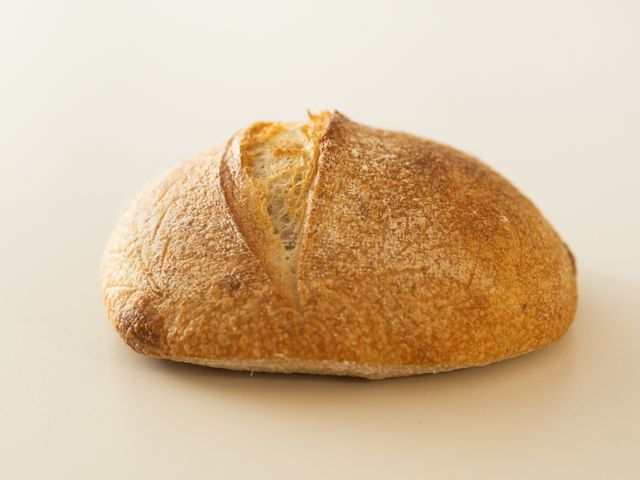
- Using a sharp knife, score the top of each round with a small slash or two to allow steam to escape.
- If desired, sprinkle a pinch of finishing salt on top.
+ Show details− Hide details
Ready when: Rounds are in the hot vessel and scored
Tip: Parchment paper makes transfer safe; scoring prevents explosive bursting and helps steam release evenly.
Bake coveredOven 450°F / 230°C
- Cover the Dutch oven with its lid and bake at 450°F (230°C) for 15 minutes.
- The steam trapped inside will create a beautiful crust and help the bread rise.
- You should hear slight sizzling.
+ Show details− Hide details
Ready when: Dough has risen and steam is visible when you peek
Tip: Do not lift the lid during this phase; the steam is essential for oven spring.
Bake uncoveredOven 450°F / 230°C
- Carefully remove the lid (watch for hot steam) and bake uncovered for another 10 minutes, until the rounds are deep golden brown on top and the internal temperature of the dough (away from filling) reaches 205–210°F (96–99°C).
- The filling may poke through slightly in a few spots; this is normal.
+ Show details− Hide details
Ready when: Rounds are deep golden brown; internal temperature is 205–210°F (96–99°C)
Tip: Opening the Dutch oven allows the crust to firm and brown; checking temperature ensures the dough is fully baked, not just the crust.
Cool and finish
- Transfer the rounds to a wire rack and let them cool for 10–15 minutes.
- While still warm, drizzle lightly with extra-virgin olive oil if desired, and finish with a tiny pinch of sumac or fresh mint.
- Serve warm or at room temperature.
+ Show details− Hide details
Ready when: Rounds are warm but firm enough to handle; oil is absorbed
Tip: Cooling prevents the filling from being scalding hot; olive oil and a final herb sprinkle add richness and aroma.
Good to know
Tips
- For the best flavor, use a sourdough starter that is at peak fermentation—bubbly, doubled in bulk, and with a pleasant tangy smell. If your starter is sluggish (long fermentation times), feed it 8 hours ahead and keep it in a warm spot.
- If your dough is very sticky, it's okay. Sourdough dough is naturally wetter than commercial yeast dough; use wet hands instead of extra flour when shaping.
- Do not over-stuff the rounds; too much filling will ooze out and burn on the bottom. Aim for roughly 2 tablespoons (25 g) per round.
- These rounds are at their best warm and within a few hours of baking, when the crumb is still tender and the filling is creamy. Room-temperature versions are also delicious and travel well if wrapped.
Make ahead
Make labneh 1 day ahead and refrigerate. Prepare the filling up to 4 hours ahead and keep chilled. You can also mix the dough and begin bulk fermentation up to 2 hours ahead, then shape and proof on the day of serving.
Storage & reheating
Room temperature: up to 4 hours (wrapped in a clean kitchen towel). Refrigerator: wrap each round in plastic wrap and store for up to 3 days; reheat wrapped in foil at 350°F (175°C) for 10 minutes. Freezer: wrap individually in plastic wrap and foil; freeze for up to 3 months. Thaw overnight in the fridge and reheat as above.
Substitutions
- labneh (strained yogurt), cold → Thick Greek yogurt or 50/50 blend of thick Greek yogurt and cream cheese. Greek yogurt is tangier but less creamy; cream cheese adds richness. Use 150 g yogurt + 50 g cream cheese if combining.
- English cucumber or Persian cucumber → Zucchini, grated and squeezed dry, or thinly shaved radish. Zucchini is milder; radish adds peppery crunch. Both must be patted very dry to avoid sogginess.
- fresh mint leaves → Fresh parsley, cilantro, or dill, finely chopped. Each herb shifts the flavor profile; use 20 g (¾ oz) of your choice, or combine 10 g mint + 10 g parsley for balance.
- ground sumac → Grated lemon zest or 1 tsp pomegranate molasses mixed into the filling. Sumac is tart and lemony; pomegranate molasses adds sweetness and depth. Both add brightness; mix well so molasses doesn't create pockets.