
Sourdough Japanese Yuzu Kosho and Roasted Seaweed Crisps
Thin, crispy sourdough crisps brushed with fragrant yuzu kosho (Japanese citrus-chile paste) and topped with roasted seaweed sheets for an addictive snack. The combination of tangy sourdough, bright yuzu, subtle heat, and umami-rich nori creates layers of complex flavor in a crunchy bite. Perfect for entertaining or snacking straight from the oven.
Steps
Before you start
- Preheat your oven to 375°F (190°C) with racks positioned in the upper and lower thirds
- Have your sourdough bread at room temperature for easier slicing
- Line two baking sheets with parchment paper
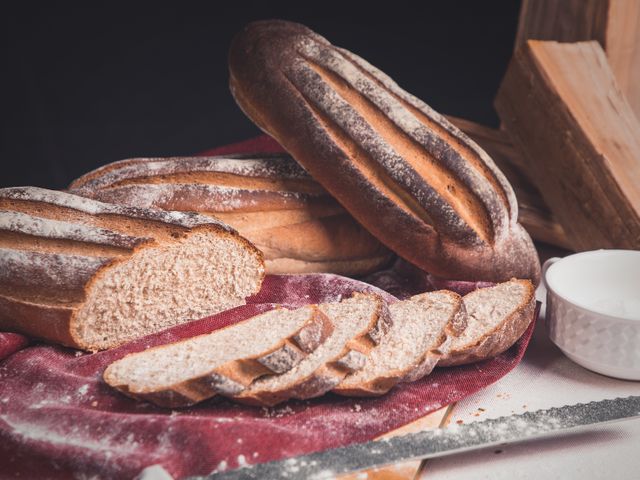
Slice the sourdough
- Using a serrated bread knife, cut the sourdough loaf into very thin slices, about ⅛-inch (3 mm) thick.
- If the bread is crumbly, a gentle sawing motion works best.
- Aim for uniform thickness so all slices bake evenly.
- You should get 35–45 slices depending on the loaf size.
+ Show details− Hide details
Ready when: Slices are uniform and thin enough to see light through them
Tip: Day-old or older sourdough slices more cleanly than fresh; avoid very soft bread that will tear
Arrange on baking sheets
- Lay the bread slices flat on the prepared baking sheets in a single layer, allowing them to overlap slightly if needed.
- Divide slices evenly between the two sheets so they bake at the same rate.
- Make sure none are folded or bunched.
+ Show details− Hide details
Ready when: All slices lie flat and are visible
Tip: Overlapping slightly is fine; they will shrink as they toast
Toast the breadOven 375°F / 190°C
- Place both baking sheets in the preheated 375°F (190°C) oven, one on the upper rack and one on the lower rack.
- Toast for 10–12 minutes, rotating the sheets and swapping positions halfway through.
- The bread should be golden and just crispy on the edges but still slightly pliable.
- Watch carefully—they can go from golden to burnt quickly.
+ Show details− Hide details
Ready when: Bread is light golden brown and crispy at the edges; it flexes slightly but doesn't bend easily
Tip: Rotate and swap racks at 6 minutes to ensure even browning; ovens have hot spots
Mix yuzu kosho and oil
- In a small bowl, whisk together the yuzu kosho and extra virgin olive oil until smooth and combined.
- The mixture should be brushable but not runny.
- Taste a tiny amount on a spoon—it should be aromatic, tangy, and have a gentle heat from the chiles.
+ Show details− Hide details
Ready when: Mixture is smooth and uniform with no lumps
Tip: If yuzu kosho is very thick, warm the oil slightly to help it emulsify
Brush on yuzu kosho
- Remove the baking sheets from the oven.
- Working quickly while the bread is still warm, use a pastry brush or the back of a small spoon to lightly brush or spread a thin layer of the yuzu kosho mixture on one side of each crisp.
- You don't need much—just enough to coat lightly.
- Not every spot needs coverage; some variation in intensity is desirable.
+ Show details− Hide details
Ready when: All crisps have a light coating of yuzu kosho on the upper surface
Tip: Work quickly so the crisps don't cool and harden before topping; warm bread absorbs flavors better
Top with nori and seasonings
- Distribute the nori squares evenly across the crisps, pressing each piece gently so it adheres to the yuzu kosho.
- Sprinkle the sea salt over all the crisps.
- If using furikake, scatter it over the seaweed pieces for extra umami and color.
- The toppings should be visible but not thick.
+ Show details− Hide details
Ready when: All crisps are topped with nori pieces and seasoning is distributed
Tip: Press nori gently; if it sticks to your fingers, use the tip of a knife to guide it onto the yuzu kosho
Final bakeOven 375°F / 190°C
- Return both sheets to the oven, again one on the upper rack and one on the lower.
- Bake for 10–13 minutes more, rotating and swapping sheets at the midpoint.
- The nori will darken and become crispy, the crisps will firm up completely, and the yuzu kosho will become slightly more concentrated.
- Watch for the nori to not turn black; deep brown is the target.
+ Show details− Hide details
Ready when: Nori is dark brown and crispy; crisps are completely rigid and make a snapping sound when bent
Tip: If you see any pale spots on the nori, those crisps may need an extra minute; the seaweed should not be black or it becomes bitter
Cool completely
- Remove the baking sheets from the oven and let the crisps cool on the sheets for 5 minutes.
- They will continue to firm up as they cool.
- Transfer them to a cooling rack (or back to the sheets if you don't have a rack) and let them cool completely to room temperature, about 10–15 minutes.
- Discard any very thin, shattered pieces or eat them as a snack.
- Store the rest in an airtight container.
+ Show details− Hide details
Ready when: Crisps are completely cool and snap cleanly when bent
Tip: Don't skip the cooling step; they firm up dramatically as they cool and will be too fragile to move while hot
Good to know
Tips
- Yuzu kosho varies in saltiness by brand; taste the mixture before applying to all crisps and adjust salt in the final seasoning step if needed—you want bright and complex, not oversalted.
- For a spicier batch, add a pinch of gochugaru (Korean red chile flakes) or cayenne to the yuzu kosho mixture.
- These crisps are best eaten the day they are made, while the nori is at its crispiest; day-old crisps will have softened slightly but are still delicious.
- Serve with a cold sake, crisp white wine, or sparkling tea to balance the umami richness and yuzu's bright acidity.
Make ahead
You can slice and arrange the bread on the baking sheets up to 2 hours ahead; cover loosely with plastic wrap. Prepare the yuzu kosho mixture up to 24 hours ahead and store in a covered bowl in the refrigerator, then bring to room temperature and stir before using.
Storage & reheating
Store in an airtight container or zip-top bag at room temperature for up to 5 days. They will soften slightly if exposed to humid air, but you can re-crisp them in a 300°F (150°C) oven for 3–5 minutes. Do not refrigerate or freeze, as moisture will compromise crispiness.
Substitutions
- yuzu kosho (Japanese yuzu citrus and chili paste) → shichimi togarashi (seven-spice blend) mixed with a squeeze of fresh lemon juice and a touch of honey. Yuzu kosho is the star of this recipe, but if unavailable, this blend approximates the citrus-spice profile. Use sparingly—togarashi is spicier than kosho.
- roasted nori (seaweed) sheets → crispy seaweed snack sheets (plain or lightly salted), torn into pieces. Convenience option; adjust salt levels since some seaweed snacks are already seasoned. Standard roasted nori sheets give the most authentic result.
- sourdough bread → firm white bread or challah, sliced thin. The sourdough's tang and structure are ideal, but any day-old, dense, non-sweet bread works. Avoid soft sandwich bread, which tears easily.
- extra virgin olive oil → neutral oil like grapeseed or vegetable oil. Olive oil adds flavor; neutral oil will create a less rich version but still works functionally. The yuzu kosho will be more prominent.
More sourdough
See all →



Find more like this
- Meal
- Snack
- Cuisine
- Japanese
- Method
- Oven
- Quick & Easy
- 5 Ingredients or LessEasy