Sourdough Tangy Rye Loaf
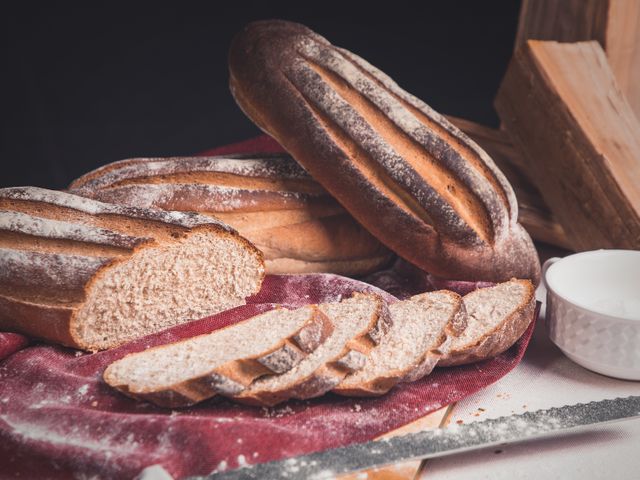
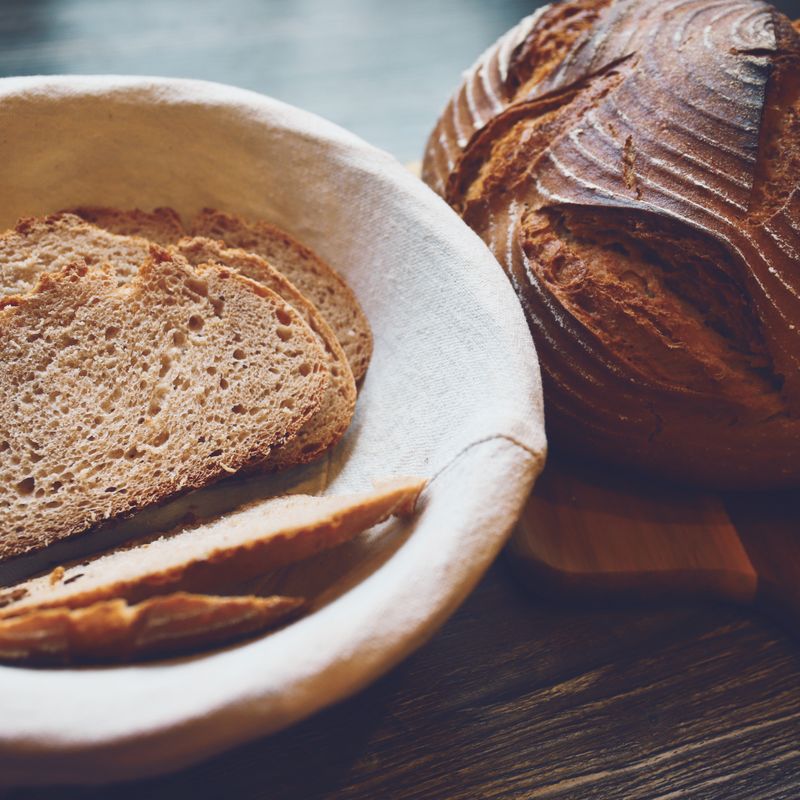
A rustic German-style sourdough rye loaf with a deep, tangy flavor and tender crumb. The combination of rye and bread flour creates a complex taste enhanced by caraway seeds, while long fermentation develops natural sourness and excellent keeping qualities. Perfect for pairing with cured meats, cheese, or hearty soups.
- Prep
- 25 min
- Cook
- 45 min
- Wait
- 12 hr
- Total
- 13 hr 10 min
- Makes
- 1 loaf (12–14 slices)
Steps
Before you start
- Ensure your sourdough starter is fed and active (bubbly, doubled, passes the float test) 4–8 hours before mixing
- Have your Dutch oven or covered baking vessel ready
- Use filtered or room-temperature water if possible
- Clear at least 12 hours for fermentation and baking
Mix the dough
- In a large bowl, combine the active sourdough starter (150 g), bread flour (360 g), rye flour (140 g), and room-temperature water (355 ml).
- Stir with a wooden spoon until all flour is hydrated and no dry bits remain—the dough will be shaggy and sticky.
- This should take 2–3 minutes.
- Cover the bowl with a towel or plastic wrap and let rest for 30 minutes at room temperature.
- This rest period, called autolyse, allows the flour to fully absorb water and improves gluten development.
+ Show details− Hide details
Ready when: All flour is moistened and dough feels cohesive
Tip: Don't skip the autolyse—it produces a more extensible dough with better rise and crumb structure.
Add salt and caraway seeds
- Sprinkle sea salt (10 g) and toasted caraway seeds (15 g) evenly over the rested dough.
- Wet your hand slightly and gently work the salt and seeds into the dough, squeezing and folding for about 1 minute until they are fully distributed.
- The dough will feel firmer and slightly tighter.
- Cover and let rest for 10 minutes.
+ Show details− Hide details
Ready when: Salt and seeds are evenly distributed throughout
Tip: Adding salt after autolyse prevents it from tightening gluten too early and allows better fermentation.
Perform stretch and folds
- Wet your hand again and perform 4 sets of stretch and folds over the next 30 minutes, spaced 7–8 minutes apart.
- For each fold, grab one side of the dough, stretch it up and fold it over itself.
- Rotate the bowl 90 degrees and repeat 4 times (north, south, east, west).
- This builds strength without aggressive kneading.
- After the final fold, cover the bowl loosely.
+ Show details− Hide details
Ready when: Dough becomes smoother and holds its shape better; visible bubbles appear after 3rd or 4th fold
Tip: Wet hands prevent sticking. The dough should feel slightly firmer and less sticky after the final fold.
Bulk fermentation
- Leave the covered bowl at room temperature (68–72°F / 20–22°C) for 4–6 hours, until the dough has increased in volume by 50–75% (not fully doubled).
- You should see a network of bubbles just below the surface when you gently pull back the towel.
- The dough will smell fragrant and slightly sour.
- If your kitchen is warmer (72–75°F / 22–24°C), check after 3.5 hours; if cooler, it may take up to 6 hours.
+ Show details− Hide details
Ready when: Dough volume increases 50–75%; visible bubbles near surface; springs back slowly when poked
Tip: Rye dough ferments faster than wheat-only dough because rye enzymes break down starches more quickly. Don't overferment or the crumb will be gummy.
Pre-shape and rest
- Turn the dough out onto a lightly floured surface (use bread flour).
- Gently pre-shape it into a round without degassing excessively—fold the edges toward the center, creating surface tension.
- Let it rest uncovered for 20–30 minutes.
- The dough will relax and become slightly puffy.
- This resting period makes final shaping easier and improves oven spring.
+ Show details− Hide details
Ready when: Dough is noticeably puffy and relaxed; indentation from a poke springs back halfway
Tip: This bench rest is crucial for rye bread—it prevents the dough from tearing during final shaping.
Final shape
- With the dough still on a light flour dusting, shape it into a tight round: fold the top third toward you, press gently, fold the left edge toward the center, press, fold the right edge toward the center, fold the bottom up and toward you, then flip the dough seam-side down and roll it toward you with gentle tension to form a round.
- Transfer the shaped dough seam-side up into a banneton basket dusted with cornmeal or rye flour (or a towel-lined bowl).
- If you don't have a banneton, use a round bowl lined with a floured kitchen towel.
+ Show details− Hide details
Ready when: Dough is shaped into a round with a taut surface
Tip: A tight shape creates surface tension that helps the loaf spring upward in the oven rather than spreading sideways.
Cold overnight proof
- Cover the banneton with plastic wrap (or place it in a plastic bag) and refrigerate at 38–40°F (3–4°C) for 12–16 hours, or overnight.
- Cold fermentation develops deeper flavor and makes scoring easier because the dough is firmer.
- You may also do a room-temperature proof of 2–4 hours if you prefer, but overnight cold proof is ideal for sourdough.
+ Show details− Hide details
Ready when: Dough is cold and firm; poke test should show slow spring-back
Tip: The cold overnight proof is the secret to deep tanginess and superior flavor in sourdough rye. Don't skip it if possible.
Preheat and prepare ovenOven 475°F / 245°C
- Remove the dough from the refrigerator and let it sit for 30 minutes at room temperature while you preheat.
- Place a Dutch oven (or covered baking vessel) inside your oven and preheat to 475°F (245°C) for at least 45 minutes.
- This ensures the vessel is very hot for excellent oven spring and crust development.
- If using a banneton, dust off excess flour.
+ Show details− Hide details
Ready when: Oven reaches 475°F (245°C) and holds temperature steadily
Tip: A hot Dutch oven traps steam, which is essential for a crispy, well-developed crust. Don't skip the preheating step.
Score and bake coveredOven 475°F / 245°C
- Carefully remove the hot Dutch oven from the oven.
- Quickly invert the banneton and flip the dough into the pot seam-side down.
- Using a sharp lame or knife, score the top of the loaf with a single 6–7 inch slash at a 30–45 degree angle, about ¼ inch deep.
- Immediately cover the Dutch oven with its lid and return it to the 475°F (245°C) oven.
- Bake covered for 30 minutes.
- The steam inside the pot will keep the crust soft, allowing the dough to expand.
+ Show details− Hide details
Ready when: Loaf has risen significantly; score has opened; color is light tan under the lid
Tip: Work quickly when transferring the cold dough to the hot pot—this is the most critical moment. Have everything ready before you open the oven.
Uncover and finish bakingOven 450°F / 230°C
- Carefully remove the lid from the Dutch oven (be cautious of steam).
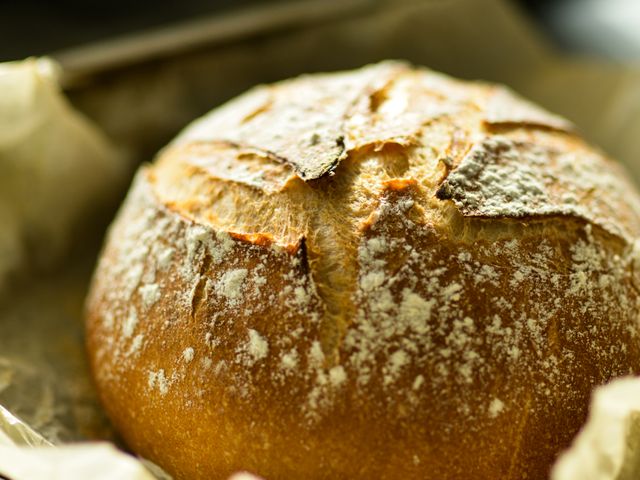
- Reduce the oven temperature to 450°F (232°C) and continue baking uncovered for 12–15 minutes, until the crust is deep golden brown and the loaf sounds hollow when you tap the bottom.
- The internal temperature should read 205–210°F (96–99°C) when measured in the thickest part of the crumb.
+ Show details− Hide details
Ready when: Crust is deep golden brown; bottom sounds hollow when tapped; internal temperature 205–210°F (96–99°C)
Tip: Rye bread takes slightly longer to finish baking than wheat-only bread because the crumb is denser. Don't pull it out too early or the interior will be gummy.
Cool completely
- Transfer the loaf to a wire rack and let it cool at room temperature for at least 1 hour before slicing.
- As the bread cools, the crumb continues to set.
- If you slice too early, the interior will be sticky and gummy.
- A fully cooled loaf slices more cleanly.
+ Show details− Hide details
Ready when: Loaf is no longer warm to the touch; interior is set and no longer steaming
Tip: Patient cooling is non-negotiable for rye bread—it has a naturally moist crumb and needs this time to develop proper structure and sliceability.
Good to know
Tips
- Always use a very active, bubbly starter passed the float test. An inactive starter will not provide enough lift and the loaf may collapse.
- Rye flour ferments faster than bread flour because its enzymes break down starches quickly. Watch your dough closely during bulk fermentation—overproofing is more common with rye than with wheat.
- Don't skimp on the overnight cold proof if you want true depth of flavor and tang. Room-temperature proofs work but deliver less complexity.
- A banneton or towel-lined bowl is crucial for rye dough, which is slightly stickier than wheat dough. This prevents a flat spread and gives you a proper boule shape.
Make ahead
You can shape the dough and refrigerate it for up to 24 hours (even 48 hours for extra depth). Simply remove it from the fridge 30 minutes before baking, score, and bake. You can also freeze the shaped, unbaked dough in the banneton for up to 2 weeks; bake directly from frozen, adding 5–10 minutes to the baking time.
Storage & reheating
Room temperature (in a closed bread box or paper bag): up to 4 days. The tangy, dense crumb keeps this bread fresher longer than typical sandwich bread. Refrigerator: wrap in plastic or foil and store for up to 1 week; toast slices before serving to restore crispness. Freezer: wrap tightly and freeze for up to 3 months. Thaw at room temperature in the wrapper (3–4 hours) or reheat directly in a 300°F (150°C) oven for 20 minutes wrapped in foil.
Substitutions
- whole rye flour (medium or dark) → spelt flour or einkorn flour (use only 120 g to account for greater water absorption). These heritage grains offer a slightly less tangy, more delicate flavor but will still ferment well. The crumb will be slightly less dense.
- caraway seeds, whole → fennel seeds or anise seeds (use same amount) or 2 tbsp chopped fresh dill. Caraway is traditional, but these alternatives provide different aromatic notes—fennelseeds are sweeter, dill is fresher and more herbaceous.
- filtered water, room temperature → chicken or vegetable stock (same volume) for deeper savory depth. Stock adds umami richness and complements the rye and caraway. Use unsalted stock or reduce the salt in the recipe by 1–2 grams.
- active sourdough starter, fed 4–8 hours prior → ½ tsp instant dry yeast mixed with 1 tbsp whole wheat or rye flour + 2 tbsp water (made into a thick paste and fermented 8–12 hours) plus remove 50 g water from the main recipe. This backup ferment is less flavorful than a sourdough starter but will work. The loaf will be less tangy and have slightly different crumb texture.