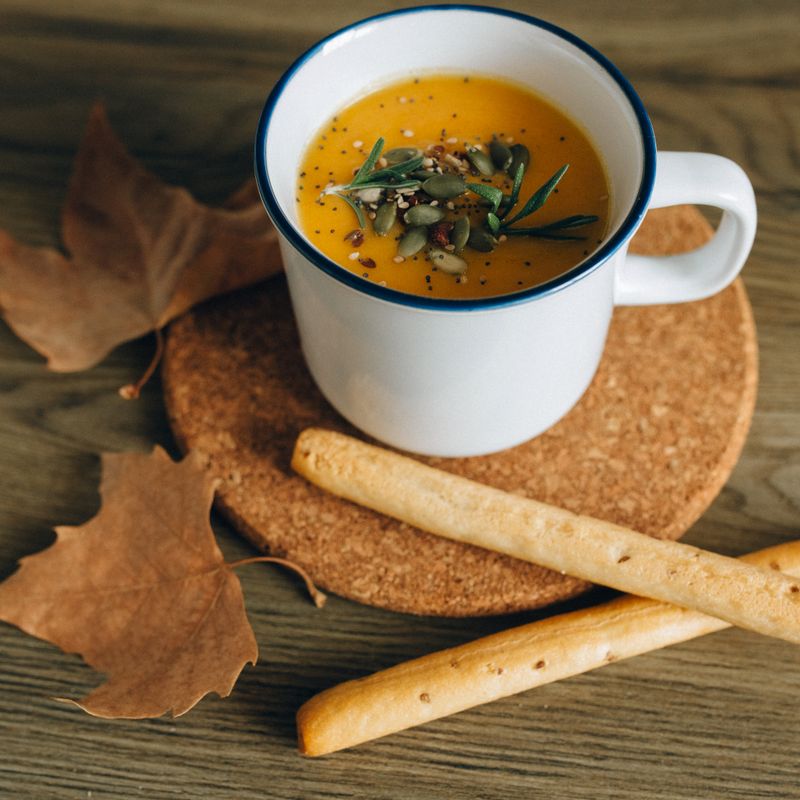
Sourdough Greek Kefir and Roasted Thyme Breadstick Twists
Crispy, savory breadstick twists made with sourdough discard and tangy Greek kefir for a tender crumb. Roasted thyme and sesame seeds add Mediterranean flavor and texture. Perfect for snacking, serving alongside soup, or pairing with dips.
- Prep
- 20 min
- Cook
- 18 min
- Wait
- 45 min
- Total
- 1 hr 23 min
- Makes
- 16 breadstick twists
Steps
Before you start
- Line two baking sheets with parchment paper
- Measure out your sourdough discard at room temperature
- Dry and lightly toast the thyme sprigs in a dry skillet over medium heat for 2 minutes, then strip the leaves from the stems
- Have your mixer or work surface ready; this dough is sticky
Mix dough
- In a stand mixer bowl or large mixing bowl, whisk together 1 cup (240 ml) room-temperature sourdough discard and ½ cup (120 ml) Greek kefir until mostly combined.
- Add 2 cups (250 g) all-purpose flour, ½ cup (60 g) whole wheat flour (or use 2½ cups / 310 g all-purpose if omitting), 1½ teaspoons (9 g) kosher salt, and ½ teaspoon (3 g) instant yeast.
- Using a dough hook or wooden spoon, mix on medium speed or by hand for 3–4 minutes, until a shaggy, sticky dough forms.
- The dough should feel tacky but hold together.
+ Show details− Hide details
Ready when: Shaggy dough forms; ingredients are fully moistened and combined
Tip: The dough will feel wetter than a typical bread dough due to the kefir—this is intentional and creates a tender, delicate crumb.
First rise
- Cover the bowl loosely with a damp kitchen towel or plastic wrap.
- Let the dough rest at warm room temperature (68–72 °F / 20–22 °C) for 30–40 minutes, until it rises by about one-third and becomes visibly more relaxed and airy.
+ Show details− Hide details
Ready when: Dough increases by about one-third in volume; bubbles are visible at the surface
Tip: Sourdough discard fermentation is slower than commercial yeast alone, so don't rush this step. The slight boost from instant yeast helps ensure the twists rise during their final proof.
Oil and fold
- Drizzle 1 tablespoon (15 ml) of olive oil over the risen dough and fold it in gently using a bench scraper or spatula, working around the edges to incorporate the oil.
- The dough will be wet and delicate—handle it gently to preserve the airy structure you've built.
+ Show details− Hide details
Ready when: Oil is fully distributed throughout the dough; dough looks glossy
Tip: Work quickly and avoid overworking the dough at this stage; you want to keep it light and airy.
Shape twistsOven 425°F / 220°C
- Preheat your oven to 425 °F (220 °C).
- Lightly oil two large baking sheets with a little of the remaining olive oil.
- Turn the dough out onto a lightly oiled work surface and gently shape it into a rough rectangle about ½ inch (1.3 cm) thick.
- Using a bench scraper or sharp knife, cut the dough into 16 even strips about 5 inches (13 cm) long and ¾ inch (2 cm) wide.
- Working with one strip at a time, gently stretch it to about 7 inches (18 cm) long, then twist it once or twice with a gentle spiral.
- Place the twist on a prepared baking sheet, spacing them about 1½ inches (4 cm) apart.
- Repeat with all strips, dividing them evenly between the two sheets.
+ Show details− Hide details
Ready when: All 16 twists are shaped and arranged on baking sheets with even spacing
Tip: Keep your hands and work surface lightly oiled to prevent sticking. Don't twist too tightly or you'll compress the dough and lose the light, airy interior.
Final proof
- Brush the top of each twist lightly with the remaining 1 tablespoon (15 ml) of olive oil.
- Sprinkle each twist generously with sesame seeds and roasted thyme leaves.
- Cover the baking sheets loosely with plastic wrap or a damp towel and let them rest at room temperature for 10–12 minutes.
- The twists should puff slightly and feel a bit lighter when gently poked.
+ Show details− Hide details
Ready when: Twists have puffed noticeably and feel airy; they'll spring quickly when lightly poked
Tip: A short proof is all you need here—overproofing will cause the twists to collapse or spread too much in the oven.
BakeOven 425°F / 220°C
- Place both baking sheets in the preheated 425 °F (220 °C) oven.
- Bake for 16–18 minutes, rotating the sheets halfway through (at 8 minutes) for even browning.
- The twists should be deep golden brown, crispy on the outside, and light inside.
+ Show details− Hide details
Ready when: Twists are deep golden brown on all edges; they sound crispy and hollow when tapped on the bottom
Tip: Rotate the baking sheets at the halfway point to ensure even, uniform browning. If the sesame seeds begin to darken too quickly, tent the sheets loosely with foil for the last 3–4 minutes.
Cool and finish
- Remove the baking sheets from the oven and transfer the hot twists to a wire rack to cool for at least 5 minutes.
- While still warm, sprinkle lightly with fleur de sel if desired.
- Serve warm or at room temperature.
+ Show details− Hide details
Ready when: Twists have cooled enough to handle without burning your fingers; they are crisp and firm
Tip: A pinch of fleur de sel adds a subtle briny finish that complements the thyme and sesame beautifully, but it's optional.
Good to know
Tips
- Sourdough discard should be at peak activity (bubbly and risen) for best results. If your starter is sluggish, feed it 4–6 hours ahead and use it at its most vigorous state.
- The kefir's acidity tenderizes the dough and adds subtle tang that balances the nutty roasted thyme. Don't substitute with milk or water alone.
- For extra crispness, use a baking stone preheated in the oven and transfer the twists directly to it before baking, using a peel or sturdy spatula.
- Lightly toasting the fresh thyme before stripping the leaves enhances its flavor and makes the leaves more fragrant and easier to handle.
Make ahead
You can prepare the shaped, unbaked twists up to 8 hours ahead. Cover them tightly with plastic wrap and refrigerate. Bake directly from cold, adding 2–3 minutes to the baking time.
Storage & reheating
Store cooled breadstick twists in an airtight container at room temperature for up to 3 days. To refresh, warm in a 350 °F (175 °C) oven for 3–4 minutes. They can also be frozen in a freezer-safe bag for up to 2 weeks; thaw at room temperature or warm directly from frozen in a 350 °F (175 °C) oven for 5–6 minutes.
Substitutions
- Greek kefir or plain Greek yogurt → Plain Greek yogurt or sour cream. Use the same amount. Both add tang and tenderness; yogurt yields a slightly denser crumb than kefir.
- whole wheat flour → All-purpose flour. Omit the whole wheat and use 2½ cups (310 g) all-purpose flour instead. The breadsticks will be lighter and slightly less nutty.
- fresh thyme, lightly toasted → Dried oregano or Italian seasoning. Use 1–1½ tablespoons (3–5 g) dried oregano for a more assertive, Mediterranean flavor.
- sesame seeds (white or mixed) → Poppy seeds, nigella seeds, or everything bagel seasoning. Use the same amount. Everything bagel seasoning adds garlic, onion, and poppy seed complexity.
More yeast breads
See all →
Find more like this
- Meal
- Snack
- Cuisine
- Mediterranean
- Method
- Oven
- Quick & Easy
- Budget