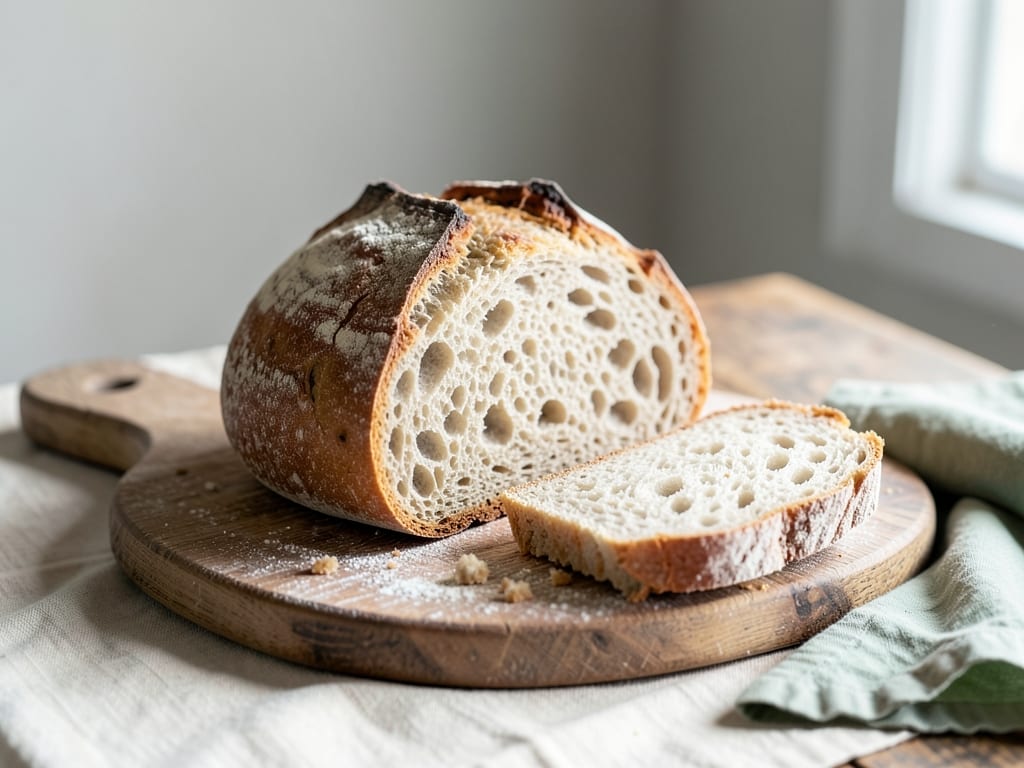
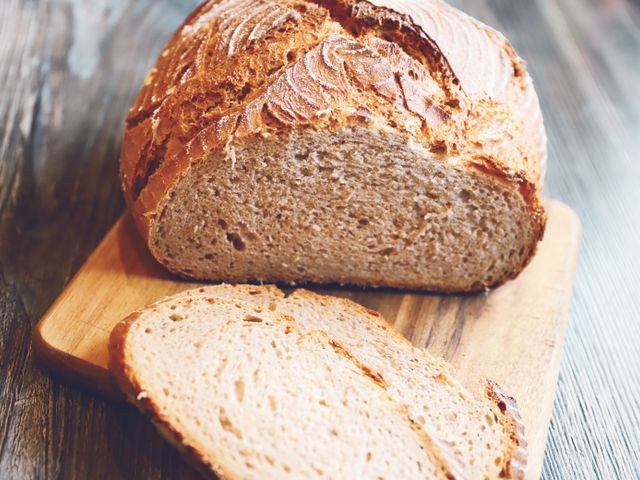
Sourdough French Bouillabaisse Saffron and Fennel Bread Scoops
Thin, crispy bread scoops infused with saffron, fennel, and fish broth, baked from sourdough discard. These golden, aromatic crisps are designed to dunk into bouillabaisse or other seafood stews, delivering authentic Provençal flavor in every bite. The combination of saffron and fennel mirrors traditional bouillabaisse seasoning, while the sourdough base adds depth and tang.
- Prep
- 20 min
- Cook
- 22 min
- Wait
- 50 min
- Total
- 1 hr 32 min
- Makes
- 24–28 bread scoops
Steps
Before you start
- Preheat oven to 425°F (220°C) about 15 minutes before baking.
- Warm fish broth to 110°F (43°C) to help activate the sourdough.
- Have two sheet pans ready, or plan to bake in batches.
- Measure out all dry ingredients and saffron threads beforehand.
Bloom saffron in warm water
- In a small bowl, add ¼ teaspoon (0.5 g) saffron threads to 2 tablespoons (30 ml) of warm water.
- Let sit undisturbed for 10 minutes so the threads release their color and flavor.
- The liquid should turn golden-amber.
+ Show details− Hide details
Ready when: Liquid turns golden-amber and smells distinctly floral
Tip: Do not skip this step; blooming saffron unlocks its full aromatic potential.
Mix dough base
- In a large bowl, combine 1 cup (240 ml) sourdough discard, ¾ cup (180 ml) warm fish broth, and the saffron bloom (liquid and threads).
- Stir until the sourdough is fully incorporated and the mixture looks golden.
- Add 2 cups (250 g) all-purpose flour, 1.5 teaspoons (9 g) fine sea salt, ½ teaspoon (2 g) instant yeast, 1.5 teaspoons (3 g) lightly crushed fennel seeds, 2 minced garlic cloves, and ¼ teaspoon (0.5 g) red pepper flakes if using.
- Stir with a wooden spoon or dough whisk until shaggy and well combined (no dry flour remains).
+ Show details− Hide details
Ready when: All dry flour is incorporated and the dough is shaggy but cohesive
Tip: Don't overwork the dough at this stage; you want the fennel and garlic to remain distinct, not completely broken down.
Incorporate olive oil
- Drizzle 3 tablespoons (45 ml) extra-virgin olive oil over the dough and fold it in using the wooden spoon or your hand, turning the dough over itself 8–10 times until the oil is fully absorbed and the dough is smoother and slightly glossy.
+ Show details− Hide details
Ready when: Oil is fully absorbed and dough is smooth and glossy
Tip: Use the stretch-and-fold technique if you know it, but simple folding works fine for this thick, wet dough.
First rise
- Cover the bowl loosely with plastic wrap or a damp kitchen towel.
- Let the dough rise at room temperature (68–72°F / 20–22°C) for 30 minutes.
- The dough will become puffy and slightly more relaxed, though it won't double in volume.
+ Show details− Hide details
Ready when: Dough is puffy and jiggles slightly when the bowl is moved
Tip: Warmer room temperatures (72°F / 22°C) will speed fermentation; cooler rooms will slow it—adjust timing accordingly.
Shape and rest dough
- Turn the dough out onto a lightly floured work surface.
- Gently shape it into a rough rectangle about ¼ inch (6 mm) thick, using your fingertips and palms.
- Work carefully so you don't tear it.
- Let it rest, uncovered or loosely covered, for 5 minutes.
+ Show details− Hide details
Ready when: Dough is an even rectangle and is soft and pliable
Tip: If the dough springs back too much while shaping, cover it and let it rest for another 2–3 minutes before continuing.
Cut into scoop shapes
- Using a sharp knife or a pastry wheel, cut the rectangle into strips about 2 inches (5 cm) wide and 3 inches (7.5 cm) long (you should get 24–28 pieces).
- Arrange them on two parchment-lined sheet pans, spaced about ½ inch (1.25 cm) apart.
- They can be packed fairly closely since they will rise only slightly.
+ Show details− Hide details
Ready when: All pieces are cut and arranged in a single layer on pans
Tip: Use a long serrated knife or a bench knife for cleaner cuts; a dull knife will tear the gluten network.
Final rise
- Cover the sheet pans loosely with a damp kitchen towel or plastic wrap.
- Let them rise at room temperature for 15 minutes.
- The pieces will puff slightly and become a bit more tender.
+ Show details− Hide details
Ready when: Pieces appear slightly puffy and jiggle when the pan is tapped
Tip: Don't over-proof; if they rise too much, they'll bake cake-like instead of crispy.
Preheat and prepare for bakingOven 425°F / 220°C
- While the dough is rising for the final time, preheat your oven to 425°F (220°C).
- If you're using a single oven and have two pans, arrange the racks to the upper and lower thirds.
- Have coarse sea salt ready for topping if desired.
+ Show details− Hide details
Ready when: Oven reaches 425°F (220°C)
Tip: Use an oven thermometer to ensure accurate temperature; 425°F is crucial for crisping.
Top with sea salt and oil
- Just before baking, lightly brush the tops of each piece with a tiny bit of extra-virgin olive oil (optional but recommended).
- Sprinkle a few grains of coarse sea salt on each piece if using.
- This enhances the crust and adds a finishing touch that echoes bouillabaisse seasonings.
+ Show details− Hide details
Ready when: All pieces are topped and glisten lightly
Tip: Reserve the best-looking side for the top so the scoops look rustic and appetizing.
Bake until crispy and goldenOven 425°F / 220°C
- Place the sheet pans in the preheated 425°F (220°C) oven.
- If you're baking both pans simultaneously, rotate them halfway through (at the 11-minute mark) to ensure even browning.
- Bake for 20–22 minutes total, until the edges are deep golden brown and the pieces sound hollow when tapped.
- The tops should be firm and slightly charred in spots.
+ Show details− Hide details
Ready when: Edges are deep golden, tops are firm, and pieces sound hollow when tapped on the bottom
Tip: Every oven is different; if your oven runs hot, start checking at 18 minutes. If you notice edges darkening too quickly, tent the pans loosely with foil.
Cool and finish
- Transfer the sheet pans to a wire cooling rack or place them on the stovetop.
- Let the bread scoops cool for 5–10 minutes.
- They will continue to crisp up as they cool.
- Serve warm or at room temperature alongside bouillabaisse or other seafood soups and stews.
- They are best eaten the same day but will keep in an airtight container.
+ Show details− Hide details
Ready when: Scoops are cool enough to handle and no longer steam
Tip: If they soften slightly as they cool, pop them back in a 350°F (175°C) oven for 3–4 minutes to re-crisp.
Good to know
Tips
- For maximum bouillabaisse authenticity, serve these scoops slightly warm and have a small ramekin of rouille (saffron-garlic mayonnaise) nearby for dipping.
- The saffron-fennel flavoring is subtle—these scoops work as a side bread or canvas for bouillabaisse rather than overwhelming it with competing spices.
- If your sourdough discard is very young (less than 4 hours fed), reduce the fish broth to ½ cup (120 ml) since the batter will be wetter.
- For a variation, add 1 tablespoon (5 g) finely grated Parmigiano-Reggiano or dried Provençal herbs (thyme, oregano, marjoram) to the flour mixture.
Make ahead
Dough can be mixed, covered, and refrigerated for up to 8 hours before shaping. This will deepen the sourdough flavor. Remove from the fridge 30 minutes before shaping to bring to room temperature. Baked scoops can be made a day ahead and stored in an airtight container; refresh in a 350°F (175°C) oven for 4–5 minutes before serving.
Storage & reheating
Room temperature (uncovered, in a dark place): up to 6 hours. Airtight container at room temperature: up to 1 day. Refrigerator (airtight): up to 3 days; refresh in a 350°F (175°C) oven for 4–5 minutes. Freezer (airtight freezer bag, separated by parchment): up to 2 months; thaw at room temperature and refresh in oven.
Substitutions
- fish broth or seafood stock → Vegetable broth or water. Vegetable broth maintains aromatics; water will work but yields a milder flavor. Chicken broth is less ideal as it competes with the saffron and fennel.
- fennel seeds → 1 teaspoon (2 g) crushed anise seeds. Anise is botanically related and offers similar licorice notes, though slightly more delicate.
- saffron threads → ¼ teaspoon (0.5 g) turmeric plus a pinch of crushed dried chamomile. Won't replicate saffron's complexity, but turmeric provides color and earthiness; chamomile adds subtle floral notes. Not recommended if avoiding the cost of saffron on a whim.
- sourdough discard (fed and active, unfed is fine) → Active dry yeast or instant yeast (increase to 1 teaspoon / 5 g total yeast and omit the ½ teaspoon in the recipe). You'll lose the sourdough tang and complexity. Use only if you don't have discard; the result will be a pleasant but less flavorful bread.