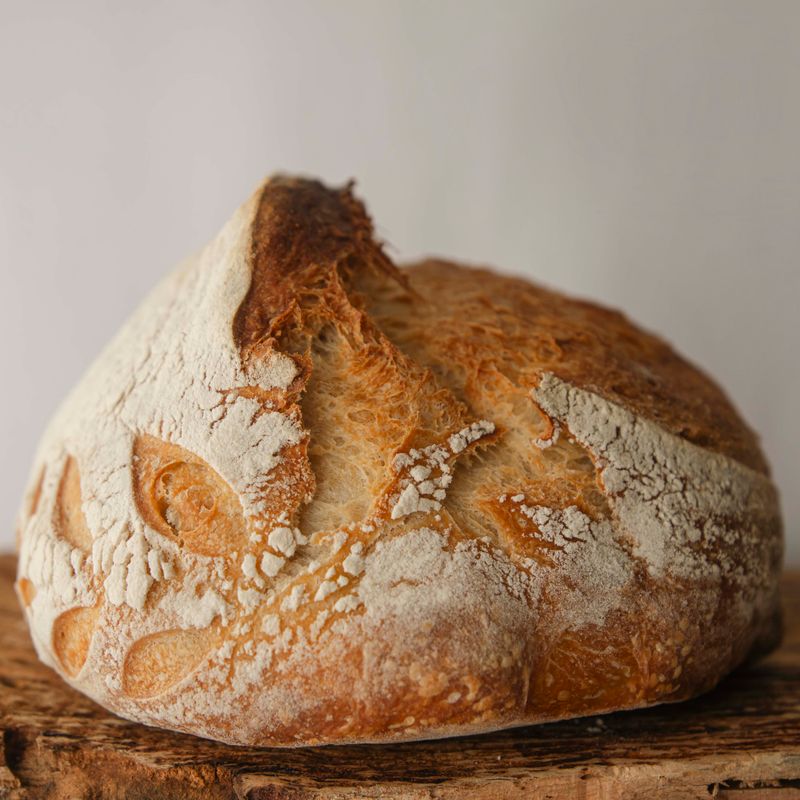
Sourdough Algerian Matloue with Cheese
A rustic Algerian folded flatbread made with sourdough starter and filled with creamy ricotta, fresh herbs, and butter. The dough is stretched thin, brushed with butter, folded into layers, then pan-fried until golden and crispy on the outside while remaining tender inside. Serve warm as an appetizer, side, or light meal.
- Prep
- 30 min
- Cook
- 20 min
- Wait
- 2 hr
- Total
- 2 hr 50 min
- Makes
- 4 matloues (serves 4)
Steps
Before you start
- Ensure your sourdough starter is at peak activity (bubbly and doubled in size 4–8 hours after feeding)
- Have all ingredients at room temperature for easier mixing and stretching
- Line a baking sheet with parchment paper for the dough to rest
- Measure out the cheese filling and herbs before you start mixing the dough
Mix the dough
- In a large bowl, whisk together the sourdough starter (120 ml / ½ cup) and warm water (180 ml / ¾ cup).
- Add the bread flour (280 g / 2 cups) and stir with a wooden spoon until a shaggy dough forms with no dry flour remaining.
- Cover the bowl loosely with plastic wrap and let rest for 30 minutes at room temperature.
+ Show details− Hide details
Ready when: Dough is shaggy and cohesive
Tip: This 30-minute rest makes the dough easier to handle and improves flavor development
Add salt and knead
- Sprinkle the salt (5 g / 1 teaspoon) over the dough.
- Using wet hands or a dough scraper, incorporate the salt by folding the dough onto itself repeatedly for 2–3 minutes until fully incorporated.
- The dough will feel slightly sticky but should hold together.
- Cover and let rest for 10 minutes.
+ Show details− Hide details
Ready when: Salt is fully integrated and dough is smooth
Tip: Wet hands prevent sticking; avoid adding more flour as this is a naturally sticky sourdough dough
Bulk fermentation
- Cover the dough and let it rise at room temperature (70–75°F / 21–24°C) for 60–90 minutes.
- After 30 minutes, perform one set of stretch-and-folds: wet your hand, grab one side of the dough, stretch it up and fold it over the center, then repeat with the other three sides, rotating the bowl 90° each time.
- Do this once more at the 60-minute mark if time allows.
- The dough should feel airy and increase by about 50–70% in volume.
+ Show details− Hide details
Ready when: Dough is visibly puffy, feels airy, and jiggles slightly when the bowl is moved
Tip: Stretch-and-folds strengthen the dough and distribute gas evenly; skip them if you're short on time, but they improve texture
Prepare cheese filling
- While the dough ferments, combine the ricotta cheese (250 g / 1 cup), fresh mint (12 g / ¼ cup), fresh parsley (15 g / ¼ cup), and black pepper to taste in a small bowl.
- Stir gently until well mixed.
- Taste and adjust seasoning if needed.
- Let sit at room temperature until ready to use.
+ Show details− Hide details
Ready when: Filling is evenly mixed and herbs are distributed throughout
Tip: Prepare the filling early so it's ready when you shape the matloues
Divide and shape
- Turn the dough out onto a lightly floured work surface.
- Using a bench scraper or dough knife, divide the dough into 4 equal portions (each about 150 g / 5 oz).
- Gently shape each piece into a loose ball by cupping your hand around it and rotating it toward you to create surface tension.
- Place each ball on a parchment-lined baking sheet with space between them, cover loosely with plastic wrap, and let rest for 15 minutes.
+ Show details− Hide details
Ready when: Each piece is rounded and smooth
Tip: Don't overwork the dough when shaping; gentle tension is all you need at this stage
Stretch and fill
- Working with one ball at a time, gently stretch the dough into a thin 8–10 inch (20–25 cm) round on a lightly floured surface.
- The dough should be thin enough to see light through it (like a thin crepe), but not so thin that it tears.
- Brush the stretched dough lightly with softened butter (about 1 teaspoon / 5 g per piece).
- Spread 3–4 tablespoons (about 60 g) of the cheese filling across the dough, leaving a ½-inch (1 cm) border around the edges.
+ Show details− Hide details
Ready when: Dough is thin and translucent, filling is evenly distributed
Tip: Work gently and patiently; if the dough resists stretching, let it rest 2–3 minutes and try again
Fold into layers
- Fold the dough in half like a half-moon, pressing the edges gently to seal.
- Then fold in half again to create a smaller triangle or square.
- Gently pat and flatten the folded dough so it's about ½–¾ inch (1–2 cm) thick.
- The layers should be visible.
- Repeat with the remaining three portions of dough.
+ Show details− Hide details
Ready when: Folded dough is compact and flattened with visible layers when you look at the edge
Tip: Seal the edges well so the cheese doesn't leak out during frying; use a damp finger to help seal if needed
Pan-fry the matloues
- Heat a 12-inch (30 cm) cast iron or nonstick skillet over medium-high heat.
- Add 1 tablespoon (14 g) of butter and let it melt and foam.
- Once hot, carefully place one matloue in the pan.
- Fry for 3–4 minutes on the first side until golden brown and crispy, then flip.
- Add another ½ tablespoon (7 g) of butter to the pan, and fry the second side for 2–3 minutes until golden and crispy.
- Transfer to a paper towel–lined plate.
- Repeat with the remaining three matloues, adding butter as needed between batches.
+ Show details− Hide details
Ready when: Exterior is deep golden brown and crispy, cheese filling is melted and warm when broken open
Tip: Keep the heat steady at medium-high; too high will burn the outside before the filling heats through, too low will make it greasy
Rest and serve
- Allow the matloues to cool on paper towels for 2–3 minutes so they firm up slightly and excess oil is absorbed.
- Serve warm as an appetizer, side dish, or light meal.
- They are best eaten within 30 minutes of cooking while the exterior is still crispy and the cheese is warm.
+ Show details− Hide details
Ready when: Matloues are warm throughout but cool enough to handle
Tip: Blot excess butter on paper towels immediately; this keeps the crust crispy rather than soggy
Good to know
Tips
- For a more authentic Algerian flavor, add a pinch of ground coriander or a tiny pinch of saffron threads infused in the warm water before mixing
- If the dough tears while stretching, pinch it closed and keep going; small tears won't affect the final result
- The key to crispy exteriors is not adding too much butter; a thin layer is all you need, and high heat for the initial sear locks in texture
- For best results, use a cast iron skillet, which distributes heat evenly and creates superior browning compared to lighter pans
Make ahead
The dough can be refrigerated for up to 8 hours after the bulk fermentation and before shaping. This actually improves flavor and makes stretching easier. After shaping and before cooking, the matloues can be refrigerated for up to 4 hours; let them come to room temperature for 15 minutes before frying.
Storage & reheating
Leftover matloues can be stored at room temperature in an airtight container for up to 1 day, though they are best eaten fresh. Refrigerate for up to 3 days; reheat in a dry skillet over medium heat for 1–2 minutes per side until warm and the exterior crisps up again. Do not freeze uncooked shaped dough as the filling texture will change upon thawing.
Substitutions
- whole milk ricotta cheese → Crumbled feta cheese mixed with a few tablespoons of Greek yogurt. Feta is tangier and more traditional in some Algerian versions; mix with yogurt to approximate ricotta's creaminess
- fresh mint leaves → Fresh cilantro or additional parsley. Both herbs complement the cheese filling well; adjust to your preference
- whole milk ricotta cheese → Farmer's cheese or quark. These have a similar creamy texture and mild flavor; use in equal amounts
- unsalted butter → Olive oil or ghee. Olive oil creates a lighter flavor profile, ghee adds richness; use the same amount
More flatbreads
See all →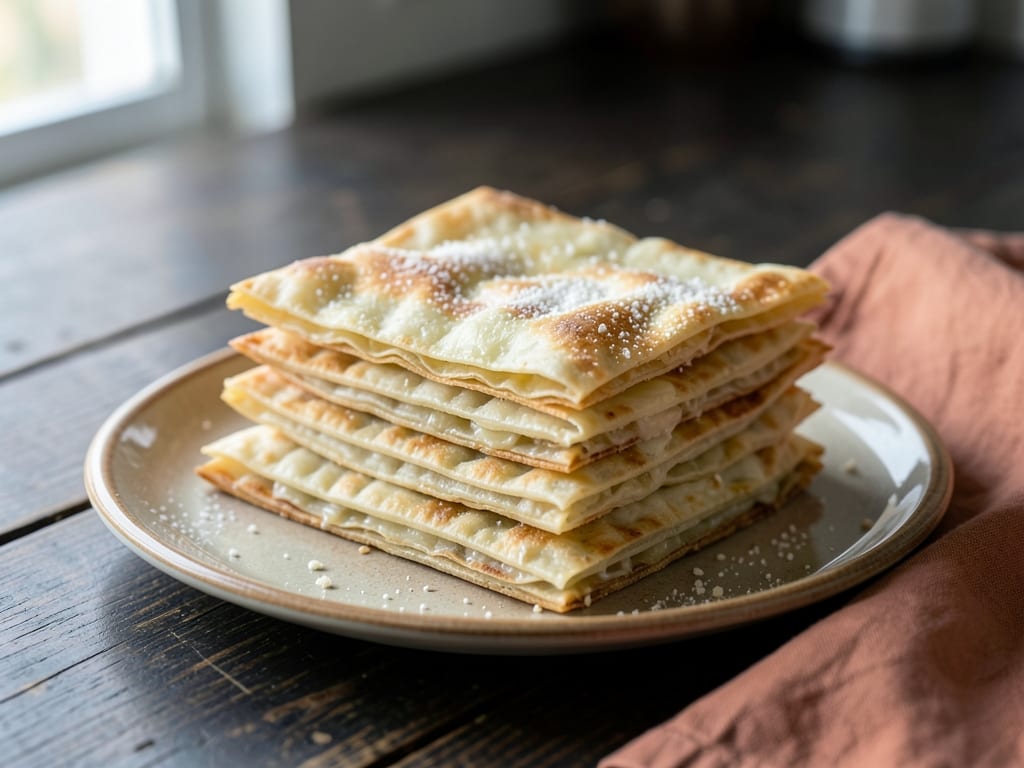

Find more like this
- Meal
- Snack
- Cuisine
- Moroccan
- Main ingredient
- Cream Cheese
- Method
- Stovetop