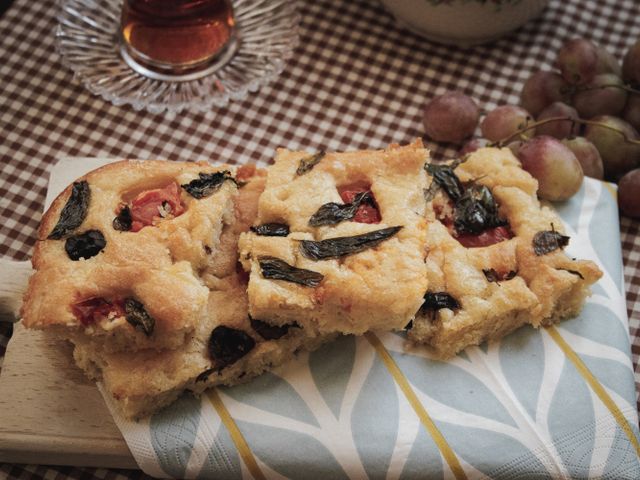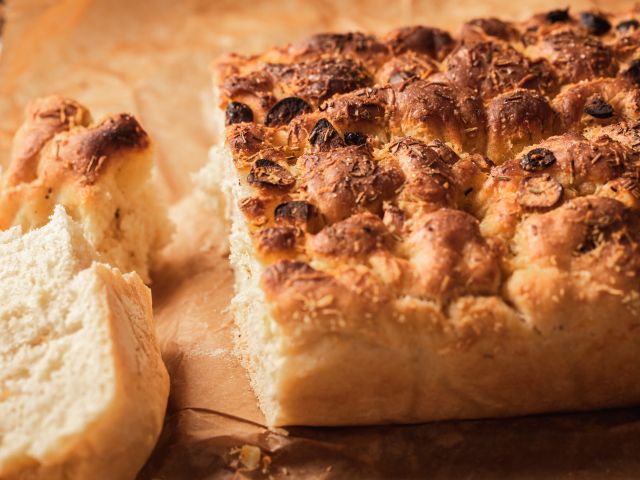
Sourdough Cornmeal and Honey Flatbread
A rustic, lightly sweet flatbread that marries tangy sourdough with nutty cornmeal and floral honey. The result is tender and slightly chewy with crispy golden edges—perfect for dipping in olive oil, topping with cheese, or using as a sandwich base.
- Prep
- 15 min
- Cook
- 13 min
- Wait
- 2 hr 3 min
- Total
- 2 hr 31 min
- Makes
- 4 flatbreads (8 servings as an appetizer)
Steps
Before you start
- Ensure your sourdough starter is active and bubbly—it should have been fed 4–8 hours before you start, ideally at or just past peak rise.
- Read through the timeline before starting; the bulk fermentation takes 1.5 to 2 hours.
- Have your baking sheet and parchment paper ready.
- Preheat your oven to 475°F (245°C) during the final proof step.
Mix dough
- In a large mixing bowl, combine active sourdough starter, lukewarm water, cornmeal, and flour.
- Stir with a wooden spoon or dough whisk until all flour is hydrated and no dry bits remain (about 2 minutes).
- Add honey, olive oil, and salt.
- Stir vigorously for another 2–3 minutes until dough comes together into a shaggy, slightly sticky mass.
- The dough should be wetter than typical bread dough but hold together.
+ Show details− Hide details
Ready when: All ingredients incorporated, no dry flour visible; dough is shaggy and slightly sticky.
Tip: The dough will be noticeably wetter than sandwich bread—this is correct and produces a tender flatbread.
Bulk fermentation
- Cover the bowl loosely with a damp kitchen towel or plastic wrap.
- Let the dough rise at room temperature (68–75°F / 20–24°C) for 1.5 to 2 hours until it is visibly puffy and has increased in volume by about 50–75%.
- You should see bubbles on the surface and the dough should jiggle when you shake the bowl.
+ Show details− Hide details
Ready when: Dough is puffy, increased in volume by 50–75%, visible bubbles on surface.
Tip: If your kitchen is cold, this may take up to 2.5 hours; if warm, it may finish in 1.5 hours.
Shape flatbreads
- Turn the dough out onto a lightly floured work surface (flour your hands too, as this dough is sticky).
- Divide into 4 equal pieces.
- Working with one piece at a time, gently stretch it with your fingertips into a rough rectangle about 8 × 6 inches (20 × 15 cm).
- If the dough springs back aggressively, let it rest for 5 minutes and try again.
- Stretch gently and don't deflate it completely.
- Place each shaped flatbread on a parchment-lined baking sheet, spacing them about 1 inch apart.
+ Show details− Hide details
Ready when: Four roughly rectangular flatbreads on baking sheet.
Tip: These don't need to be perfect—rustic, irregular shapes are part of the charm.
Final proof and preheatOven 475°F / 245°C
- Cover the shaped flatbreads loosely with a damp kitchen towel.
- Let them rise at room temperature for 20–30 minutes until visibly puffy (they should increase by about 25–50% in height).
- While they rise, preheat your oven to 475°F (245°C).
+ Show details− Hide details
Ready when: Flatbreads are noticeably puffed, oven reaches 475°F (245°C).
Top and bakeOven 475°F / 245°C
- Brush each flatbread lightly with olive oil.
- Sprinkle with finishing salt if desired and scatter fresh rosemary sprigs on top.
- Transfer the baking sheet to the preheated 475°F (245°C) oven and bake for 12–14 minutes until the edges are deep golden brown and the tops are set and lightly colored.
- The bottoms should be golden as well.
+ Show details− Hide details
Ready when: Edges deep golden brown, top is set and firm to touch, bottoms are golden.
Tip: All ovens vary; check at 12 minutes to avoid over-browning.
Cool and serve
- Remove the baking sheet from the oven.
- Let the flatbreads cool on the baking sheet for 2–3 minutes to firm up slightly, then transfer to a wire rack.
- Serve warm or at room temperature, drizzled with olive oil if desired.
+ Show details− Hide details
Ready when: Flatbreads have cooled enough to handle.
Tip: These are best enjoyed within a few hours of baking while still warm.
Good to know
Tips
- Your sourdough starter is the key: it must be visibly active with lots of bubbles and smell pleasantly sour. If it's been cold-stored, feed it and let it rise at room temperature until it doubles (usually 4–8 hours) before using.
- Don't overwork the dough during shaping—these flatbreads are meant to be rustic and tender. Gentle handling prevents tough, dense bread.
- Cornmeal absorbs water differently by brand: if your dough is very sticky after mixing, add flour 1 tablespoon at a time. Conversely, if it's stiff, add water by the teaspoon.
- Cold-proofing overnight in the fridge makes these even better—the slow fermentation deepens the sourdough flavor.
Make ahead
The dough can be prepared through the bulk fermentation step, then covered and refrigerated overnight (up to 16 hours). The next day, remove from fridge, let it come to room temperature (30–45 minutes), then shape, proof, and bake as directed. Cold fermentation develops even more sourdough tang.
Storage & reheating
Room temperature (covered): up to 2 days in an airtight container or wrapped in foil. Refrigerator: up to 5 days in an airtight container. Freezer: up to 3 months in a freezer bag or airtight container. To reheat: Wrap in foil and warm at 350°F (175°C) for 5–7 minutes from room temperature, or 10–12 minutes from frozen.
Substitutions
- cornmeal → polenta. Use the same amount (100g / 0.75 cup); polenta gives a coarser, more rustic texture.
- all-purpose flour or bread flour → whole wheat flour (up to 50g / ⅓ cup). Replace up to one-third of the all-purpose flour with whole wheat; add an extra 1–2 tablespoons of water as whole wheat absorbs more liquid.
- honey → maple syrup or agave nectar. Use 20–25 ml (1.5–2 tbsp); maple will add a distinct flavor.
- active sourdough starter → instant yeast (½ tsp / 2.5g). Mix yeast with the water; reduce bulk fermentation to 45 minutes. Flavor won't be as complex, but texture will be similar.