
Arepa with Carne Mechada
Venezuelan arepas—pan-fried cornmeal flatbreads with a tender crust and pillowy interior—filled with carne mechada, a rustic shredded beef slow-braised in tomatoes, cumin, and oregano. The arepas puff slightly and sound hollow when tapped, providing the perfect vessel for the flavorful, saucy beef. A satisfying, authentic comfort-food meal that tastes even better when the carne mechada is made a day ahead.
- Prep
- 30 min
- Cook
- 25 min
- Wait
- 1 hr 37 min
- Total
- 2 hr 32 min
- Makes
- 4 arepas
Steps
Before you start
- Make the carne mechada 1–2 days ahead if possible; it tastes richer when flavors meld, and it cuts final cooking time dramatically
- Use warm water (about 110°F / 43°C) for the arepa dough—test with your finger; it should feel pleasantly warm, not hot
- Read the full recipe; the arepas cook while the beef braises, so timing is flexible
- Gather and prep all ingredients before you start; have a damp kitchen towel ready for shaping arepas
Prepare and brown the beef
- Cut beef chuck into 2–3 inch (5–8 cm) chunks and pat dry thoroughly with paper towels (this helps browning).
- Heat olive oil in a large pot or Dutch oven over medium-high heat until shimmering, about 1 minute.
- Working in batches to avoid overcrowding (don't pile the beef on top of itself), add beef and cook undisturbed for 3–4 minutes per side, browning on all surfaces, about 8–10 minutes total.
- Use tongs to turn pieces.
- Transfer browned beef to a clean plate.
+ Show details− Hide details
Ready when: beef is mahogany brown on all sides
Tip: Don't move the beef around too much while browning; let it sit to develop a good crust. If the pot is too crowded, the beef will steam instead of brown.
Sauté vegetables and start braising
- Dice the onion, bell pepper, and mince the garlic.
- To the same pot, add the diced onion and bell pepper, stirring occasionally over medium heat, until softened and beginning to caramelize, about 4–5 minutes.
- Add minced garlic and cook for 1 minute until fragrant.
- Return the browned beef to the pot.
- Pour in crushed tomatoes, beef broth, ground cumin, and dried oregano.
- Add a pinch each of salt and black pepper.
- Stir well to combine, scraping up any brown bits stuck to the bottom of the pot.
- Increase heat to medium-high and bring to a simmer (you'll see active bubbling around the edges).
- Once simmering, reduce heat to low, partially cover the pot (lid slightly ajar), and simmer gently for 90 minutes, stirring occasionally, until the beef is very tender and shreds easily with a fork.
+ Show details− Hide details
Ready when: beef shreds easily when pierced with a fork; liquid is thick and jammy
Tip: If liquid is reducing too fast and the bottom is drying out, cover more or add another splash of broth. If there is excess liquid at the end, uncover during the final 10 minutes to reduce it slightly. The sauce should coat the meat.
Shred the beef and finish sauce
- Remove beef from the pot with tongs and transfer to a cutting board.
- Using two forks (one in each hand), pull and shred the beef into bite-sized pieces, working in batches if needed.
- Return shredded beef to the pot and stir to coat evenly with the braising liquid.
- Taste and adjust seasoning with additional salt and pepper as needed.
- Keep the carne mechada warm over low heat while you prepare the arepas.
+ Show details− Hide details
Ready when: beef is shredded into bite-sized pieces and coated with rich, glossy sauce
Tip: If shredding is difficult, let the meat cool for 2–3 minutes; it will hold together better.
Mix the arepa dough
- In a large mixing bowl, combine pre-cooked arepa flour and salt.
- Gradually add warm water (about 110°F / 43°C), stirring with a wooden spoon, until the mixture resembles wet mashed potatoes—moist and holding together, but not sticky or overly crumbly.
- Add melted butter and mix until evenly incorporated throughout.
- Cover the bowl with a damp kitchen towel and let rest for 5 minutes; this allows the cornmeal to fully hydrate and become tender.
+ Show details− Hide details
Ready when: dough is moist, holds together without being sticky, and feels smooth
Tip: Add water gradually; the dough should feel like soft, wet mashed potatoes. If it's too dry, add 1 tbsp water at a time. If it becomes too sticky, add a bit more arepa flour.
Shape the arepas
- Wet your hands with cool water to prevent sticking.
- Divide the dough into 4 equal portions.
- Shape each into a ball, then gently press into a thick disk about 3/4 inch (2 cm) tall and 3–4 inches (8–10 cm) in diameter.
- The arepas should feel soft and moist, not firm or cracked.
- Place shaped arepas on a lightly damp kitchen towel and let rest for 2 minutes to set slightly.
+ Show details− Hide details
Ready when: arepas are evenly shaped, thick disks that are soft and moist to the touch
Tip: Keep your hands and a damp towel nearby. Wet your hands between shaping each arepa to prevent sticking. If the dough dries out, cover with the damp towel. Arepas should be noticeably thick, not thin pancakes.
Pan-fry the arepas until crispy
- Heat vegetable oil in a large skillet (10–12 inch / 25–30 cm) over medium heat until shimmering and a few bubbles form when you dip a wooden spoon in it, about 1–2 minutes.
- Carefully slide arepas into the hot oil.
- (If your skillet is small, fry in two batches to avoid crowding and to maintain oil temperature.) Fry for 4–5 minutes on the first side without moving them, until golden brown and crispy.
- Using a spatula, gently flip and fry the other side for 4–5 minutes until also golden brown and crispy.
- The arepas should sound slightly hollow when tapped with your spoon.
- Transfer to a paper towel-lined plate and let cool for 1–2 minutes.
+ Show details− Hide details
Ready when: arepas are golden brown and crispy on the outside; they sound hollow when tapped
Tip: Don't crowd the pan or move the arepas around too much—let them fry undisturbed to develop a crispy, golden crust. If frying in batches, keep the first batch warm in a low oven (200°F / 93°C) covered with foil.
Fill arepas and serve immediately
- Using a small sharp knife, carefully cut each arepa in half horizontally to create a pocket, being careful not to crack it.
- If the arepa is too hot, let it cool for another 30 seconds.
- Generously fill each arepa pocket with shredded carne mechada and some of the rich, savory cooking sauce.
- Top with optional fillings: sliced ripe avocado, crumbled queso fresco, and fresh chopped cilantro.
- Serve immediately while the arepas are still warm and crispy.
+ Show details− Hide details
Tip: If you struggle to fit all the filling into the arepa pocket without it spilling out, use a small spoon to gently push the filling deeper inside. Serve right away so the arepas stay warm and crispy on the outside, pillowy on the inside.
Good to know
Tips
- Carne mechada tastes richer the next day as flavors meld. If time permits, braise it a day ahead and reheat gently before serving.
- Pre-cooked arepa flour (harina de maíz precocida) is essential. Look for it in Latin American markets, specialty grocery stores, or online. Regular cornmeal, polenta, and raw masa harina are not suitable substitutes.
- The key to pillowy, soft arepas is proper dough consistency. Aim for the texture of wet mashed potatoes: moist and holding together, but not sticky. The 5-minute rest allows the cornmeal to fully hydrate.
- For extra flavor, sauté a small amount of diced tomato, onion, or cilantro into the shredded beef just before serving. Some cooks add a splash of lime juice or a pinch of cumin for extra depth.
Make ahead
Carne mechada can be made 1–2 days ahead; store covered in the refrigerator. It actually tastes better when the flavors meld overnight. Reheat gently over low heat with a splash of broth if the sauce has thickened too much. Arepas are best served immediately after frying but can be made a few hours ahead and reheated in a 350°F (175°C) oven for 10 minutes, covered with foil.
Storage & reheating
Carne mechada: Store in an airtight container in the refrigerator for up to 3 days, or freeze for up to 3 months. Thaw overnight in the refrigerator before gently reheating. Arepas: Store in an airtight container at room temperature for 1 day (they soften over time). Reheat in a 350°F (175°C) oven for 10–15 minutes, covered with foil, until warmed through. Do not store assembled arepas; they will become soggy.
Substitutions
- beef chuck → beef brisket or short ribs. Brisket will take slightly longer to tenderize (up to 2 hours); short ribs have more fat and bone but are delicious. Adjust braising time as needed.
- pre-cooked arepa flour (harina de maíz precocida) → masa harina precocida (pre-cooked corn dough). Make absolutely sure it is pre-cooked (precocida); raw cornmeal, polenta, or masa harina cruda will not work. The dough will not come together properly.
- queso fresco → cotija cheese, fresh mozzarella, or feta. Queso fresco has a salty, crumbly texture. Cotija is similar and salty; mozzarella is creamier and milder; feta is tangier. Each will give a different flavor profile.
- vegetable oil → olive oil or coconut oil. Use a neutral oil with a high smoke point. Avoid butter, which will burn at pan-frying temperature.
More flatbreads
See all →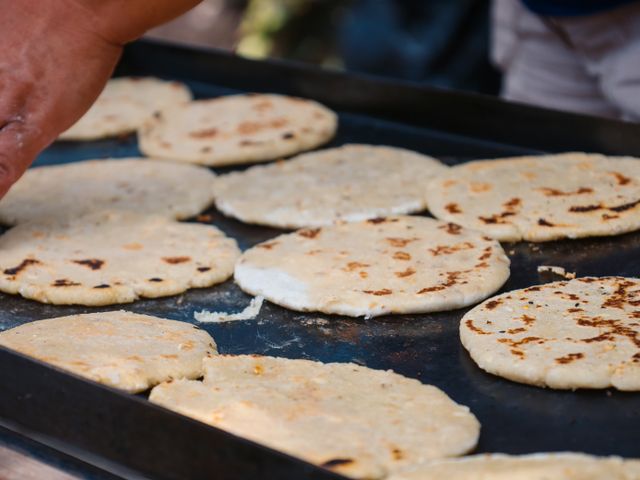



Find more like this
- Meal
- Dinner
- Main ingredient
- Stew Beef
- Diet
- HalalSugar-Free
- Method
- Stovetop
- Quick & Easy
- Make Ahead