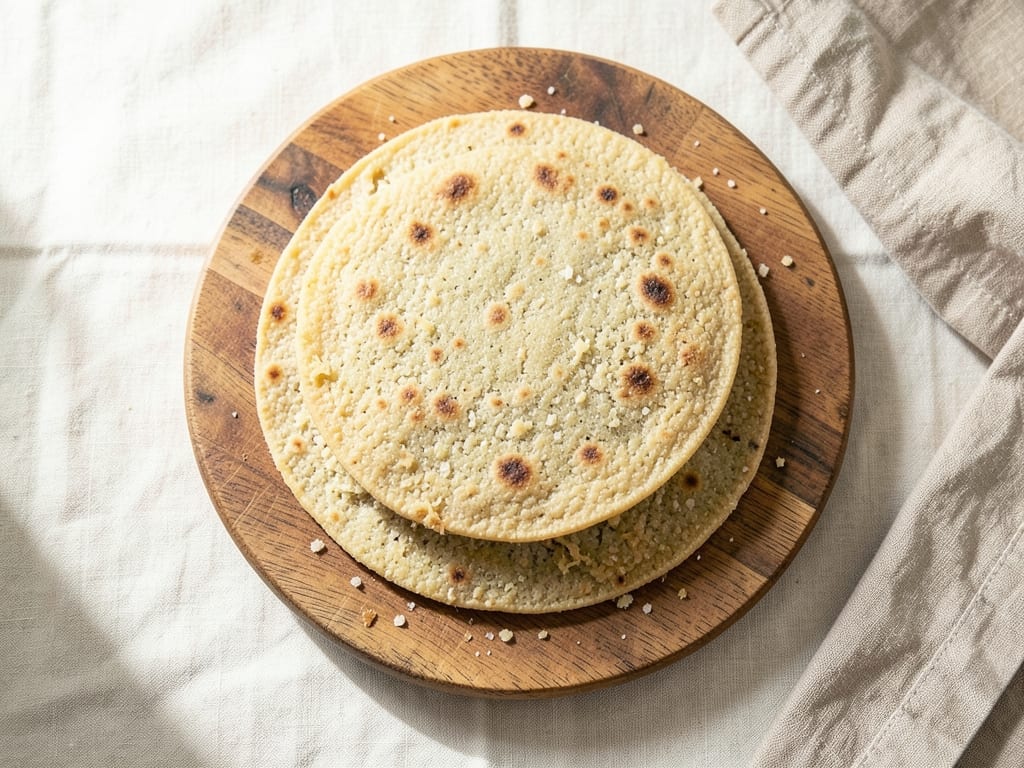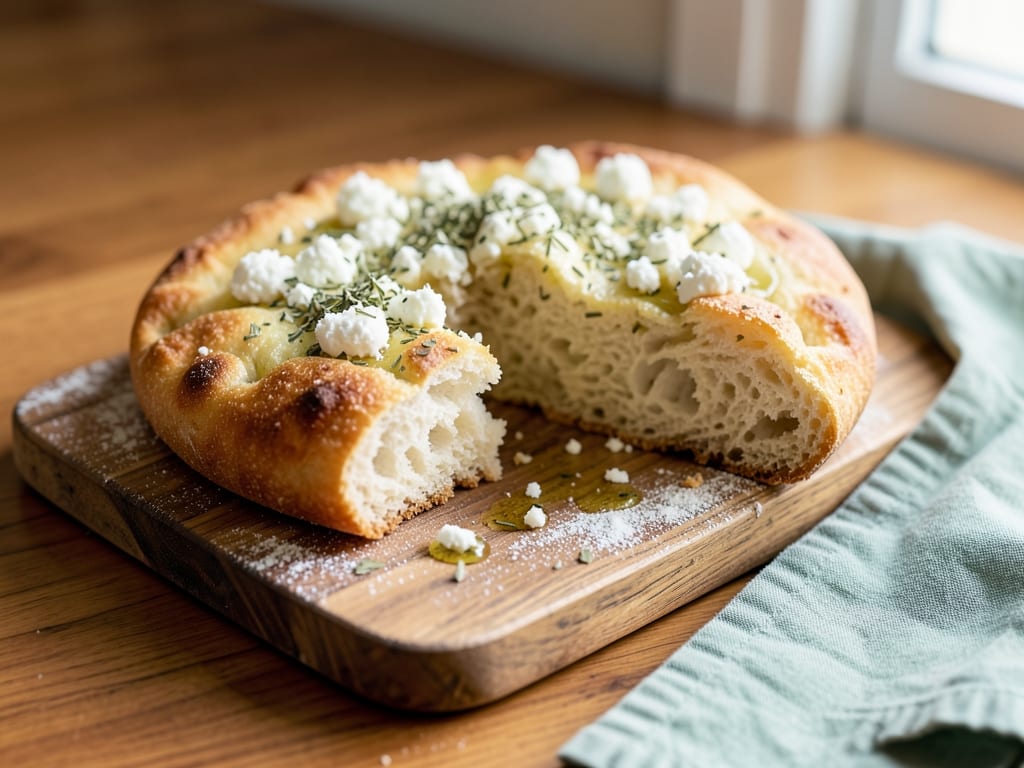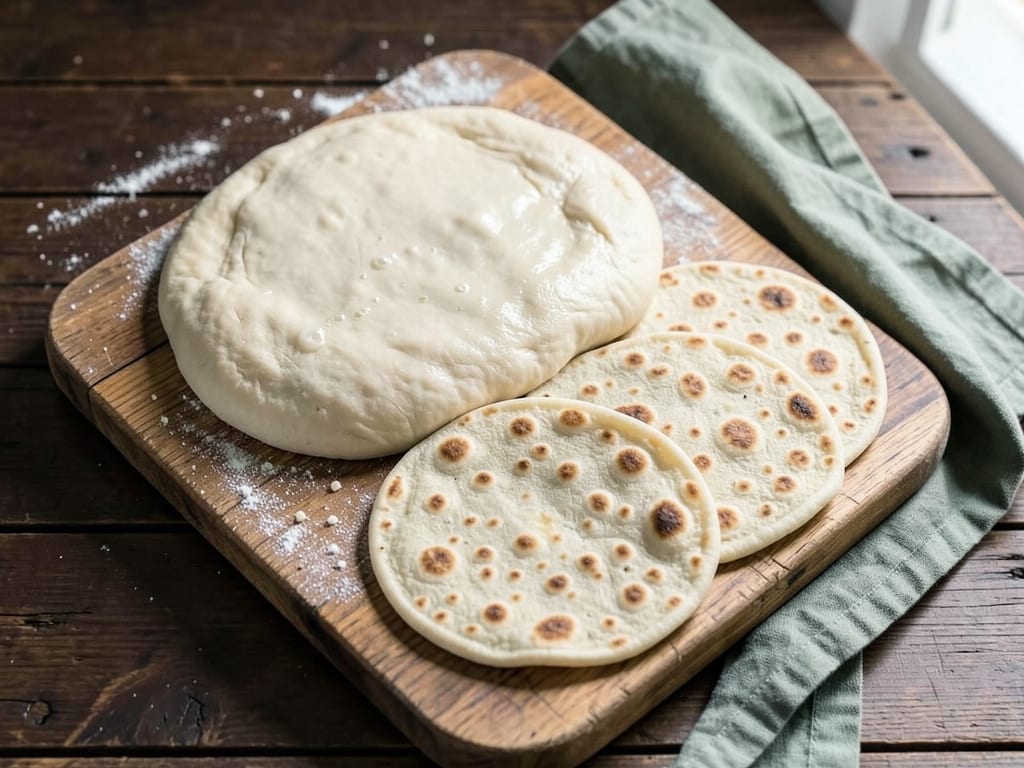
Sada Roti Dough and Tawa-Cooked Sada Roti
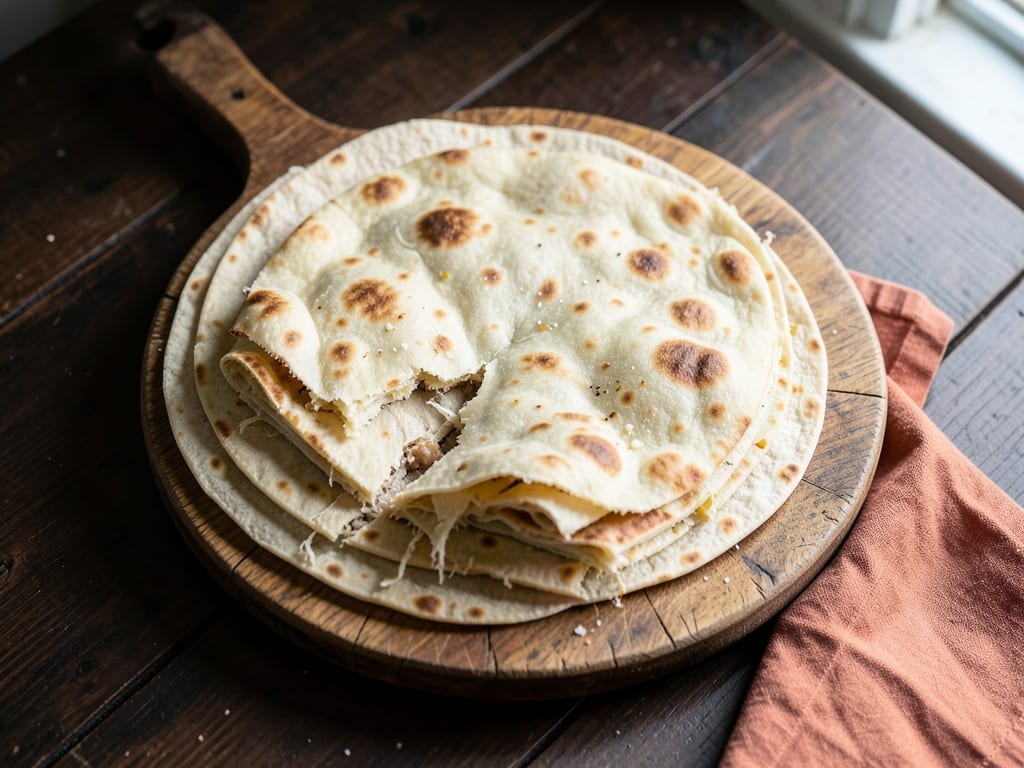
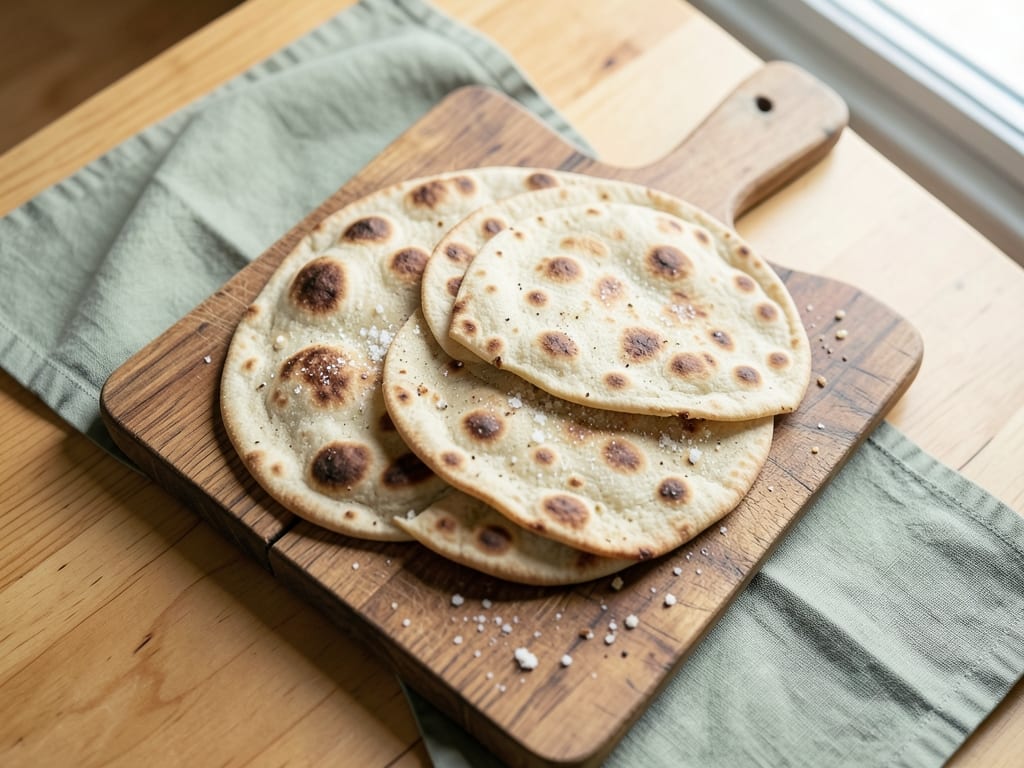
A soft, pillowy Trinidadian breakfast flatbread made from a simple baking powder and milk dough, rested, rolled thin, and cooked on a dry tawa until lightly freckled and puffed. No oven is needed; everything is cooked on the stovetop.
- Prep
- 30 min
- Cook
- 31 min
- Wait
- 45 min
- Total
- 1 hr 46 min
- Makes
- 8 rotis (about 8 inches / 20 cm each)
Steps
Before you start
- This dough is chemically leavened with baking powder, not yeast, which is how traditional sada roti is made. The rests relax the gluten so the dough rolls easily.
- Cut the butter into small cubes and keep it cold until you use it.
- Check that your baking powder is fresh (it should fizz when a pinch is stirred into hot water), or the rotis will be dense.
- Plan about 1 hour 45 minutes in total, including two rests. All cooking is done on the stovetop; no oven is needed.
Whisk dry ingredients
- In a large bowl, whisk the flour, baking powder, salt, and sugar for about 30 seconds until evenly combined.
+ Show details− Hide details
Ready when: No streaks or clumps of baking powder remain.
Tip: Thorough whisking spreads the baking powder evenly so the rotis puff uniformly.
Rub in butter
- Add the cold butter cubes.
- Rub them into the flour between your fingertips, pressing and crumbling for 2 to 3 minutes.
+ Show details− Hide details
Ready when: The mixture looks like coarse sand with no visible butter pieces larger than a small pea.
Tip: Work quickly so the butter stays cool and does not melt into a paste.
Add milk and mix
- Make a well in the center and pour in 1 cup (240 ml) of the milk.
- Stir with your hand or a fork, adding the remaining milk a spoonful at a time, until a shaggy, slightly tacky dough forms and no dry flour is left in the bowl.
+ Show details− Hide details
Ready when: The dough holds together and picks up all the loose flour from the bowl.
Tip: If the dough is stiff and cracking, add 1 tablespoon more milk. If it sticks heavily to your hands, dust with a little flour.
Knead briefly
- Turn the dough onto a lightly floured surface (use about half of the dusting flour).
- Knead gently for 3 to 4 minutes, folding and pressing with the heel of your hand, until smooth and soft.
+ Show details− Hide details
Ready when: The dough is smooth, soft like an earlobe, and springs back slowly when poked.
Tip: Don't over-knead. Too much kneading makes the rotis tough.
First rest
- Shape the dough into a ball, return it to the bowl, and cover with a damp towel.
- Let it rest at room temperature for 30 minutes.
+ Show details− Hide details
Ready when: The dough feels softer and more relaxed and is easy to stretch.
Divide and rest again
- Cut the dough into 8 equal pieces (about 110 g / 4 oz each).
- Roll each into a smooth ball by cupping your palm and rotating it on the counter.
- Cover with the towel and rest for 10 minutes.
+ Show details− Hide details
Ready when: Balls are smooth with no cracks and feel soft when pressed.
Tip: Keep unused balls covered so a dry skin does not form.
Heat the tawa
- During the last 5 minutes of the rest, set the tawa or skillet over medium heat.
- Do not add oil.
+ Show details− Hide details
Ready when: A pinch of flour sprinkled on the surface turns light tan in about 30 seconds.
Tip: If the flour scorches immediately, lower the heat. A too-hot pan browns the outside before the inside cooks.
Roll out a round
- Flatten one ball on a lightly floured surface and roll it into a thin round about 8 inches (20 cm) across and ⅛ inch (3 mm) thick, turning it a quarter turn after each pass.
- Brush off excess flour.
- Roll the next round while the first one cooks.
+ Show details− Hide details
Ready when: The round is even in thickness with no tears.
Tip: Use as little dusting flour as possible, since extra flour burns on the pan.
Cook first side
- Lay a rolled round on the hot tawa.
- Cook for about 1½ to 2 minutes, until small bubbles form on top and the underside has pale golden-brown freckles.
+ Show details− Hide details
Ready when: Bubbles rise on the surface and the underside is speckled golden-brown.
Flip and puff
- Flip the roti and cook the second side for about 1½ minutes until it has golden spots.
- Flip once more and press gently around the edges with a folded towel or spatula.
- The roti should puff in places.
- Cook 30 seconds more.
- Repeat with the remaining rounds, wiping out any burnt flour from the pan as needed.
+ Show details− Hide details
Ready when: Both sides are dotted with golden-brown spots, the roti puffs, and it feels soft and dry (not doughy) when pressed.
Tip: If the rotis cook too fast and stay doughy inside, reduce the heat slightly.
Brush and steam
- As each roti comes off the pan, brush lightly with melted butter if using, and stack inside a clean kitchen towel, folding it over the pile.
- Let the stack sit for 5 minutes before serving.
+ Show details− Hide details
Ready when: Rotis are soft and bend without cracking.
Tip: Don't leave them uncovered, or they will dry and stiffen.
Good to know
Tips
- Roll the rounds thin. Thick rotis stay doughy in the center before the outside browns.
- Cook on a dry pan. Oil would fry the roti and make it crisp rather than soft.
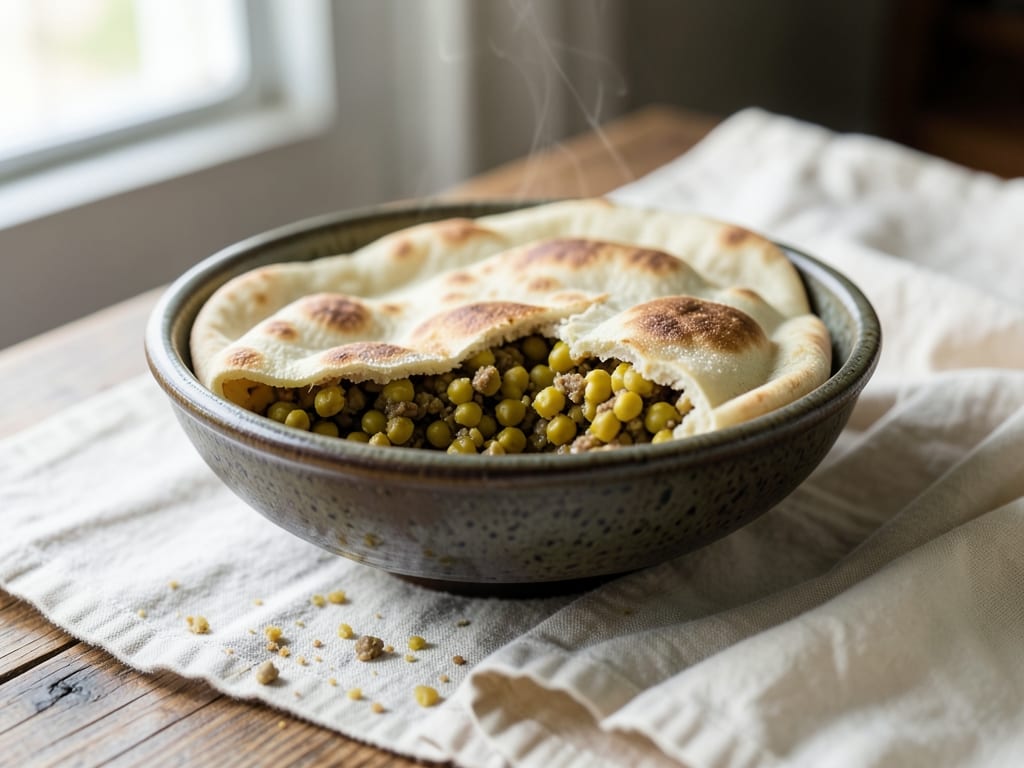
- Serve warm with butter, tomato choka, fried eggs, smoked herring, or cheese.
- If the dough keeps springing back while rolling, cover it and rest it for 5 more minutes.
Make ahead
The dough can be made through "Knead briefly", wrapped tightly, and refrigerated for up to 24 hours. Bring it to room temperature for 30 minutes, then continue with "Divide and rest again". Cooked rotis can be made a day ahead and reheated.
Storage & reheating
Room temperature: wrapped in a towel inside a sealed bag for up to 1 day. Fridge: up to 4 days in an airtight bag. Freezer: stack with parchment between rotis and freeze up to 2 months. Reheat in a dry skillet over medium heat for about 30 to 45 seconds per side, or wrap in a damp paper towel and microwave for 15 to 20 seconds.
Substitutions
- whole milk → Water, or unsweetened plant milk. Water gives a slightly less rich, chewier roti. Plant milk works 1:1.
- unsalted butter → Vegetable shortening or neutral oil (3 tbsp / 40 ml). Shortening can be rubbed in the same way. If using oil, stir it into the milk before adding.
- all-purpose flour → Half all-purpose, half whole-wheat flour. Gives a nuttier flavor and a slightly denser roti. You may need 1 to 2 tbsp more milk.
- granulated sugar → Omit. The roti will be a little less golden but still delicious.