Quick Cabbage and Chickpea Curry
A vibrant, quick-cooking vegetarian curry loaded with tender cabbage and protein-rich chickpeas, aromatic with ginger, cumin, and coriander. Ready in under 30 minutes, it's a weeknight staple that tastes like you simmered it for hours. Serve with rice or flatbread.
Steps
Before you start
- Drain and rinse canned chickpeas thoroughly
- Measure all spices before you start cooking
- Chop all vegetables and have them ready by your stove
Bloom the spices
- Heat the oil in a large skillet over medium-high heat for about 30 seconds until shimmering.
- Add the diced onion and cook, stirring often, for 3 minutes until it turns translucent and softens.
- Add the minced ginger and garlic, stirring constantly for 30 seconds until fragrant.
+ Show details− Hide details
Ready when: Onion is soft and translucent; garlic and ginger are very fragrant
Tip: Don't let garlic scorch—it will taste bitter. Keep stirring and stay alert.
Add ground spices
- Add the cumin, coriander, turmeric, and chili powder.
- Stir continuously for 1 minute, coating the onions evenly.
- The spices will release their oils and deepen in color.
+ Show details− Hide details
Ready when: Spices are fragrant and coat the onion mixture uniformly
Tip: This blooming step awakens the spices and mellows their raw flavor. Don't skip it.
Add tomatoes and liquid
- Pour in the crushed tomatoes and water, stirring well to combine with the spice mixture.
- The sauce will begin to simmer gently.
+ Show details− Hide details
Ready when: Liquid is incorporated and simmering gently
Add chickpeas and cabbage
- Stir in the drained chickpeas and chopped cabbage, breaking up any large clumps of cabbage with your spoon.
- The pot will be quite full but the cabbage will wilt as it cooks.
+ Show details− Hide details
Ready when: All ingredients are evenly distributed
Tip: Don't worry if it looks crowded—the cabbage collapses to about a third of its raw volume.
Simmer until cabbage is tender
- Reduce the heat to medium and simmer uncovered for 8–10 minutes, stirring occasionally.
- The cabbage will soften and the flavors will meld.
- The liquid will reduce slightly and thicken.
+ Show details− Hide details
Ready when: Cabbage is fork-tender; broth is slightly thickened and no longer watery
Tip: Stir every 2–3 minutes so nothing sticks to the bottom. If it looks too thick, add a splash of water.
Taste and season
- Remove from heat.
- Taste the curry and adjust the salt to your preference.
- If you like brightness, squeeze a bit of lime juice into the pot or reserve lime wedges for serving.
+ Show details− Hide details
Ready when: Salt is dissolved and incorporated
Tip: Add salt gradually in small pinches—it's easier to add more than to take it out.
Serve
- Transfer to bowls or serving plates.
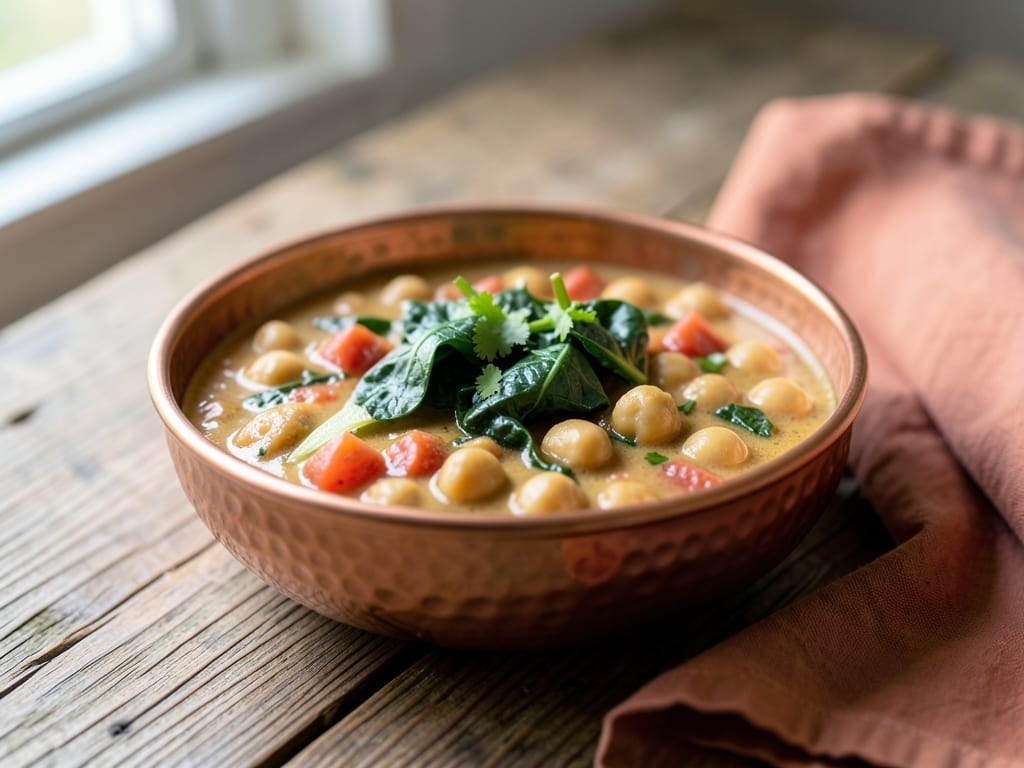
- Garnish with fresh cilantro if using, and serve hot with lime wedges on the side.
- Pair with steamed basmati rice, jasmine rice, or warm naan bread.
+ Show details− Hide details
Tip: Cilantro and lime brighten the earthy spices and should be added just before eating for maximum freshness.
Good to know
Tips
- For creamier curry, stir in 2–3 tablespoons coconut milk or full-fat yogurt at the very end. Add after you've removed from heat so yogurt doesn't break or separate.
- If your ginger or garlic is very old and has started to dry out, add a touch more (½ teaspoon extra) to punch up the flavor.
- Serve with a dollop of plain yogurt and sliced red onion on the side for cooling contrast and extra texture.
- To make it a one-pot meal, stir in ¾ cup cooked basmati rice in the last step, then cover and let rest for 1 minute.
Make ahead
Prepare and chop the onion, ginger, garlic, and cabbage up to 8 hours ahead; store in separate airtight containers in the fridge. Measure the spices and combine in a small bowl up to 1 day ahead. The curry itself is best made fresh, but see storage notes if you have leftovers.
Storage & reheating
Store leftovers in an airtight container in the refrigerator for up to 4 days. Reheat gently on the stovetop over medium heat, adding a splash of water if the sauce has thickened too much. The curry also freezes well for up to 3 months in a freezer-safe container or zip-top bag; thaw overnight in the fridge and reheat gently on the stovetop or microwave.
Substitutions
- green cabbage, fresh → Fresh spinach (2 cups, packed) or lacinato kale (4 cups, chopped). Use half the volume of water if substituting with spinach (which releases moisture). Add spinach in the last 2 minutes of cooking so it doesn't turn dark. Kale needs the full 8–10 minutes of simmering to become tender.
- canned chickpeas (15 oz / 425g can) → White beans, black-eyed peas, or lentils (canned, drained). Any legume works; quantities stay the same. For firmer texture, use dried chickpeas soaked overnight and cooked until just tender (adds 30–45 minutes).
- kashmiri chili powder or mild paprika → Cayenne pepper (⅛ to ¼ teaspoon) for more heat, or omit entirely for mild. Kashmiri chili powder is mild and adds color; cayenne is nearly 10 times hotter. Start with less if using cayenne.
- canned crushed tomatoes (14.5 oz / 411g can) → 2 fresh medium tomatoes, roughly chopped, blended smooth. Use 2 tablespoons tomato paste thinned with ¼ cup water as a shortcut. Fresh tomatoes may produce a slightly more watery curry; simmer 2–3 minutes longer to reduce.