Mild Shrimp and Tomato Curry
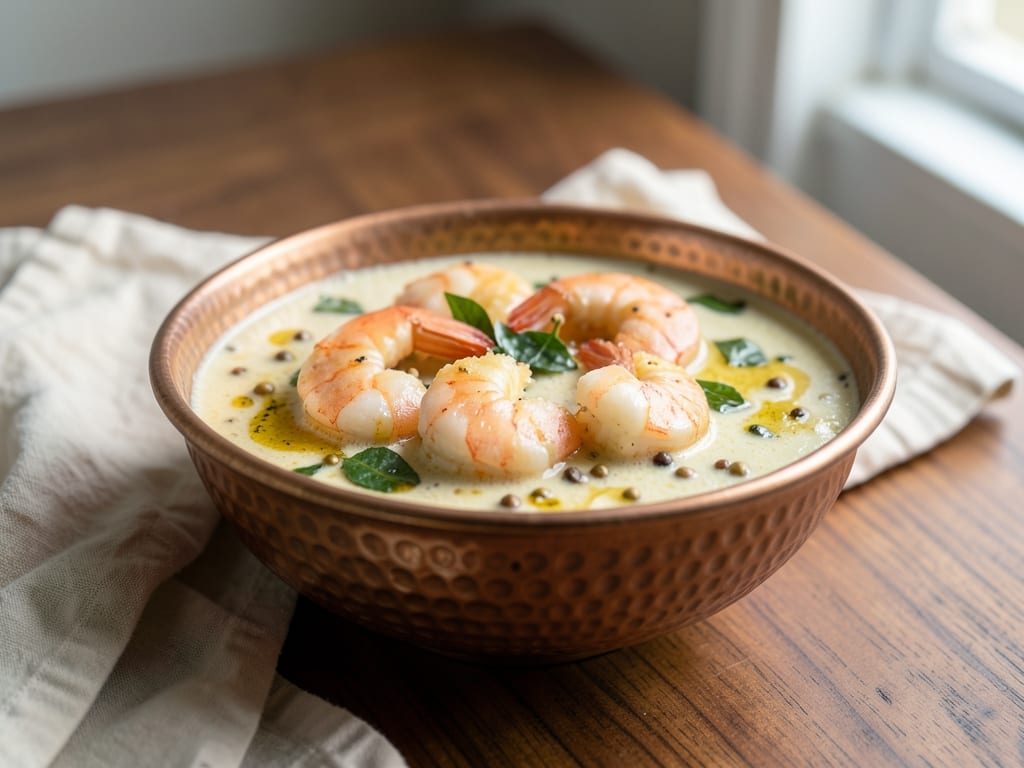
A gentle, aromatic Indian-style curry with tender shrimp in a silky tomato-coconut sauce. Warm spices—turmeric, coriander, and cumin—build flavor without heat, making it perfect for those who prefer mild curries. Ready in under 30 minutes and naturally gluten-free.
- Prep
- 12 min
- Cook
- 18 min
- Total
- 30 min
- Makes
- 4 servings (about 1¼ cups curry per person)
Steps
Before you start
- Pat shrimp dry and keep cold until you start cooking
- Have all ingredients prepped and within reach—the cooking happens quickly
- If using frozen shrimp, thaw them in the refrigerator the night before
Sauté aromatics
- Heat the oil in a large skillet or saucepan (at least 12 inches/30 cm) over medium-high heat.
- Add the diced onions and cook for 5–6 minutes, stirring occasionally, until softened and beginning to turn golden at the edges.
- The onions should be fragrant and translucent.
+ Show details− Hide details
Ready when: Onions are softened, translucent, and lightly golden
Tip: Stir occasionally to prevent burning on the bottom. If onions stick, add a splash of water.
Add garlic and ginger
- Reduce heat to medium.
- Add the minced garlic and ginger, stirring constantly for 45 seconds to 1 minute.
- You'll smell the raw-garlic aroma fade as they cook.
- Do not let them brown.
+ Show details− Hide details
Ready when: Fragrant, no longer raw-smelling, and pale in color
Tip: High heat will burn the garlic, making it bitter. Keep the heat at medium and stir constantly.
Bloom the spices
- Add the turmeric, coriander, and cumin.
- Stir constantly for about 1 minute.
- The spices will toast slightly and become very aromatic.
- This step releases their essential oils and deepens the flavor.
+ Show details− Hide details
Ready when: Spices are aromatic and slightly darker in color
Tip: Don't skip this blooming step—it transforms the flat taste of raw spices into a warm, complex base.
Add tomato paste
- Stir in the tomato paste and cook for 2 minutes, stirring frequently.
- The paste will darken slightly and caramelize a little, which adds sweetness and depth to the curry.
+ Show details− Hide details
Ready when: Tomato paste is darker and has a slight caramelized edge
Tip: Cooking the paste prevents a raw, sour taste. If it sticks, add a splash of water.
Pour in tomatoes and coconut milk
- Add the canned diced tomatoes with their juice and the coconut milk.
- Stir well to combine.
- Increase the heat to medium-high and bring the mixture to a gentle simmer, about 3–4 minutes.
+ Show details− Hide details
Ready when: Small bubbles appear regularly around the edges and surface
Tip: Stir occasionally to prevent sticking on the bottom. The sauce will look loose but will concentrate as it cooks.
Simmer sauce
- Once simmering, reduce heat to medium and let the sauce simmer uncovered for 5 minutes, stirring occasionally.
- The sauce will thicken slightly and the flavors will meld.
- It should smell intensely aromatic—warm, savory, and slightly sweet.
+ Show details− Hide details
Ready when: Sauce is noticeably thicker, with no raw tomato or spice smell
Tip: If the sauce looks too thick before adding shrimp, you can thin it with a few tablespoons of water.
Add fish sauce and season
- Stir in the fish sauce (it adds savory depth without a fishy taste).
- Taste the sauce and season with a pinch of salt and black pepper.
- Remember: you'll be adding shrimp next, and their natural saltiness will contribute too, so season conservatively.
+ Show details− Hide details
Ready when: Fish sauce is fully incorporated; sauce tastes balanced
Tip: Fish sauce smells pungent in the bottle but becomes savory and rich when cooked. Don't be afraid of it.
Cook shrimp
- Increase heat to medium-high.
- Add the shrimp to the simmering sauce in a single layer if possible (work in batches if needed to avoid crowding).
- Cook for 4–5 minutes, stirring gently halfway through.
- The shrimp will turn from gray to opaque pink and will feel firm to the touch when done.
+ Show details− Hide details
Ready when: Shrimp are opaque pink throughout, no longer translucent, and feel firm
Tip: Do not overcook shrimp—they'll become tough and rubbery in seconds. Remove them the moment they turn opaque. If cooking in batches, set the first batch aside and return all shrimp to the pan at the end.
Finish and serve
- Remove from heat.
- Taste and adjust seasoning with a touch more salt and pepper if needed.
- Garnish with fresh cilantro and serve immediately with lime wedges on the side.
- Serve over steamed basmati rice, jasmine rice, or with warm naan bread.
+ Show details− Hide details
Tip: A squeeze of fresh lime juice brightens the curry and cuts through the richness of the coconut milk.
Good to know
Tips
- Buy shrimp already peeled and deveined for convenience, or buy whole shrimp and prepare them yourself for better flavor and a lower price. Pat them completely dry before cooking—moisture on their surface prevents proper searing and heat transfer.
- For a spicier curry, add ½ teaspoon of red chili flakes or ¼ teaspoon of cayenne pepper in Step 3, bloomed with the other spices.
- Coconut milk naturally separates in the can. You can stir it together before opening, or if you prefer a thicker sauce, use just the cream that settles on top (about 3 tablespoons/45 ml).
- Serve with basmati rice, jasmine rice, or naan bread to soak up the sauce. A fresh green salad or raita (yogurt sauce) on the side provides balance and cooling contrast.
Storage & reheating
Refrigerate in an airtight container for up to 2 days. Reheat gently over medium-low heat on the stovetop, stirring occasionally and adding a splash of water if the sauce has thickened too much. Do not microwave, as the heat may toughen the shrimp further. Freezing is not recommended, as shrimp become mushy when thawed.
Substitutions
- unsweetened full-fat coconut milk → Greek yogurt or heavy cream. Use ¾ cup (180 ml) and stir it in at the very end, off the heat, to prevent curdling. The curry will be less rich but still creamy.
- large shrimp (21–25 count per pound) → firm white fish (cod, halibut, or mahi-mahi), cut into 1-inch chunks. Cook for 5–6 minutes instead of 4–5, until the fish flakes easily with a fork.
- fish sauce → soy sauce or tamari. Use ½ teaspoon (2.5 ml) for a different but equally savory depth. It will taste slightly more Asian than Indian.
- canned diced tomatoes → 2 cups (480 ml) fresh tomato puree or crushed canned tomatoes. Maintains the same volume and consistency. Fresh tomatoes will give a brighter taste; canned are reliable year-round.