Iftar Egg Curry with Coconut and Chickpeas
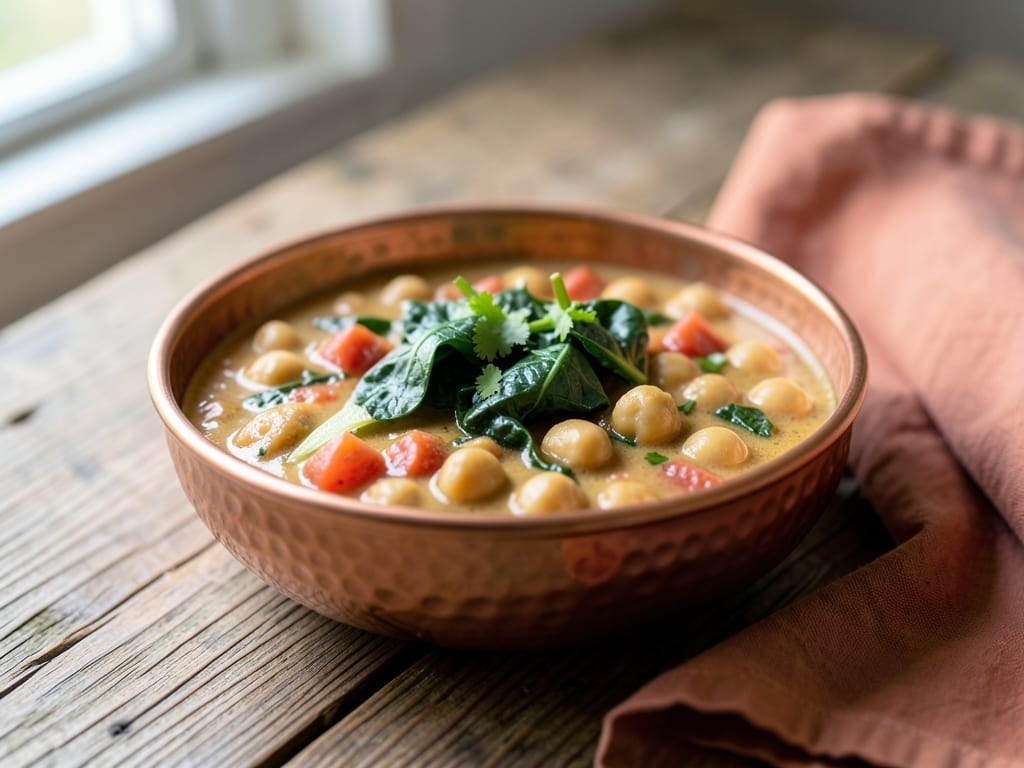
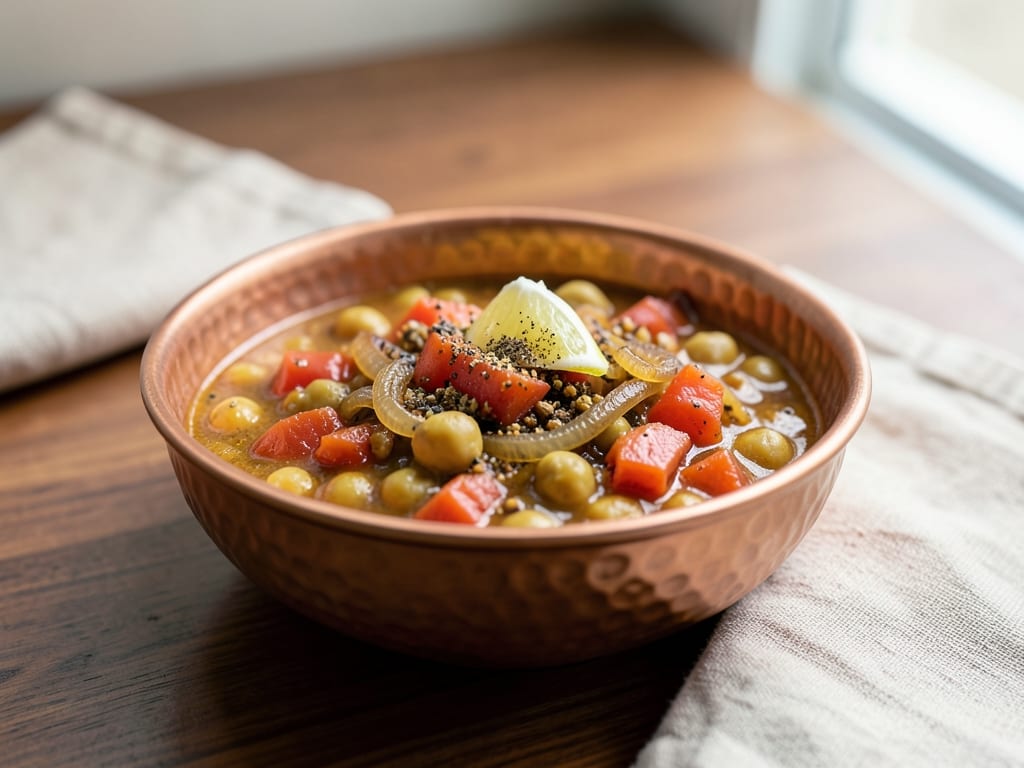
A creamy, fragrant egg curry enriched with coconut milk and chickpeas, ideal for breaking the Ramadan fast. Hard-boiled eggs nestle in a silky sauce infused with warming spices, garlic, ginger, and tomatoes, finished with fresh cilantro. Naturally vegetarian and deeply satisfying.
- Prep
- 20 min
- Cook
- 40 min
- Wait
- 15 min
- Total
- 1 hr 15 min
- Makes
- 4 servings (6–8 eggs with chickpeas and sauce)
Steps
Before you start
- Boil the eggs 20 minutes ahead if not already cooked
- Have all spices measured and ready (mise en place)
- Use full-fat coconut milk for creaminess and authenticity
Boil the eggs
- If using uncooked eggs, place them in a small saucepan, cover with cold water by 1 inch (2.5 cm), and bring to a rolling boil over high heat.
- Remove from heat, cover, and let sit for 12 minutes.
- Transfer to an ice bath to cool, then peel gently under running water.
- Halve the peeled eggs lengthwise and set aside.
+ Show details− Hide details
Ready when: Yolks are set with a pale yellow center
Tip: Use older eggs (1–2 weeks old) for easier peeling; they release cleanly from the shell.
Temper the cumin seeds
- Heat the oil in a large heavy-bottomed pot or Dutch oven over medium heat.
- Once shimmering, add the cumin seeds and listen for them to crackle, about 1 minute.
- The kitchen should smell fragrant and nutty.
+ Show details− Hide details
Ready when: Cumin seeds crackle and release aroma
Tip: Don't let the seeds burn; they should be fragrant, not dark brown. If they darken too quickly, reduce heat slightly.
Cook the onion base
- Add the diced onion to the pot and stir continuously with a wooden spoon.
- Cook for 6–8 minutes, stirring often, until the onion is deep golden and translucent, with some light brown edges.
- This builds the foundation of the curry's flavor.
+ Show details− Hide details
Ready when: Onion is soft, translucent, and golden brown
Tip: Resist the urge to rush; patient caramelization creates depth and sweetness that balances the spices.
Add garlic and ginger
- Stir in the minced garlic and ginger, and cook for 1–2 minutes, stirring constantly.
- The mixture should be fragrant but not browned.
- If the garlic begins to brown, it will taste bitter.
+ Show details− Hide details
Ready when: Mixture is very aromatic and ginger is distributed evenly
Tip: Keep heat at medium to avoid burning the garlic; it should just release its oils and become fragrant.
Bloom the spices
- Add the ground coriander, turmeric, Kashmiri chili powder, and garam masala.
- Stir well for 1 minute.
- The spices will cling to the oil and onion mixture, releasing their essential flavors.
- You'll smell a rich, warm aroma.
+ Show details− Hide details
Ready when: Spices are evenly coated and fragrant
Tip: Blooming spices in oil ensures they distribute evenly and their flavors integrate fully into the sauce.
Add tomatoes and simmer
- Pour in the crushed tomatoes (with their juice) and stir to combine.
- Increase heat to medium-high and bring the mixture to a gentle simmer.
- Reduce heat to medium-low and simmer for 8–10 minutes, stirring occasionally, until the tomatoes break down and the mixture darkens slightly and becomes more concentrated.
- The oil should begin to separate visibly at the edges.
+ Show details− Hide details
Ready when: Mixture is thick, darker, and oil shows at the edges
Tip: This step is crucial: cooking down the tomatoes concentrates the flavors and removes excess water, creating a rich base for the curry.
Stir in coconut milk and chickpeas
- Add the full-fat coconut milk and stir to combine smoothly.
- Add the drained and rinsed chickpeas, and stir again.
- Bring the curry to a gentle simmer over medium heat.
+ Show details− Hide details
Ready when: Curry is simmering gently with small bubbles at the surface
Tip: Stir the coconut milk well before adding to distribute the cream evenly; canned coconut milk often separates during storage.
Simmer the curry base
- Once simmering, reduce heat to medium-low and simmer gently for 10–12 minutes without a lid, stirring occasionally.
- The curry should bubble gently and thicken slightly as the flavors meld.
- Taste and adjust seasoning with salt and black pepper.
+ Show details− Hide details
Ready when: Curry is creamy, aromatic, and coats a spoon; flavors are balanced
Tip: Taste before adding all the salt; the chickpeas and canned ingredients add saltiness, so add incrementally.
Add the eggs
- Gently slide the halved boiled eggs into the simmering curry, cut-side up where possible.
- Stir very gently to distribute them evenly without breaking them.
- Simmer for 2–3 minutes to heat the eggs through and allow them to absorb the flavors.
+ Show details− Hide details
Ready when: Eggs are heated through and nestled evenly in the sauce
Tip: Add the eggs just before serving if you prefer them firmer; simmering them too long can make the whites rubbery.
Finish and serve
- Remove the pot from heat.
- Stir in most of the fresh cilantro, reserving some for garnish.
- Taste and adjust seasoning one final time.
- Ladle the curry with eggs and chickpeas into shallow bowls, ensuring each serving gets at least 2 halved eggs.
- Garnish with the reserved cilantro.
- Serve with lime wedges on the side for squeezing.
+ Show details− Hide details
Ready when: Curry is creamy, well-seasoned, and fragrant
Tip: Fresh cilantro added off heat preserves its bright color and fresh flavor; a squeeze of lime enhances the spices and adds acidity.
Good to know
Tips
- This curry is naturally vegetarian and high in protein from the eggs and chickpeas, making it an ideal Iftar dish to replenish energy after fasting.
- Kashmiri chili powder is milder and adds fruity notes without excessive heat; if unavailable, use half the amount of standard chili powder and add a pinch of smoked paprika for color.
- For a thinner curry, add a splash of vegetable broth or water during simmering; for a thicker sauce, simmer uncovered longer or stir in a paste of 1 tablespoon cornstarch mixed with 2 tablespoons water.
- Serve with warm naan, rice, or flatbread to soak up the rich, creamy sauce. A simple cucumber and tomato salad or raita (yogurt-based condiment) makes a cooling complement.
Make ahead
The curry base (tomato, spices, coconut milk, and chickpeas) can be made up to 2 days ahead and refrigerated in an airtight container. Boil the eggs up to 1 day ahead and peel and refrigerate them. Reheat the curry base gently over medium-low heat until simmering, add the eggs, and finish with cilantro and lime just before serving.
Storage & reheating
Refrigerate leftovers in an airtight container for up to 3 days. Freeze the curry base (without eggs) for up to 3 months in freezer-safe containers. Thaw overnight in the fridge and reheat gently over medium-low heat; add fresh eggs and cilantro just before serving. The curry tastes even better the next day as flavors deepen.
Substitutions
- canned chickpeas → white beans or kidney beans, drained and rinsed. Use the same quantity. White beans are creamier; kidney beans add earthiness.
- Kashmir or Kashmiri chili powder (mild, fruity) → cayenne pepper or a pinch of smoked paprika. Use half the amount of cayenne for similar heat; paprika adds smokiness without heat.
- full-fat coconut milk → heavy cream or Greek yogurt mixed with a splash of water. Use the same quantity; yogurt adds tang and richness but is less traditional.
- fresh cilantro → fresh parsley or mint. Use the same quantity. Parsley is milder; mint adds refreshing brightness.