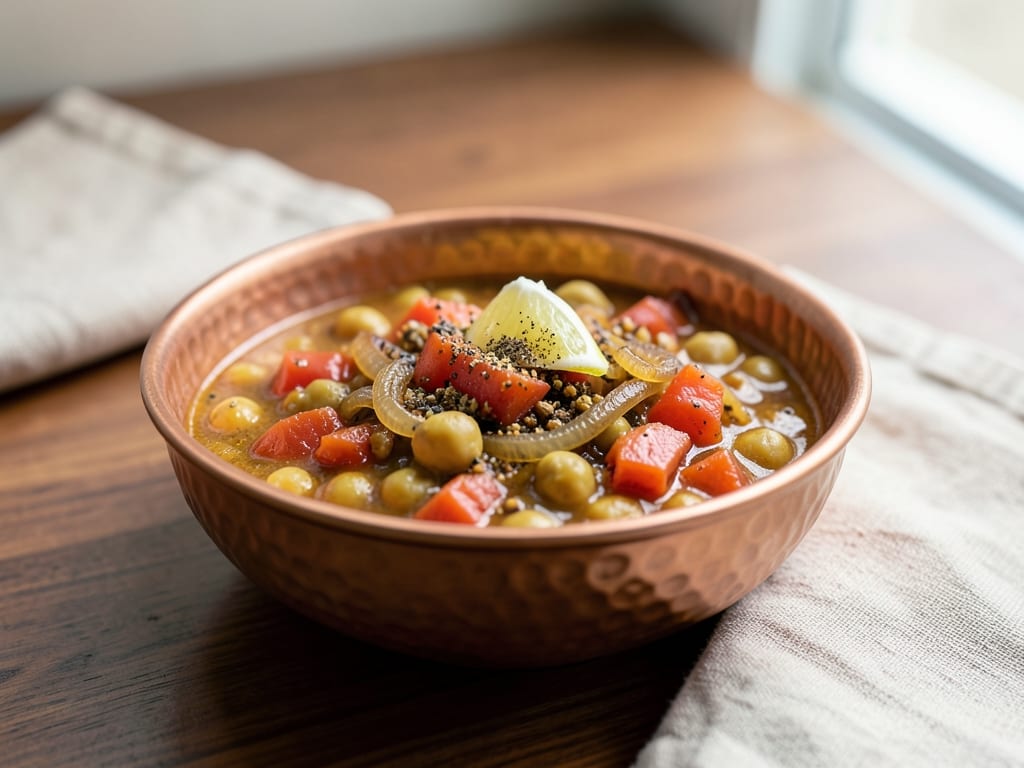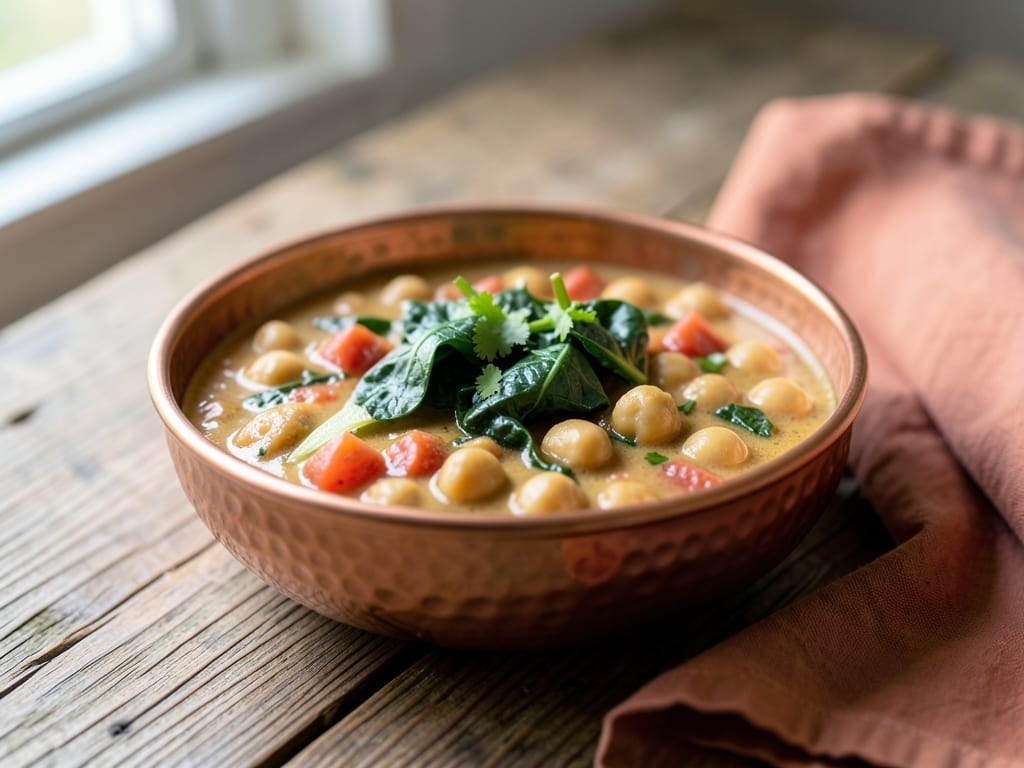
One-Pot Chickpea Coconut Curry
A creamy, gently spiced curry of chickpeas simmered in tomato and coconut milk, finished with wilted spinach and a squeeze of lemon. Everything cooks in one pot in about 45 minutes, using mostly pantry staples.
- Prep
- 15 min
- Cook
- 30 min
- Total
- 45 min
- Makes
- About 6 cups (4 generous servings)
Steps
Before you start
- Open, drain and rinse the chickpeas in a colander until the water runs clear, then shake off the excess.
- Shake the can of coconut milk well before opening so the cream and liquid are evenly mixed.
- Have all vegetables chopped before you turn on the heat; the spices need your full attention for the short time they toast.
- If you plan to serve with rice, start it now so it is ready when the curry is.
Soften the onion
- Set a large, deep skillet or 4-quart (3.8 L) pot over medium heat and add the oil.
- When the oil shimmers, add the diced onion and ¼ teaspoon of the salt.
- Cook, stirring every minute or so, for 6 to 7 minutes.
+ Show details− Hide details
Ready when: Onion is soft, translucent and just starting to turn pale golden at the edges, with no raw crunch.
Tip: If the onion browns quickly or sticks, lower the heat and add a splash of water.
Add aromatics
- Stir in the garlic, grated ginger and red pepper flakes (if using).
- Cook, stirring constantly, for 1 minute.
+ Show details− Hide details
Ready when: The garlic and ginger smell fragrant and look glossy; the garlic should not be browned.
Tip: Burnt garlic turns bitter, so move on to the next step as soon as it smells fragrant.
Toast spices and paste
- Add the curry powder and tomato paste.
- Stir and cook for 1 to 2 minutes, pressing the paste into the onion mixture so it fries rather than sits in clumps.
+ Show details− Hide details
Ready when: The mixture darkens to a deep brick-red, smells toasty and sticks slightly to the pan bottom.
Tip: If the spices begin to stick and scorch, add 2 tablespoons of the broth right away.
Build the sauce
- Pour in the crushed tomatoes and scrape up any browned bits from the bottom of the pan with a wooden spoon.
- Add the coconut milk, broth, remaining ¾ teaspoon salt and the sugar (if using).
- Stir until the coconut milk is fully blended and the sauce is a uniform orange color.
+ Show details− Hide details
Ready when: No white streaks of coconut remain and the sauce is just reaching a bubble at the edges.
Tip: The sugar is optional; it softens the acidity of canned tomatoes.
Add chickpeas and simmer
- Stir in the drained chickpeas and bring to a gentle boil.
- Reduce the heat to medium-low, partially cover with the lid slightly ajar, and simmer for 15 to 18 minutes, stirring every 4 to 5 minutes so nothing sticks.
+ Show details− Hide details
Ready when: The sauce has thickened enough to coat the back of a spoon and leave a clear trail when you drag a spoon across the pan bottom; the surface shows small, lazy bubbles.
Tip: Keep it at a gentle simmer; a hard boil can make the coconut milk separate and look greasy.
Mash a few chickpeas
- Use the back of a wooden spoon to press about ¼ cup of the chickpeas against the side of the pan to crush them.
- Stir well and simmer uncovered for 3 more minutes.
+ Show details− Hide details
Ready when: The sauce looks creamier and thicker, like a loose stew rather than a thin soup.
Tip: If the curry is too thick, stir in 2 to 4 tablespoons of water; if too thin, simmer a few minutes longer.
Wilt the spinach
- Add the spinach in two or three handfuls, stirring each addition into the sauce until it collapses before adding the next.
- Cook for 2 to 3 minutes in total.
+ Show details− Hide details
Ready when: All spinach is dark green, completely wilted and tender, with no stiff leaves.
Tip: Don't cook spinach longer than needed or it turns dull and slimy.
Finish and season
- Remove the pot from the heat.
- Stir in the lemon juice, then taste and add more salt, a pinch at a time, until the flavors taste bright and balanced.
- Let the curry rest for 5 minutes off the heat to thicken slightly, then serve topped with chopped cilantro, over rice or with warm naan.
+ Show details− Hide details
Ready when: The sauce is creamy and thick, tastes balanced between salty, tangy and mildly sweet.
Tip: Add the lemon juice off the heat so its fresh flavor isn't cooked away.
Good to know
Tips
- Rinse canned chickpeas well; the canning liquid can make the curry taste metallic and foamy.
- Frying the curry powder and tomato paste before adding liquid deepens the flavor noticeably, so don't skip step 3.
- Mashing some chickpeas thickens the sauce naturally without flour or cornstarch.
- Taste and adjust the salt and lemon at the end; canned products vary in saltiness, so seasoning at the finish is more reliable.
Make ahead
"The curry tastes even better the next day. Cook through step 6, cool, and refrigerate for up to 3 days; reheat gently, then add the spinach, lemon juice and cilantro just before serving."
Storage & reheating
"Room temperature: up to 2 hours. Refrigerator: cool completely and store in an airtight container for up to 4 days. Freezer: up to 3 months in freezer-safe containers (leave ½ inch / 1 cm headspace); thaw overnight in the fridge. Reheat in a saucepan over medium-low heat, stirring often, until steaming hot throughout, adding a splash of water or broth if the sauce has thickened."
Substitutions
- baby spinach → Chopped kale (stems removed). Add it 5 minutes before the end of simmering, as kale needs longer to become tender: about 6 to 8 minutes total.
- full-fat coconut milk → Light coconut milk. The curry will be thinner and less rich; reduce the broth to ½ cup (120 ml) to compensate.
- canned crushed tomatoes → Canned diced tomatoes. Use the same amount with their juices; the sauce will be chunkier, so mash a few more pieces with the spoon.
- mild or medium curry powder → Garam masala (1 tablespoon) plus ground turmeric (1 teaspoon) and ground cumin (1 teaspoon). Gives a similar warm, earthy flavor, though the heat level and blend will vary.