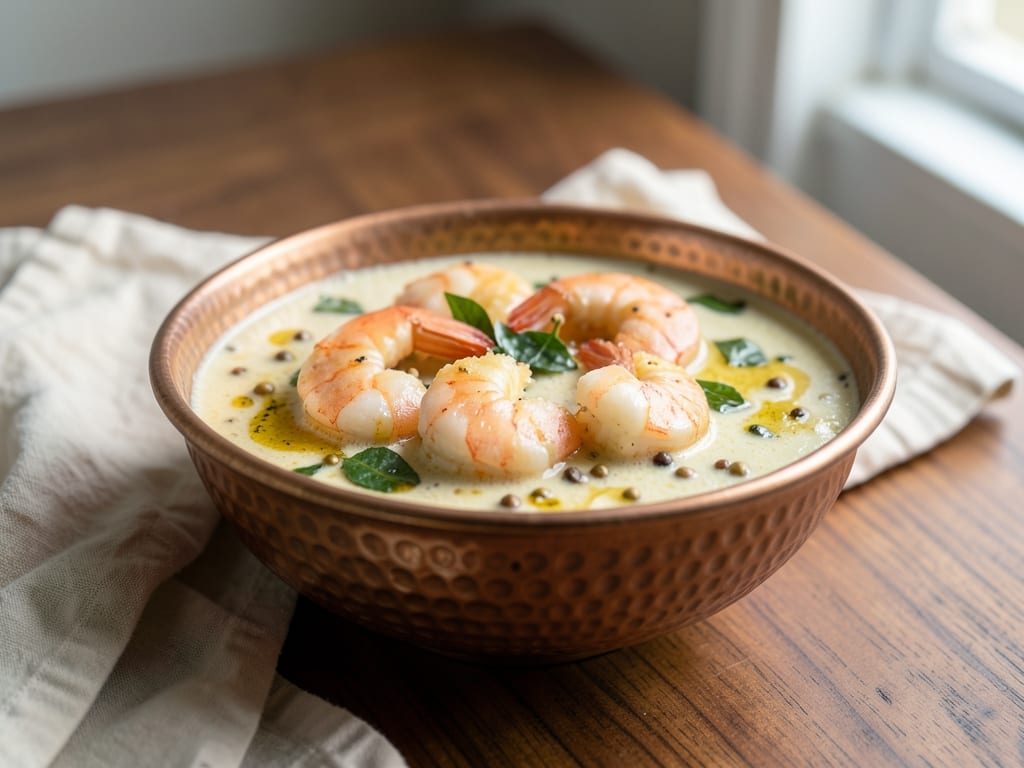
Kerala Shrimp Curry with Coconut Milk
A coastal Kerala-style curry of juicy shrimp in a silky coconut milk sauce, built on coconut oil, popping mustard seeds, fresh curry leaves and tangy kokum. Ready in about an hour and best spooned over steamed rice.
- Prep
- 16 min
- Cook
- 28 min
- Wait
- 20 min
- Total
- 1 hr 4 min
- Makes
- About 4 cups curry (4 servings)
Steps
Before you start
- Start the kokum soak first. It needs 15 minutes, and you can prep everything else while it soaks.
- Thaw frozen shrimp fully in the fridge or in a bowl of cold water for 15 minutes, then pat them very dry.
- Shake the can of coconut milk well before opening. Measure out all spices and have everything within reach, because the tempering step takes only about 2 minutes.
- Serve with steamed basmati or red parboiled rice, so cook the rice while the curry simmers.
Soak kokum, season shrimp
- Rinse the kokum under cold water, then put it in a small heatproof bowl and cover with the ½ cup (120 ml) just-boiled hot water.
- Leave it to soak for 15 minutes.
- While it soaks, put the dried shrimp in a medium bowl and toss with ¼ tsp of the salt and ¼ tsp of the turmeric.
- Refrigerate the shrimp until step 8.
+ Show details− Hide details
Ready when: Kokum rinds are soft and flexible and the water has turned a deep reddish-purple
Tip: Do not marinate the shrimp longer than 30 minutes with salt, or the texture turns firm.
Prep the aromatics
- Slice the shallots thinly, mince the ginger and garlic, slit the green chilies lengthwise, strip the curry leaves from their stems and chop the tomato.
- Measure the chili powder, coriander, remaining ½ tsp turmeric and the pepper into one small bowl so they can go into the pan together.
+ Show details− Hide details
Ready when: Everything is prepped and within reach of the stove
Tip: Ground spices burn fast, so having them premeasured prevents bitterness.
Temper the seeds
- Heat the coconut oil in a 12-inch (30 cm) deep skillet over medium-high heat for about 1 minute until it shimmers.
- Add the mustard seeds and fenugreek seeds (if using) and cover the pan with the lid slightly ajar.
- Cook for 30 to 45 seconds.
- Add the curry leaves, standing back because they will spatter, and cook for 15 seconds.
+ Show details− Hide details
Ready when: Mustard seeds pop and turn gray, and the curry leaves turn crisp and glossy and smell nutty
Tip: If the seeds do not pop, the oil is not hot enough. If they smell acrid, they have burned; start over.
Soften the shallots
- Reduce the heat to medium.
- Add the sliced shallots and a pinch of the sauce salt (from the remaining 1 tsp).
- Cook, stirring often, for 6 to 7 minutes.
- Add the ginger, garlic and green chilies and cook for 1 minute more.
+ Show details− Hide details
Ready when: Shallots are soft, translucent and light golden at the edges, and the raw garlic smell is gone
Tip: If the shallots start to brown dark, add a splash of water and lower the heat.
Cook the spices and tomato
- Add the premeasured chili powder, coriander, turmeric and pepper.
- Stir for 20 seconds, then add the chopped tomato and the rest of the 1 tsp salt.
- Cook, stirring and pressing the tomato against the pan, for 4 to 5 minutes.
+ Show details− Hide details
Ready when: The tomato has broken down into a thick paste and the oil begins to separate at the edges
Tip: Splash in 1 to 2 tbsp water if the spices stick to the pan.
Simmer with kokum
- Pour in the kokum along with its soaking liquid, plus the ½ cup (120 ml) water.
- Bring to a simmer, then cover and cook for 7 minutes to blend the flavors.
+ Show details− Hide details
Ready when: The sauce is deep red, smells pleasantly tangy and has reduced slightly
Add the coconut milk
- Stir the can of coconut milk until smooth and pour it in.
- Stir well and bring to a gentle simmer over medium-low heat, about 2 minutes.
- Do not let it boil hard, as the coconut milk can split.
+ Show details− Hide details
Ready when: Tiny bubbles break at the surface and the sauce is evenly creamy and pale orange
Tip: Taste the sauce now and add a pinch of salt if needed before adding the shrimp.
Poach the shrimp
- Drain any liquid from the shrimp and add them to the simmering sauce in a single layer.
- Cook, stirring once or twice, for 4 to 5 minutes.
- Check one shrimp with a thermometer: it should read 145°F (63°C).
+ Show details− Hide details
Ready when: Shrimp are pink and opaque and curl into a loose C shape; a tight O means overcooked
Tip: Shrimp keep cooking in the hot sauce, so pull the pan off the heat as soon as they turn opaque.
Rest and serve
- Turn off the heat, cover the pan and leave it for 5 minutes so the sauce thickens slightly and the flavors settle.
- Fish out the kokum pieces if you prefer (they are not eaten), then taste and adjust the salt.
- Serve hot over steamed rice.
+ Show details− Hide details
Ready when: Sauce coats the back of a spoon and tastes balanced between tangy, spicy and creamy
Good to know
Tips
- Use full-fat coconut milk. Light versions make a thin sauce that splits more easily.
- Keep the heat at a gentle simmer after adding the coconut milk to keep the sauce smooth and creamy.
- The curry tastes even better after resting; the kokum sourness mellows and the sauce thickens.
- For a spicier curry, leave the chili seeds in or add an extra green chili.
Make ahead
"Make the sauce through step 7 up to 2 days ahead and refrigerate. Reheat gently to a simmer, then add the shrimp and finish at step 8 so they stay tender."
Storage & reheating
"Room temperature: up to 1 hour. Refrigerator: airtight container for up to 2 days. Freezer: not recommended, since the shrimp turn rubbery and the sauce can separate. Reheat gently in a skillet over low heat, stirring, with a splash of water, just until hot; do not boil."
Substitutions
- dried kokum (cocum) rinds → 1 to 1½ tsp tamarind paste (or 1 tbsp lime juice stirred in at the end). Tamarind gives a similar sourness. If using lime, add it off the heat and skip the soaking water, using an extra ½ cup water instead.
- virgin coconut oil → Neutral oil such as avocado or sunflower oil. You lose some of the authentic Kerala aroma but the curry still works.
- Kashmiri chili powder → 1 tsp sweet paprika plus ¼ tsp cayenne. Matches the color of Kashmiri chili with similar heat.
- shallots → 1 medium red onion, thinly sliced. Cook an extra 1 to 2 minutes until soft.
More curries
See all →
Find more like this
- Meal
- Dinner
- Cuisine
- South Indian
- Main ingredient
- Shrimp
- Method
- Stovetop