Thai Red Curry with Shrimp
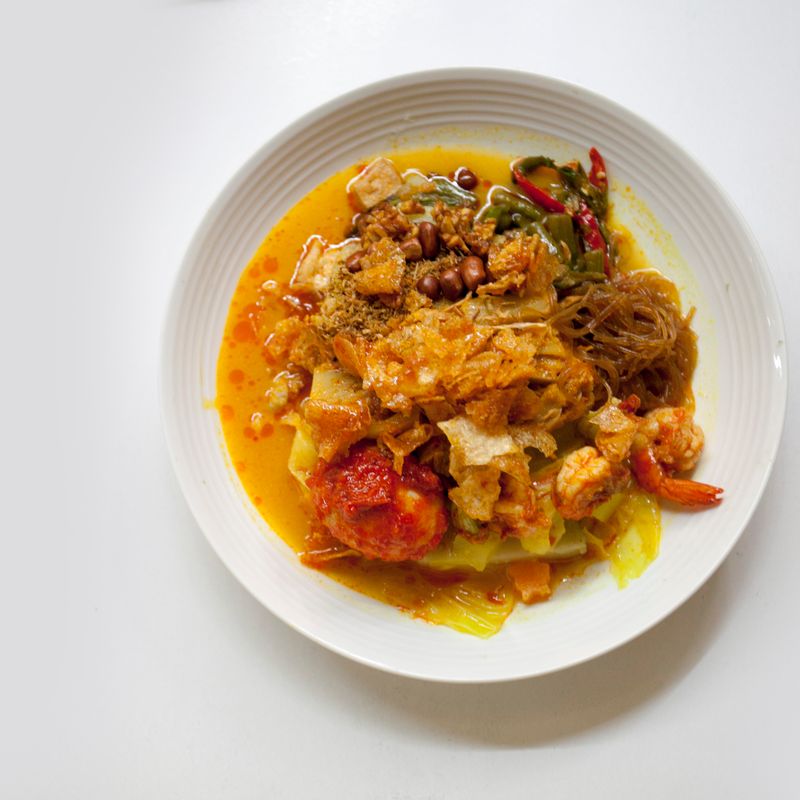
A fragrant, creamy red curry built by frying the paste in thick coconut cream, then simmering with bell pepper and bamboo shoots and finishing with plump shrimp. Ready in 30 minutes and balanced with fish sauce, palm sugar and lime.
- Prep
- 12 min
- Cook
- 18 min
- Total
- 30 min
- Makes
- About 6 cups (4 servings), enough for 4 bowls with rice
Steps
Before you start
- Do not shake the coconut milk cans; you want the thick cream on top to fry the curry paste. If the cream is not separated, just use the first 1 cup (240 ml) from the cans and stir as you go.
- Start the jasmine rice before the curry, or have cooked rice ready, so everything is hot together.
- Pat the shrimp very dry and have all vegetables cut before heating the pan, because the cooking moves quickly.
- Brands of red curry paste vary a lot in heat and saltiness, so start with the amount given and adjust at the end.
Prep the ingredients
- Cook the jasmine rice if you haven't already.
- Pat the shrimp very dry with paper towels and set aside.
- Slice the bell pepper, drain and rinse the bamboo shoots, tear the lime leaves, and pick the basil leaves.
- Open the coconut milk cans without shaking and spoon the thick cream from the top of each into a small bowl (about 1 cup / 240 ml total).
- Keep the thinner milk in the cans.
+ Show details− Hide details
Ready when: Everything is cut and within reach of the stove.
Tip: Wet shrimp will water down the sauce, so dry them thoroughly.
Fry the curry paste
- Set the skillet over medium heat.
- Add the reserved coconut cream and cook, stirring, for 3 to 4 minutes until it bubbles and the oil begins to separate and shimmer at the edges.
- Add the red curry paste and stir constantly, mashing it into the cream, for 2 minutes.
+ Show details− Hide details
Ready when: The paste smells toasty and fragrant, and red-orange oil pools around it.
Tip: If the paste starts to stick or scorch, lower the heat and add a splash of the thin coconut milk.
Build the sauce
- Pour in the remaining coconut milk from both cans, scraping the cans clean.
- Add the fish sauce, palm sugar and lime leaves.
- Stir until the sugar dissolves and bring to a gentle simmer, about 3 minutes.
+ Show details− Hide details
Ready when: Small bubbles break steadily at the surface and the sauce is smooth and uniformly orange-red.
Tip: Keep it at a gentle simmer; a hard boil can make the coconut milk split and turn greasy.
Simmer the vegetables
- Add the bell pepper strips and bamboo shoots.
- Reduce the heat to medium-low and simmer uncovered for 5 minutes.
+ Show details− Hide details
Ready when: Bell pepper strips are crisp-tender: they bend easily but still hold their shape.
Poach the shrimp
- Add the shrimp in a single layer and submerge them in the sauce.
- Cook for 3 to 4 minutes, stirring once or twice, until the shrimp are pink and opaque and curled into a loose C shape.
- Remove from the heat.
+ Show details− Hide details
Ready when: Shrimp are pink and opaque throughout and read 145°F (63°C) at the thickest part; a tight O shape means overcooked.
Tip: Shrimp keep cooking in the hot sauce, so pull the pan off the heat as soon as they turn opaque.
Season and finish
- Stir in the Thai basil leaves until just wilted, about 20 seconds.
- Squeeze in the juice of half the lime, then taste.
- Add more fish sauce for salt, more lime for tang, or a pinch more sugar to soften the heat.
- The sauce should be rich, salty, slightly sweet and tangy.
+ Show details− Hide details
Ready when: Basil is wilted and bright green, and the flavors taste balanced.
Tip: Add the basil off the heat so it keeps its aroma and color.
Serve
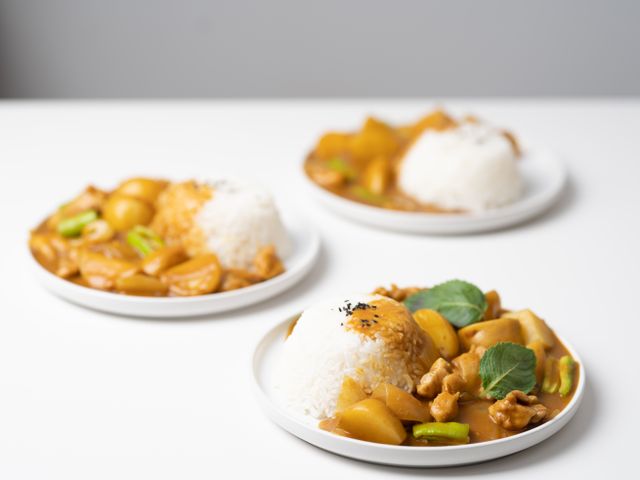
- Spoon the hot rice into four bowls and ladle the curry over or alongside it.
- Top with sliced chile if using, and serve with the remaining lime wedges.
+ Show details− Hide details
Tip: Remove the lime leaf pieces as you eat; they are fragrant but too tough to chew.
Good to know
Tips
- Frying the paste in coconut cream until the oil separates is the key to deep flavor; don't skip it.
- Use full-fat coconut milk. Light versions give a thin sauce that can split easily.
- Taste the paste before you start: if it is very salty or hot, use 2 tablespoons and add more at the end.
- Do not overcook the shrimp. Add them last and pull the pan off the heat as soon as they are opaque.
Make ahead
Make the curry sauce through step 4 up to 2 days ahead and refrigerate. Reheat to a gentle simmer, then add the shrimp and finish with basil and lime just before serving.
Storage & reheating
Room temperature: up to 1 hour. Fridge: airtight container up to 2 days; shrimp are best the first day. Freezer: not recommended with shrimp, but the sauce alone freezes up to 2 months. Reheat gently in a saucepan over medium-low heat, stirring, until just hot, about 5 minutes; avoid boiling so the shrimp stay tender.
Substitutions
- large shrimp (21–25 count) → Boneless chicken thigh, sliced thin. Simmer the chicken in the sauce for 8 to 10 minutes until it reaches 165°F (74°C) before adding the bell pepper and bamboo shoots; or use firm tofu, simmered 5 minutes.
- fish sauce → Soy sauce. Use 2 tablespoons for a vegetarian version; the flavor will be less funky but still savory.
- Thai basil leaves → Regular sweet basil. Use the same amount; the flavor is less anise-like but still fresh.
- sliced bamboo shoots → Sliced zucchini or green beans. Use about 1 cup (150 g); green beans need an extra 2 minutes of simmering.