Persian Barbari Bread
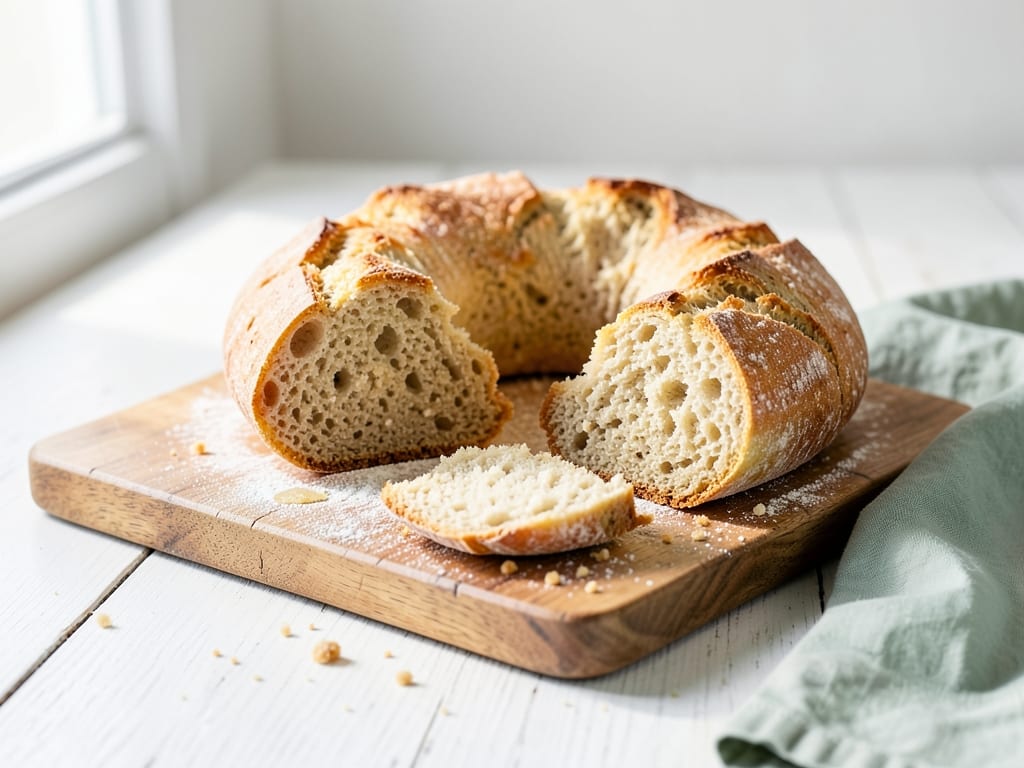
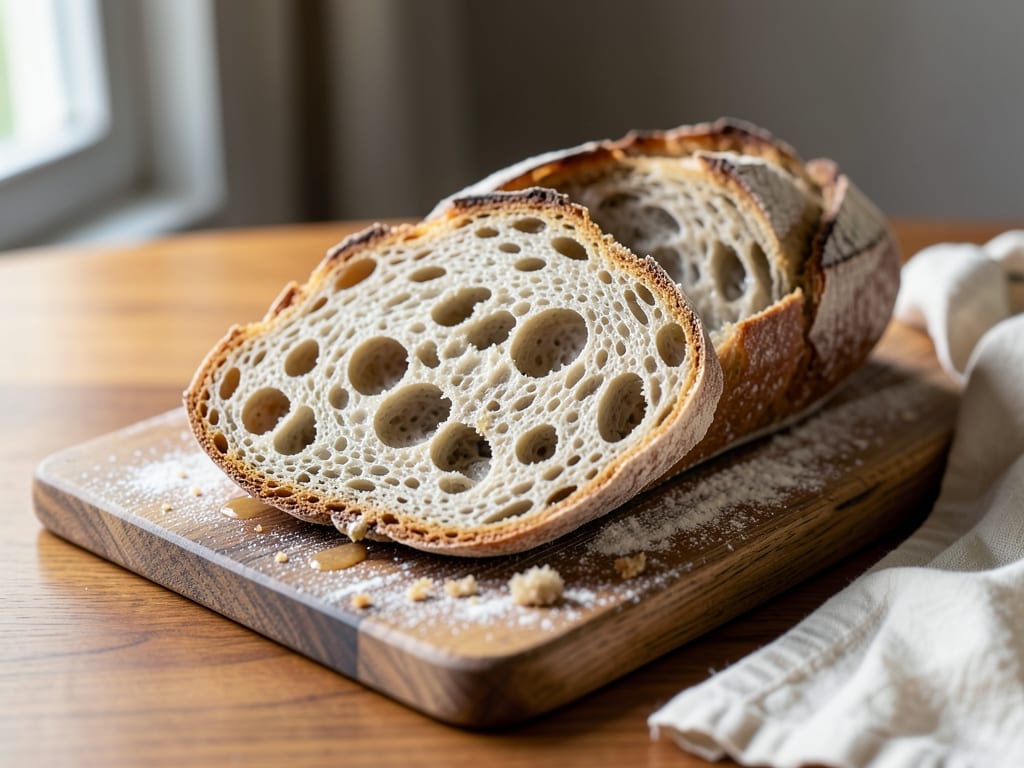
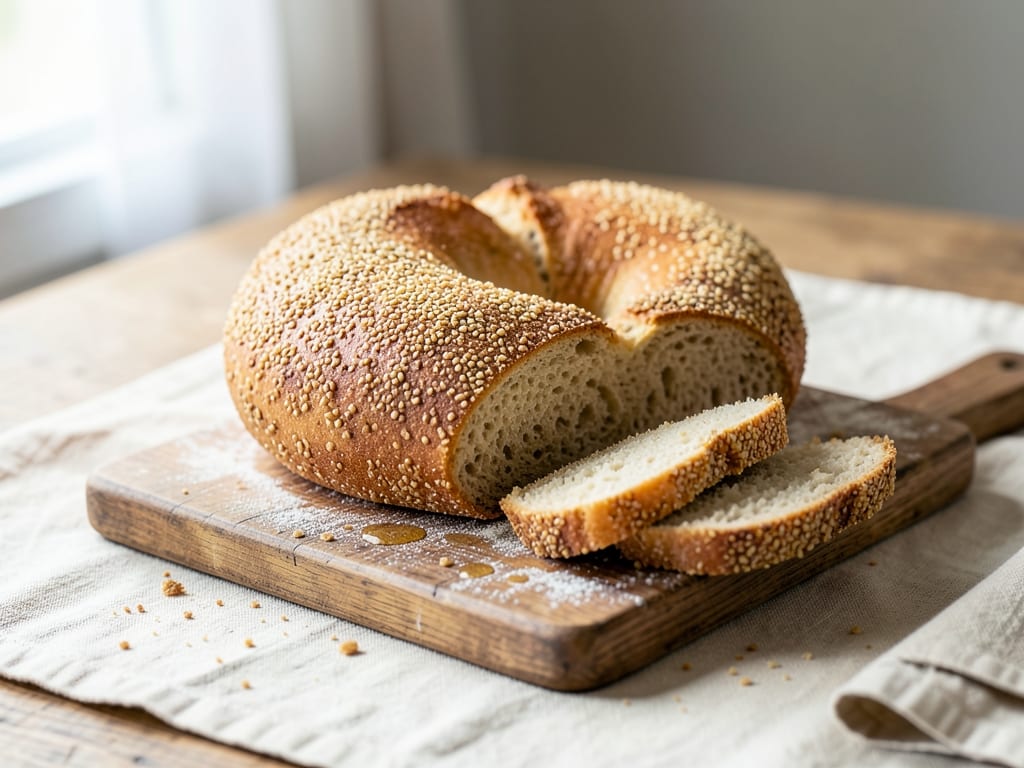
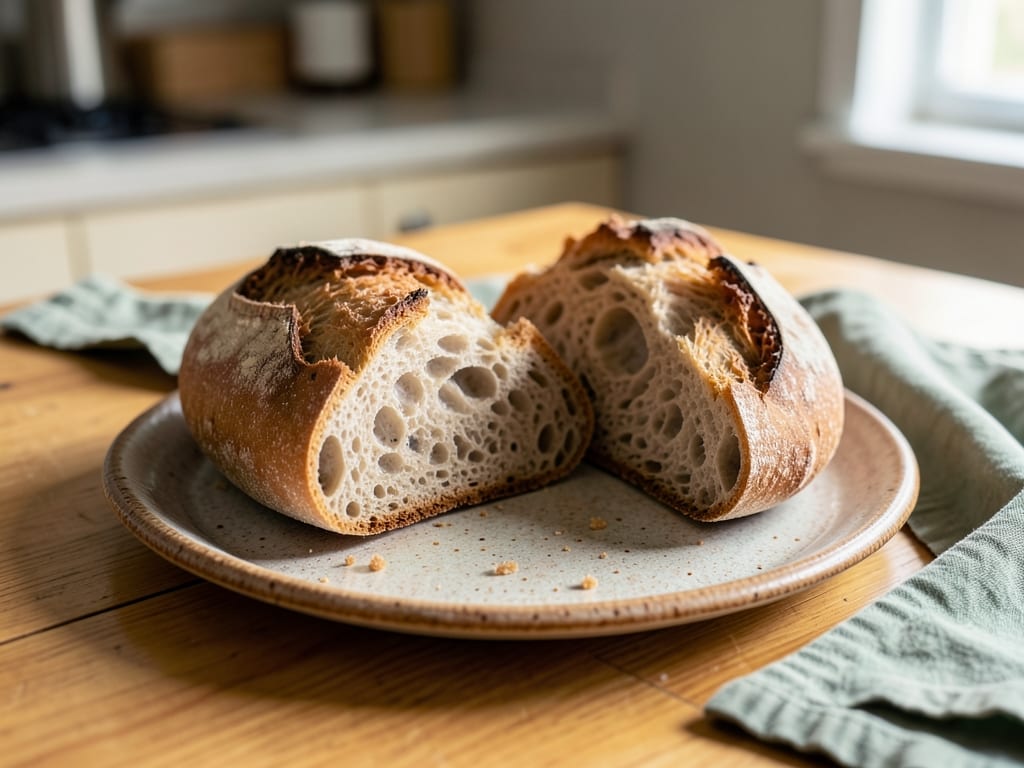
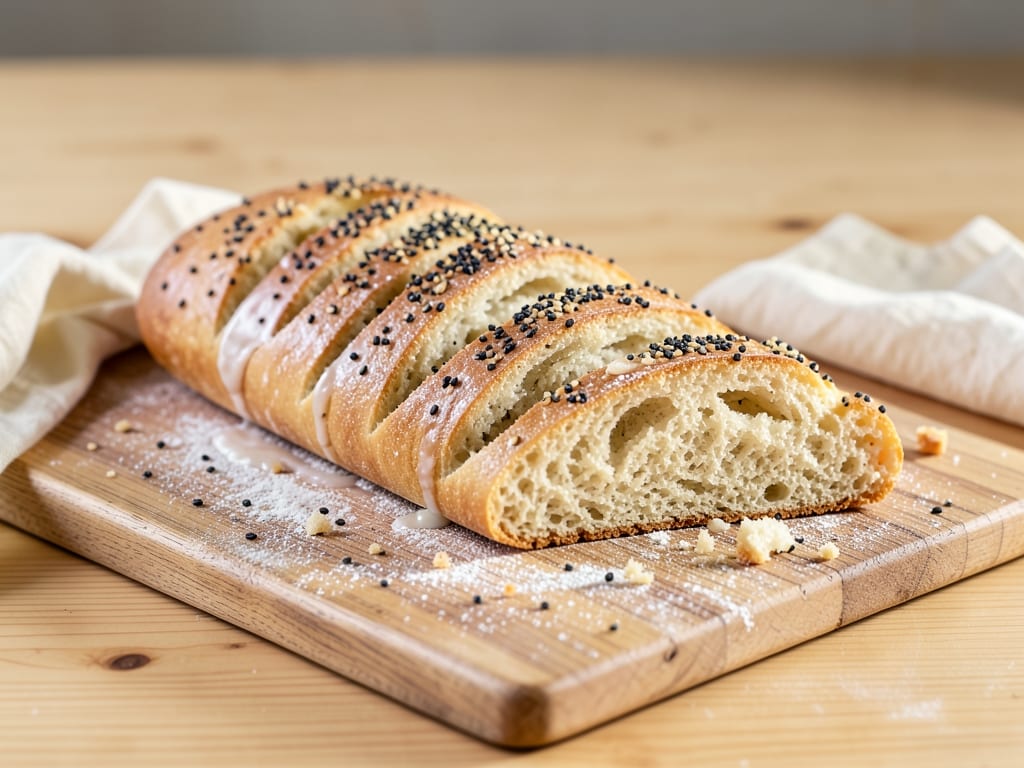
Long, golden Persian flatbread with a chewy, airy crumb, a crisp seed-studded crust and signature deep finger ridges, brushed with a simple flour-water glaze for shine and crunch. Wonderful warm with feta, butter and jam, or fresh herbs.
- Prep
- 30 min
- Cook
- 18 min
- Wait
- 2 hr 5 min
- Total
- 2 hr 53 min
- Makes
- 2 oval loaves, each about 12 inches (30 cm) long (8 servings)
Steps
Before you start
- Plan on about 3 hours from start to table, most of it hands-off rising time.
- Place a baking stone, baking steel or an upside-down heavy baking sheet on the middle oven rack before you preheat so it heats fully.
- The dough is wet (70% hydration) and sticky. Use oiled hands and an oiled spatula rather than adding extra flour; that wetness gives the open, chewy crumb.
- Use fine salt, not coarse, so it disperses evenly.
Mix the dough
- In a large bowl whisk the bread flour, instant yeast, fine salt and sugar.
- Add the lukewarm water and 1 tablespoon of the oil.
- Stir with a wooden spoon or your hand for about 2 minutes until no dry flour remains and you have a shaggy, very sticky dough.
- Cover the bowl and let it rest 10 minutes so the flour hydrates.
+ Show details− Hide details
Ready when: No dry flour remains; dough looks shaggy and sticky
Tip: Water hotter than about 110°F (43°C) can damage the yeast, so test it on your wrist; it should feel barely warm.
Knead until smooth
- With wet or lightly oiled hands, knead the dough in the bowl for 8 minutes, stretching it up and folding it over itself (or knead 6 minutes on medium-low in a stand mixer with the dough hook).
- Don't add more flour.
+ Show details− Hide details
Ready when: Dough is smooth, elastic and stretches thin without tearing; it is still tacky but no longer sticks to clean hands
Tip: If it sticks stubbornly, wet your hands with water rather than adding flour.
First rise
- Pour about 1 teaspoon of the remaining oil into the bowl (use the rest later for your hands), turn the dough to coat, cover with plastic wrap or a damp towel and leave at room temperature (72–75°F / 22–24°C) for 60 minutes.
+ Show details− Hide details
Ready when: Dough has doubled in size and is domed, puffy and full of bubbles
Tip: In a cool kitchen, give it up to 90 minutes; judge by volume, not the clock.
Divide and shape
- Line two baking sheets or two pieces of parchment (about 14×12 inches / 35×30 cm).
- With oiled hands, gently turn the dough out onto an oiled counter and cut it in half with a bench scraper (about 440 g each).
- Gently stretch each piece into an oval roughly 12×5 inches (30×12 cm) and transfer it to its parchment.
- Cover loosely and rest 10 minutes.
+ Show details− Hide details
Ready when: Ovals hold their shape and feel relaxed and slightly puffy
Tip: Handle gently; pressing out all the gas gives a denser loaf.
Cook the glaze
- In a small saucepan whisk the glaze flour into the cold glaze water until completely smooth.
- Set over medium heat and stir constantly for 3–4 minutes until it thickens to the consistency of thin pudding or loose gravy and just begins to bubble.
- Remove from the heat and let it cool to lukewarm while the loaves proof.
+ Show details− Hide details
Ready when: Glaze coats the back of a spoon and leaves a trail when stirred
Tip: Whisk the flour into cold water first; adding it to hot water creates lumps.
Final proof and preheatOven 475°F / 245°C
- Cover the shaped loaves with a clean towel and let them proof 30 minutes.
- About 30 minutes before baking, set the oven to 475°F (245°C) with the stone or steel on the middle rack so it is fully hot.
+ Show details− Hide details
Ready when: Loaves look puffy and a gently pressed fingertip leaves a dent that slowly springs back
Tip: Don't let them over-proof; too much rise makes the ridges disappear.
Glaze, ridge and seed
- Brush the cooled glaze generously over the top of each loaf.
- Dip your fingers in the glaze or oil and press down firmly in 4 long lines lengthwise from end to end, pressing nearly to the parchment to make deep furrows.
- Sprinkle each loaf with half of the sesame seeds and half of the nigella seeds, pressing lightly so they stick.
+ Show details− Hide details
Ready when: Deep, continuous ridges run the loaf's length and the surface is evenly shiny
Tip: Press firmly; shallow dimples puff out in the oven.
Bake the loavesOven 475°F / 245°C
- Slide one loaf with its parchment onto the hot stone (or bake both on the stone if they fit; otherwise bake in two batches).
- Bake at 475°F (245°C) for 12–15 minutes, rotating once halfway, until deep golden brown with darker edges.
- Bake the second loaf the same way.
+ Show details− Hide details
Ready when: Crust is deep golden brown, loaf sounds hollow when tapped underneath, and the internal temperature reads about 205°F (96°C)
Tip: Keep the second loaf covered and un-glazed-side protected from drafts while the first bakes; if it looks dry, brush again with glaze.
Cool and serve
- Transfer the loaves to a wire rack and cool at least 15 minutes.
- The crust crisps as it cools.
- Serve warm, torn or cut into rectangles.
+ Show details− Hide details
Ready when: Loaf is warm, not hot, and the crust feels crisp
Good to know
Tips
- Deep ridges are the barbari signature; press with your fingertips almost all the way to the parchment.
- A very hot stone or steel gives the best bottom crust and oven spring; an inverted heavy baking sheet works too.
- Keep the dough wet and use oiled hands; extra flour makes the bread dense.
- The flour-water glaze creates the shiny, crisp crust; don't skip it or substitute egg wash if you want authentic texture.
Make ahead
"After kneading, the dough can rest covered in the refrigerator for up to 24 hours for deeper flavor. Bring it to room temperature for 45 minutes, then shape and proof as directed, extending the final proof if needed."
Storage & reheating
"Room temperature in a paper bag or loosely wrapped for up to 1 day; best eaten the day it's baked. Freeze fully cooled loaves, wrapped tightly, for up to 2 months. Reheat in a 350°F (175°C) oven for 8–10 minutes (from frozen, 12–15 minutes) until warm and crisp."
Substitutions
- bread flour → all-purpose flour. Use 480 g (about 3¾ cups) and reduce the water to 330 ml; the crumb will be slightly less chewy.
- instant yeast → active dry yeast. Use 1¼ teaspoons (4 g), dissolved in the lukewarm water for 5 minutes before mixing.
- nigella seeds → extra sesame seeds. Use a total of 2 tablespoons sesame seeds; you lose the slight peppery flavor but keep the crunch.
- neutral oil (such as sunflower or canola) → olive oil. Gives a slightly fruitier flavor; use the same amount.