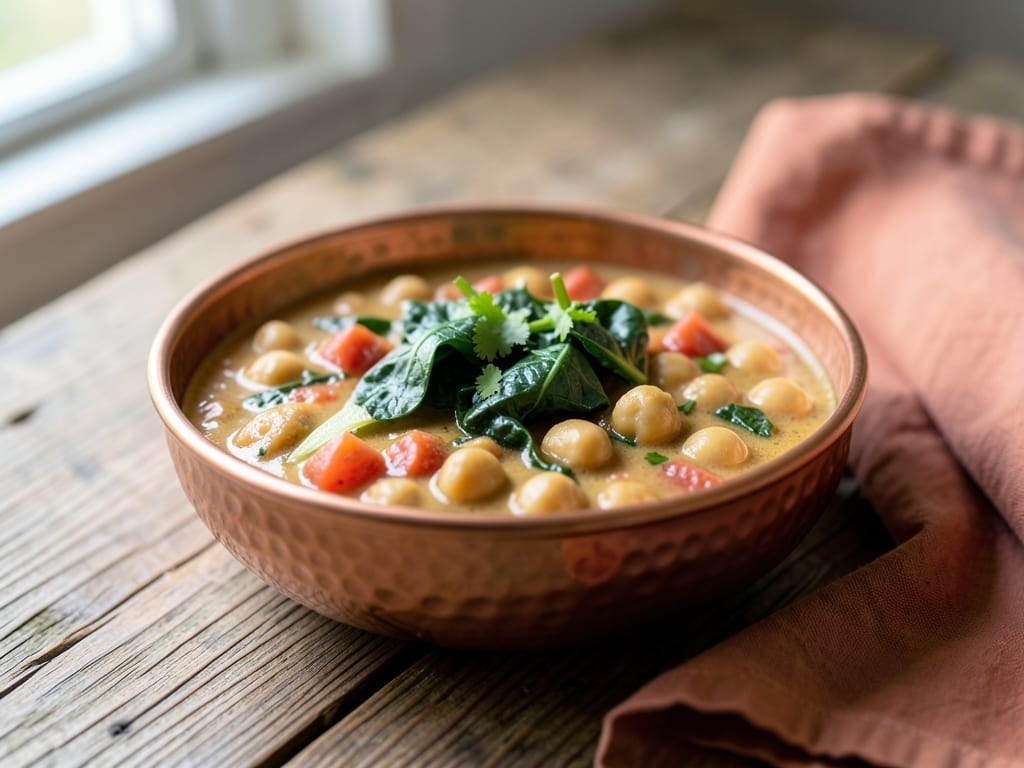
One-Pot Sourdough Indian Chickpea Curry with Yogurt and Bread Scoops
A warming, tangy chickpea curry built on ginger-garlic paste, turmeric, and yogurt, all simmered together in one pot. Cubed sourdough bread is crisped alongside the curry and served as scoops—the bread absorbs the creamy, spiced sauce while staying structural. Perfect for a weeknight dinner that feels both comforting and restaurant-quality.
- Prep
- 15 min
- Cook
- 30 min
- Wait
- 5 min
- Total
- 50 min
- Makes
- 4 servings (about 1½ cups curry + bread per person)
Steps
Before you start
- Have your ginger-garlic paste ready (or mince fresh ginger and garlic together)
- Drain and rinse canned chickpeas, or use cooked dried chickpeas
- Use yogurt at room temperature so it doesn't curdle when added to the hot curry
- Cut sourdough bread into ¾-inch cubes a few minutes before cooking to prevent drying
Temper the spices
- Heat the oil in your large pot over medium-high heat for 1 minute until shimmering.
- Add the cumin seeds and brown mustard seeds, stirring constantly.
- Toast for 45–60 seconds until fragrant and the seeds begin to pop.
- You'll see a few cumin seeds jump in the pot—this is exactly what you want.
- Reduce heat to medium-low to prevent burning.
+ Show details− Hide details
Ready when: Seeds are fragrant and beginning to pop
Tip: Mustard and cumin seeds will continue to pop briefly after you add the next ingredient—this is normal. Don't lower the heat yet.
Build the flavor base
- Immediately add the ginger-garlic paste to the toasted seeds and stir constantly for 30 seconds.
- The paste will sizzle and deepen in color.
- Add the diced onion and cook for 5 minutes, stirring occasionally, until the onion begins to soften and turn translucent at the edges.
- The bottom of the pot may brown lightly—this is flavorful fond, not burning.
+ Show details− Hide details
Ready when: Onion is beginning to soften and turn translucent at the edges
Tip: If the paste or onion begins to stick aggressively to the bottom, add a splash of water and scrape with your spoon to loosen it.
Bloom the dry spices
- Lower heat to medium-low.
- Sprinkle the turmeric, ground coriander, and Kashmiri chili powder directly over the onion mixture.
- Stir constantly for 60–90 seconds until fragrant.
- The spices will coat the oil and appear darker.
- This blooming step releases the essential oils and prevents any raw, dusty spice flavor in the finished curry.
+ Show details− Hide details
Ready when: Spices are fragrant and have turned darker, coating the onion mixture
Tip: Keep the heat low during blooming so the spices toast gently without burning. If smoke appears, immediately add the tomato paste.
Add tomato paste and chickpeas
- Stir in the tomato paste and cook for 1 minute, stirring well to combine.
- Add the drained chickpeas and stir for 30 seconds.
- Pour in the water, scraping the bottom of the pot to release any stuck spices or onion.
- Bring to a gentle simmer over medium heat.
+ Show details− Hide details
Ready when: Liquid is simmering gently with small, steady bubbles
Tip: Stir and scrape the bottom well to deglaze; all those browned bits are pure flavor.
Simmer and reduce
- Once simmering, maintain a gentle, steady bubble for 10 minutes.
- The curry will thicken slightly and the flavors will meld.
- Stir occasionally.
- The liquid should reduce by about one-quarter and the chickpeas should be heated through.
+ Show details− Hide details
Ready when: Liquid has reduced slightly; chickpeas are fully heated and sauce is creamy-looking
Tip: If your curry is too thin, simmer for another 2–3 minutes. If it's too thick, add water 2 tablespoons at a time.
Temper yogurt and add
- Remove the pot from heat.
- Measure the yogurt into a small bowl and whisk it well until smooth.
- Ladle about ¼ cup (60 ml) of the hot curry liquid into the yogurt while whisking constantly.
- This tempers the yogurt so it won't curdle when added to the hot pot.
- Once combined, slowly pour the tempered yogurt back into the pot while stirring gently.
- The curry will brighten and become creamy.
+ Show details− Hide details
Ready when: Yogurt is fully incorporated and curry is smooth and creamy
Tip: Tempering the yogurt is crucial—adding cold yogurt directly to the hot curry can cause it to separate into grainy curds.
Season to taste
- Taste the curry.
- Add kosher salt and freshly ground black pepper in small amounts, stirring and tasting after each addition.
- Most of the salt should come from here, not from the water or spices.
- The curry should taste warm, bright, and balanced—neither too salty nor bland.
+ Show details− Hide details
Ready when: Curry tastes fully seasoned and balanced
Tip: Add salt gradually—it's easier to add more than to remove it.
Prepare and crisp the bread
- While the curry finishes, heat a large skillet or griddle over medium-high heat.
- Once hot, add the sourdough bread cubes directly to the dry pan—no oil needed yet.
- Toast them for 2 minutes, shaking the pan occasionally, so they brown on one side.
- You should hear a light sizzle.
- Pour about 1 teaspoon of oil over the bread, toss well, and continue toasting for another 2 minutes, shaking occasionally, until all sides are golden-brown and crispy on the outside.
- The centers will still be tender.
- Transfer to a plate and sprinkle lightly with salt.
+ Show details− Hide details
Ready when: Bread cubes are golden-brown on all sides with crispy exteriors
Tip: Day-old sourdough works best here because it's slightly firmer and won't fall apart as readily. Don't crowd the pan—toast in batches if needed.
Finish and serve
- Return the curry to low heat if it has cooled slightly, just to warm through for 1 minute.
- Ladle the curry into bowls.
- Top generously with the crispy sourdough cubes and a small handful of fresh cilantro if using.
- Serve immediately with lime wedges on the side so each person can squeeze fresh brightness into their bowl.
+ Show details− Hide details
Ready when: Curry is hot and sourdough is fresh from the skillet
Tip: Serve immediately so the bread stays crispy. The bread will soften as it sits in the curry, which is wonderful—it absorbs the sauce like a scoop.
Good to know
Tips
- Make sure all your spices are fresh—Indian cooking relies on bright, aromatic spices. Toast a cumin seed in a dry pan; if it pops, your spices are fresh enough.
- The key to this curry is layering flavors: first seeds, then paste, then dry spices, then tomato paste. Each step deepens what comes next.
- Sourdough's tangy, slightly sour notes complement the warm spices and yogurt beautifully. If you don't have sourdough, any sturdy, flavorful bread works—just avoid soft white bread.
- This curry tastes even better the next day as the spices continue to meld. Make it ahead if you can, but add the yogurt just before serving or reheating.
Make ahead
Prepare the ginger-garlic paste and dice the onion up to 1 day ahead. Cook the curry through step 5 (before adding yogurt), cool, and refrigerate for up to 2 days. Reheat gently over low heat, then add the tempered yogurt. Toast the sourdough bread just before serving.
Storage & reheating
Room temperature (2 hours max): Keep in a covered pot. Refrigerator (up to 4 days): Store in an airtight container; reheat gently over low heat, stirring occasionally, adding a splash of water if needed. Freezer (up to 3 months): Freeze in an airtight container without the yogurt added. Thaw overnight in the fridge, then reheat and add fresh tempered yogurt before serving. The bread should always be toasted fresh.
Substitutions
- Kashmiri red chili powder → ½ teaspoon cayenne pepper or ½ teaspoon regular chili powder. Kashmiri chili adds mild heat and bright color. Cayenne is hotter, so use less; chili powder is similar in heat but less vibrant.
- plain whole-milk yogurt, at room temperature → Greek yogurt (use ½ cup / 120 ml) or sour cream (use ½ cup / 120 ml). Both are thicker and tangier. Sour cream will add extra tang; Greek yogurt will make the curry slightly richer and thicker.
- day-old or fresh sourdough bread → day-old ciabatta, focaccia, or any sturdy bread with an open crumb. Sourdough's tang pairs beautifully with curry, but any bread with character works. Avoid soft sandwich bread—it will disintegrate.
- canned chickpeas, drained and rinsed → white beans, cannellini beans, or cooked dried chickpeas. White beans are creamier and more delicate; use the same weight. The curry's flavor will remain excellent.