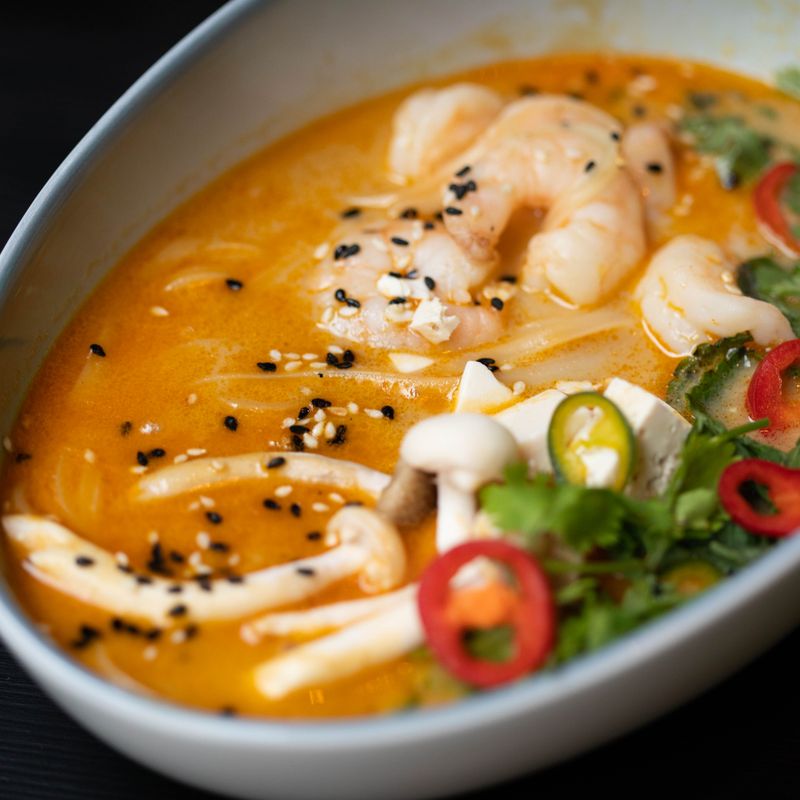
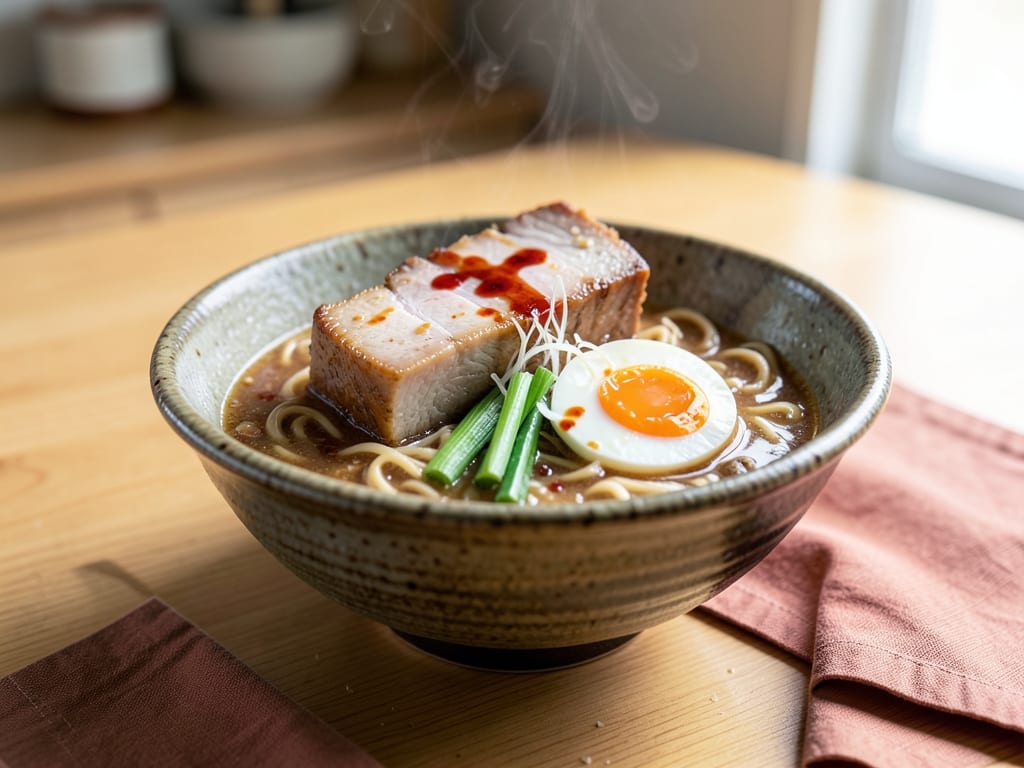
One-Pot Miso Butter Mushroom Noodle Soup
A silky, deeply flavored noodle soup built on a foundation of miso and dashi, enriched with browned butter and three types of mushrooms. Everything cooks in one pot for minimal cleanup, and the noodles absorb the savory broth while staying tender. Finished with fresh scallions and a soft-boiled egg, this is a weeknight dinner that tastes like you spent hours simmering it.
- Prep
- 15 min
- Cook
- 22 min
- Wait
- 8 min
- Total
- 45 min
- Makes
- 4 servings (about 10 oz noodles, 4 cups broth)
Steps
Before you start
- Read through the recipe—the noodles are added partway through so they don't overcook.
- Have all ingredients prepped and within arm's reach of your pot.
- If using instant ramen, discard or save the flavor packet for another use; we're making our own broth.
- Fill a small pot with water and bring to a simmer for soft-boiled eggs (optional but recommended).
Brown the butter and sauté mushrooms
- Place a large heavy-bottomed pot (5-quart) over medium-high heat.
- Add the cold butter pieces and cook, swirling occasionally and watching closely, for 4–5 minutes until the butter turns golden-brown and smells nutty.
- You should see brown bits (milk solids) at the bottom.
- Add the prepared mushroom pieces and stir well to coat in the butter.
- Cook uncovered for 5–6 minutes, stirring every minute or so, until the mushrooms release their liquid and begin to caramelize slightly at the edges.
- The mushrooms should be partially tender and the pot will smell deeply savory.
+ Show details− Hide details
Ready when: Mushrooms are partially tender and caramelized at edges; butter is golden-brown and aromatic.
Tip: Watch the butter closely so it browns but doesn't burn. Brown bits on the pot bottom are flavorful—don't scrape them out yet.
Add aromatics and toast briefly
- Reduce heat to medium.
- Add the minced ginger and minced garlic to the pot.
- Stir constantly for 30–45 seconds until fragrant.
- Be careful not to let the garlic scorch, as it will turn bitter.
+ Show details− Hide details
Ready when: Garlic and ginger are aromatic and slightly lighter in color.
Tip: Keep the heat at medium so the garlic toasts but doesn't burn. You should smell a warm, spicy fragrance.
Deglaze and add broth
- Pour the dashi broth slowly into the pot while stirring gently with a wooden spoon, scraping up any browned bits stuck to the bottom (this adds flavor).
- Continue stirring for about 1 minute to loosen all the fond.
- The liquid should be a light amber color.
+ Show details− Hide details
Ready when: All browned bits are dissolved and the liquid is smooth with no flotsam.
Tip: Scrape the bottom of the pot thoroughly to release all the flavorful fond—this is essential for depth.
Temper and whisk in miso paste
- In a small bowl, ladle about ½ cup (120 ml) of the hot broth from the pot and let it cool for 30 seconds.
- Add the miso paste to the small bowl and whisk smoothly until no lumps remain (this prevents lumpy soup).
- Pour the miso mixture back into the pot and stir well.
- Add the soy sauce and stir to combine.
- Do not boil the miso after adding it, as boiling can destroy beneficial enzymes and dull the flavor.
+ Show details− Hide details
Ready when: Miso is fully dissolved; soup is smooth and glossy.
Tip: Always temper miso in a small amount of hot liquid first and whisk until smooth. This prevents lumps and preserves the miso's beneficial cultures.
Bring to a gentle simmer
- Increase heat to medium-high and bring the soup to a gentle simmer (small bubbles breaking the surface, not a rolling boil).
- Once simmering, reduce heat to medium-low and maintain a gentle bubble for 3 minutes to meld flavors.
- Taste the broth and adjust salt with a pinch more soy sauce if needed.
+ Show details− Hide details
Ready when: Broth smells rich and complex; a gentle simmer is visible.
Tip: Never allow the soup to boil vigorously after miso is added—a gentle simmer is ideal.
Add noodles and cook until tender
- Increase heat to medium and add the ramen noodles directly to the pot, breaking them apart gently with a wooden spoon as they soften.
- Stir occasionally to prevent sticking.
- Simmer for 4–5 minutes (if using fresh noodles) or 7–8 minutes (if using dried), until the noodles are tender but still have a slight bite.
- The broth should be clear and aromatic.
+ Show details− Hide details
Ready when: Noodles are tender with a slight resistance when bitten; broth is clear and flavorful.
Tip: Stir the noodles occasionally to prevent them from clumping together. Taste a noodle for doneness rather than relying on the package time, as cooking times vary by brand.
Finish with scallions and optional garnishes
- Remove the pot from heat.
- Stir in the minced white and light-green parts of the scallions, reserving the sliced dark-green tops for garnish.
- If using sesame oil, drizzle it in and stir gently.
- Divide the soup among four bowls, spooning mushrooms and broth equally.
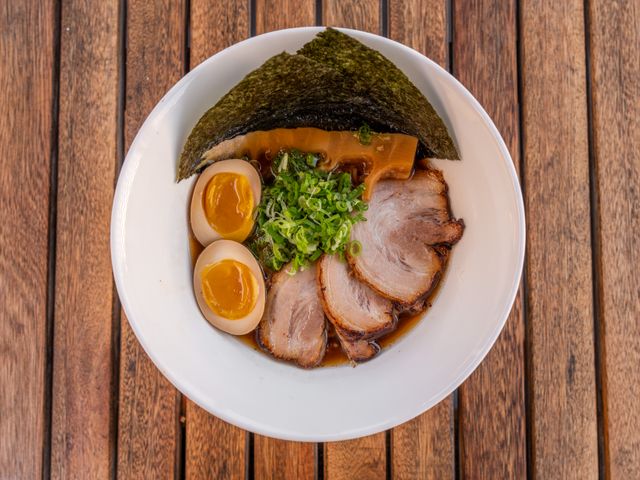
- Top each bowl with sliced scallion greens, nori pieces (if using), and a soft-boiled egg half (if using).
- Serve immediately while steaming.
+ Show details− Hide details
Ready when: Soup is hot and steaming; garnishes are fresh and visible.
Tip: Add the scallion whites to the broth but reserve the dark-green tops as a fresh garnish for bright color and onion bite. A soft-boiled egg yolk enriches the broth as you eat.
Good to know
Tips
- For deeper umami without store-bought dashi, simmer 1 tablespoon dried kombu seaweed and 1 tablespoon bonito flakes in the water for 5 minutes, then strain before using. Instant dashi powder (1 teaspoon dissolved in hot water) also works perfectly.
- Soft-boiled eggs are optional but highly recommended. To make them, bring a pot of water to a rolling boil, gently lower room-temperature eggs into the water, set a timer for 6 minutes, then immediately transfer to ice water. The yolk will be runny and creamy—perfect for stirring into the broth.
- Don't skip browning the butter. This step builds the foundation of the soup's rich, nutty flavor and takes only a few minutes but rewards you with complexity.
- If the soup seems too concentrated after cooking (noodles absorb broth), thin it with an extra ½ cup (120 ml) warm dashi or water and stir in a pinch of salt to taste.
Make ahead
You can prepare the mushrooms, ginger, garlic, and scallions (store separately) up to 8 hours ahead and refrigerate. The browned butter can be made up to 2 hours ahead and gently reheated in the pot before adding mushrooms. Do not cook the noodles ahead; assemble the full recipe fresh.
Storage & reheating
Leftovers keep in an airtight container in the refrigerator for up to 3 days. Noodles will absorb broth and soften further; the soup will thicken. Reheat gently on the stovetop over medium heat for 3–4 minutes (do not boil). Do not freeze, as the noodle texture will suffer. Soft-boiled eggs are best eaten fresh; store separately if making ahead.
Substitutions
- dashi broth (or vegetable broth as substitute) → Vegetable broth or chicken broth (use chicken for richer soup). Dashi provides authentic umami depth, but neutral vegetable broth works well in a pinch. For a richer version, use chicken broth or a combination of dashi and chicken broth.
- white or awase miso paste → Chickpea miso or other miso varieties (red, barley). White/awase miso is milder and sweet. Red or barley miso adds deeper, earthier flavor; use the same amount or reduce by ¼ teaspoon if it tastes too strong.
- mixed mushrooms (cremini, shiitake, and oyster), about 14 oz total → Any single type of mushroom (cremini, shiitake, oyster, king trumpet) or a combination. Mix mushroom types for complexity, but any single variety will work. Avoid button mushrooms alone as they lack depth; cremini, shiitake, or oyster are best.
- fresh or frozen ramen noodles (or dried ramen) → Dried ramen noodles, soba, or udon noodles. Fresh ramen noodles cook in 4–5 minutes. Dried ramen takes 7–8 minutes, soba takes 4–5 minutes, and udon takes 3–4 minutes. Adjust cooking time accordingly.
More noodle soups
See all →

Find more like this
- Meal
- Dinner
- Cuisine
- Japanese
- Diet
- HalalSugar-Free
- Method
- Stovetop