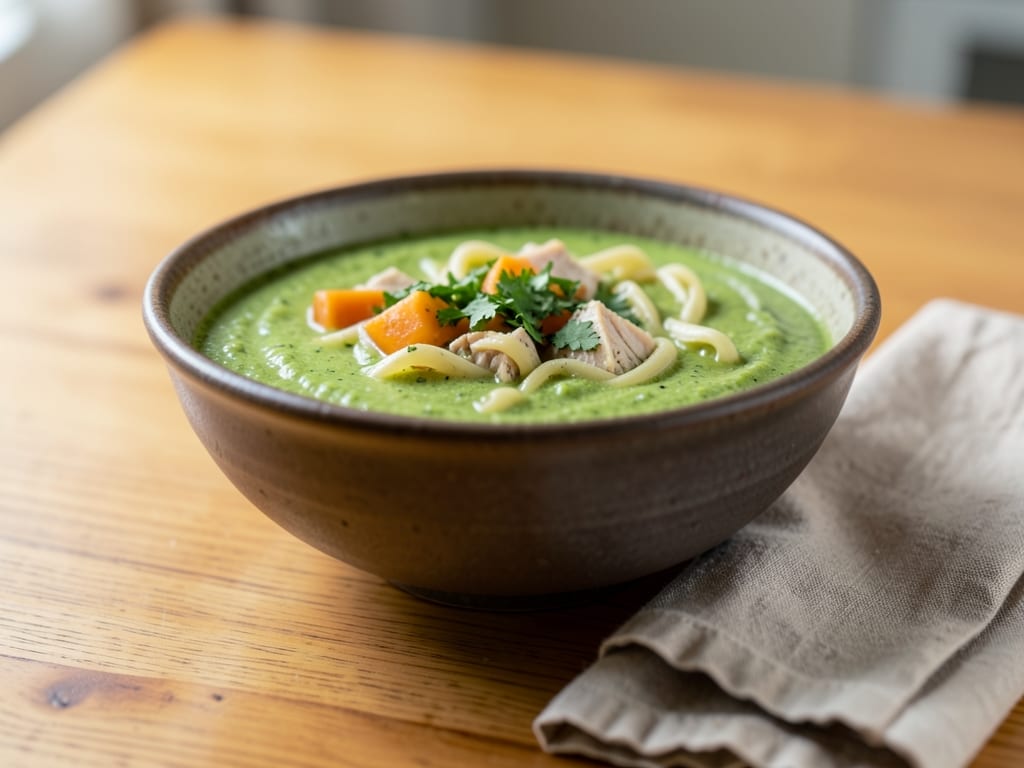
Vegan Sourdough Miso Sesame Noodles
Fresh handmade noodles made with sourdough starter discard, infused with umami-rich miso and toasted sesame oil. These tender, slightly tangy noodles cook quickly and pair beautifully with broths, stir-fries, or cold noodle salads. The sourdough adds subtle complexity and improves the dough's elasticity.
- Prep
- 35 min
- Cook
- 4 min
- Wait
- 30 min
- Total
- 1 hr 9 min
- Makes
- About 1 pound (450g) of fresh noodles; 4 servings
Steps
Before you start
- Have your sourdough discard at room temperature (even aged or inactive discard works—no need for bubbles).
- Clear at least 2 feet of clean counter space for kneading and rolling dough.
- Gather your equipment: mixing bowl, pasta roller or rolling pin, sharp knife, and parchment paper.
- Fill a large pot with water and set it nearby for boiling noodles at the end.
Combine flour and miso
- In a large mixing bowl, whisk together the all-purpose flour and salt until evenly blended.
- In a small separate bowl, stir the white miso paste with the room-temperature sourdough discard and toasted sesame oil until mostly smooth—a few small miso flecks are fine and will disappear during kneading.
+ Show details− Hide details
Ready when: Miso is partially combined into the discard mixture
Tip: Don't overthink the miso—it will fully incorporate as you knead.
Form shaggy dough
- Make a well in the center of the dry flour mixture.
- Pour the miso-sourdough blend into the well.
- Using a fork, slowly incorporate the dry flour into the wet ingredients with circular motions.
- Once the mixture becomes shaggy, switch to your hands and bring all the dough together into a rough mass.
- If it feels very stiff and isn't coming together, add room-temperature water 1 teaspoon at a time.
+ Show details− Hide details
Ready when: All flour is moistened and a rough dough ball forms
Tip: Err on the side of slightly stiff over wet—you can add water, but removing it is impossible.
Knead until smooth
- Turn the shaggy dough onto a clean, unfloured counter.
- Using the heel of your hand, push the dough firmly away from you, then fold it back over itself.
- Rotate the dough a quarter turn and repeat.
- Continue for 8 to 10 minutes, maintaining a steady rhythm.
- The dough will gradually become smoother, silkier, and elastic.
- You'll feel the transformation from rough and slightly sticky to smooth and supple.
+ Show details− Hide details
Ready when: Dough is smooth and elastic; it gently springs back within 1 second when poked with a finger
Tip: If the dough is sticky, dust your hands lightly with flour. If it's too stiff, wet your hands slightly and continue kneading.
Let dough rest
- Shape the kneaded dough into a ball.
- Place it in the mixing bowl and cover tightly with plastic wrap or a damp kitchen towel.
- Leave at room temperature for 30 minutes.
- This rest allows the flour to fully absorb moisture and the gluten network to relax, making the dough easier to roll and cut.
+ Show details− Hide details
Ready when: Dough feels relaxed and springs back slowly when gently poked
Roll noodle sheets
- Turn the rested dough onto a lightly floured counter and divide into 4 equal portions (roughly 100g each).
- Cover 3 portions with an inverted bowl or plastic wrap to prevent drying.
- Working with one portion, use a pasta roller set to its widest setting (or a rolling pin) to flatten and thin the dough.
- Pass the dough through the roller several times, folding it in half between passes and dusting with flour as needed.
- Continue until the sheet reaches the second-thinnest setting on your roller (about 1/16 inch or 1.5mm thick)—it should be thin enough that you can almost see your hand through it.
- Repeat with the remaining 3 portions, keeping finished sheets stacked with parchment between them.
+ Show details− Hide details
Ready when: Dough sheet is thin, uniform, and nearly translucent
Tip: If dough resists and springs back, let it rest under a towel for 5 minutes before continuing. Work with one portion at a time and keep the others covered.
Cut into noodles
- Dust each rolled sheet lightly with flour.
- Fold it into thirds lengthwise, then loosely roll the folded dough into a cylinder.
- Using a sharp knife, slice the roll crosswise into 1/8- to 1/4-inch-wide strips (thinner for delicate noodles, thicker for chewier ones).
- Gently unfold the cut noodles and lay them on a parchment-lined tray or plate, dusting lightly with flour to prevent sticking.
- Repeat with the remaining rolled sheets.
+ Show details− Hide details
Ready when: All noodles are cut, separated, and lightly dusted with flour
Tip: Fresh noodles can be cooked immediately, refrigerated for up to 3 days, or frozen for up to 1 month without thawing before cooking.
Cook fresh noodles
- Fill a large pot (6 to 8 quarts) with water and bring to a rolling boil over high heat.
- Add a generous pinch of salt.
- Carefully add the noodles, stirring gently with a fork or tongs to prevent clumping.
- Fresh noodles cook quickly, usually in 3 to 5 minutes.
- Begin tasting at the 3-minute mark; the noodles should be tender but still have a slight bite (al dente).
- Drain in a colander and serve immediately in a warm broth, tossed with sauce, or chilled for a noodle salad.
+ Show details− Hide details
Ready when: Noodles are tender with a slight firmness; no hard center remains when you bite one
Tip: Fresh noodles are more delicate than dried pasta. Stir gently and avoid crowding the pot. If cooking in batches, cook noodles just before serving for the best texture.
Good to know
Tips
- Sourdough discard doesn't need to be bubbly or freshly fed for this recipe. Even dormant discard that's been refrigerated for weeks works beautifully. The fermentation adds subtle complexity and improves the dough's extensibility.
- If you don't have a pasta roller, a rolling pin works perfectly—it simply takes a few more minutes and a bit more arm strength. The results are equally delicious.
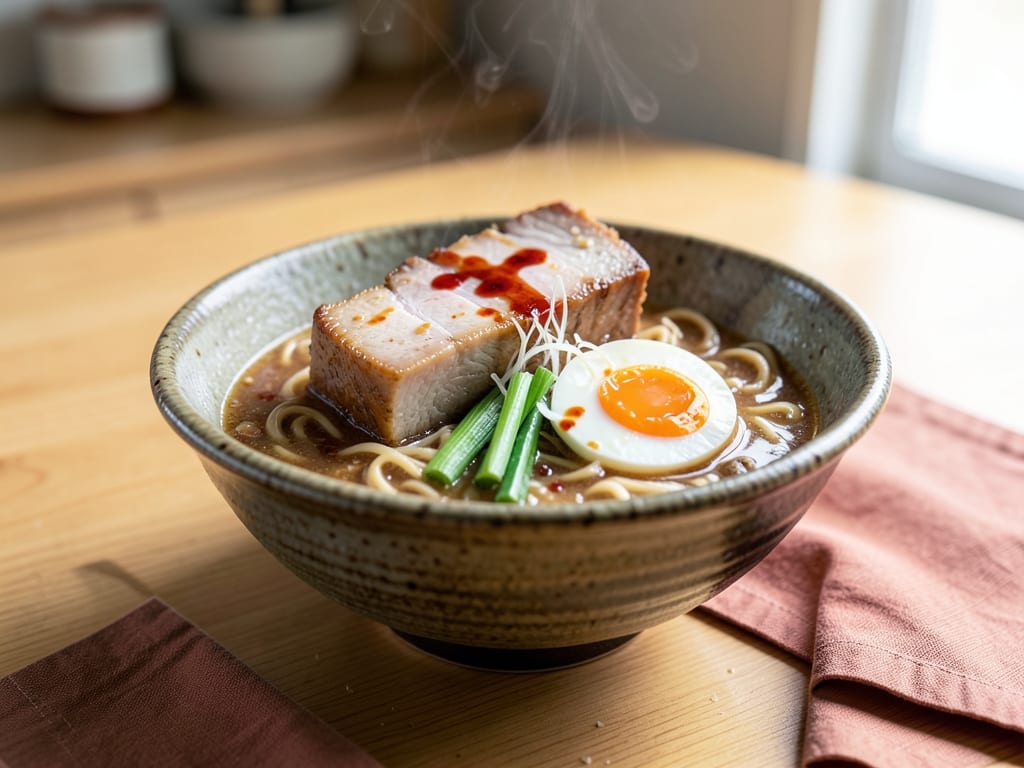
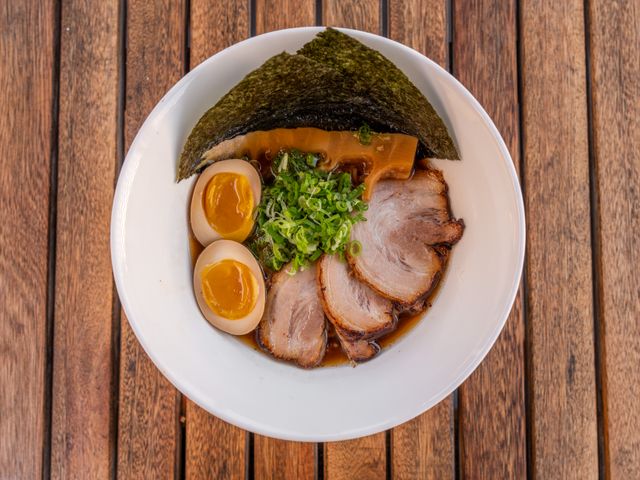
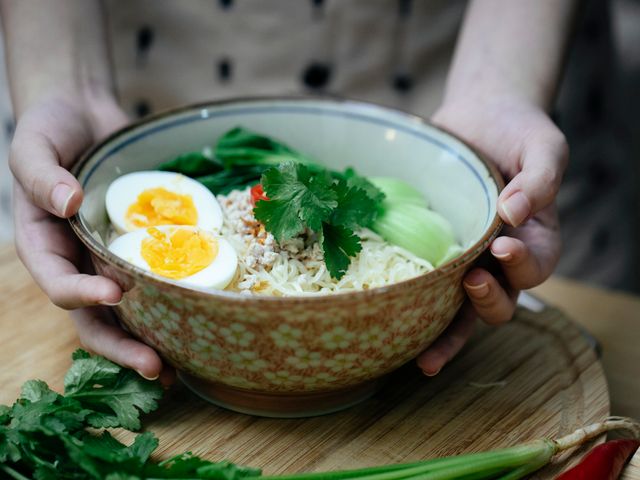
- These noodles have a tender crumb with a gentle chew and a subtle tangy note. Serve them warm in a simple miso broth with mushrooms, bok choy, and a soft-cooked egg, or toss cold with a sesame-soy dressing, cucumber, and pickled ginger.
- For thinner, more delicate noodles that cook in 2–3 minutes, roll the dough until you can clearly see your hand through it. For thicker, chewier noodles, stop rolling just before the thinnest setting and cook for 5–6 minutes.
Make ahead
Yes. Uncooked fresh noodles can be prepared up to 3 days ahead. After cutting, dust lightly with flour and store in an airtight container in the refrigerator. You can also freeze cut noodles: lay them on a parchment-lined tray, freeze for 2 hours, then transfer to a freezer bag for up to 1 month. Cook frozen noodles directly in boiling water without thawing; add 1 to 2 minutes to the cooking time.
Storage & reheating
Uncooked fresh noodles: store in an airtight container in the refrigerator, dusted with flour to prevent sticking, for up to 3 days. Freeze on a parchment-lined tray, then transfer to a freezer bag for up to 1 month. Cooked noodles: refrigerate in an airtight container for up to 3 days. To reheat, bring a pot of water to a boil and warm the noodles through for 1 minute, or toss in a skillet with a splash of water or broth over medium heat for 2 to 3 minutes until heated through.
Substitutions
- white miso paste → Red miso or chickpea miso. Red miso is saltier and more assertive; reduce to 12g instead of 15g. Chickpea miso is milder and slightly sweet; use the full 15g for balanced flavor.
- toasted sesame oil → Extra virgin olive oil or avocado oil. You'll lose the distinctive sesame flavor, but the noodle structure and texture remain the same. Use the same amount (2 teaspoons).
- sourdough starter discard → Unfed or recently fed sourdough starter. Either dormant starter (unused for weeks) or active starter (fed 4–6 hours prior) works equally well. Use 100g by weight. Active starter produces a milder tang.
- all-purpose flour → Bread flour or whole wheat flour. Bread flour creates chewier, more elastic noodles. Whole wheat adds warm nuttiness but may require an extra 5–10ml water to achieve proper hydration. Adjust carefully.