Green Onion Cheese Biscuits
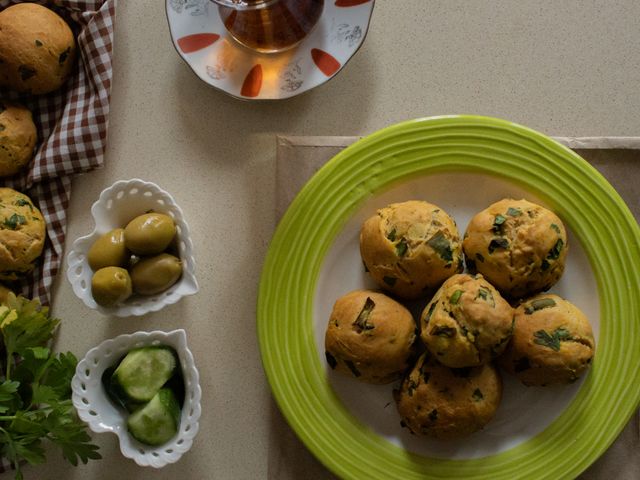
Tender, flaky biscuits studded with sharp cheddar and fresh green onions. These savory biscuits come together quickly with cold butter and buttermilk, then bake until golden brown. Perfect as a side for soups, stews, or breakfast.
Steps
Before you start
- Cut butter into ½-inch cubes and keep very cold (chill for at least 30 minutes or use straight from the refrigerator)
- Preheat oven to 400°F (204°C)
- Line a large baking sheet with parchment paper
Mix dry ingredients
- In a large bowl, whisk together 2¼ cups (281 g) flour, 1 tsp (5 g) baking powder, ¾ tsp (4.5 g) kosher salt, and ¼ tsp (0.5 g) black pepper until evenly distributed.
+ Show details− Hide details
Ready when: No lumps of baking powder visible
Cut in cold butter
- Add 6 tbsp (85 g) cold butter cubes to the flour mixture.
- Using a pastry cutter, two knives, or your fingertips, work the butter into the flour until the mixture resembles coarse breadcrumbs with some pea-sized pieces of butter still visible.
- This should take 3–4 minutes by hand.
+ Show details− Hide details
Ready when: Mixture looks like breadcrumbs with visible pea-sized butter pieces
Tip: Keep everything as cold as possible; warm butter won't create flaky layers. If the mixture becomes warm or slick, refrigerate for 10 minutes before continuing.
Add cheese and green onions
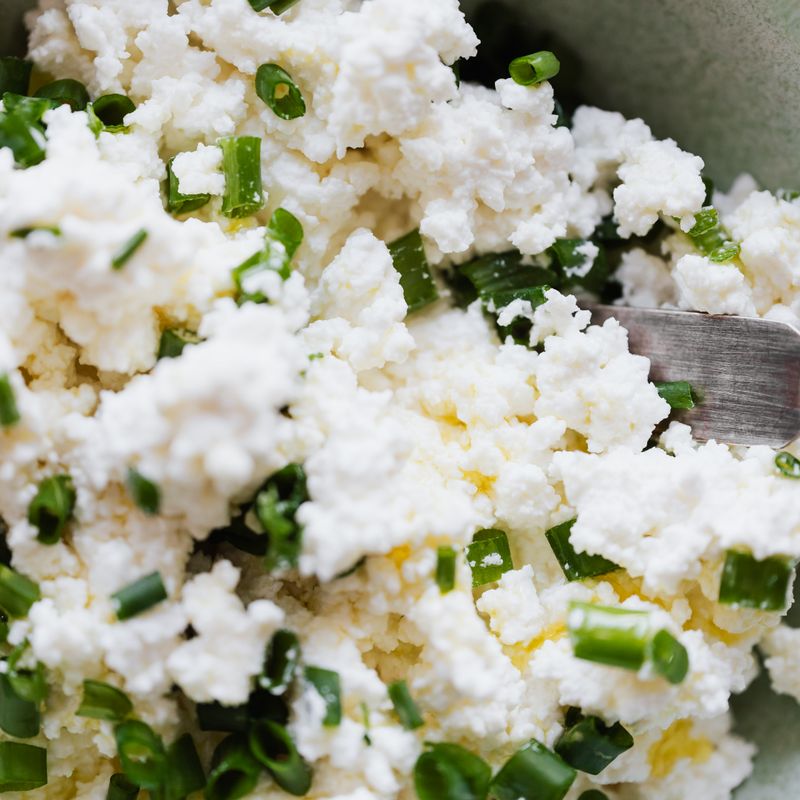
- Stir in 1¼ cups (150 g) freshly grated sharp cheddar and 4 large (80 g) green onions (sliced white and light green parts only).
- Mix gently with a wooden spoon until evenly distributed throughout the dry ingredients.
+ Show details− Hide details
Ready when: Cheese and green onions evenly scattered throughout mixture
Add buttermilk and fold dough
- Pour ¾ cup (180 ml) cold buttermilk into the mixture.
- Using a rubber spatula or wooden spoon, fold the wet and dry ingredients together gently, scraping the bottom and sides of the bowl.
- Stop as soon as a shaggy dough forms and no dry flour remains visible.
- Do not overmix; some lumps are okay.
+ Show details− Hide details
Ready when: Dough comes together with no visible dry flour; texture is shaggy
Tip: Overmixing develops gluten and creates tough biscuits. Stop folding the moment the dough holds together.
Turn out and shape dough
- Turn the dough out onto a lightly floured work surface.
- Gently press it together into a disk about 1 inch (2.5 cm) thick, being careful not to compress or knead it.
- If the dough feels sticky, dust the top lightly with flour.
+ Show details− Hide details
Ready when: Dough is formed into a cohesive disk about 1 inch thick
Tip: Handle the dough as little as possible. Minimal manipulation keeps the biscuits tender and flaky.
Cut biscuits
- Using a 2-inch (5 cm) biscuit cutter or the rim of a drinking glass dipped in flour, cut straight down into the dough and lift straight up without twisting (twisting seals the edges and prevents rising).
- Place biscuits on the prepared baking sheet about 1 inch (2.5 cm) apart.
- Gather scraps, gently press them together, and cut additional biscuits.
- You should have about 12 biscuits.
+ Show details− Hide details
Ready when: 12 biscuits cut and arranged on baking sheet
Tip: Press the cutter straight down without twisting. Twisting seals the edge and prevents the biscuit from rising properly.
Bake biscuitsOven 400°F / 205°C
- Transfer the baking sheet to a preheated 400°F (204°C) oven.
- Bake for 12–14 minutes, until the tops are golden brown and a light touch on top springs back slightly.
- The edges should be deeper golden than the tops.
+ Show details− Hide details
Ready when: Tops are light golden brown; edges are deeper golden; tops spring back when lightly pressed
Tip: Do not overbake; biscuits continue to firm up slightly as they cool. At 12 minutes, they may still feel slightly soft on top, which is correct.
Cool and serve
- Remove the baking sheet from the oven and let the biscuits rest on the sheet for 2 minutes.
- Transfer them to a wire rack or serve warm directly from the pan.
+ Show details− Hide details
Ready when: Biscuits are warm and set enough to transfer
Tip: Serve while still warm for the best texture and flavor.
Good to know
Tips
- Cold ingredients are essential. Chill your bowl and utensils for 15 minutes before mixing if your kitchen is warm. Visible flecks of butter in the dough create steam pockets that make biscuits light and flaky.
- Weigh your flour for accuracy. Scooping flour directly from the bag compacts it; weigh it or fluff the flour, spoon it into the measuring cup, and level off.
- Don't skip letting the biscuits rest 2 minutes on the sheet before transferring. This brief resting time allows carryover cooking and helps them hold together without crumbling.
- Serve warm with butter, jam, honey, or alongside soups and stews. Biscuits are best eaten the day they're made but reheat beautifully.
Make ahead
Dough can be mixed and cut into biscuits up to 2 hours ahead; cover loosely with plastic wrap and refrigerate. Bake from cold, adding 1–2 minutes to baking time. Alternatively, freeze unbaked biscuits on a tray until solid (about 2 hours), then transfer to a freezer bag for up to 1 month; bake directly from frozen, adding 2–3 minutes to baking time.
Storage & reheating
Store cooled biscuits in an airtight container at room temperature for up to 2 days. Refrigerate for up to 4 days. Freeze for up to 3 months. Reheat in a 350°F (177°C) oven for 5–7 minutes until warm through, or wrap in a damp paper towel and microwave for 20–30 seconds.
Substitutions
- sharp cheddar cheese, cold → aged Gruyère or Comté cheese. Use the same weight; these harder cheeses grate easily and add a deeper, slightly nutty flavor.
- green onions (scallions) → fresh chives (finely chopped) or crispy bacon bits. Use 3 tbsp chopped chives or ⅓ cup bacon bits. Either adds a different savory note while maintaining texture.
- buttermilk, cold → whole milk mixed with 1 tbsp lemon juice or white vinegar, let sit 5 minutes. Use ¾ cup milk plus 1 tbsp acid; let stand briefly to curdle before using. Results in slightly less tang but similar texture.
- baking powder → ½ tsp baking soda plus ¾ tsp cream of tartar. Mix together before adding to dry ingredients. Produces the same rise and flaky texture.