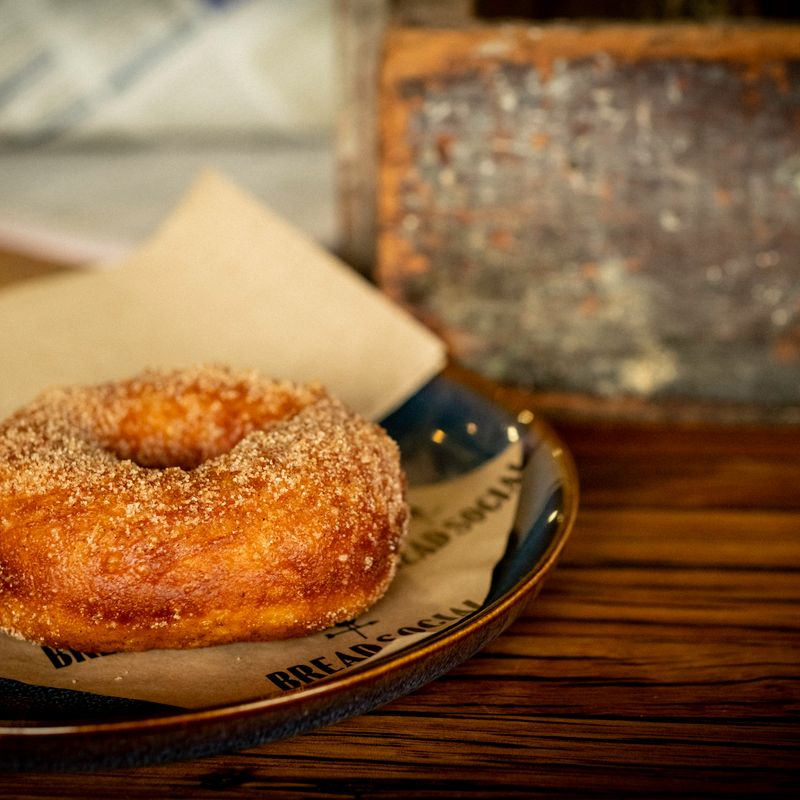
Cinnamon Sugar Donut Holes
Tender, golden-fried donut holes coated in warm cinnamon sugar. These are quick to make, best eaten fresh, and perfect for breakfast, brunch, or a sweet snack. The dough comes together in minutes and fries up in batches—no yeast required.
- Prep
- 15 min
- Cook
- 12 min
- Wait
- 5 min
- Total
- 32 min
- Makes
- 24 donut holes (about 6 per person as a snack)
Steps
Before you start
- Heat oil to 350°F (175°C) in your fryer or heavy pot before you begin mixing
- Mix the cinnamon-sugar coating in a shallow bowl so it's ready to use immediately after frying
- Preheat your oven to 200°F (93°C) to keep finished batches warm while you fry the rest
- Have a slotted spoon or spider strainer ready to fish donut holes out of the oil
Combine dry ingredients
- In a medium bowl, whisk together 1½ cups (180 g) all-purpose flour, ¼ cup (50 g) sugar, 1½ teaspoons (7 g) baking powder, and ¼ teaspoon (1.5 g) salt.
- Make sure there are no lumps of baking powder—this ensures even leavening.
+ Show details− Hide details
Ready when: mixture looks like coarse sand with no lumps
Tip: Sift the baking powder into the flour if you notice any clumps—this prevents dense donuts.
Mix wet ingredients
- In a small bowl, whisk together 1 large egg (at room temperature), ½ cup (120 ml) whole milk (at room temperature), and ½ teaspoon (2.5 ml) vanilla extract until smooth.
+ Show details− Hide details
Ready when: egg is fully incorporated and mixture is uniform
Tip: Room-temperature egg and milk mix into the dough more smoothly and create a more tender crumb.
Make the dough
- Pour the wet ingredients into the dry ingredients and stir with a wooden spoon or rubber spatula until just combined.
- The dough should be thick and slightly shaggy—do not overmix.
- A few flour streaks are fine; they will disappear when you shape the pieces.
+ Show details− Hide details
Ready when: ingredients are just combined; no dry flour remains on the bottom
Tip: Stop mixing as soon as the dough comes together. Overmixing develops gluten and makes donut holes tough and dense.
Prepare coating
- In a shallow bowl, mix 2 tablespoons (15 g) ground cinnamon with ½ cup (100 g) sugar.
- Stir well to distribute the cinnamon evenly.
- Set aside.
- In another small bowl, keep 3 tablespoons (45 g) melted butter ready for brushing on the warm donut holes.
+ Show details− Hide details
Ready when: cinnamon is evenly distributed throughout the sugar
Check oil temperatureOven 350°F / 175°C
- Attach a deep-fry thermometer to your pot or insert it into the oil.
- The oil should reach exactly 350°F (175°C).
- Use a heavy-bottomed pot with at least a 2-quart capacity to ensure the oil has enough depth for safe frying and consistent temperature.
- If the oil is too cool, the donut holes will be greasy; if too hot, they'll brown before cooking through.
+ Show details− Hide details
Ready when: thermometer reads 350°F (175°C)
Tip: Let the oil come to temperature slowly and don't rush this step—it's crucial for tender donuts with a crispy exterior and no oil flavor.
Shape donut holes
- Using a small ice-cream scoop (about 1½ teaspoons / 7 ml) or two teaspoons, scoop small balls of dough onto a piece of parchment paper.
- Work quickly so the dough doesn't warm up.
- You should have about 24 pieces.
- The dough will be slightly sticky, but that's normal—use a tiny pinch of flour on your spoon if needed, and don't overwork the dough.
+ Show details− Hide details
Ready when: you have about 24 evenly sized balls of dough
Tip: Keep them roughly uniform in size so they all fry at the same rate.
Fry first batchOven 350°F / 175°C
- Carefully slide 6 to 8 donut holes into the 350°F (175°C) oil using a slotted spoon or small strainer.
- They should sizzle gently.
- Fry for 1 to 1½ minutes, then gently turn them with a slotted spoon and fry the other side for another 1 to 1½ minutes.
- The donuts should be deep golden brown on both sides.
- Do not crowd the pot.
+ Show details− Hide details
Ready when: deep golden brown on all sides, they float to the surface and stay there
Tip: Keep the thermometer in the oil and monitor the temperature after each batch. It may drop by 5–10°F; let it recover before the next batch.
Drain and coolOven 200°F / 95°C
- Use a slotted spoon to transfer the hot donut holes to a paper towel–lined baking sheet.
- Let them drain for 1 to 2 minutes.
- Place the baking sheet in a preheated 200°F (93°C) oven to keep the first batch warm while you fry the remaining batches.
+ Show details− Hide details
Ready when: excess oil has dripped off; donut holes are still hot
Tip: Don't leave them on paper towels too long or they'll stick; move to the warm oven as soon as possible.
Coat with cinnamon sugar
- While the donut holes are still warm, lightly brush each one with melted butter on all sides using a pastry brush or the back of a spoon.
- Working in batches, toss the warm, buttered donut holes in the cinnamon-sugar mixture until fully coated.
- A handful at a time works best.
- The warmth helps the sugar and butter stick to the donut.
+ Show details− Hide details
Ready when: all donut holes are evenly coated with cinnamon sugar
Tip: Coat them while they're warm, not hot to the touch—the butter helps the cinnamon sugar adhere, but piping-hot donut holes will burn your hands. Wait 30 seconds after removing from oil if they're smoking.
Fry remaining batchesOven 200°F / 95°C
- Repeat steps 7 and 8 with the remaining dough.
- You should have 3 to 4 batches total.
- Keep returning each batch to the warm oven after coating so they all stay hot and the coating stays fresh.
+ Show details− Hide details
Ready when: all 24 donut holes are fried and coated
Tip: If your oil temperature drops more than 20°F between batches, let it recover before frying—if it's too cool, the donuts won't puff up properly.
Serve immediately
- Arrange all the donut holes on a serving platter.
- They are best eaten warm or at room temperature on the same day they're made.
- Once cooled, they can be stored in an airtight container (see storage).
+ Show details− Hide details
Tip: Serve with hot coffee, tea, or cold milk for a classic pairing.
Good to know
Tips
- Keep a close eye on oil temperature: it should remain between 340°F and 360°F (170–182°C) for the best results. If it climbs above 360°F, lower the heat slightly; if it drops below 340°F, raise the heat and wait for it to recover.
- Don't try to double the batch by frying more donut holes at once. Crowding the pot cools the oil and causes them to absorb grease instead of frying evenly.
- If your first batch turns out greasy, your oil was probably too cool. Check the thermometer and wait longer for the next batch to heat to 350°F.
- For extra indulgence, drizzle warm donut holes with a simple glaze (3 tablespoons milk mixed with ½ cup powdered sugar) after coating them with cinnamon sugar, but eat them right away—the glaze soaks in over time.
Storage & reheating
Room temperature: up to 8 hours in an airtight container. Fridge: up to 3 days in an airtight container. Freezer: up to 1 month in a freezer bag. To reheat: thaw room-temperature donuts in a 350°F (175°C) oven for 3–5 minutes to refresh the texture, or microwave a single donut for 15–20 seconds (not ideal but fast). Unfrosted donut holes keep their texture better than frosted ones.
Substitutions
- vegetable oil for deep frying → canola oil or peanut oil. All have similar smoke points and neutral flavors. Avoid olive oil or coconut oil—they have lower smoke points or add unwanted flavor to fried dough.
- whole_milk → buttermilk or Greek yogurt thinned with a splash of water. Buttermilk creates a slightly tangy, more tender crumb. If using yogurt, thin it with water to reach 120 ml and whisk until smooth. Omit or reduce the vanilla slightly.
- ground cinnamon → pumpkin pie spice, apple pie spice, or cardamom mixed with sugar. Use the same amount and mix as you would with cinnamon. Cardamom adds a warm, floral note; spice blends create a more complex flavor.
- granulated sugar for coating → brown sugar or muscovado sugar. Brown sugar adds a molasses note and sticks slightly better. Use the same weight and mix with the cinnamon as you would with granulated sugar.
More baking
See all →


Find more like this
- Meal
- Breakfast
- Diet
- VegetarianHalal
- Method
- Stovetop
- Quick & Easy
- Easy