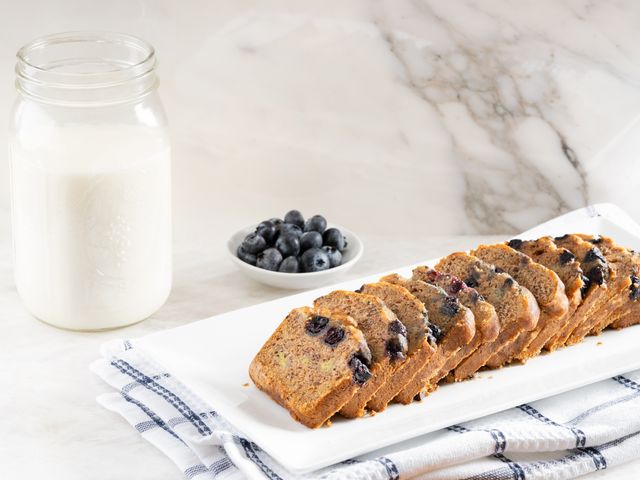
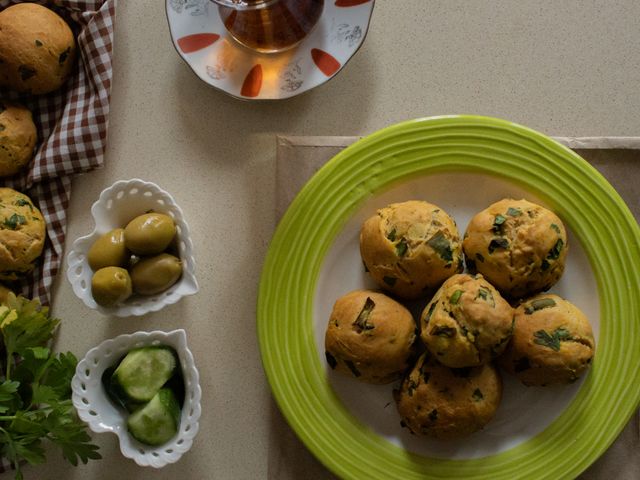
Black Garlic Cheddar Biscuits
Buttery, tender biscuits studded with umami-rich black garlic and sharp cheddar cheese. The black garlic adds a sweet, molasses-like depth that complements the cheese beautifully. Perfect warm from the oven with butter or alongside soup.
Steps
Before you start
- Preheat oven to 400°F (200°C)
- Use very cold butter straight from the refrigerator
- Have all ingredients measured and ready before mixing
- Line a large baking sheet with parchment paper
Mix dry ingredients
- In a large mixing bowl, whisk together the flour, baking powder, salt, and black pepper until evenly combined.
- This ensures the leavening agent is distributed throughout the dough.
+ Show details− Hide details
Ready when: flour mixture is uniform with no lumps
Tip: Sifting the flour first will yield slightly lighter, more tender biscuits if you have the time
Cut in cold butter
- Add the cold butter cubes to the flour mixture.
- Using a pastry cutter, two forks, or your fingertips, work the butter into the flour until the mixture resembles coarse breadcrumbs with some pea-sized pieces of butter still visible.
- This creates steam pockets during baking, resulting in flaky layers.
+ Show details− Hide details
Ready when: mixture looks like coarse breadcrumbs with some small butter pieces visible
Tip: Keep everything cold—warm butter will make dense biscuits. Work quickly and don't overwork the dough
Add cheese and black garlic
- Gently fold the grated cheddar cheese and minced black garlic into the flour-butter mixture using a spatula or wooden spoon.
- Stir until evenly distributed, taking care not to overwork the dough.
+ Show details− Hide details
Ready when: cheese and garlic are evenly scattered throughout
Tip: Use your hands for the last few folds if needed—just keep everything as cold as possible
Add buttermilk and form dough
- Pour the cold buttermilk over the mixture and gently fold it in with a spatula or wooden spoon until just combined and a shaggy dough forms.
- Do not overmix—a few small flour streaks are fine.
- Overmixing develops gluten and makes tough biscuits.
+ Show details− Hide details
Ready when: dough just comes together with minimal visible dry flour
Tip: Stop mixing as soon as the dough comes together—this is the key to tender, flaky biscuits
Turn out and pat dough
- Turn the dough out onto a lightly floured surface.
- Using your hands or a rolling pin, gently pat and shape the dough into a rectangle roughly ¾ inch (2 cm) thick.
- Handle it as minimally as possible to avoid toughening.
+ Show details− Hide details
Ready when: dough is evenly thick and rectangular
Tip: If the dough is warm or sticky, chill it in the refrigerator for 5 minutes before cutting
Cut biscuits
- Using a 2-inch (5 cm) round biscuit cutter dipped in flour (to prevent sticking), cut out circles from the dough.
- Place them on the parchment-lined baking sheet about 1 inch (2.5 cm) apart.
- Gather any scraps and gently pat them together, then cut additional biscuits—these will be slightly less fluffy but still delicious.
+ Show details− Hide details
Ready when: 12 biscuits are cut and arranged on the baking sheet
Tip: Use a downward cutting motion without twisting—twisting seals the edges and prevents proper rise
Apply egg wash (optional)
- If using the egg wash, brush the top of each biscuit lightly with the beaten egg mixture.
- This creates a golden, shiny top and helps any cheese pieces or seasonings adhere.
+ Show details− Hide details
Ready when: all biscuits are lightly brushed with egg wash
Tip: Use a light hand so you don't deflate the biscuits—a pastry brush works best
Bake until goldenOven 400°F / 205°C
- Place the baking sheet in the preheated 400°F (200°C) oven.
- Bake for 14–16 minutes, until the tops are golden brown and the biscuits have risen.
- They should be lightly browned on top and still feel slightly tender when pressed gently.
+ Show details− Hide details
Ready when: tops are golden brown and biscuits have risen about ½ inch (1.3 cm) higher
Tip: Do not open the oven door during the first 12 minutes—steam is critical for lift
Cool briefly
- Remove the baking sheet from the oven and let the biscuits cool on the sheet for 2–3 minutes.
- Then transfer them to a cooling rack.
- They'll continue to set as they cool, becoming firmer.
+ Show details− Hide details
Ready when: biscuits are cool enough to handle but still warm
Tip: Serve warm within the hour for the best texture and flavor
Good to know
Tips
- The key to tender, flaky biscuits is keeping everything cold and not overworking the dough. Warm ingredients and overmixing are the enemy.
- Black garlic has a subtle sweetness that pairs beautifully with sharp cheese. Taste the cheese and black garlic before mixing if you want to adjust proportions.
- If your biscuits are flat or dense, the most likely culprit is either warm ingredients, overworked dough, or insufficient leavening. Check your baking powder's expiration date—it loses potency over time.
- Serve these warm with cultured butter, alongside a creamy soup, or as part of a charcuterie board. They're also excellent split and used for mini sandwiches.
Make ahead
Prepare the dry ingredients and cut the butter the night before, storing both separately in airtight containers in the refrigerator. On baking day, combine them and proceed from step 2. Alternatively, freeze unbaked biscuits on the baking sheet for 2 hours, then bake directly from frozen, adding 2–3 minutes to the baking time.
Storage & reheating
Store cooled biscuits in an airtight container at room temperature for up to 2 days. Reheat in a 350°F (175°C) oven for 5–7 minutes to restore warmth and texture. Freeze in an airtight freezer bag for up to 1 month; thaw at room temperature for 1 hour, then reheat as above. Do not refrigerate—it stales them faster.
Substitutions
- sharp white cheddar cheese → Gruyère, aged gouda, or mild cheddar. Adjust to your preferred sharpness. Gruyère adds a more refined flavor; mild cheddar will be less pronounced but still delicious.
- black garlic cloves → Roasted garlic cloves or caramelized garlic, minced. Black garlic provides a sweet, umami depth. Roasted or caramelized garlic offers similar richness, though with slightly more pungency. Use the same amount.
- cold buttermilk → Plain Greek yogurt thinned with milk (equal parts) or sour cream thinned with milk. Both provide the acidity needed for rise and tenderness. Use the same total volume.
- cold unsalted butter → Lard or leaf lard for a more tender, flaky crumb. Lard creates exceptionally flaky biscuits. Use the same amount, keeping it very cold.