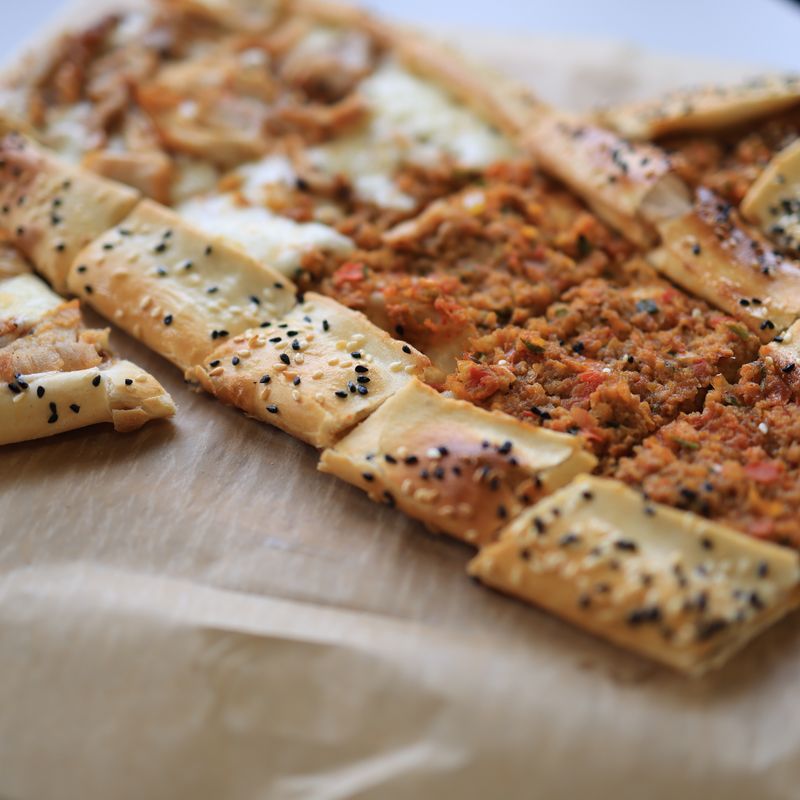
Black Cumin Seed Flatbread Dough
A simple, aromatic Middle Eastern flatbread dough infused with nutty black cumin seeds. This tender, forgiving dough is easy to work with and can be cooked on a skillet, griddle, or pan. The black cumin seeds add a subtle, earthy, slightly warm flavor that complements both savory and mildly sweet preparations.
- Prep
- 20 min
- Cook
- 12 min
- Wait
- 35 min
- Total
- 1 hr 7 min
- Makes
- 8 flatbreads
Steps
Before you start
- Use room-temperature water for smooth, even hydration
- Measure flour by weight if possible; fluff flour before measuring by volume
- Optional: lightly toast black cumin seeds in a dry skillet for 1–2 minutes to deepen their nutty flavor, then cool completely
- Keep dough at room temperature throughout; do not refrigerate before the first rest
Combine Dry Ingredients
- In a large mixing bowl, whisk together 3 cups (375 g) all-purpose flour, 1 teaspoon (5 g) salt, and 1 tablespoon (10 g) black cumin seeds until the seeds are evenly distributed throughout the flour.
- If you've toasted the seeds, make sure they're completely cooled before adding them to prevent any residual heat from affecting the dough.
+ Show details− Hide details
Ready when: Dry ingredients are combined with black cumin seeds evenly distributed throughout
Tip: A quick whisk ensures the small seeds won't sink or clump together during mixing.
Add Liquid and Begin Mixing
- Pour 1 cup (240 ml) room-temperature water and 2 tablespoons (30 ml) olive oil into the flour mixture.
- Using a wooden spoon or the dough hook on low speed, stir vigorously until all dry flour is moistened and a shaggy, rough dough forms with no dry flour visible.
- The dough will be sticky and irregular at this stage—this is correct.
+ Show details− Hide details
Ready when: Shaggy dough with no visible dry flour; all moisture is incorporated
Tip: Thorough mixing helps hydrate all the flour evenly and begins developing the gluten structure that makes flatbreads tender.
Knead the Dough
- Turn the dough onto a lightly floured work surface.
- Knead by hand for 8–10 minutes using a steady pushing motion with the heel of your hand, folding the dough back over itself, and rotating it a quarter turn after each push.
- Alternatively, use a stand mixer on medium speed with the dough hook for 6–8 minutes.
- The dough is ready when it becomes smooth, elastic, and springs back when you poke it with a finger.
- It should feel slightly tacky but not sticky, and the surface should be smooth and cohesive.
+ Show details− Hide details
Ready when: Smooth, elastic dough that springs back when poked; slightly tacky surface with no stickiness
Tip: Consistent, rhythmic kneading develops the gluten network, which gives flatbreads their characteristic tender chewiness. Avoid adding too much flour—a slightly tacky dough is better than a dry one.
First Rest (Bulk Fermentation)
- Shape the kneaded dough into a loose ball and place it in a lightly oiled bowl, turning it once to coat all sides with oil.
- Cover the bowl with a damp kitchen towel to prevent a skin from forming on the surface.
- Let the dough rest at room temperature (65–72°F / 18–22°C is ideal) for 30–40 minutes.
- The dough will relax, rise slightly, and become soft and pillowy.
+ Show details− Hide details
Ready when: Dough has risen about 25–30%, feels soft and relaxed, and is no longer tense when pressed gently
Tip: Room-temperature resting is traditional for Middle Eastern flatbreads. Avoid refrigerating at this stage; the warm rest keeps the dough tender and quick to cook.
Divide and Shape Portions
- Turn the rested dough onto a lightly floured surface.
- Using your hands or a bench scraper, divide the dough into 8 equal pieces—each should weigh about 60–70 g if using a scale.
- Shape each piece into a ball by pulling the edges toward the center and rotating it gently in your hands.
- Then flatten each ball into a round or oval disc about ¼ inch thick, either by hand-stretching or using a rolling pin.
- The shapes don't need to be perfect; rustic flatbreads are authentic and charming.
+ Show details− Hide details
Ready when: 8 relatively flat discs of even thickness, ready for cooking
Tip: If the dough springs back aggressively while shaping, let it rest for 2–3 minutes—this means the gluten is still tense, and a brief rest will relax it.
Cook on SkilletOven 400°F / 205°C
- Heat a cast-iron skillet or griddle over medium-high heat (375–400°F / 190–200°C) for about 2–3 minutes until hot enough that a drop of water sizzles immediately on contact.
- Lightly brush or wipe the skillet with a small amount of oil.
- Working in batches without crowding, place one flatbread on the hot skillet and cook for 2–3 minutes until the bottom is golden with light brown spots and the dough feels firm to the touch.
- Flip gently and cook the other side for 1–2 minutes until it puffs slightly, develops similar brown spots, and smells fragrant.
- Transfer to a plate and cover loosely with a clean kitchen towel to keep warm.
- Repeat with the remaining flatbreads.
+ Show details− Hide details
Ready when: Golden-brown spots on both sides, slightly puffed, warm and fragrant, with a tender exterior
Tip: Do not press down on the flatbreads while cooking—let them puff naturally. High, steady heat is essential for browning and creating texture; lower heat produces pale, tough bread.
Good to know
Tips
- Black cumin seeds (nigella, kalonji) are a staple in Middle Eastern, Indian, and North African cuisines. Toasting them for 1–2 minutes in a dry skillet before adding to the flour intensifies their warm, nutty, slightly peppery flavor. Cool them completely before mixing into the dough.
- This dough is forgiving and can be cooked immediately after shaping if you're in a hurry, though the 30–40 minute rest improves both texture and flavor.
- Flatbreads can be cooked on a cast-iron skillet, griddle, or even a cast-iron grill pan. For a richer, slightly fluffier result, you can fry them in a shallow pan with about ¼ inch of oil at medium-high heat, 2–3 minutes per side.
- For thicker, puffier flatbreads, let the dough rest 15–20 minutes after shaping before cooking. For thinner, crispier ones, cook immediately after shaping.
Make ahead
The dough can be refrigerated after the initial mixing (before the bulk rest). Cover the bowl and refrigerate for up to 24 hours. When ready to use, remove from the refrigerator and let come to room temperature for about 30–40 minutes before proceeding with the rest and shaping. This slow rise will develop deeper, more complex flavors. Alternatively, shape the flatbreads, cover them on a plate with plastic wrap, and refrigerate for up to 8 hours; cook directly from cold or let return to room temperature for 15 minutes first.
Storage & reheating
Cooked flatbreads: Store in an airtight container at room temperature for up to 2 days, or wrap and refrigerate for up to 4 days. Reheat on a skillet over medium heat for 1–2 minutes per side, or wrap in foil and warm in a 300°F (150°C) oven for 5–7 minutes. Uncooked dough: Wrap tightly and refrigerate for up to 24 hours, or freeze in a freezer-safe container or bag for up to 3 months. Thaw frozen dough in the refrigerator overnight before using. Cooked flatbreads can be frozen in a freezer bag or container for up to 2 months; thaw and reheat using the methods above.
Substitutions
- black cumin seeds (nigella seeds, kalonji) → sesame seeds (white or black). Use the same amount. Sesame adds a different but equally pleasant nutty flavor and a slight earthiness. The visual appearance will differ, but the taste is delicious.
- black cumin seeds (nigella seeds, kalonji) → fennel seeds. Fennel seeds are larger and slightly sweet with a subtle licorice note. Use 1½ teaspoons (5 g) and toast them first for 1–2 minutes to mellow the flavor.
- olive oil → neutral oil (vegetable, canola, or light coconut oil). Use the same amount. This substitution keeps the focus on the black cumin and flour flavors if you prefer a less peppery taste.
- all-purpose flour → whole wheat flour or spelt flour (mixed 50/50 with all-purpose flour). Using 50% whole wheat or spelt adds nutty, complex flavor and a denser crumb. You may need an extra tablespoon (15 ml) of water since whole grains absorb more liquid.
More flatbread doughs
See all →
Find more like this
- Meal
- Dinner
- Cuisine
- Middle Eastern
- Method
- Stovetop
- Quick & Easy
- 5 Ingredients or LessEasyBeginner