Egyptian Eish Baladi (Whole Wheat Pocket Bread)
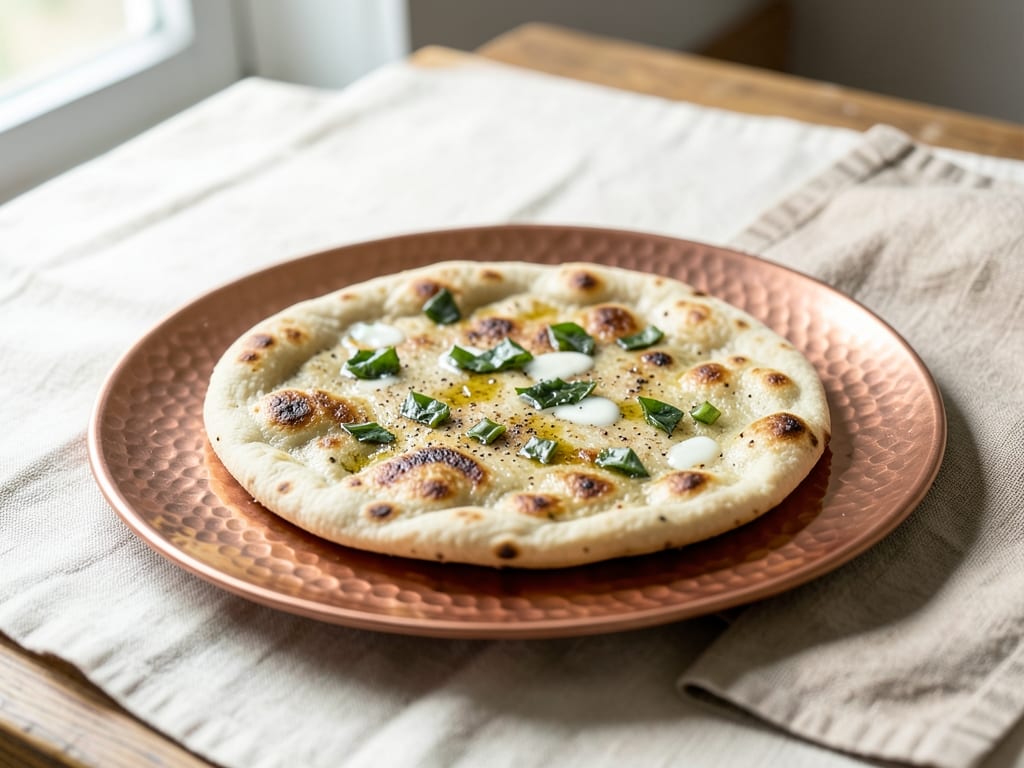
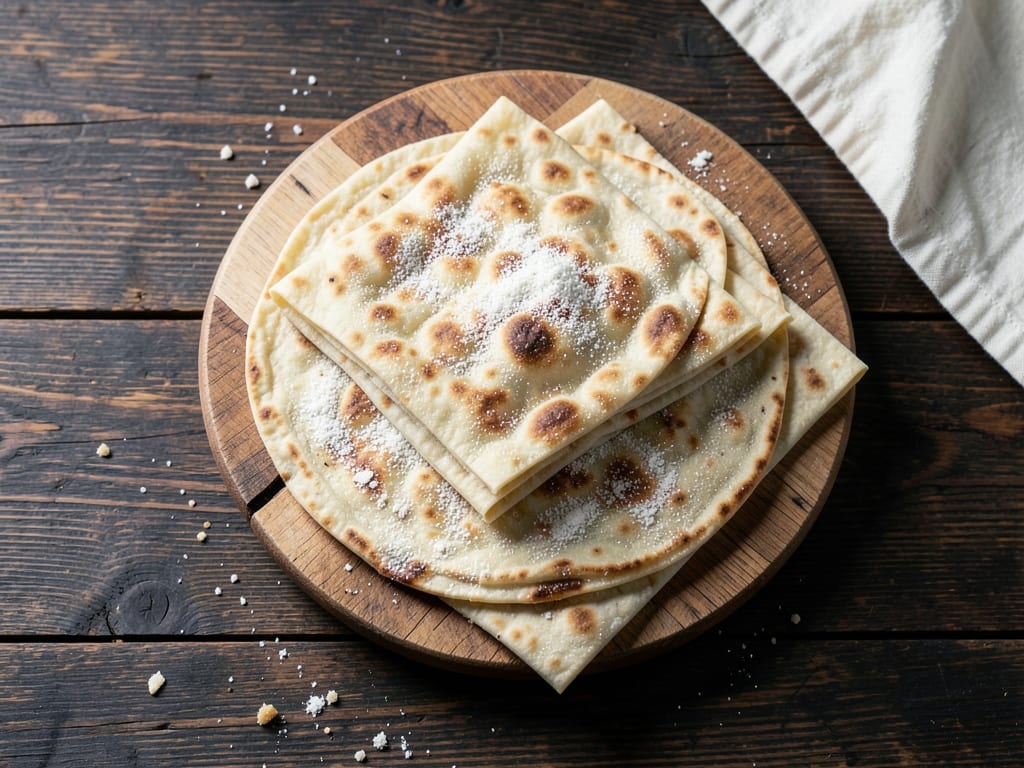
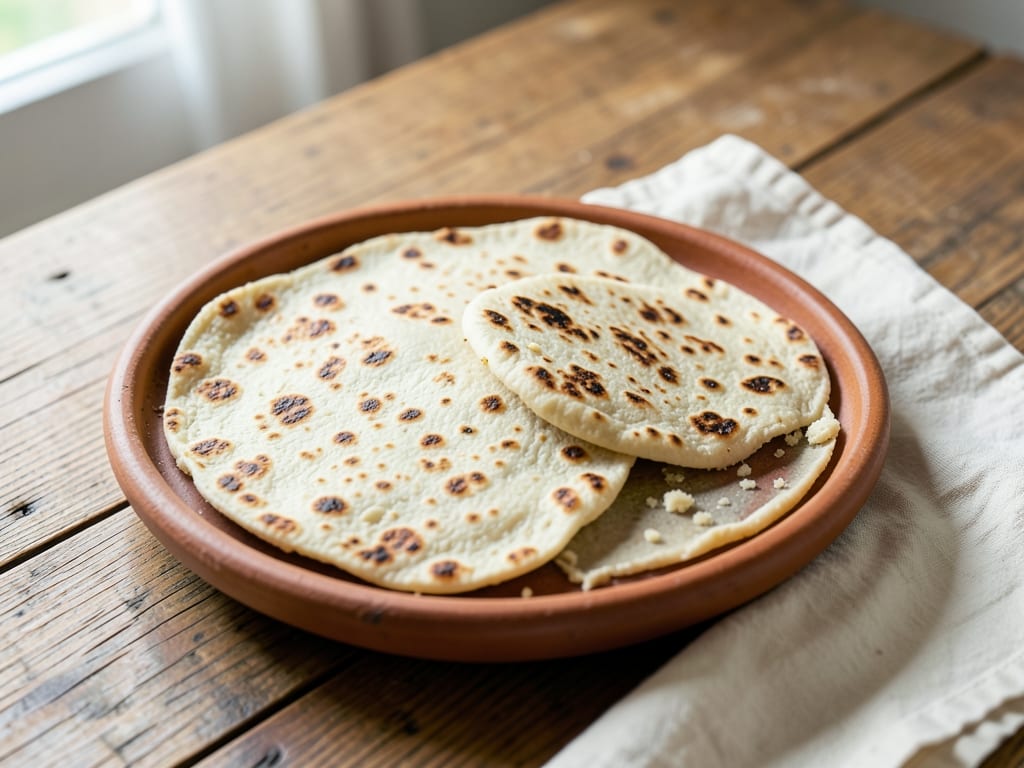
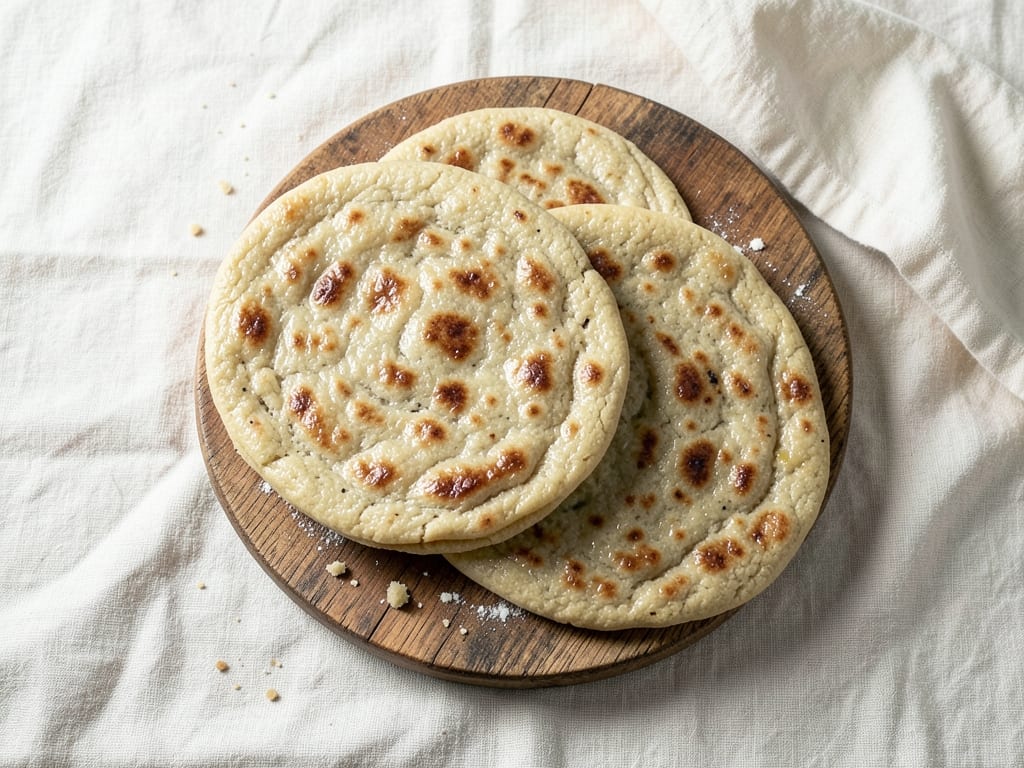
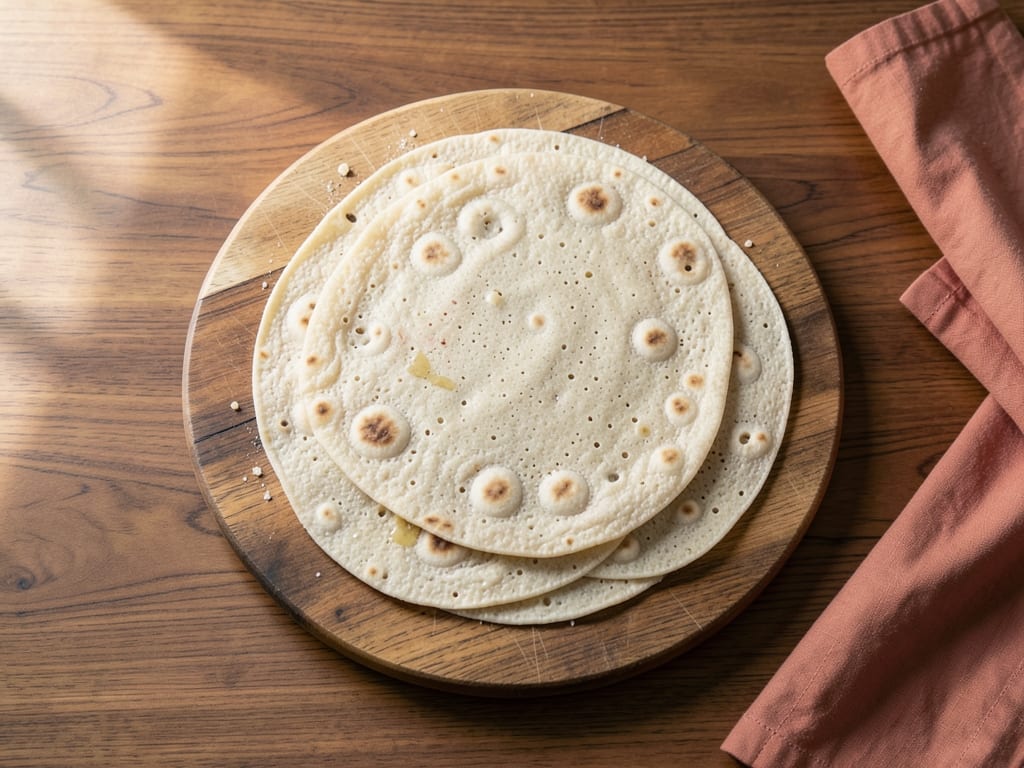
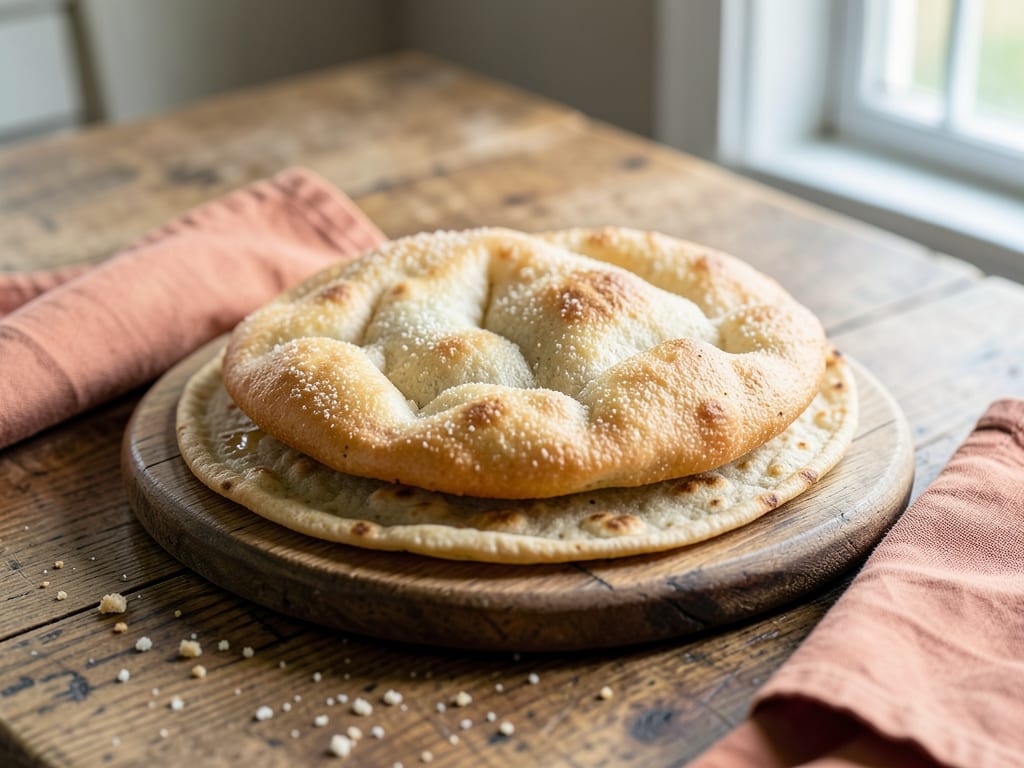
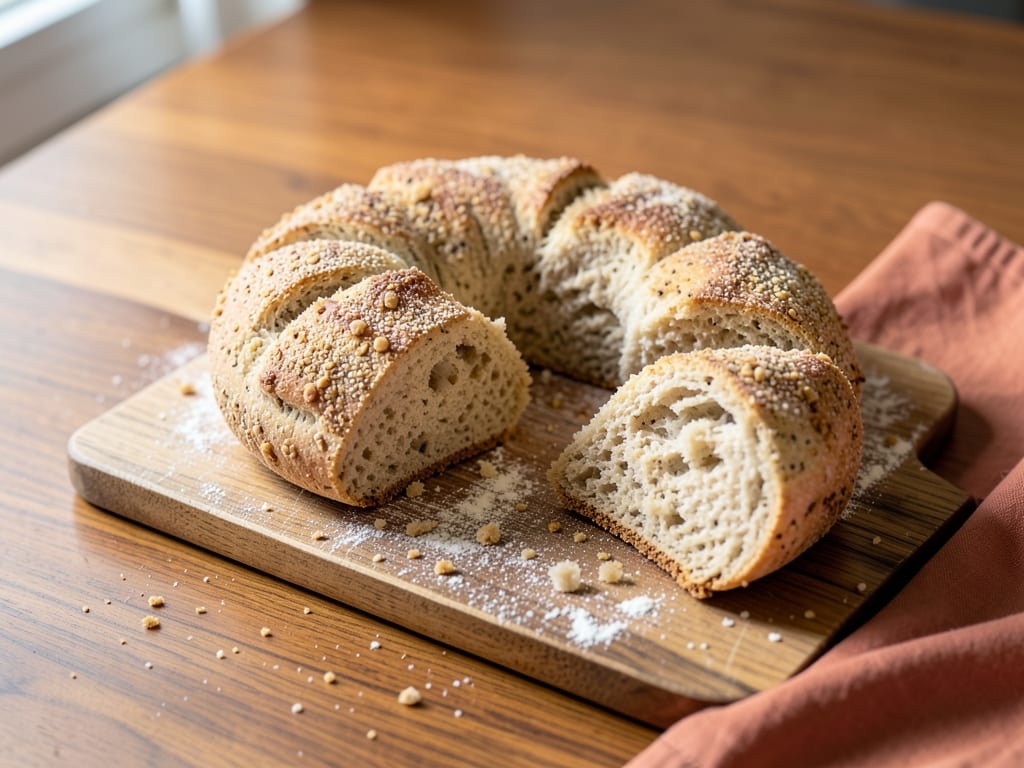
Eish baladi is Egypt's everyday whole wheat flatbread: a soft, nutty round with a bran-dusted crust that puffs in a very hot oven to form a pocket. It's ideal for scooping ful, tearing beside grilled meats, or stuffing with falafel.
- Prep
- 38 min
- Cook
- 20 min
- Wait
- 2 hr 10 min
- Total
- 3 hr 8 min
- Makes
- 8 flatbreads (about 7 inches / 18 cm each)
Steps
Before you start
- Plan on about 3 hours 10 minutes in total, but most of it is hands-off rising and resting.
- Put a baking steel, pizza stone, or heavy rimless baking sheet on the middle oven rack before you preheat. It must heat for at least 45 minutes at 500°F (260°C).
- The dough is intentionally soft and slightly sticky. Keep a small bowl of water nearby to wet your hands, and resist adding extra flour.
- Use a kitchen scale if you have one. Whole wheat flour is easy to over-measure by volume.
Mix the dough
- In a large bowl, whisk the whole wheat flour, ½ cup (30 g) bran, instant yeast, salt, and sugar.
- Pour in the warm water.
- Stir with a wet hand or sturdy spoon for about 2 minutes until no dry flour remains and you have a shaggy, sticky dough.
+ Show details− Hide details
Ready when: No dry flour pockets remain and the dough looks rough and wet.
Tip: Keep the yeast away from the salt until the water goes in, since direct contact can slow the yeast.
Rest the dough
- Cover the bowl with a towel and let the dough rest for 15 minutes.
- The bran and whole wheat flour absorb water during this time, which makes the dough easier to knead.
+ Show details− Hide details
Ready when: The dough looks slightly smoother and less shaggy.
Knead until elastic
- With wet hands, knead the dough in the bowl or on an unfloured counter for about 8 minutes: stretch a portion up, fold it over the center, rotate, and repeat.
- The dough will stay soft and slightly tacky.
- Don't add flour, because the bran absorbs more water as it sits.
+ Show details− Hide details
Ready when: The dough is cohesive and springs back slowly when poked, and it stretches a little before tearing.
Tip: Wet your hands instead of flouring them to keep the bread tender and pocket-forming.
First rise
- Shape the dough into a ball in the bowl and cover it with a towel or plastic wrap.
- Leave it in a warm spot (75–80°F / 24–27°C) for 60 minutes.
+ Show details− Hide details
Ready when: The dough has doubled and a floured finger leaves a dent that fills back in slowly.
Tip: In a cool kitchen, give it up to 20 extra minutes. Judge by size, not just time.
Divide and start ovenOven 500°F / 260°C
- Place the baking steel or stone on the middle rack and preheat the oven to 500°F (260°C) now; it needs at least 45 minutes.
- Scrape the dough onto a counter dusted with a little of the dusting bran.
- Cut into 8 equal pieces (about 115 g each).
- Shape each into a tight ball by tucking edges underneath.
- Cover with a towel and rest for 15 minutes.
+ Show details− Hide details
Ready when: Each ball is smooth on top and feels soft and relaxed.
Tip: Weigh the pieces so the rounds bake evenly.
Roll out the rounds
- Sprinkle a clean towel generously with bran.
- Dust the counter lightly with bran and roll each ball into a round about 7 inches (18 cm) wide and ¼ inch (6 mm) thick, turning as you roll for an even thickness.
- Lay each round on the bran-dusted towel without overlapping, and sprinkle the tops lightly with more bran.
+ Show details− Hide details
Ready when: Rounds are an even thickness with no thin spots or tears.
Tip: Even thickness is what makes the bread puff. Thin spots or creases let steam escape.
Final proofOven 500°F / 260°C
- Cover the rounds loosely with a second towel and let them proof for 30 minutes while the oven finishes preheating.
+ Show details− Hide details
Ready when: The rounds look slightly puffy and a fingertip press springs back slowly.
Tip: Don't let them proof much longer, or they may collapse when moved.
Bake in batchesOven 500°F / 260°C
- Working with 2 rounds at a time, gently slide them onto the hot steel with a peel or flat sheet, bran side up.
- Bake 4 to 5 minutes.
- The breads should balloon within the first 2 minutes.
- Remove with the peel to a wire rack, then bake the remaining rounds in 3 more batches, letting the oven recover for a minute between batches.
+ Show details− Hide details
Ready when: Each bread is puffed, firm on top, and speckled with golden-brown spots, with a pale-tan underside.
Tip: Do not open the oven during the first 2 minutes. Pierce any bread that puffs unevenly only after baking.
Cool and soften
- Stack the baked breads in a clean kitchen towel and wrap them loosely for 10 minutes.
- Trapped steam softens the crust, and the puffed breads deflate into soft rounds with a pocket.
+ Show details− Hide details
Ready when: The crusts feel soft and flexible when bent, not crisp.
Tip: Serve warm for the best texture.
Good to know
Tips
- Make sure the oven and steel are fully heated. A very hot baking surface produces the fast steam burst that inflates the pocket.
- Use a gentle touch when moving proofed rounds. Pressing or stretching them can ruin the puff.
- If you have no baking steel, preheat an upside-down heavy baking sheet for 45 minutes instead.
- If the breads brown but don't puff, the dough was likely rolled unevenly or the oven was not hot enough.
Make ahead
The dough can be kneaded, covered, and refrigerated for up to 24 hours after the first rise begins. Bring it to room temperature for about 1 hour, then divide and continue from the shaping step. You can also bake the breads up to a day ahead and reheat them.
Storage & reheating
Room temperature: store cooled breads in a sealed bag for up to 2 days. Fridge: up to 5 days in an airtight bag. Freezer: wrap in stacks of 2 and freeze up to 3 months. Reheat in a 350°F (175°C) oven for 5 minutes, or warm in a dry skillet over medium heat for 30 to 45 seconds per side.
Substitutions
- instant yeast → active dry yeast, 2 tsp (6 g). Dissolve it in the warm water with the sugar and let it foam for 5–10 minutes before mixing.
- wheat bran → additional whole wheat flour, 30 g. The bread will be a little less rustic. Add 1 tablespoon more water if the dough feels stiff.
- wheat bran → coarse cornmeal or semolina. It prevents sticking, but the classic bran flavor and look will be missing.
- granulated sugar → honey, 1 tsp. Stir it into the warm water before adding to the flour.