Whole Wheat Rosemary Olive Oil Shortbread
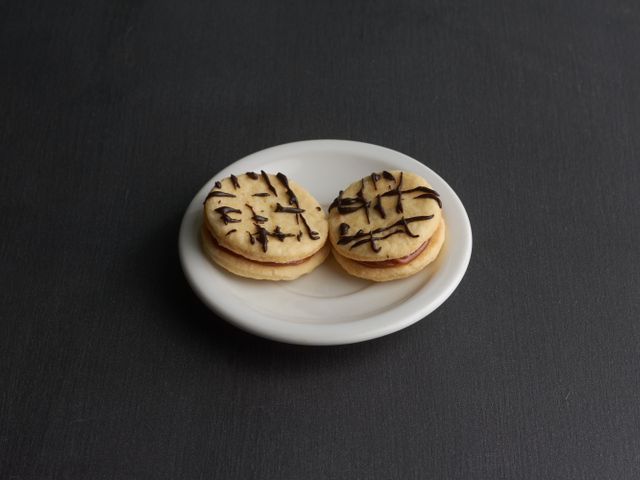
A tender, herbaceous shortbread that reimagines the Scottish classic with whole wheat flour, fruity olive oil, and fresh rosemary. The honey adds subtle sweetness and helps keep the shortbread moist and crisp, while sea salt and rosemary create an unexpectedly savory-sweet flavor profile. These are rustic yet refined—perfect alongside tea or as an elegant after-dinner treat.
- Prep
- 15 min
- Cook
- 18 min
- Wait
- 30 min
- Total
- 1 hr 3 min
- Makes
- 24 shortbread biscuits (2 cookies per serving)
Steps
Before you start
- Preheat your oven to 325°F (163°C)
- Line two large baking sheets with parchment paper
- Finely chop or strip fresh rosemary leaves from the stem (about 1 tablespoon total)
- Use a good-quality, fruity extra-virgin olive oil—this is a key flavor component
Mix dry ingredients
- In a medium bowl, whisk together the whole wheat flour (210 g), cornstarch (30 g), sea salt (3 g), and finely chopped fresh rosemary (3 g).
- Ensure the rosemary is evenly distributed throughout the flour mixture.
+ Show details− Hide details
Ready when: Rosemary pieces are evenly scattered; no lumps of salt
Tip: Sifting is optional for whole wheat flour, but whisking ensures even distribution of the small amount of rosemary
Combine wet ingredients
- In the same bowl or a separate small bowl, whisk together the extra-virgin olive oil (120 ml), honey (45 g), and vanilla extract (2.5 ml) until the honey is fully incorporated and the mixture is uniform.
+ Show details− Hide details
Ready when: No visible honey streaks; mixture is pale and emulsified
Tip: Whisking the wet ingredients together helps the honey dissolve evenly, preventing dry pockets in the dough
Bring dough together
- Pour the wet ingredients into the dry mixture and stir with a fork until a shaggy dough forms.
- Continue stirring gently for about 30 seconds until the dough is just combined.
- It should feel slightly crumbly but hold together when pressed.
+ Show details− Hide details
Ready when: Dough is just moistened throughout; no dry flour streaks remain
Tip: Overmixing develops gluten and makes the shortbread tough—stop as soon as there are no dry patches
Press into pan
- Transfer the dough into an 8×8-inch (20×20 cm) square baking pan lined with parchment paper (or simply use the pan lightly oiled).
- Using the bottom of a measuring cup or your lightly oiled hands, press the dough evenly into the pan, aiming for an even thickness of about ½ inch (1.25 cm).
- Smooth the top with a fork.
+ Show details− Hide details
Ready when: Dough fills the entire pan with an even, smooth surface
Tip: If the dough sticks, lightly oil your hands or the cup—this keeps the surface from tearing
Chill doughOven 325°F / 165°C
- Place the pan in the refrigerator for 15–20 minutes.
- This rests the gluten and helps the shortbread bake evenly without spreading too much.
- While chilling, preheat the oven to 325°F (163°C).
+ Show details− Hide details
Ready when: Dough is firm to the touch and does not spring back when lightly pressed
Tip: Chilling prevents the shortbread from spreading and helps it bake more evenly
Score and prick
- Remove the pan from the refrigerator.
- Using a sharp knife, score the shortbread into 24 equal pieces (a 6×4 grid works well—cut 5 lines one direction and 3 lines the other to create 24 squares).
- Prick each piece 3–4 times with a fork to prevent puffing.
+ Show details− Hide details
Ready when: Each piece is clearly outlined; fork holes are visible across all pieces
Tip: Score while cold so the knife doesn't drag the dough; pricking prevents bubbles and creates the traditional shortbread appearance
Bake shortbreadOven 325°F / 165°C
- Bake in a preheated 325°F (163°C) oven for 18–22 minutes.
- The shortbread should be pale golden at the edges and light golden across the center; the top should feel just set but still slightly tender.
- The whole wheat flour will not brown as much as white flour, so watch for a light, even color rather than deep browning.
+ Show details− Hide details
Ready when: Edges are pale to light golden; center is light golden; shortbread feels set to the touch but springs back slightly
Tip: Whole wheat flour bakes paler than all-purpose; don't overbake looking for deep browning, or the shortbread will become bitter and tough
Cool and cut
- Remove from the oven and let the shortbread cool in the pan for 5 minutes.
- While still warm, use a sharp knife to cut along the scored lines, pressing firmly through to separate the pieces completely.
- Allow the shortbread to cool in the pan for another 10 minutes, then transfer the pieces to a wire rack to cool completely (about 15 minutes total).
+ Show details− Hide details
Ready when: Shortbread is firm and separates cleanly at the score lines; cooled pieces are crisp and no longer warm to the touch
Tip: Cut while the shortbread is still warm—once completely cool, it becomes brittle and may crack or shatter when cut
Good to know
Tips
- Whole wheat flour absorbs liquid differently than all-purpose—if the dough seems too dry after mixing, add ½ teaspoon of water at a time and stir gently until it just comes together.
- The key to tender shortbread is minimal mixing. Stir just until combined; any additional stirring will toughen the cookies.
- Quality olive oil is essential here—use a fruity, extra-virgin oil that you enjoy tasting. A delicate or refined oil will result in bland shortbread.
- These shortbread cookies are best eaten within 2–3 days, when they are still crisp and fresh. After that, they soften slightly but remain pleasant for a few more days in an airtight container.
Make ahead
Prepare the dough, press it into the pan, cover with plastic wrap, and refrigerate for up to 2 days. Bake directly from the cold pan (add 2–3 minutes to the baking time). You can also freeze the pressed dough in the pan for up to 1 month; bake from frozen, adding 5–7 minutes to the baking time.
Storage & reheating
Store at room temperature in an airtight container for up to 5 days. The shortbread will firm up as it cools and becomes crispier as it sits. For longer storage, layer parchment between pieces and freeze in an airtight container or freezer bag for up to 3 months. Thaw at room temperature for 30 minutes before serving. Do not refrigerate or shortbread will become stale faster.
Substitutions
- whole wheat flour → All-purpose or bread flour. Use 1¾ cups (220 g) all-purpose flour. The shortbread will bake slightly faster and will be lighter and more tender, but will lose the nuttier flavor of whole wheat. It will also brown more readily, so watch the oven carefully.
- fresh rosemary → Dried rosemary. Use 1 teaspoon (1 g) dried rosemary. The flavor will be more concentrated, so you may want to use ¾ teaspoon (0.75 g) to start and adjust to taste. Avoid over-grinding dried herbs, as they can become bitter.
- honey → Maple syrup or agave nectar. Use 3 tablespoons (45 ml) of maple syrup or agave. The flavor will be subtly different—maple will add earthiness, while agave will be more neutral. The baking time and texture may vary slightly.
- extra-virgin olive oil → Refined vegetable or avocado oil. Use ½ cup (120 ml) neutral oil. The distinctive fruity olive oil flavor will be lost, resulting in a more subtle taste. Use a quality oil for the best texture and moisture.