Lebanese Maamoul Filled Cookies
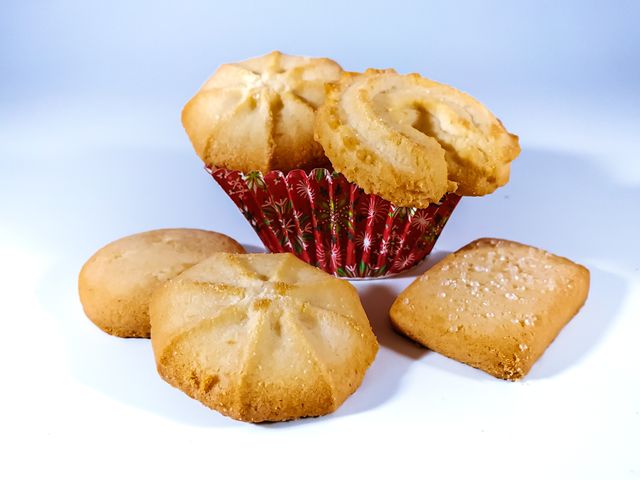
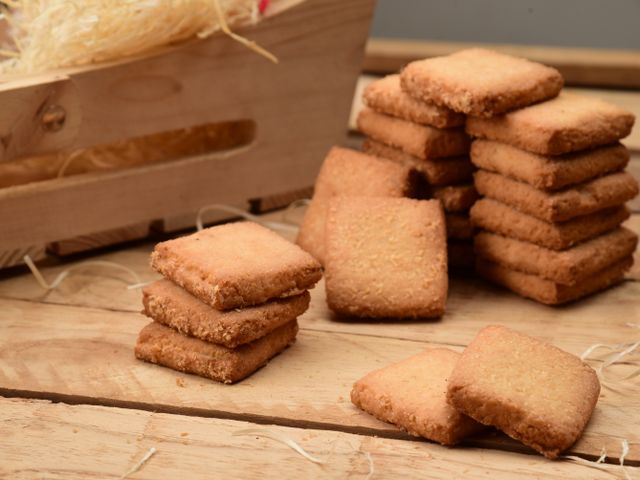
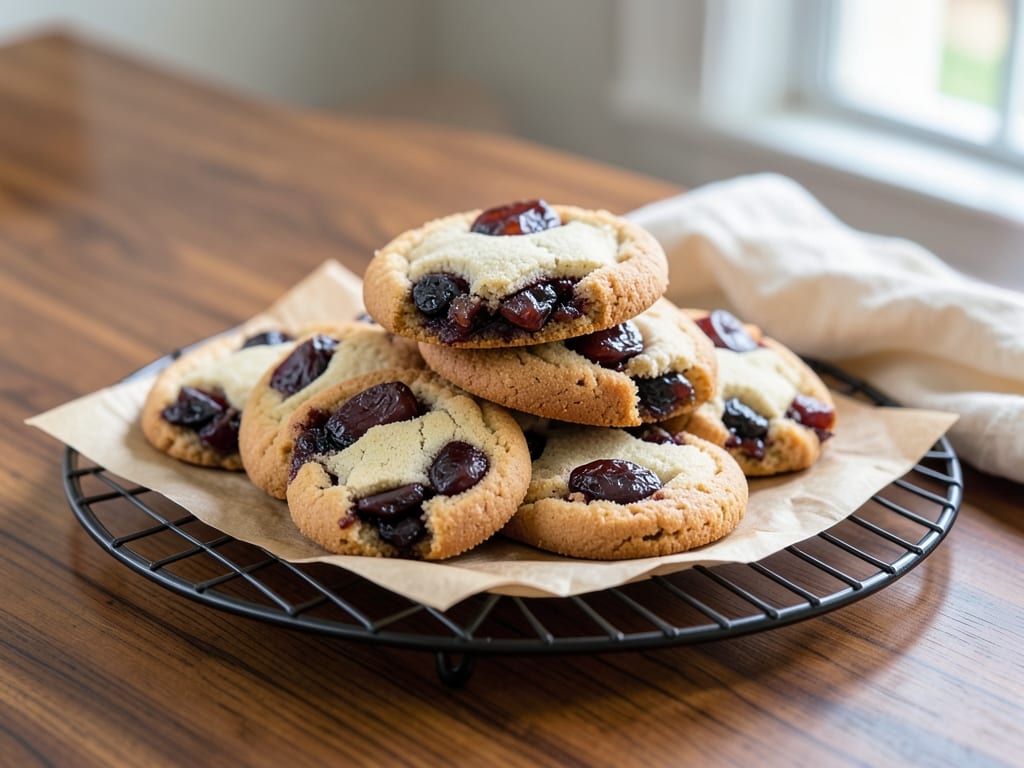
Delicate pressed cookies with a crumbly semolina dough and aromatic walnut-date filling, infused with orange blossom water. Maamoul are traditional Lebanese pastries often made for special occasions. The dough is firm enough to press into wooden molds (if you have them) or shaped by hand, creating elegant designs. Each bite delivers a nutty, slightly sweet filling offset by the subtle floral notes of orange blossom water.
Steps
Before you start
- Bring butter to room temperature (68–72°F / 20–22°C) for 1–2 hours so it blends smoothly into the dough
- Preheat your oven to 350°F (175°C) 15 minutes before baking
- Finely chop the walnuts and dates by hand or in a food processor, and combine them in a bowl with orange blossom water before you begin shaping
- Have a small bowl of water nearby for dampening your hands as you shape the cookies
Make the filling
- In a medium bowl, combine the finely chopped walnuts, finely chopped dates, 1 tablespoon orange blossom water, and cinnamon if using.
- Mix until well combined and the mixture holds together when pressed.
- The filling should feel slightly moist but not wet.
- Set aside.
+ Show details− Hide details
Ready when: Filling is evenly combined and holds together when squeezed
Tip: Chop walnuts and dates very finely so they bind together and press cleanly into the dough without breaking through
Mix the dough
- In a large mixing bowl, combine the semolina, all-purpose flour, and salt.
- Whisk together to aerate slightly.
- Add the room-temperature butter pieces and, using your fingertips or a wooden spoon, work the butter into the dry ingredients until the mixture resembles coarse breadcrumbs with pea-sized pieces of butter visible throughout.
- Add the sugar and stir to combine.
- Drizzle in the 2 tablespoons of orange blossom water while gently stirring and tossing the mixture with your fingertips until the dough just begins to come together and feels slightly damp but not sticky.
+ Show details− Hide details
Ready when: Dough clumps together when squeezed but still crumbly, no streaks of visible butter remain
Tip: Do not overwork the dough—overmixing will toughen the cookies. Stop as soon as the orange blossom water is incorporated
Rest the dough
- Cover the bowl with plastic wrap and let the dough rest at room temperature for 15 minutes.
- This allows the semolina to fully hydrate and makes the dough easier to shape and mold.
Shape the cookies (method 1: mold)
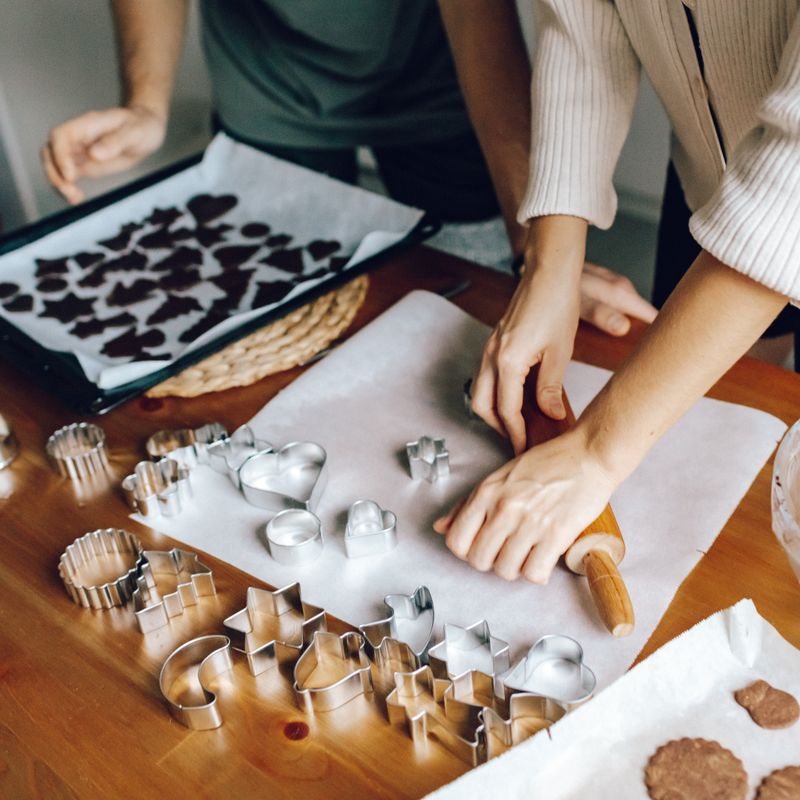
- If you have a maamoul wooden mold, lightly dampen your hands with water.
- Pinch off a piece of dough about 1 tablespoon (15 g) and gently press it into the bottom of the mold cavity in an even layer.
- Press about 1 teaspoon (5 g) of filling into the center, then top with another 1 tablespoon (15 g) of dough, pressing gently to seal.
- Tap the mold sharply onto the baking sheet to release the molded cookie.
- Repeat with the remaining dough and filling.
- You should make about 24 cookies.
+ Show details− Hide details
Ready when: All dough and filling are shaped into maamoul forms on the baking sheet
Tip: Dampen your hands lightly but do not soak them; excess water will make the dough sticky. Press the dough evenly in the mold so the cookie releases cleanly
Shape the cookies (method 2: by hand)
- If you don't have a mold, lightly dampen your hands.
- Pinch off a piece of dough about 1 tablespoon (15 g).
- Flatten it into a small disk in your palm, place about 1 teaspoon (5 g) of filling in the center, then fold the dough around the filling and gently roll it into an oval or round shape.
- Place it seam-side down on the baking sheet.
- Repeat with the remaining dough and filling to make about 24 cookies.
- Space them about 1 inch (2.5 cm) apart.
+ Show details− Hide details
Ready when: All dough and filling are shaped into round or oval forms on the baking sheet
Tip: Keep your hands lightly damp but not wet—this prevents sticking without making the dough soggy. Work quickly so the dough doesn't warm up too much
Chill before baking
- Refrigerate the shaped cookies on the baking sheets for 15 minutes.
- This firms them up so they hold their shape and don't spread too much during baking.
Prick and prepare for baking
- Remove the baking sheets from the refrigerator.
- Using a fork or small skewer, prick the top of each cookie 2–3 times in a decorative pattern.
- This is traditional and allows steam to escape evenly.
- If you used a mold, the surface may already have a pattern; in that case, you can skip this step or add just one or two pricks for decoration.
+ Show details− Hide details
Ready when: Each cookie is lightly pricked with a fork or skewer
Bake the cookiesOven 350°F / 175°C
- Bake at 350°F (175°C) for 18–22 minutes, until the edges are light golden brown and the tops are pale golden (not dark).
- The cookies should feel slightly firm to the touch but still have a tender crumb.
- Rotate the baking sheets halfway through if your oven bakes unevenly.
- Do not overbake—maamoul should remain soft and slightly crumbly inside.
+ Show details− Hide details
Ready when: Edges are light golden, tops are pale golden; cookies are firm to the touch but not hard
Tip: Do not bake until dark brown—maamoul are meant to be delicate and crumbly, not crisp. If they brown too quickly, lower the oven temperature by 25°F (14°C) next time
Cool on the sheet
- Let the cookies cool on the baking sheet for 10 minutes.
- They will firm up slightly as they cool.
- Transfer them to a wire rack to cool completely to room temperature, about 30 minutes total.
+ Show details− Hide details
Ready when: Cookies are fully cooled and handle without breaking
Tip: Do not move the cookies while they are still warm—they are fragile and will crumble. Wait until they are nearly room temperature before transferring to a rack
Good to know
Tips
- Maamoul are most authentic when pressed in wooden molds carved with traditional designs, which are widely available online. However, hand-shaping yields equally delicious results and is faster. The mold imprints a beautiful pattern that makes these cookies special for gifting.
- Orange blossom water and rose water vary widely in flavor intensity. Start with the amount called for, taste a pinch of the dough, and add a splash more if you prefer a stronger floral note. These cookies should have a subtle, elegant flavor, not overwhelming.
- These cookies are meant to be soft and delicate with a slight crumb, not crispy. Underbaking slightly is better than overbaking. If your first batch feels too firm, reduce the baking time by 1–2 minutes next time.
- For a fancier presentation, dust the cooled cookies lightly with powdered sugar or a light coating of shredded coconut before serving. This is traditional for holiday versions of maamoul.
Make ahead
Store baked cookies in an airtight container for up to 5 days at room temperature. You can also shape the dough and filling up to 1 day ahead, cover the baking sheets tightly with plastic wrap, refrigerate, and bake directly from the cold; add 1–2 minutes to the baking time. The dough does not freeze well because the high semolina content makes it crumbly; bake the cookies first, then freeze for up to 3 months.
Storage & reheating
Room temperature: 5 days in an airtight container. Refrigerator: 7 days in an airtight container (they soften slightly but remain delicious). Freezer: 3 months (baked cookies only, in a freezer-safe airtight container or bag). Reheat frozen cookies by letting them come to room temperature in a closed container for 30 minutes, or warm in a 300°F (150°C) oven for 5 minutes to restore softness.
Substitutions
- walnuts → Finely chopped almonds or pistachios. Almonds and pistachios are traditional alternatives in some regions. Use the same weight as the walnuts called for. Pistachios will give a more vibrant flavor and a slightly different color.
- pitted dates → Finely chopped dried figs or apricots. Figs and apricots work well for the filling. If using apricots, chop them very finely because they can be denser. Adjust the moisture by adding a small splash more orange blossom water if the filling seems too dry.
- orange blossom water → Rose water or 1 tablespoon of fresh lemon zest mixed with 1 teaspoon honey per 2 tablespoons of liquid. Rose water gives a different but equally traditional floral note. Lemon and honey provide bright, subtle flavor. Use the same volume as the orange blossom water, but taste the dough as you add it—floral waters vary in intensity.
- all-purpose flour → Additional fine semolina (increase semolina by 0.75 cup / 95 g total and omit the all-purpose flour). This makes the cookies even more delicate and traditionally semolina-forward, though slightly more crumbly. The texture will be lighter but more fragile.