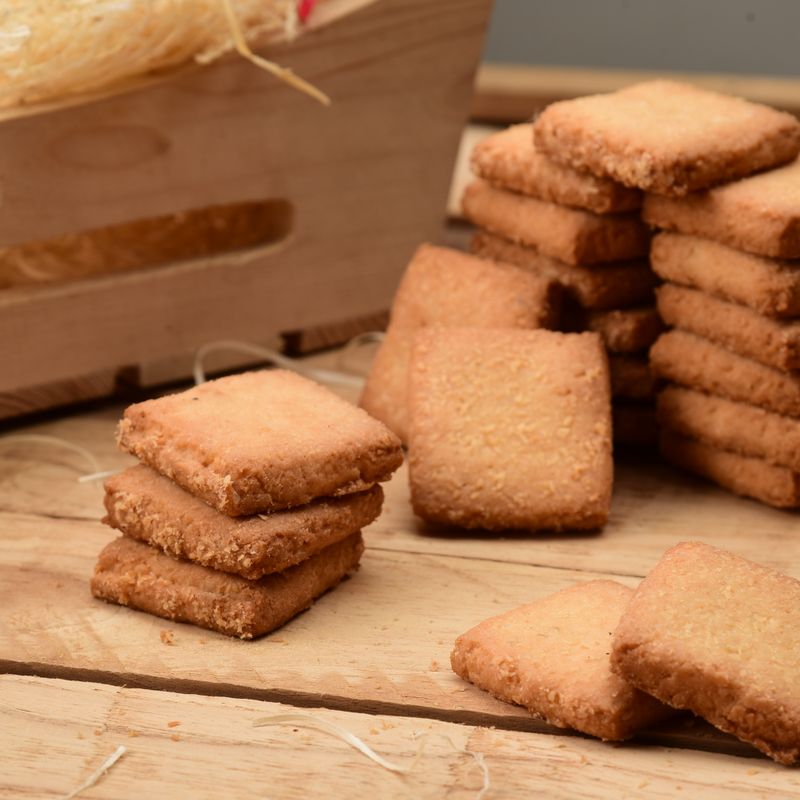
Clove and Date Shortbread
Buttery, crumbly shortbread infused with warm clove and studded with soft dates. These tender cookies balance the richness of butter with the caramel notes of dates and the subtle heat of cloves, creating a sophisticated treat that's perfect for tea or as a gift.
Steps
Before you start
- Soften the butter at room temperature for 45 minutes to 1 hour before starting
- Pit the dates if using whole dates
- Preheat your oven to 325°F (160°C) 15 minutes before baking
- Line two baking sheets with parchment paper
Cream butter and sugar
- In a stand mixer fitted with the paddle attachment (or using a hand mixer and bowl), beat the softened butter and granulated sugar on medium speed for 3–4 minutes until pale and fluffy, scraping down the bowl halfway through.
- The mixture should be light and airy.
+ Show details− Hide details
Ready when: Mixture is pale and fluffy
Tip: Do not skip the creaming step—it creates the tender crumb typical of shortbread
Add salt and clove
- Reduce the mixer to low speed.
- Add the sea salt and ground clove, mixing for 15–20 seconds until evenly distributed.
- You should not see any streaks of spice.
+ Show details− Hide details
Ready when: Spices are evenly distributed
Tip: Add the clove gradually; too much will overpower the delicate butter flavor
Fold in flour and dates
- Add the flour and chopped dates.
- Mix on low speed for 30–45 seconds until the dough just comes together.
- Do not overmix—the dough should be crumbly and hold together when pressed, not smooth.
+ Show details− Hide details
Ready when: Dough is crumbly and holds together when pressed
Tip: Overmixing develops gluten and makes shortbread tough; stop as soon as the dough forms
Press into pan
- Transfer the dough to an ungreased 8×8-inch (20×20 cm) square baking pan.
- Press it evenly into the pan using the bottom of a measuring cup or your palms, creating a compact, even layer about ½ inch thick.
- Prick the surface all over with a fork at ½-inch intervals.
+ Show details− Hide details
Ready when: Dough is evenly pressed and pricked throughout
Tip: Pricking prevents the shortbread from puffing and creates a more tender texture
Chill dough
- Refrigerate the pressed dough in the pan for 20–30 minutes.
- This helps the shortbread maintain its shape and prevents excessive spreading during baking.
+ Show details− Hide details
Ready when: Dough is firm to the touch
Tip: Do not skip this step—cold dough produces a better shortbread texture
Score and bakeOven 325°F / 165°C
- While the dough chills, preheat your oven to 325°F (160°C).
- Once chilled, remove the pan from the refrigerator and use a sharp knife to score the dough into 24 equal pieces (6 rows by 4 columns, or 4 rows by 6 columns).
- Place the pan on the middle oven rack and bake for 11–13 minutes, until the shortbread is pale golden at the edges and light tan across the top.
- The center should still be pale when you remove it from the oven—it will continue to cook slightly as it cools.
+ Show details− Hide details
Ready when: Edges are pale golden; top is light tan
Tip: Shortbread continues to firm as it cools, so remove it when slightly underbaked—it should still yield slightly to gentle pressure
Cool in pan, then cut
- Remove the pan from the oven and let it rest on a wire rack for 5 minutes.
- While still warm, use a sharp knife to cut along the scores you made, pressing firmly to cut all the way through.
- Let the shortbread cool completely in the pan for at least 20 minutes.
+ Show details− Hide details
Ready when: Shortbread is fully cooled and firm
Tip: Cutting while still warm is easier and produces cleaner breaks; once cold, the cookies will shatter if you try to cut them
Remove and store
- Carefully remove each cookie from the pan and transfer to an airtight container or serve immediately.
- The shortbread is delicate, so handle gently.
+ Show details− Hide details
Ready when: Cookies are separated and ready
Good to know
Tips
- For a decorative touch, sprinkle a pinch of Maldon sea salt or a few cloves on top of the dough just before baking.
- Shortbread is best when served at room temperature or slightly warm; if cookies become soft, place them in a 275°F (135°C) oven for 5–10 minutes to re-crisp.
- The quality of butter matters—use a good European-style butter with high fat content (at least 82%) for richer flavor and better texture.
- If your kitchen is very warm, chill the mixer bowl and attachment before creaming to prevent the butter from becoming too soft.
Make ahead
You can prepare the dough and press it into the pan up to 24 hours ahead. Cover with plastic wrap and refrigerate until ready to bake. You can also freeze the unbaked dough in the pan for up to 1 month; bake from frozen, adding 2–3 minutes to the baking time.
Storage & reheating
Store cooled shortbread in an airtight container at room temperature for up to 7 days. The cookies will remain crisp and fresh. For longer storage, place parchment between layers to prevent sticking. Shortbread can be frozen in an airtight container for up to 3 months; thaw at room temperature for 30 minutes before serving. Do not refrigerate, as moisture will soften the cookies.
Substitutions
- Medjool dates, pitted → finely chopped dried apricots or dried figs. Use the same amount. Apricots will add bright acidity; figs will provide deeper, nuttier notes that also complement clove well.
- ground clove → ground cardamom or a mix of ¼ teaspoon each ground allspice and ground cinnamon. Cardamom offers a floral, lemony warmth; the spice blend adds complexity. Adjust to your taste preference.
- all-purpose flour → cake flour or a mix of ¾ cup all-purpose flour and ¼ cup cornstarch. Cake flour and the flour-cornstarch blend will produce an even more tender, melt-in-your-mouth shortbread.
- granulated sugar → turbinado or demerara sugar. These sugars create a subtle sparkle on top and add a slight caramel depth; use the same weight but reduce volume slightly if needed.
More cookies
See all →


Find more like this
- Meal
- Dessert
- Cuisine
- Middle Eastern
- Main ingredient
- Dates
- Diet
- VegetarianHalal
- Method
- Oven
- Quick & Easy
- Easy