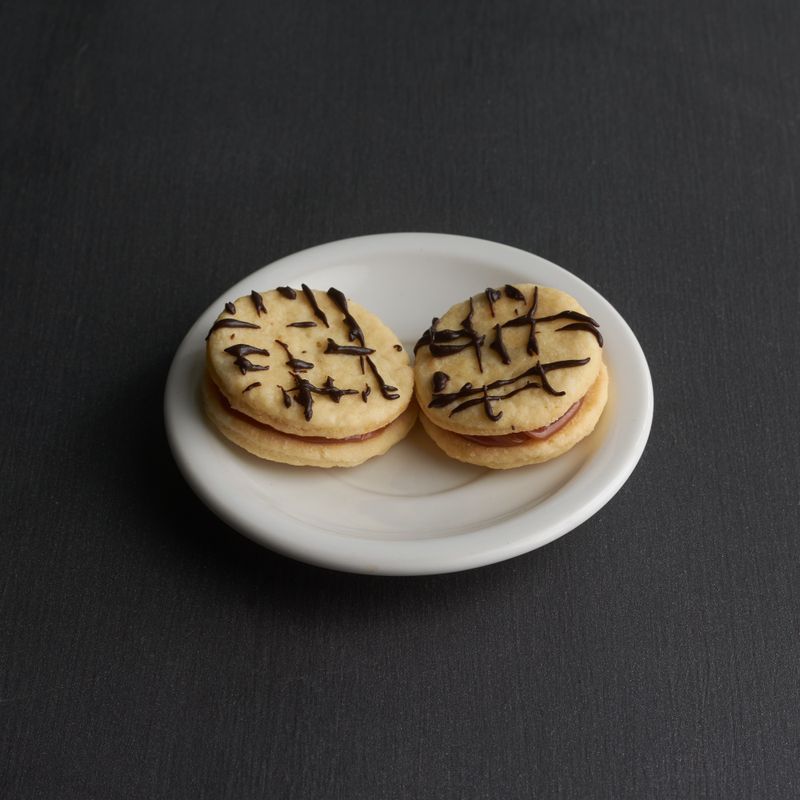
Alfajor with Dulce de Leche and Meringue
An elegant Argentine-Uruguayan sandwich cookie made with a tender cornstarch dough, filled with silky dulce de leche, and coated in a crunchy meringue crust. These delicate treats have a melt-in-your-mouth texture with a subtle sweetness balanced by the buttery dough and rich caramel filling. Perfect for special occasions or afternoon tea.
- Prep
- 30 min
- Cook
- 35 min
- Wait
- 15 min
- Total
- 1 hr 20 min
- Makes
- 12 sandwich cookies
Steps
Before you start
- Bring all ingredients to room temperature
- Preheat oven to 350°F (175°C)
- Line two baking sheets with parchment paper
- Have dulce de leche ready (store-bought or homemade)
Cream butter and sugar
- In a stand mixer fitted with the paddle attachment, beat the softened butter and granulated sugar together on medium-high speed for 3–4 minutes until pale, fluffy, and light in texture.
- Scrape down the bowl halfway through.
+ Show details− Hide details
Ready when: Mixture is pale, fluffy, and noticeably lighter in color
Tip: Do not skip this step; proper creaming incorporates air for a tender cookie.
Add eggs and vanilla
- Add the egg yolks one at a time, beating well on medium speed after each addition.
- Pour in the vanilla extract and mix until fully combined.
- The mixture will look slightly curdled at first; continue mixing until it comes together.
+ Show details− Hide details
Ready when: Mixture is smooth and uniform in color
Tip: Add eggs slowly so they emulsify properly with the butter.
Mix dry ingredients
- In a separate bowl, whisk together the all-purpose flour, cornstarch, baking powder, and salt.
- Mix until well combined and no lumps remain.
+ Show details− Hide details
Ready when: Dry mixture is uniform and lump-free
Tip: Sift the powdered ingredients if you want an extra-tender crumb.
Combine wet and dry
- Add the dry ingredients to the butter mixture in three additions, mixing on low speed just until combined after each addition.
- Do not overmix.
- The dough should be soft and slightly sticky.
+ Show details− Hide details
Ready when: No streaks of flour visible; dough is uniform and soft
Tip: Overmixing develops gluten, making the cookies tough instead of tender.
Chill dough
- Remove the dough from the mixer and wrap it in plastic wrap.
- Refrigerate for 15 minutes, or until it becomes easier to handle but is still cool.
+ Show details− Hide details
Ready when: Dough is still pliable but holds its shape
Tip: Cold dough won't spread as much in the oven, keeping the cookies tender.
Roll and cut cookies
- Lightly flour a work surface and roll out the chilled dough to about ¼ inch (6 mm) thick.
- Using a 2½-inch (6 cm) round cutter, cut out 24 rounds and place them on the prepared baking sheets, spacing them 1 inch (2.5 cm) apart.
- Gently gather and reroll scraps once if needed.
+ Show details− Hide details
Ready when: 24 evenly cut rounds arranged on baking sheets
Tip: Keep the dough cool while cutting; if it warms up, refrigerate briefly again.
Bake cookiesOven 350°F / 175°C
- Bake at 350°F (175°C) for 12–15 minutes, until the edges are pale golden and the tops are set but not darkened.
- The centers may look slightly underdone.
- Rotate the baking sheets halfway through baking for even browning.
+ Show details− Hide details
Ready when: Edges are pale golden; tops are set but not darkened
Tip: Don't overbake—alfajores should be tender, not crisp. They firm up slightly as they cool.
Cool cookies
- Let the baked cookies cool on the baking sheets for 5 minutes, then transfer them to a cooling rack.
- Cool completely to room temperature before assembling, about 10 minutes.
+ Show details− Hide details
Ready when: Cookies are firm enough to handle and completely cool to the touch
Tip: Cooling on a rack allows air to circulate underneath, preventing the bottoms from becoming damp.
Prepare meringue coating
- In a small clean bowl, whisk the egg white with a fork until foamy and slightly thickened but not stiff (about 2 minutes).
- In another bowl, combine the powdered sugar and unsweetened shredded coconut.
+ Show details− Hide details
Ready when: Egg white is foamy and thickened; sugar and coconut are mixed
Tip: Don't whip the egg white to stiff peaks; it should be liquidy enough to brush onto the cookies.
Assemble sandwich cookies
- Turn half of the cooled cookies (about 12) flat-side up on a clean surface.
- Spread about 1 tablespoon (15 g) of dulce de leche on each flat side, leaving a ¼-inch (6 mm) border.
- Top each with another cookie, flat-side down, and gently press to create a sandwich.
+ Show details− Hide details
Ready when: 12 sandwich cookies assembled with visible dulce de leche filling
Tip: Warm dulce de leche slightly (30 seconds in the microwave) if it's too thick to spread easily.
Coat with meringue
- Working with one sandwich cookie at a time, brush a thin coat of the foamy egg white on the top and bottom edges (avoid the dulce de leche sides).
- Immediately dip the edges into the powdered sugar and coconut mixture, coating all around.
- Place on a parchment-lined tray.
- Repeat with remaining cookies.
+ Show details− Hide details
Ready when: All sandwich cookies are coated with crispy meringue and coconut on the edges
Tip: Work quickly so the egg white doesn't dry before the coating adheres.
Set and serve
- Let the coated alfajores sit at room temperature for 30 minutes to 1 hour, allowing the meringue coating to dry and crisp up.
- Store in an airtight container.
+ Show details− Hide details
Ready when: Meringue coating is completely dry and crispy to the touch
Tip: Do not refrigerate immediately; the meringue coating sets best at room temperature.
Good to know
Tips
- The cornstarch is key to the delicate, melt-in-your-mouth texture of alfajores. Do not skip it or substitute with additional flour.
- Room-temperature ingredients emulsify better, making a smoother dough and more tender cookies. Take 30 minutes to warm everything before you start.
- The meringue coating serves both aesthetic and textural purposes—it adds crunch and seals in moisture. Don't skip this step.
- If using homemade dulce de leche, make sure it has cooled to room temperature before assembling; warm filling will soften the cookies.
Make ahead
You can prepare the dough up to 2 days in advance; wrap it in plastic wrap and refrigerate. You can also bake and cool the cookie rounds up to 1 day ahead and store them in an airtight container. Assemble and coat the alfajores no more than 4 hours before serving for the best texture.
Storage & reheating
Room temperature (in an airtight container): up to 4 days. The cookies remain soft and tender, though the meringue coating will gradually soften. Refrigerator (in an airtight container): up to 1 week; let them come to room temperature before serving for the best texture. Freezer (in an airtight container, separated by parchment layers): up to 2 months. Thaw at room temperature for 2 hours before serving.
Substitutions
- unsweetened shredded coconut → Finely chopped blanched almonds or pistachios. Use the same amount by weight. This gives a more elegant, less tropical appearance.
- dulce de leche → Homemade dulce de leche or cajeta (goat's milk caramel). Make or source your own if you prefer a deeper, more complex caramel flavor. Store-bought works perfectly well too.
- cornstarch → Potato starch in equal measure. Creates a very similar tender texture. Corn starch is more readily available and is the traditional choice.
- large egg white → 2 tablespoons (30 ml) of aquafaba (chickpea liquid from a can). A vegan alternative that whips similarly. Use only 1 tablespoon (15 ml) powdered sugar in the coating mixture to account for the extra liquid.
More cookies
See all →


Find more like this
- Meal
- Dessert
- Diet
- VegetarianHalal
- Method
- Oven
- Quick & Easy
- Make Ahead