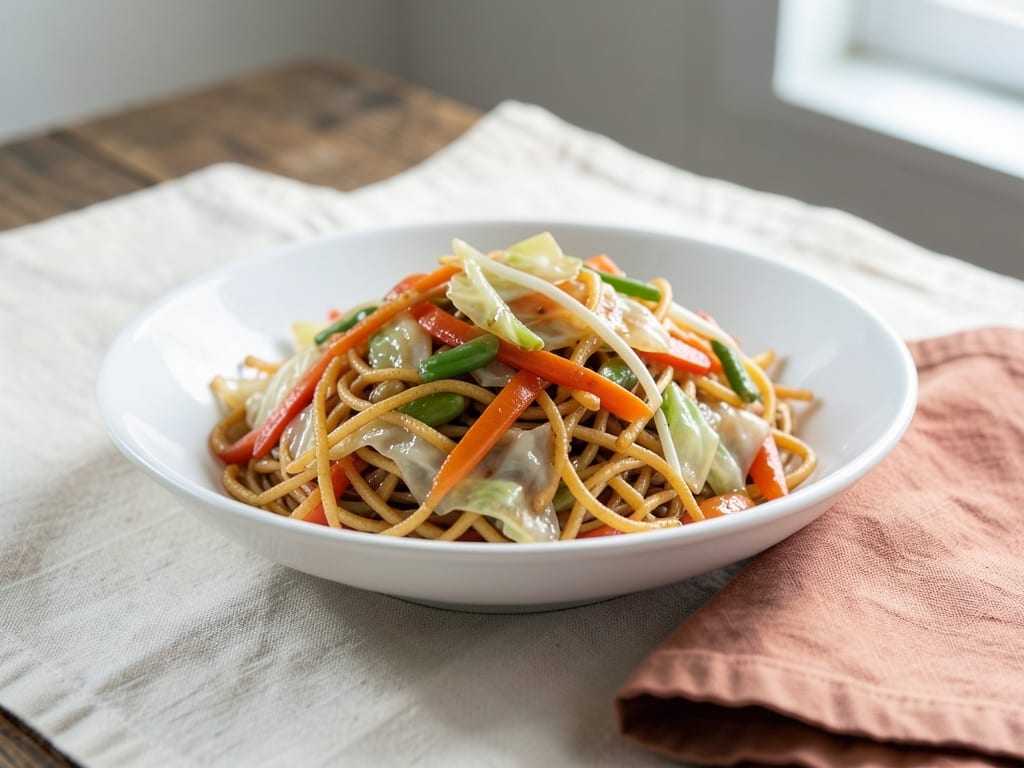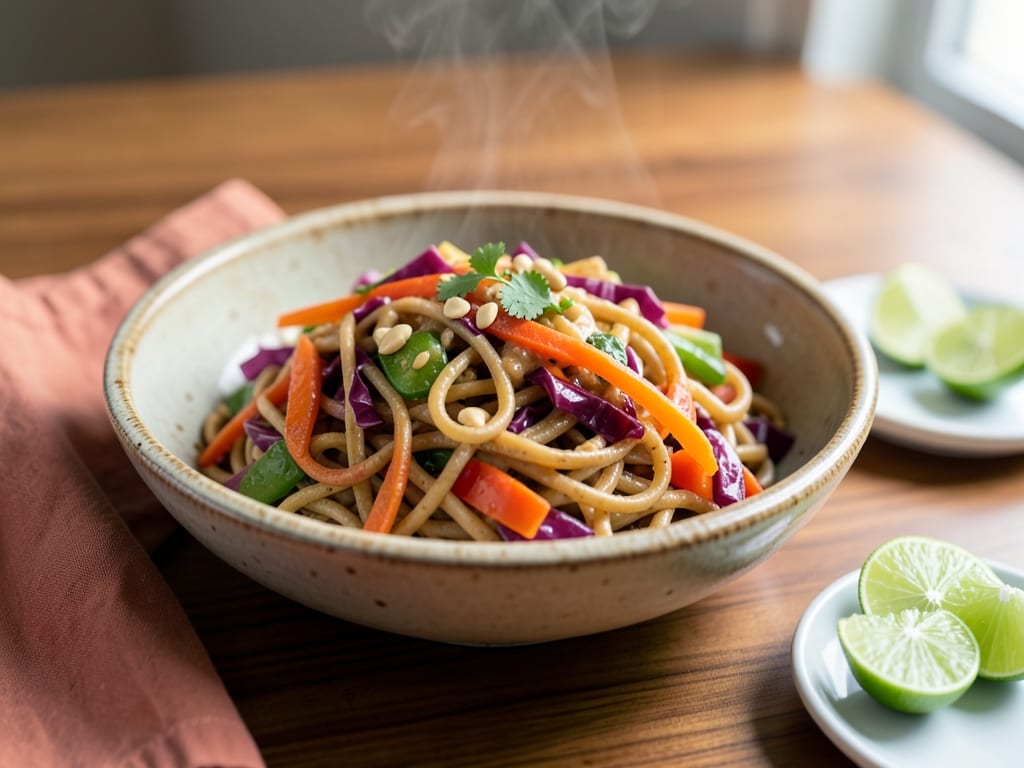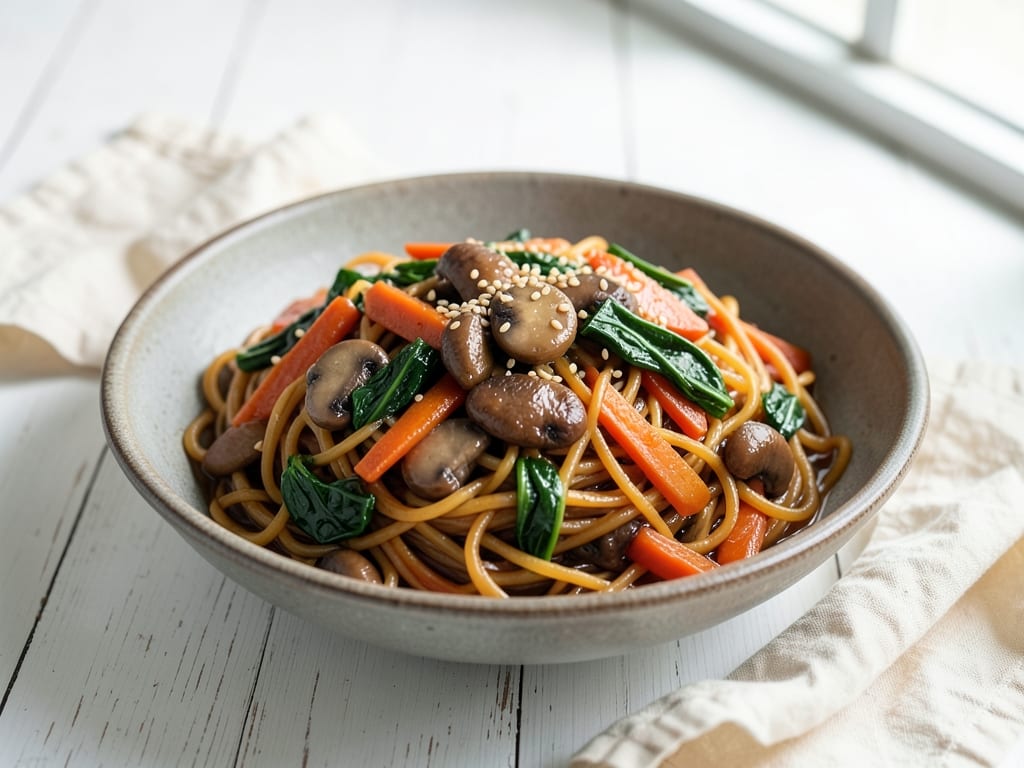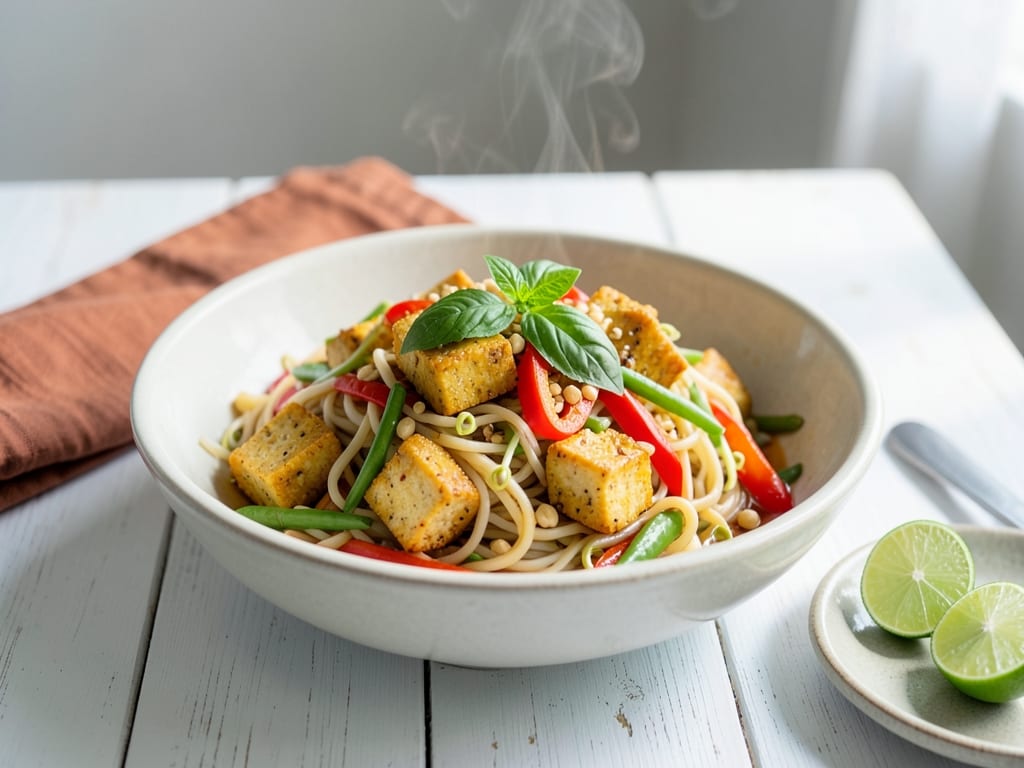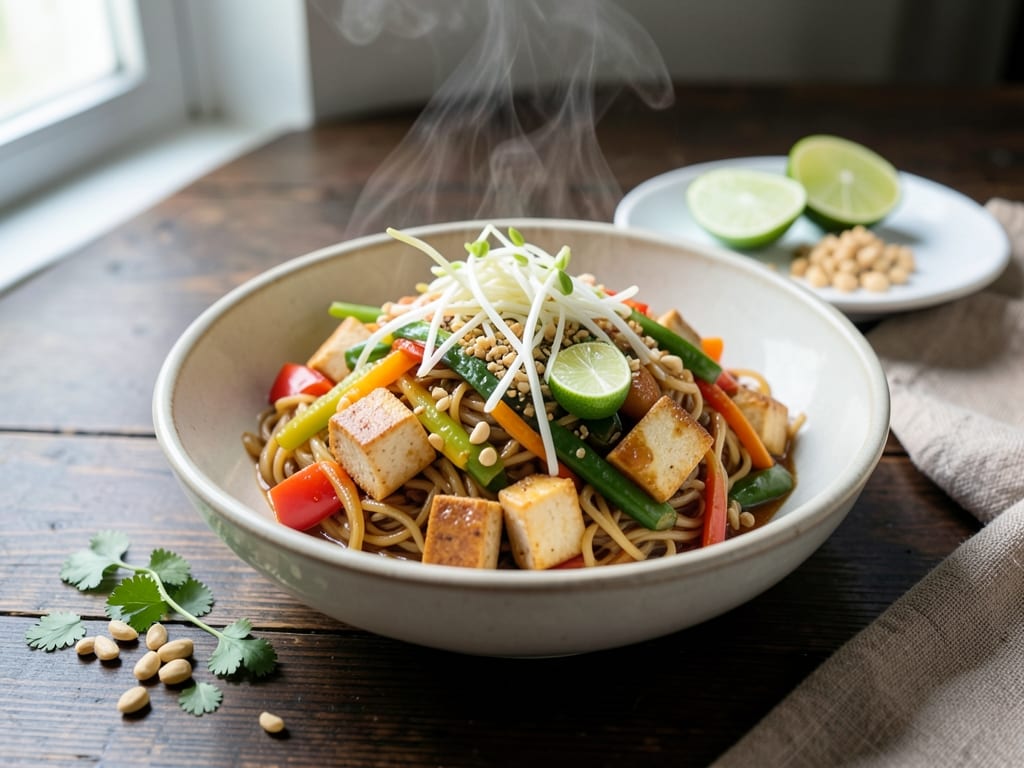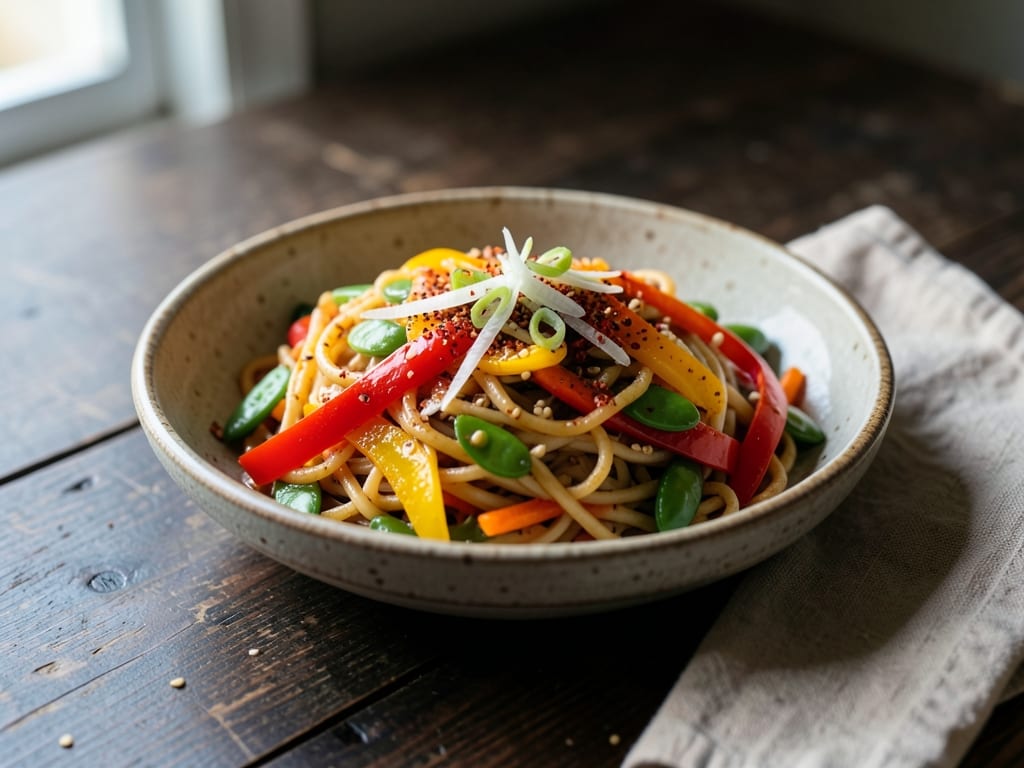
Whole Wheat Noodle Stir-Fry with Rainbow Vegetables
Nutty whole wheat noodles tossed with crisp-tender bell peppers, snow peas and carrots in a glossy garlic-ginger sauce made with low-sodium soy sauce. A fast, colorful weeknight dinner that comes together in about 35 minutes.
- Prep
- 25 min
- Cook
- 14 min
- Wait
- 5 min
- Total
- 44 min
- Makes
- 4 main-course servings (about 2 cups each)
Steps
Before you start
- Chop all vegetables and mix the sauce before you turn on the heat; stir-frying moves too fast to prep as you go.
- Use a large 14-inch (35 cm) wok or a 12-inch (30 cm) deep skillet so the vegetables fry rather than steam.
- Check the noodle package time; whole wheat noodles vary, and you want them just shy of tender because they finish cooking in the pan.
- Pat the snow peas and other vegetables dry after washing so they sear instead of steaming.
Prep the vegetables
- Slice the carrots into thin diagonal coins, cut both bell peppers into ¼-inch strips, string the snow peas, shred the red cabbage, mince the garlic, grate the ginger, and slice the scallions, keeping the white and green parts in separate piles.
- Arrange everything near the stove in the order it goes into the pan.
+ Show details− Hide details
Ready when: Vegetables are cut into similar-sized pieces and lined up by the stove.
Tip: Cut the carrots thinner than the peppers since they take longer to cook.
Mix the sauce
- In a small bowl or measuring cup, whisk together the soy sauce, rice vinegar, honey, 2 tsp sesame oil, cornstarch and ¼ cup (60 ml) cold water until no cornstarch lumps remain.
- Set aside.
+ Show details− Hide details
Ready when: Sauce looks smooth and the honey is fully dissolved.
Tip: Re-whisk right before adding it to the pan, because cornstarch settles to the bottom.
Boil the noodles
- Bring a large pot of water to a rolling boil.
- Cook the whole wheat noodles 1 minute less than the package directions, usually 6–8 minutes, stirring occasionally so they don't clump.
- Scoop out ½ cup (120 ml) of the cooking water, then drain.
+ Show details− Hide details
Ready when: Noodles are flexible and chewy with a slightly firm center when bitten.
Tip: Don't salt the water heavily; the soy sauce already adds salt.
Rinse and oil noodles
- Rinse the drained noodles briefly under cool running water to stop the cooking and wash off surface starch.
- Drain very well, then toss with 1 tsp sesame oil.
- Let them sit while you cook the vegetables.
+ Show details− Hide details
Ready when: Noodles are cool to the touch, separate easily and don't clump.
Tip: Wet noodles will steam the stir-fry, so shake off as much water as you can.
Sear carrots and cabbage
- Heat a wok or 12-inch skillet over high heat for 1–2 minutes until a drop of water sizzles instantly.
- Add 1 tbsp avocado oil and swirl.
- Add the carrots and stir-fry, tossing every 20–30 seconds, for 2 minutes.
- Add the red cabbage and cook 1 minute more.
+ Show details− Hide details
Ready when: Carrots are bright orange with a few browned edges and just starting to soften; cabbage is slightly wilted.
Tip: Don't crowd the pan. If your skillet is small, cook the vegetables in two batches.
Add peppers and snow peas
- Push the vegetables to the side, add the remaining 1 tbsp avocado oil, then add the bell peppers and snow peas.
- Stir-fry everything together for 2–3 minutes.
+ Show details− Hide details
Ready when: Snow peas turn vivid green and peppers are crisp-tender, bending slightly but still with a bite.
Tip: Overcooked snow peas turn dull and limp, so pull the pan off the heat briefly if it's smoking.
Add the aromatics
- Reduce the heat to medium-high.
- Clear a space in the center of the pan and add the garlic, ginger and scallion whites.
- Stir them in the open space for 20–30 seconds, then toss through the vegetables.
+ Show details− Hide details
Ready when: Garlic and ginger smell fragrant and look pale golden, not brown.
Tip: Burnt garlic turns bitter, so keep it moving and add the sauce quickly if it browns.
Toss with noodles and sauce
- Add the noodles to the pan.
- Re-whisk the sauce and pour it over everything.
- Using tongs, toss constantly for 2–3 minutes until the sauce thickens, turns glossy and coats the noodles.
- If it looks dry or sticky, add the reserved noodle water 2 tbsp (30 ml) at a time.
+ Show details− Hide details
Ready when: Sauce is glossy and clings to the noodles with no pool of liquid in the pan; noodles are tender but chewy.
Tip: Lift the noodles from the bottom with tongs so the sauce distributes evenly.
Finish and serve
- Turn off the heat.
- Sprinkle with the scallion greens and sesame seeds, plus red pepper flakes if you like heat.
- Taste and adjust with a splash more soy sauce or vinegar.
- Serve immediately in warm bowls.
+ Show details− Hide details
Ready when: Noodles are piping hot and the vegetables still look bright.
Good to know
Tips
- Keep the heat high and the pan uncrowded so the vegetables sear and stay crisp rather than steam.
- Cook the noodles slightly underdone; they absorb sauce and finish cooking in the pan.
- For protein, add 8 oz (225 g) cubed extra-firm tofu or 1 cup (150 g) shelled edamame in step 6.
- Cut vegetables to a similar size so everything finishes at the same time.
Make ahead
Slice all vegetables and mix the sauce (without stirring in advance of cooking) up to 24 hours ahead; store the vegetables in airtight containers in the fridge and the sauce in a jar. Boil, rinse and oil the noodles up to 1 day ahead and refrigerate in a sealed container.
Storage & reheating
Room temperature: up to 2 hours. Refrigerator: airtight container up to 4 days. Freezer: not recommended, as the vegetables lose their crunch, though the noodles can be frozen up to 1 month. Reheat in a skillet over medium heat for 3–4 minutes with a splash of water, or microwave covered for 1½–2 minutes, stirring halfway.
Substitutions
- dried whole wheat noodles (spaghetti-style or Asian whole wheat noodles) → soba, brown rice noodles or whole wheat spaghetti. Soba cooks in about 4 minutes, and brown rice noodles may need rinsing more carefully; adjust cooking time to the package. Soba and rice noodles are not all gluten-free, so check labels.
- low-sodium soy sauce → tamari or coconut aminos. Tamari makes it gluten-free; coconut aminos are sweeter, so reduce the honey to 2 tsp.
- snow peas → sugar snap peas or broccoli florets. Broccoli needs an extra 1–2 minutes of cooking.
- honey or maple syrup → maple syrup or brown sugar. Use the same amount; maple syrup keeps the dish vegan.