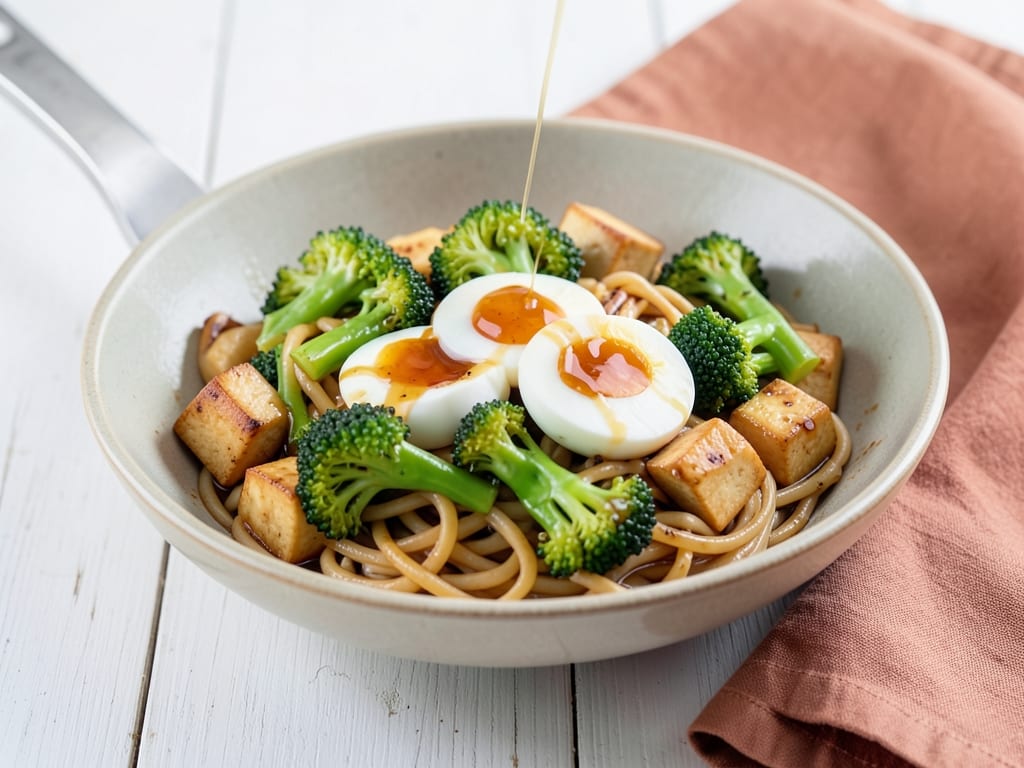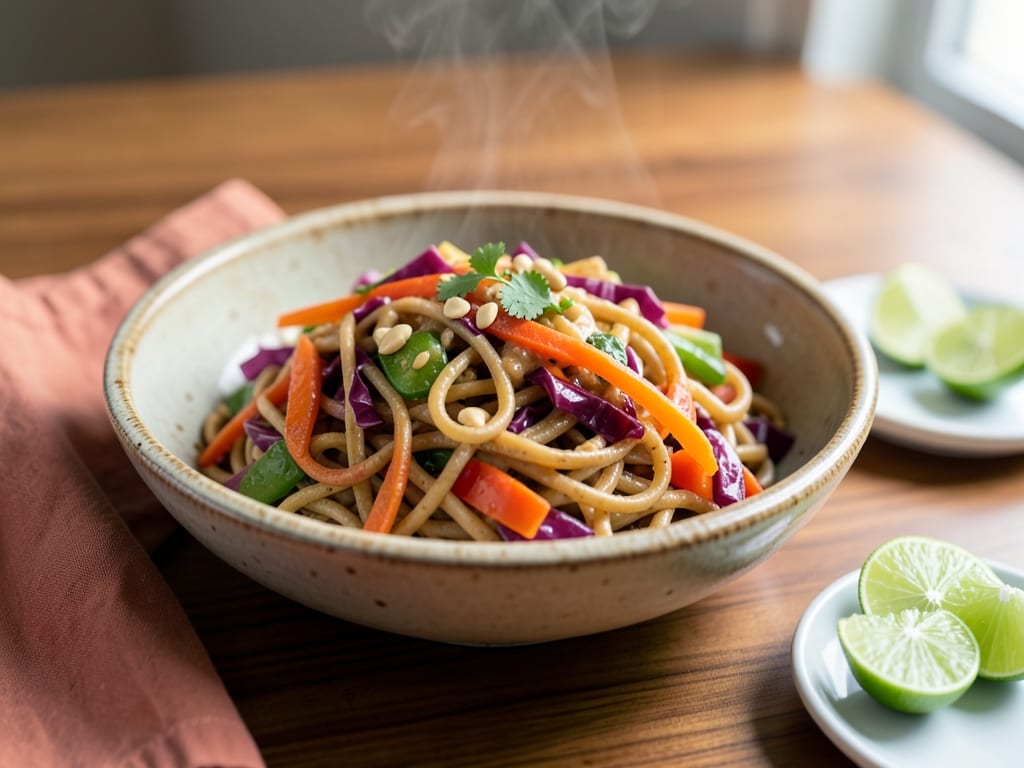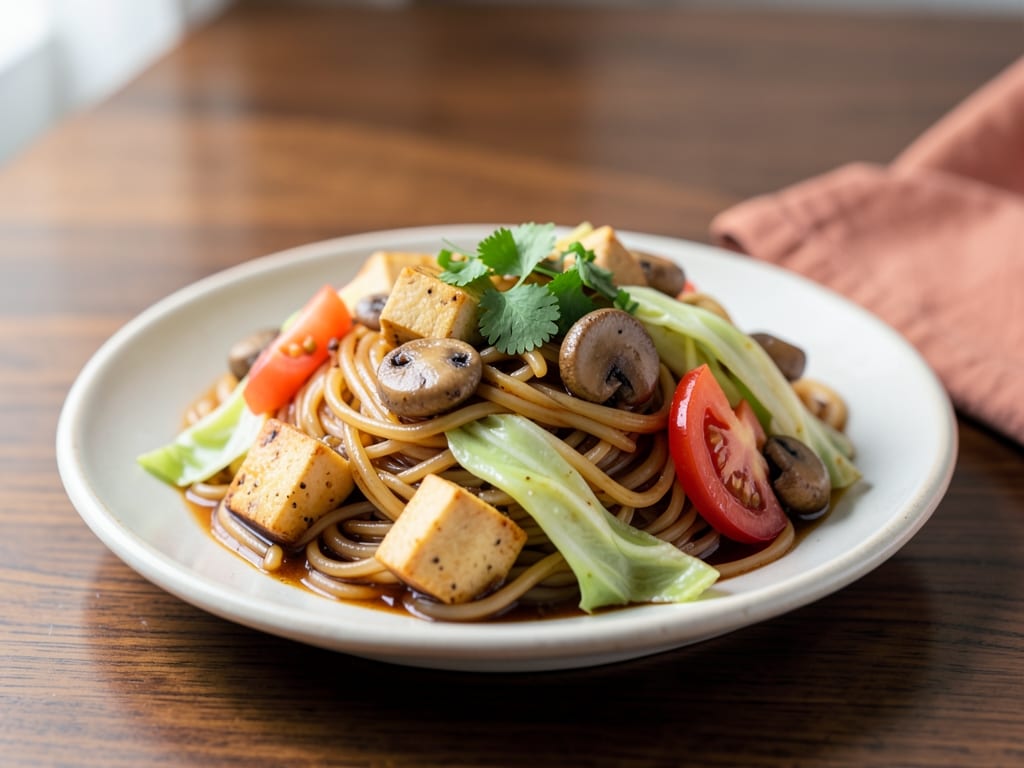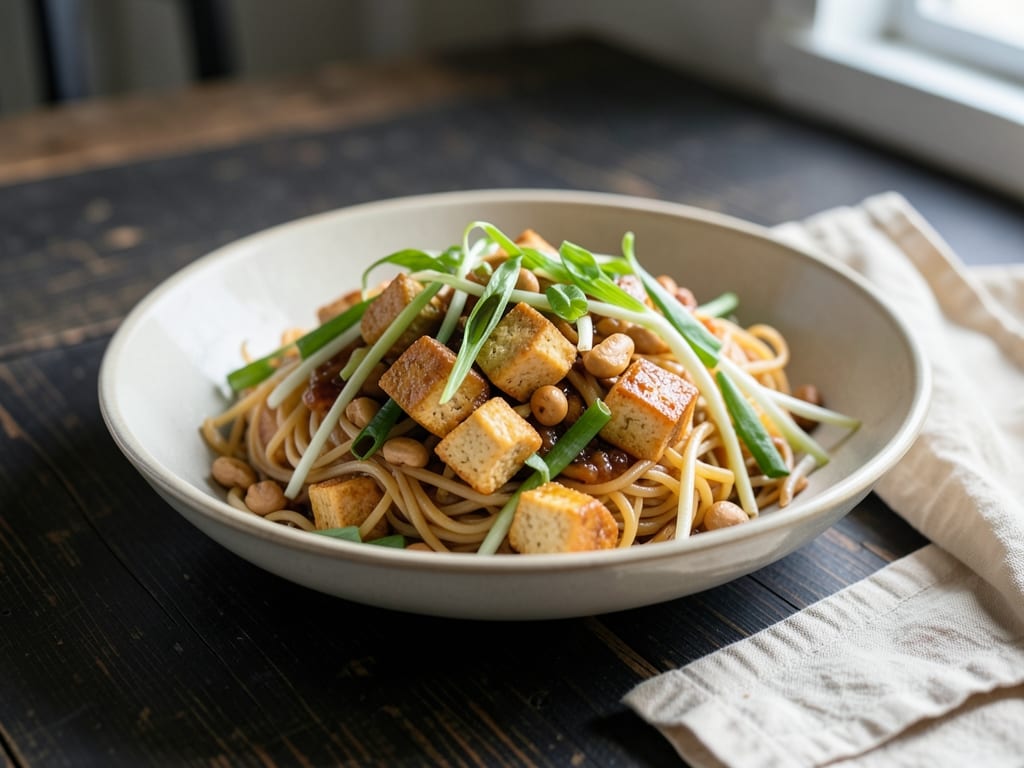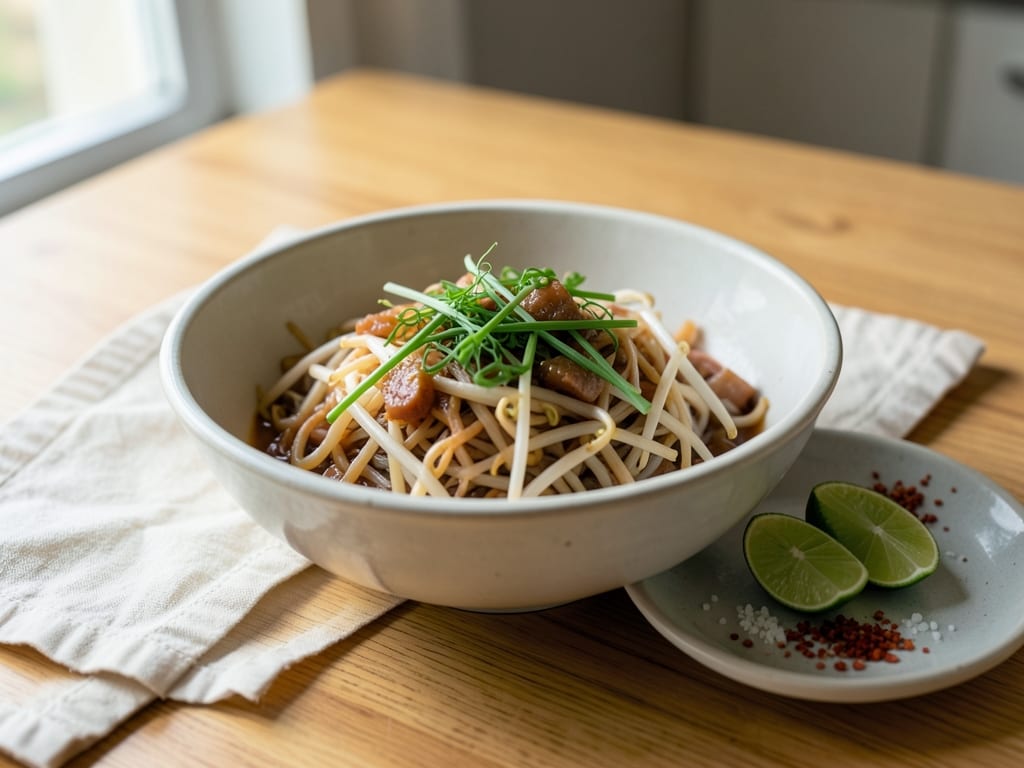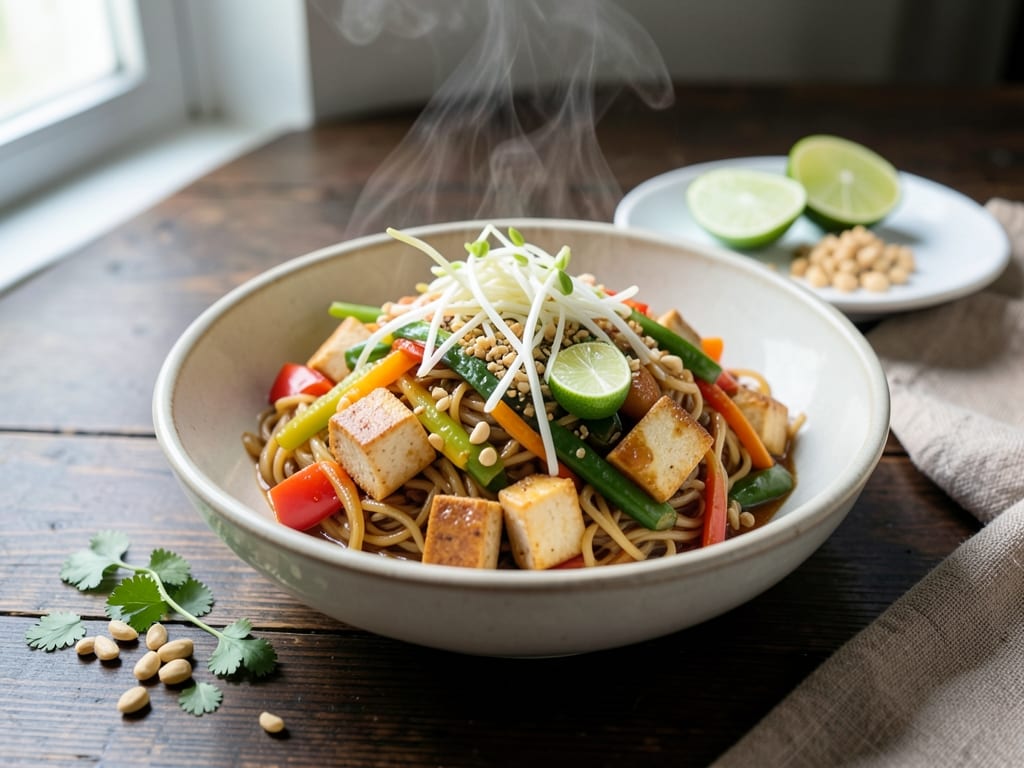
Vegetable Pad Thai Stir-Fry with Tofu
Chewy rice noodles, crisp-edged tofu, and colorful vegetables are tossed in a tangy-sweet tamarind sauce, then finished with bean sprouts, crushed peanuts, and a squeeze of lime. It's a fully vegetarian pad Thai that comes together in one wok in about 20 minutes once the noodles have soaked.
- Prep
- 20 min
- Cook
- 18 min
- Wait
- 30 min
- Total
- 1 hr 8 min
- Makes
- About 6 cups (4 generous servings)
Steps
Before you start
- Start the noodle soak first. It takes 30 minutes, and you can press the tofu and chop the vegetables while you wait.
- Have every ingredient chopped, measured, and within reach of the stove. Stir-frying moves fast and there's no time to chop mid-cook.
- Check that your tamarind is seedless paste (a thick, jam-like pulp) and not the thinner, more sour concentrate. If you only have concentrate, see the substitutions.
- Use the biggest wok or skillet you own, at least 12 inches (30 cm) across. A crowded pan steams the noodles and makes them gummy.
Soak noodles, press tofu
- Place the rice noodles in a large heatproof bowl and cover with very warm tap water (about 110°F / 43°C, hot to the touch but not boiling).
- Soak for 25 to 30 minutes, stirring once or twice.
- While they soak, set the drained tofu block on a towel-lined plate, cover with another towel, and weigh it down with a heavy pan for 15 minutes.
- Drain the noodles in a colander and shake well.
+ Show details− Hide details
Ready when: Noodles bend easily and are pliable but still have a firm, slightly opaque core; they should not be fully soft.
Tip: Don't use boiling water or soak longer. The noodles finish cooking in the wok, and fully softened noodles turn mushy.
Mix the sauce
- In a small bowl, whisk together the tamarind paste, sugar, soy sauce, water, and red pepper flakes until the tamarind and sugar dissolve and no lumps remain.
- Taste: it should be boldly sweet, sour, and salty, since it will be diluted by the noodles.
+ Show details− Hide details
Ready when: The sauce is smooth, with no visible sugar crystals or tamarind clumps.
Tip: If using palm sugar, warm the sauce in the microwave for 15 seconds so the sugar dissolves fully.
Prep the vegetables
- Cut the pressed tofu into ¾-inch (2 cm) cubes and pat the surfaces dry.
- Slice the shallots, mince the garlic, cut the carrot and bell pepper, and cut the scallions, keeping the whites and greens in separate piles.
- Beat the eggs in a small bowl.
- Arrange everything beside the stove, along with the sauce, drained noodles, and bean sprouts.
+ Show details− Hide details
Ready when: Vegetables are cut into similar, thin shapes so they cook at the same speed.
Tip: Dry tofu is the secret to browning. Any surface moisture will make it steam and stick.
Brown the tofu
- Heat 2 tablespoons (30 ml) of the oil in the wok over medium-high heat until it shimmers, about 1 minute.
- Add the tofu in a single layer.
- Let it sit undisturbed for 2 minutes, then turn the pieces every 1 to 2 minutes for a total of 7 to 8 minutes.
- Transfer to a plate.
+ Show details− Hide details
Ready when: Tofu cubes are golden brown on at least 2 sides and feel firm and slightly crisp when nudged.
Tip: Resist moving the tofu early. It releases from the pan on its own once a crust forms.
Cook the aromatics and vegetables
- Return the wok to high heat and add 1 tablespoon (15 ml) oil.
- Add the shallots and scallion whites and stir-fry for 1 minute.
- Add the garlic and stir for 30 seconds.
- Add the carrot and bell pepper and stir-fry for 2 minutes.
+ Show details− Hide details
Ready when: Shallots are translucent with browned edges, garlic smells fragrant (not dark brown), and the carrots and peppers are bright but still crisp-tender.
Tip: If the garlic darkens quickly, lower the heat slightly. Burnt garlic turns bitter.
Scramble the egg
- Push the vegetables to one side of the wok.
- Add the remaining 1 tablespoon (15 ml) oil to the cleared space and pour in the beaten eggs.
- Let them set for 15 seconds, then scramble with the spatula into small curds, about 30 to 45 seconds.
- Break the curds up and mix them in with the vegetables.
+ Show details− Hide details
Ready when: The egg is fully set with no liquid or glossy raw patches, and reaches 160°F (71°C) in the thickest curd.
Toss noodles with sauce
- Add the drained noodles to the wok, then pour the sauce over them.
- Using tongs or a spatula in a lifting and folding motion, toss constantly for 3 to 4 minutes so the noodles absorb the sauce.
- If the pan looks dry and the noodles are still stiff, add 2 to 3 tablespoons (30 to 45 ml) water and keep tossing.
+ Show details− Hide details
Ready when: Noodles are tender and chewy with no hard or chalky center, evenly coated in glossy brown sauce, and the pan bottom is nearly dry.
Tip: Don't stir aggressively. Lifting and folding keeps the noodles from tearing into short pieces.
Add tofu and sprouts
- Return the browned tofu to the wok and add the bean sprouts and scallion greens.
- Toss for about 1 minute, just until the sprouts begin to wilt at the edges.
- Remove from the heat.
- Taste and add a splash of soy sauce or squeeze of lime if needed.
+ Show details− Hide details
Ready when: Bean sprouts are slightly wilted but still crunchy and white.
Tip: Add the sprouts at the very end so they stay crisp and don't release water into the noodles.
Serve with toppings
- Divide the noodles among four plates.
- Top with the chopped peanuts and cilantro, if using, and serve each with a lime wedge.
- Squeeze the lime over the noodles just before eating.
- Serve immediately while hot.
+ Show details− Hide details
Ready when: Noodles are steaming hot and glossy.
Tip: Pad Thai is best eaten right away. The noodles continue to absorb sauce and firm up as they sit.
Good to know
Tips
- Never fully boil the noodles. They should be under-soaked going into the wok, because the sauce and heat finish cooking them.
- Cook in one batch only if you have a 14-inch wok. In a smaller pan, cook the noodles in two batches to avoid steaming and clumping.
- Adjust the sauce balance to your taste at the end: more lime for sourness, a pinch of sugar for sweetness, a dash of soy sauce for salt.
- Keep the heat high but keep moving. If anything sticks or darkens, lower the heat for a moment and add a spoonful of water.
Make ahead
"The sauce can be mixed and refrigerated up to 5 days ahead. The tofu can be pressed, cubed, and refrigerated up to 1 day ahead, and the vegetables can be cut up to 1 day ahead and stored in airtight containers. Soak the noodles just before cooking."
Storage & reheating
Best eaten right away. Refrigerate leftovers in an airtight container for up to 3 days; keep peanuts and lime separate. Reheat in a skillet over medium heat with 1 to 2 tablespoons water for 3 to 4 minutes, stirring, until steaming hot (165°F / 74°C). Freezing is not recommended, as the noodles become brittle and the sprouts watery. Leave at room temperature no longer than 2 hours.
Substitutions
- seedless tamarind paste (thick pulp, not concentrate) → 1 tbsp tamarind concentrate plus 2 tbsp water, or 2 tbsp lime juice plus 1 tbsp rice vinegar. Tamarind concentrate is stronger and more sour than paste, so use less. Lime and vinegar give a similar tang but less depth.
- large eggs → Omit the eggs and add 1 extra tablespoon of oil to the vegetables. This makes the dish vegan. Add an extra ½ cup (75 g) of tofu or another vegetable for body.
- roasted unsalted peanuts → Roasted cashews or toasted sunflower seeds. Use these for a peanut allergy (check for cross-contamination) and keep the roasted crunch.
- soy sauce → Tamari. Makes the dish gluten-free; check that the rice noodles are also labeled gluten-free.